Reviews
Watch Dogs Series Review (Xbox, PlayStation & PC)


Watch Dogs is one of the first series to put you behind the illuminated eyes of a foolhardy hacker and make you feel like the wizard with infinite access to “the back door”—the great beyond, where calculated codes and seemingly impenetrable firewalls are deemed kid-friendly equations that anyone—a hipster, usually—can solve. I, for one, have little to no major experience with technological engineering, yet in Watch Dogs, I’m the mastermind with the finger on the pulse of a revolutionary cortex. At the touch of a button, I can make spontaneous withdrawals from ATMs, cause a flock of cars to commence warfare at a traffic light, or take in-depth peeks into the lives of a “innocent” folks who just want to make their way home after a long day at the office. Oh, in Watch Dogs I have power. It’s just a shame that I have no moral compass to go with it. Thanks for the details to your checking account, Susan, a carpet salesperson from Oakland.
It doesn’t take much to make me feel powerful in a video game. In fact, if you simply hand me a mobile phone and tell me that I can move mountains with it, then I will happily spend a dozen hours playing God whilst other ordinary citizens go about their routines. But, Watch Dogs isn’t just a series about hacking into innocent people’s bank accounts, nor is it about toying with the traffic or unearthing confidential information from your neighbor’s computer. Of course, it does give you the option to do all of these things simultaneously — but that’s barely scraping the tip of the iceberg. See, Watch Dogs is a lot of things, but at its heart it’s an open-world action-adventure series that utilizes the raw power of technological innovation to conceive its stories, its ragtag characters and its whirlwind feuds.
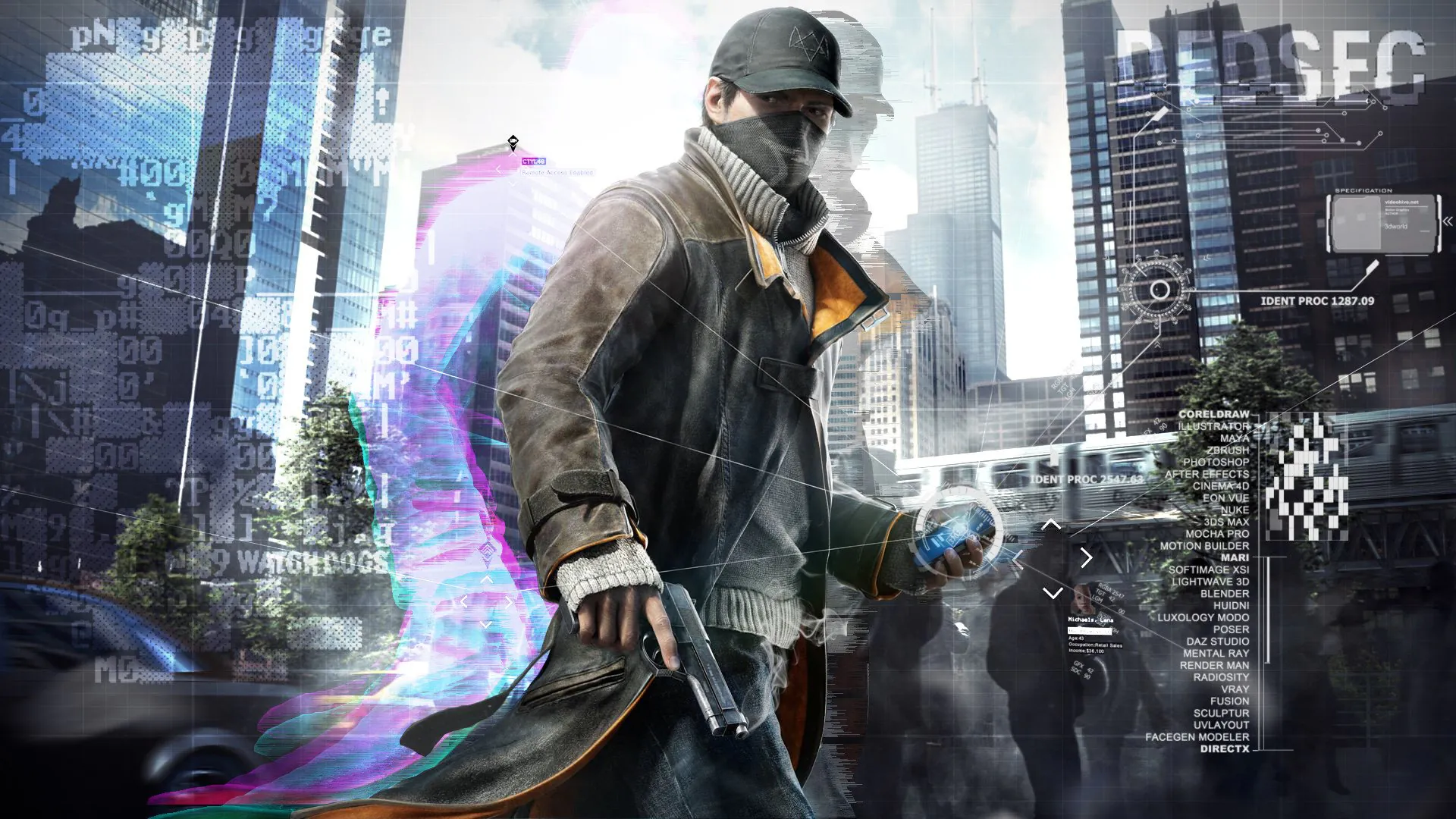
To put each of the mainline Watch Dogs entries into the same basket just wouldn’t be possible, as each one is, quite simply, vastly different in terms of its theme, gameplay, and narrative. For example, where the first chapter bases its world around a rather depressing Chicago-based plot, the sequel focuses on bubblegum hipsters and an incredibly vibrant version of San Francisco. And then there’s the third installment—a game that opens the doors to a wealth of recruiting opportunities, as well as a London-based setting with a trove of futuristic features and technological tools. The idea, however, remains vaguely familiar, in that you have a thread of ambiguous mega corporations with a knack for stealing private data, and a like-minded collective of hackers who desperately want to quell an ever-shifting cyber threat. There’s a little more to it than that I’ll admit, but you get the idea. It’s a classic good-versus-evil thing with a whole lot of hacking.
Of course, where the first installment in the series failed to ignite a spark in its storyline department, the sequel did manage to finesse the formula and conceive one of the most memorable open-world games of its time, with a bigger sandbox to explore, world events to participate in, and a cast of characters with likable traits. It was hipster fluff with a concerning amount of pulpy pop culture references, but that didn’t change the fact that, at least from a gameplay perspective, it was still in possession of a lot of great features. It had more of a pulse, is what I’m trying to say here. That isn’t to say that the original had no beating heart; it’s accepting the fact that, pioneering technical advances cast aside, it had no energy. Aiden Pearce was boring, and Ubisoft wanted the experience to feel more like a Bond movie than a tropical adventure with hacking infusions. Thankfully, Ubisoft soon realized that and made the necessary modifications to make it, well, pop. And you know, that was the best thing the team could have done.

Between the sequel and Legion you have a ton of great facets and ideas, including open-ended missions with multiple objectives, world quests, character arcs, and a nonlinear progression system that grants you the freedom to explore, hack, and ultimately transform both San Francisco and London into your own custom playgrounds. And there’s a tremendous amount of fun to be had with these worlds, too, with likable heroes, intriguing villains, and handfuls of missions that allow you the chance to “hack the world” and experiment with gadgets, weapons, and tactics.
Watch Dogs is a bit of a chameleon, of sorts, in that it actively bends to your gameplay style and tailors the experience around your preferences. For instance, if you want to be an illustrious 007 impersonator, then you can utilize drones and cameras to thwart enemies and complete objectives. If, however, you would soon rather be the “idiot with a slingshot” who also knows how to hack the system when absolutely necessary, then you can essentially throw caution to the wind and opt for the aggressive approach. The point is, there is a lot of variety here, and not to mention a plethora of tools and hacking techniques to keep you second guessing your next move as you sift through each of the campaigns.

Unfortunately, I can’t bring myself to praise Legion as much as I would like to, not because it lacks the signature qualities that the second installment brings to the table, but because it tries a little too hard to push the boundaries of innovation. Case in point, in Legion you don’t have the one protagonist; you have millions. With London at your fingertips, you have the chance to recruit and fill the shoes of everyone you come into contact with. On paper, this sounds like a great idea. Yet, in reality, it doesn’t quite hit the same spot as the other two chapters. The chemistry between heroes becomes null and void, and cardboard cutout citizens take center stage as unlikable husks with little to no redeeming personality traits whatsoever. It isn’t an enormous problem, but to call Legion a superior sequel just wouldn’t be true here.
Of course, if you can ignore the occasional issue and the lack of palpitations outside of the second chapter, then you shouldn’t find yourself struggling to scrape an enjoyable experience out of Watch Dogs’ hackable saga. It isn’t the perfect franchise, but it is one that dares to be different — and that counts for a lot.
Verdict

Watch Dogs might have taken a couple of attempts to “crack the mainframe” and incubate a back door into a compelling world of technical innovation and joyous open-world, gadget-centric shenanigans, but that isn’t to say that Ubisoft has been incompetent in its ability to conceive a genuinely unique hack-and-mash series.
While I’ll always see the second installment as the series as its best, I will stand by my word and say that, minus a couple of flaws here and there (and a lack of a personality from Aiden Pearce, sadly), each of the chapters in the rolling saga have implemented a lot of their own unique elements and set pieces, twists and challenges into the mix. Again, it isn’t Ubisoft’s Magnum Opus. That said, it is, in all honesty, an IP that deserves to share the same space as its kin.
Watch Dogs Series Review (Xbox, PlayStation & PC)
Hack The World
Watch Dogs might have taken a couple of attempts to “crack the mainframe” and incubate a back door into a compelling world of technical innovation and joyous open-world, gadget-centric shenanigans, but that isn’t to say that Ubisoft has been incompetent in its ability to conceive a genuinely unique hack-and-mash series.



