Roulette
8 Roulette Strategies Explained: Odds, Bets, and Risks

 Add Gaming.net to your preferred sources on Google
Key PointsProgression systems shift when money is at risk but never change the odds of the next…
View more
- Progression systems shift when money is at risk but never change the odds of the next spin.
- The James Bond spread wins on most spins yet still carries an average loss per wager.
- Flat betting keeps losses easy to calculate while still facing the wheel's ordinary house edge.
Roulette strategies change which pockets you cover, how much you wager or when you reset. On a fair wheel, the result of one spin does not make the next spin more likely to land on a particular pocket. The difference between systems is what the same sequence of spins can do to your balance.
The odds behind the examples
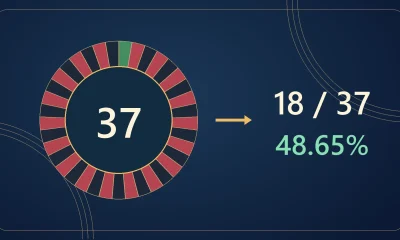
A winning red or black bet pays 1:1, but the green zero pockets also exist. That creates an expected loss on every unit wagered under standard rules. In this guide, a unit is the base stake in the example. For the table layout and chip placement, see how to play roulette.
| Wheel, with full losses on zeros | Chance a red bet wins | House edge on red |
|---|---|---|
| Single zero | 18/37, or 48.65% | 2.70% |
| Double zero | 18/38, or 47.37% | 5.26% |
| Triple zero | 18/39, or 46.15% | 7.69% |
With the French la partage rule, an eligible even-money bet gets half the stake back if zero lands. On a single-zero wheel the edge then falls to about 1.35% on those bets. Unless stated otherwise, the examples here use a standard single-zero wheel with a full loss on zero.
1. The Fibonacci Strategy
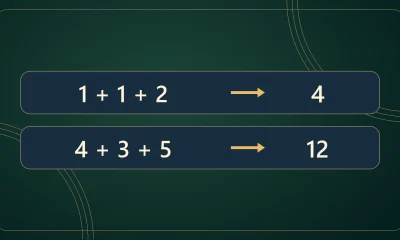
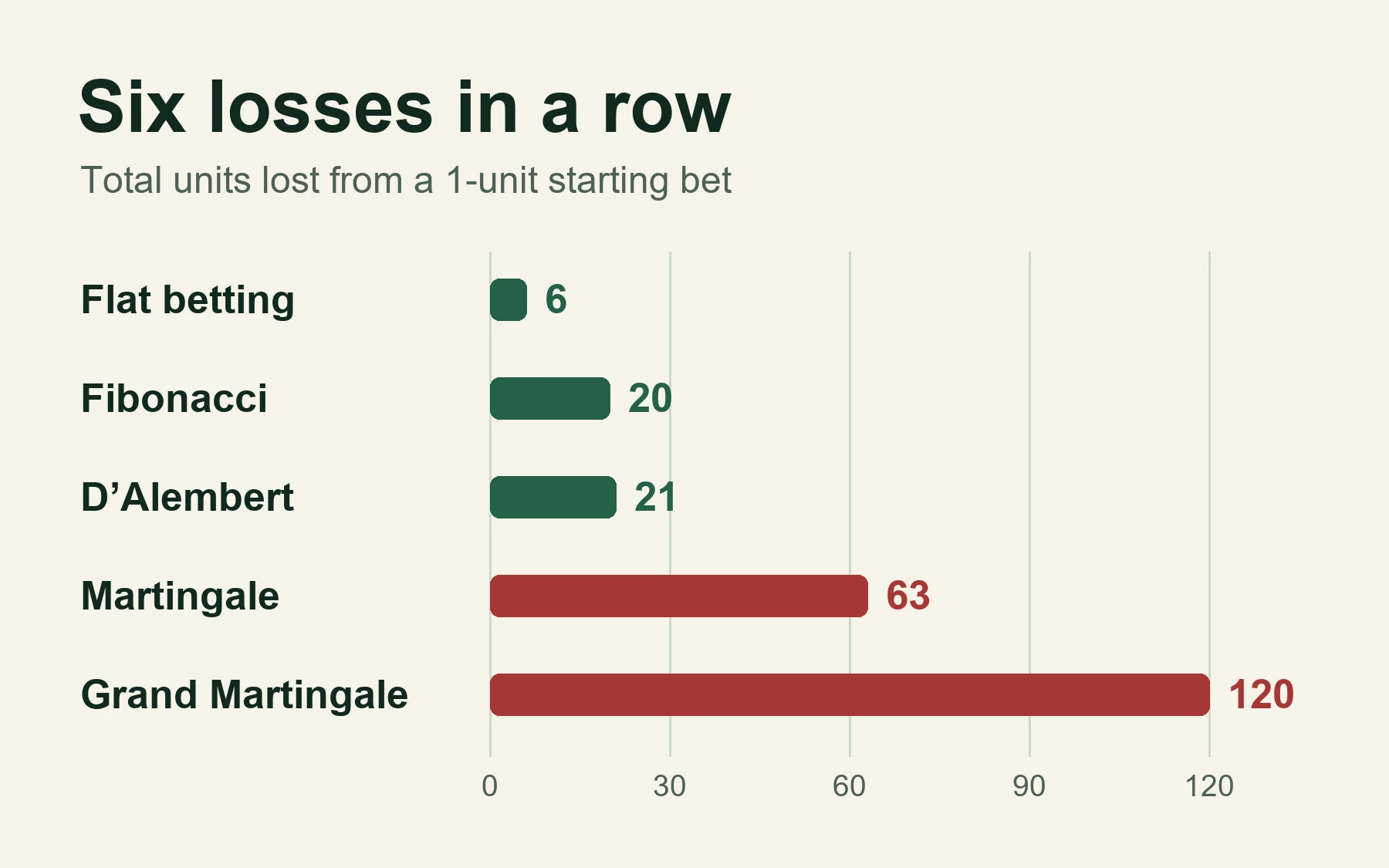
Use the sequence 1, 1, 2, 3, 5, 8 and so on for the stake. Move one step right after a loss and two steps left after a win, returning to the first one if needed. Three losses at 1, 1 and 2 units cost four units. Winning the next three-unit bet leaves a one-unit loss and moves the stake back to the second one. The Fibonacci guide shows how quickly the later stakes grow.
2. The D’Alembert Strategy
Add one unit after a loss and subtract one after a win, with a one-unit minimum. Two losses cost three units in total. A win at the next three-unit stake brings the sequence to even and reduces the next wager to two. The early changes are gradual, but six consecutive losses still cost 21 units.
3. The Martingale Strategy
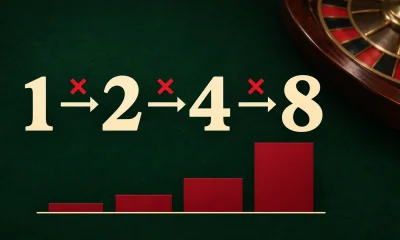
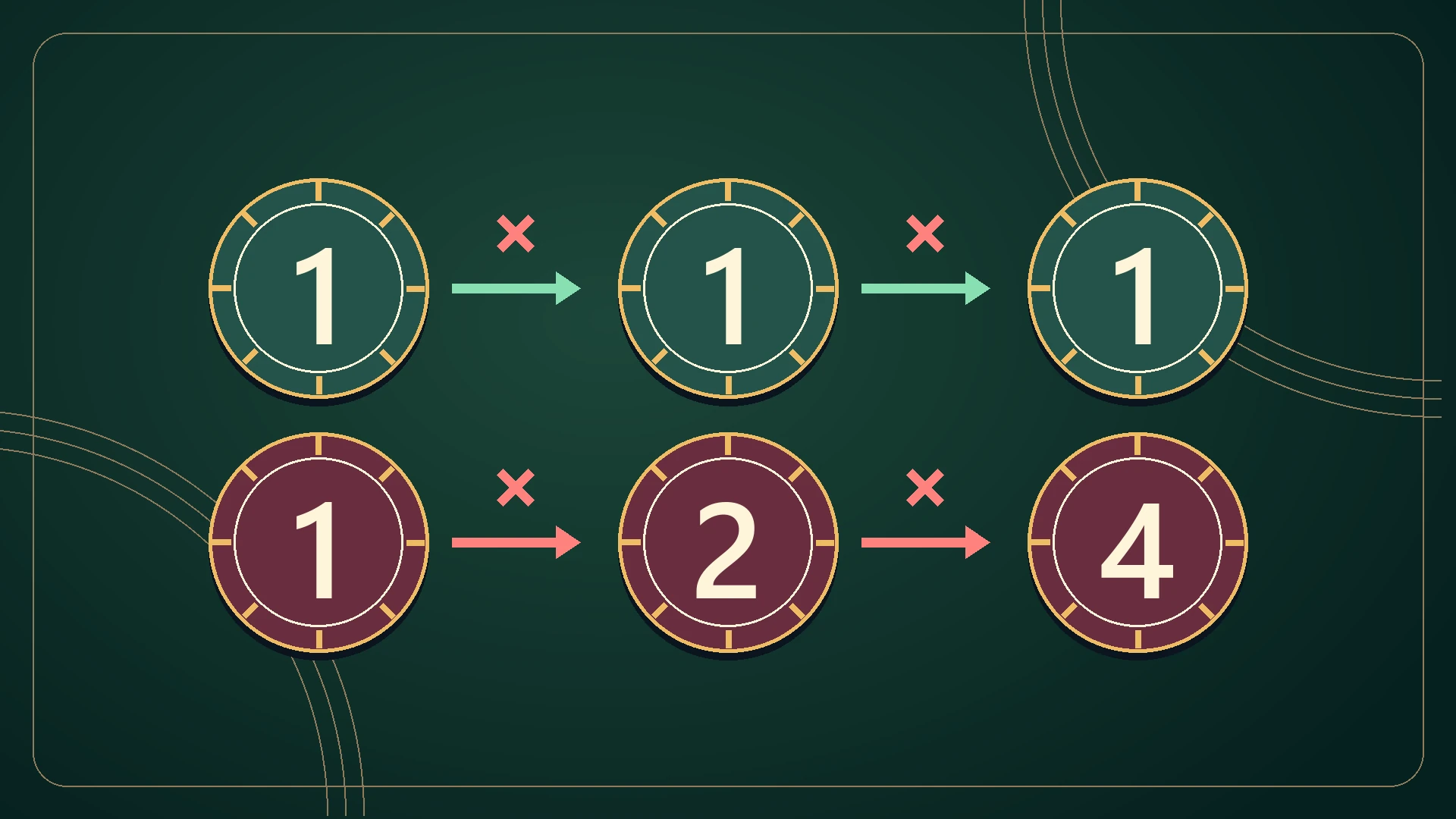
Double after a loss and reset after a win. With 1, 2 and 4-unit wagers, a win on the third bet earns four units of profit and covers the three previously lost. After six losses, however, 63 units are gone and the Martingale progression would call for a 64-unit bet. Losing the first six red bets occurs about 1.83% of the time in the standard single-zero example.
4. The Grand Martingale Strategy
Double the previous stake after a loss and add one base unit. A one-unit start gives 1, 3, 7, 15, 31 and 63. A win at seven after losses at one and three nets three units. Six consecutive losses consume 120 units and the next wager would be 127. This system raises the recovery target by putting more money at risk with every loss.
5. The Reverse Martingale Strategy
Reverse Martingale, or Paroli, doubles after a win and resets after a loss. A three-step version bets 1, 2 and 4, then resets at the end of the third spin. Three wins earn seven units. Two wins followed by a loss finish one unit down. The last four-unit bet puts the three earlier units of profit back at risk, plus one more.
6. The All-in Strategy
This example puts the whole session bankroll on one number. The profit payout is 35:1. A particular number on a single-zero wheel appears on one of 37 pockets. The other 36 results lose the full stake. The payout is large because the event is rare, and the approach can end the session on the first spin.
7. The James Bond Strategy
This is a fixed three-bet setup. In a 20-unit example, 14 units go on 19–36 at 1:1, five on the six-line covering 13–18 at 5:1, and one on zero at 35:1. Each winning result must also cover the other two wagers, which lose. The net is +8 units on 19–36, +10 on 13–18, and +16 on zero. Landing on 1–12 loses all 20.
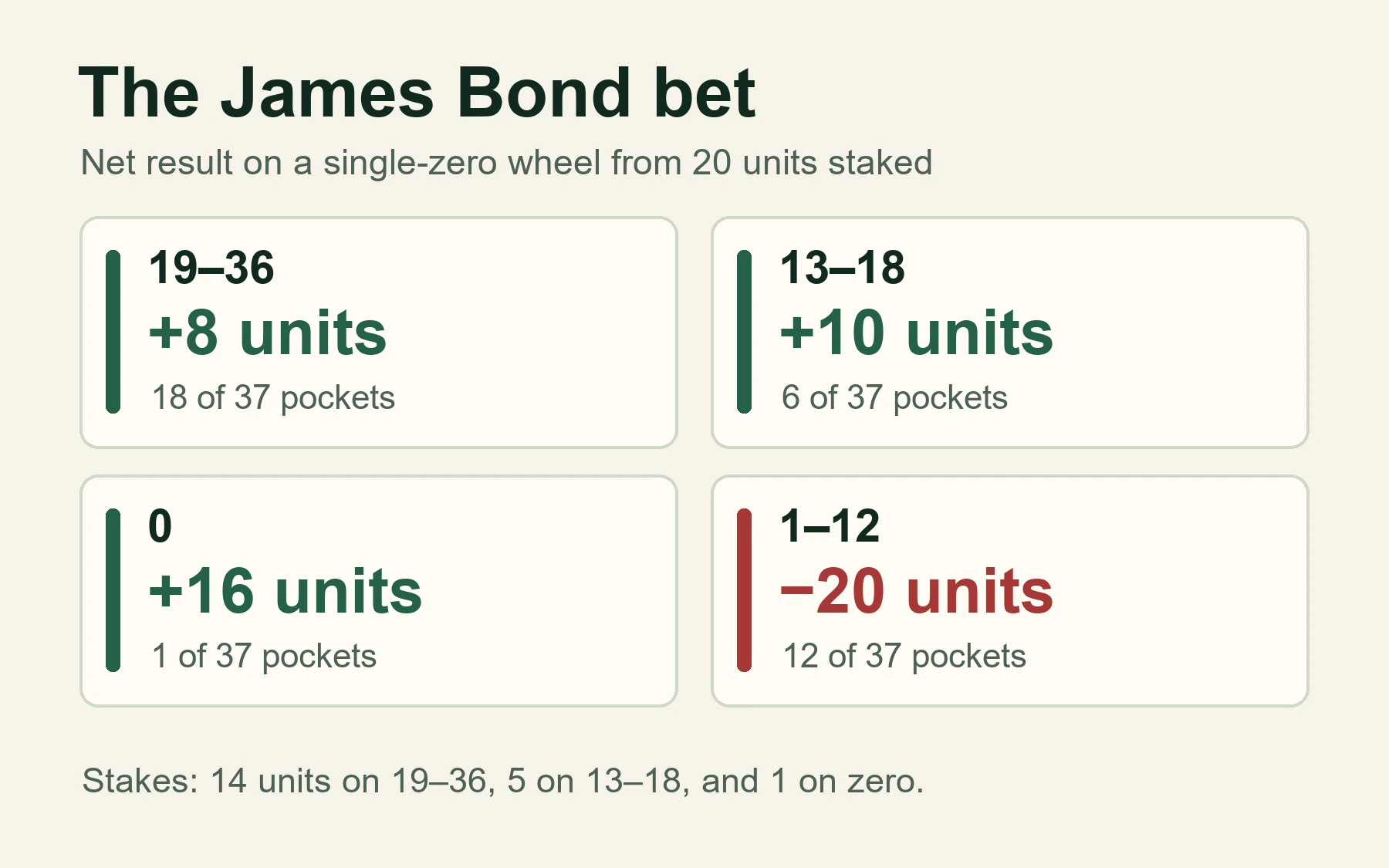
This spread wins on about 67.57% of spins. The net amounts are unequal. Weighting each outcome by its probability produces an average loss of about 0.54 units for each 20 units wagered.
8. The Constant Bet Strategy
Flat betting repeats the same stake regardless of the previous result. Losing six spins at one unit costs six units. Two losses and one win at 1:1 cost one unit. The fixed amount makes the effect of a losing stretch easy to calculate. It still carries the wheel and wager’s ordinary house edge.
Which decisions change the cost of playing?
A wheel with fewer zeros or a better payout rule can lower the house edge on comparable wagers. A fixed spending limit and lower stakes can limit exposure. A progression changes when more money is at risk. It leaves the probability of the next spin unchanged. Use the roulette bankroll examples to compare how stake and number of spins affect the total wagered.