Roulette
The Martingale System in Roulette: Stakes, Odds, and Limits

 Add Gaming.net to your preferred sources on Google
Key PointsMartingale doubling cannot change the fixed roulette odds on any single spin.
View more
- Martingale doubling cannot change the fixed roulette odds on any single spin.
- Frequent small wins under Martingale are offset by rare but severe losing runs.
- Table maximums and bankroll limits can halt a Martingale progression before recovery.
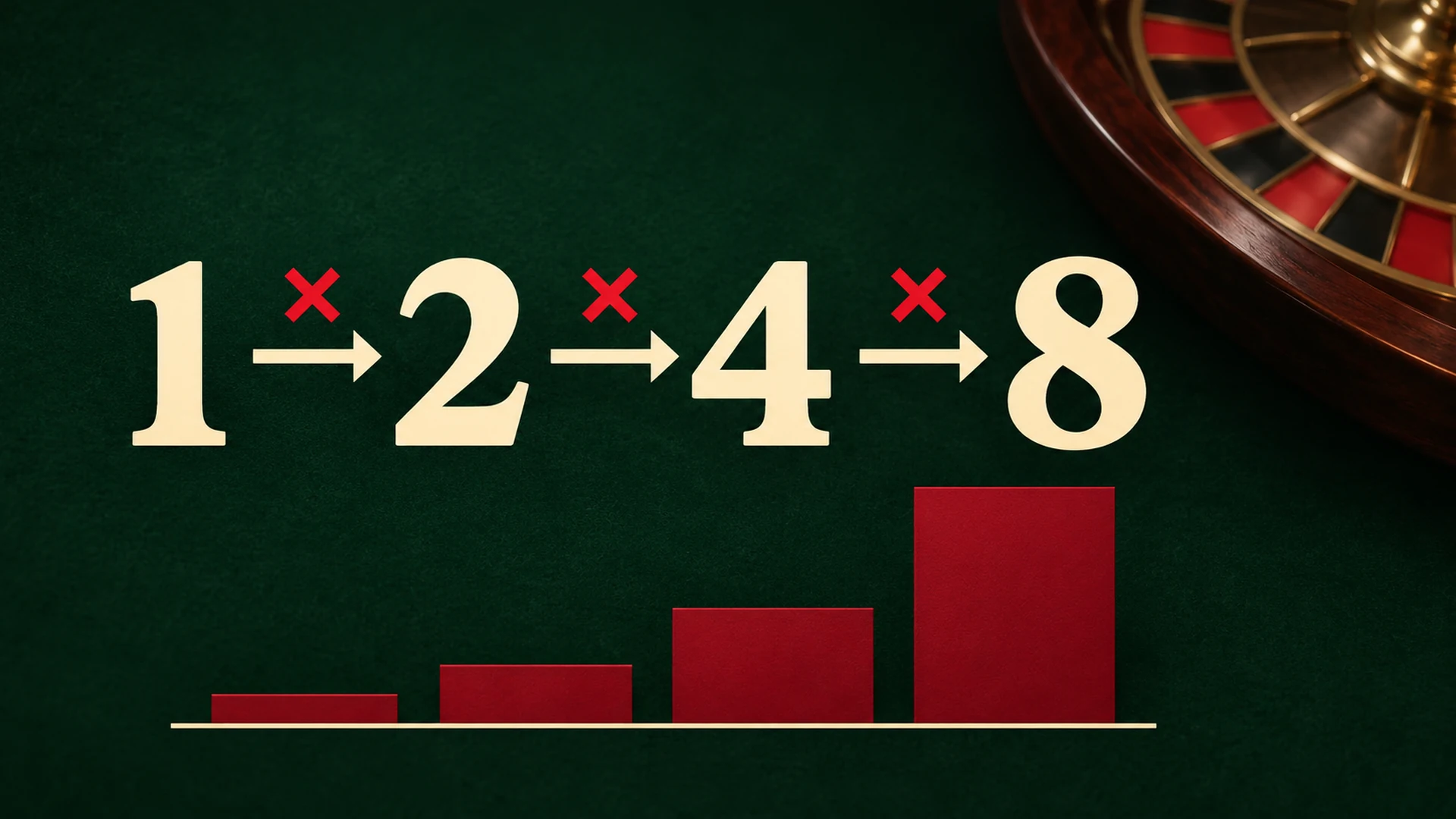
The Martingale system doubles your wager after every loss and resets to the original stake after a win. Its appeal is easy to see on paper. A win on an even-money bet can recover the previous losses and leave one base unit of profit. The catch is that your next stake grows twice as fast as the last, even though the odds stay the same.
How the Martingale works
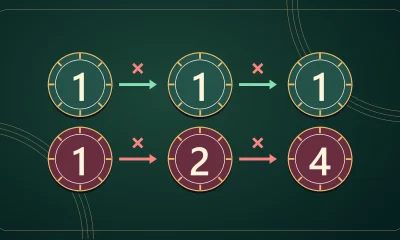
Start with one unit on an even-money roulette outcome such as red. If it loses, the next stake is two units. If that also loses, the next stake is four. A win at four earns four units of profit, which covers the one- and two-unit losses and leaves a net gain of one unit. The previous two losses do not make the third bet more likely to win.
| Bet in the sequence | Stake | Total lost if this bet also loses |
|---|---|---|
| First | 1 | 1 |
| Second | 2 | 3 |
| Third | 4 | 7 |
| Fourth | 8 | 15 |
| Fifth | 16 | 31 |
| Sixth | 32 | 63 |
| Seventh | 64 | 127 |
The table assumes full losses and a 1:1 payout. A half-loss rule, a commission or a different payout changes the recovery arithmetic. Compare the roulette strategies guide for examples that raise the stake more slowly or keep it fixed.
What happens when a progression stops
At a table with a 32-unit maximum, the sequence stops after six losses. At a table that allows the next 64-unit bet, you would need to have started with 127 units to place all seven wagers if the earlier six lost. Starting with 64 units lets you make the first six bets but leaves only one unit afterward.
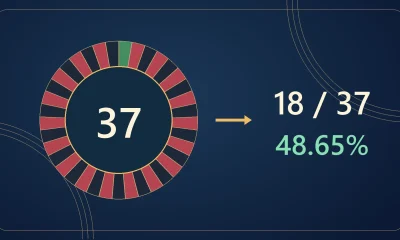
On a standard single-zero wheel, a red bet loses on 19 of 37 pockets. Six consecutive losses from the start of a cycle therefore occur about 1.83% of the time. That figure applies to an individual six-bet cycle and does not measure the probability of encountering a losing run across an entire session.
Why frequent wins do not produce a profit on average
Suppose a cycle ends at the first win or after six losses. Its outcomes are a 1-unit gain about 98.17% of the time or a 63-unit loss about 1.83% of the time. Multiplying those outcomes by their probabilities gives an expected loss of about 0.17 units per cycle. Each new wager still carries the standard 2.70% single-zero edge on red under full-loss rules.
How it differs from other progressions
Reverse Martingale doubles after wins and resets after losses. The Fibonacci system moves through smaller early increments. Flat betting leaves the stake unchanged. After six losses from a one-unit starting bet, flat betting loses six units and Martingale loses 63. The choice changes the size of the losses the same spins can produce.