India Guide
How to Play Teen Patti: Hand Rankings, Blind Play, and Show

 Add Gaming.net to your preferred sources on Google
Key PointsSeen players often pay more to continue than blind players under the same table rules.
View more
- Seen players often pay more to continue than blind players under the same table rules.
- Packing forfeits the hand along with any chips already committed to the pot.
- Classic Teen Patti lacks a shared board so your three cards never improve.
Teen Patti gives each player three private cards. Players can stay in by betting, pack their cards to fold, or continue blind without looking if the rules allow it. The last player remaining can win without showing. If the final players compare hands, the stronger eligible three-card hand wins.
Learn the order of standard three-card hands
| Highest to lowest | What it means |
|---|---|
| Trio or trail | Three cards of the same rank |
| Pure sequence | Three consecutive cards in the same suit |
| Sequence | Three consecutive cards without the same-suit requirement |
| Color | Three cards in one suit |
| Pair | Two cards of the same rank |
| High card | None of the higher combinations |
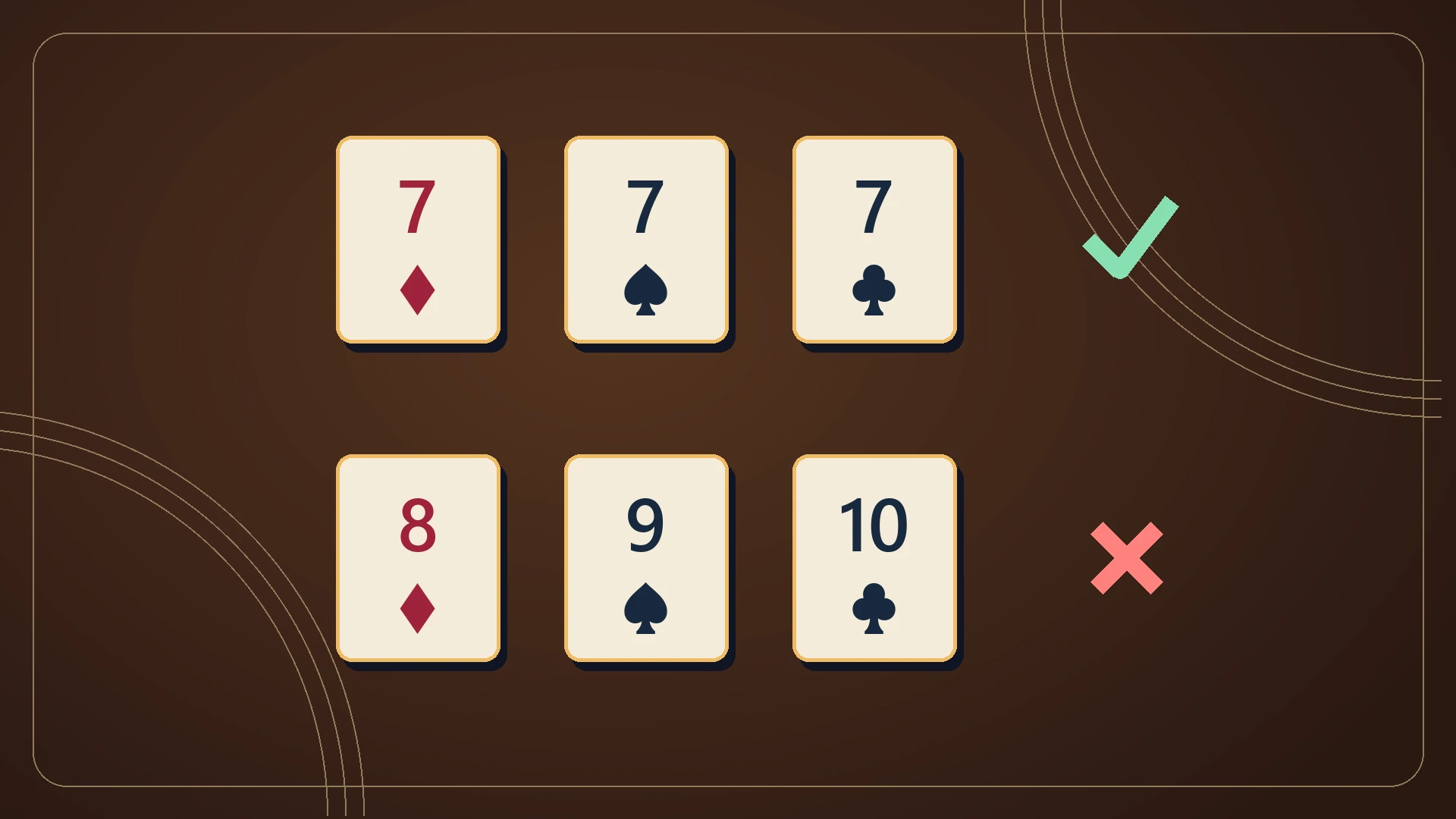
Three sevens beat a mixed-suit 8-9-10 sequence. Check how the table orders ace-high and ace-low sequences and settles equal hands. Some variants add wild cards or reverse which hands are desirable.
Follow the money before choosing blind or seen
Players usually contribute a boot to seed the pot before the deal. The current stake determines the minimum to continue. A player who has looked at their hand is seen. Seen play can cost more to continue than blind play under the same table rules. The information has a price, and the published blind/seen schedule tells you what it is. Packing gives up the hand and any chips already in the pot.
Understand a show and a sideshow
A show reveals the final eligible hands under the table’s conditions. Some versions also allow a private sideshow between eligible seen players before only two are left. It can have a cost and can be declined. Confirm who may request it and what happens on a tie before counting it as an available option.
Distinguish a player table from dealer-style variants
In the player game, you are comparing hands and decisions with other players. Some casino adaptations use fixed side wagers or compare designated hands against posted payouts. Read the precise hand ranks and costs for the version you are playing. Unlike standard Hold’em, the classic game has no shared board to improve your three cards.