Best Of
10 Best Games Like Against the Storm
Explore ten games like Against the Storm for settlement building, resource pressure and meaningful progression, with clear differences in structure and scale.

 Add Gaming.net to your preferred sources on Google
A settlement starts to feel promising, then the next shortage explains what you forgot to plan. Against the Storm makes that cycle unusually satisfying, and these ten games offer other reasons to rethink a workshop, a route or the whole town. Some keep the fresh-start structure; others let you stay with one place for a long time. Choose around whether you want a new beginning or more room to finish the project you already started.
Looking for somewhere to start?
- Frostpunk 2 for survival pressure and political decisions.
- Timberborn for engineering around changing water.
- dotAGE for turn-based settlement runs.
10. Foundation
Best for growing a medieval town organically · PC · Single-player
Foundation gives you a medieval settlement and lets its inhabitants’ daily lives become the ongoing story. There is no central hero pulling attention away from the town. A thriving market or an inconvenient supply route can be enough to shape what you spend the next session trying to improve.
Production chains support growth, while paths and the layout encourage a more organic town than a rigid grid suggests. Watching where people go helps you understand whether a district actually works. Planning still matters, even when the result looks as though it developed naturally.
The connection to Against the Storm is making a settlement capable of supporting itself. The difference is having a persistent place to refine instead of regularly moving on. It suits players who wanted more time with a successful town, especially when the way a neighborhood looks matters alongside what its workshops produce.
9. Kingdoms and Castles
Best for a readable city with external threats · PC · Single-player
A small settlement grows toward a kingdom in Kingdoms and Castles, provided ordinary life can survive interruptions from raiders and dragons. That simple situation gives walls a purpose without needing an elaborate campaign plot. The town’s visible development supplies the sense of history you are trying to protect.
Food, homes and production create a readable management loop. Fitting another neighborhood within the defenses can expose a disagreement between an efficient layout and a safe one. External threats add pressure to those decisions, so a good harvest does not settle every concern.
This is an accessible alternative when you want resource planning with consequences you can see. It focuses on looking after one developing kingdom rather than completing a series of roguelite settlements. If Against the Storm made you enjoy solving the town’s next practical problem, the clear needs here provide another inviting starting point.
8. dotAGE
Best for turn-based decisions with run structure · PC · Single-player
An elder’s foreknowledge frames dotAGE’s village as a community trying to prepare for disasters. The danger gives everyday assignments a larger purpose: a comfortable present is not much use if nobody has planned for what follows. Each run lets that basic situation produce a different set of pressures.
Worker assignments unfold through turns, giving you space to think before the next consequence arrives. Events and procedural variation make a familiar plan unreliable without making it useless. Small pixel-art citizens can demand some fairly uncomfortable trade-offs when the available labor will not cover every need.
It is one of the closer structural matches to Against the Storm, with another village to try after the current attempt. The turn-based pace is the useful distinction. Players who enjoy weighing difficult choices but dislike a continuously advancing simulation can take their time here without expecting the village’s problems to become simple.
7. Settlement Survival
Best for production chains with long-term growth · PC · Single-player
Settlement Survival begins with people who need a viable new home. Events and environmental pressures complicate that straightforward aim, while the town’s growth supplies the continuing narrative. The important question is what sort of community your decisions can keep functioning, rather than which scripted hero reaches an ending.
Food, population and production connect through chains that become more demanding as you expand. A workshop may require investment several steps earlier in the economy before it can operate reliably. New housing helps only when enough work and supplies exist to support the people who move in.
This is for players who wanted to keep polishing an Against the Storm settlement after meeting its objective. You build a persistent town and work through longer stages of development. The pleasure comes from making a fragile arrangement dependable, then finding out whether it can sustain the next round of growth.
6. Oxygen Not Included
Best for understanding a colony’s physical systems · PC · Single-player
Oxygen Not Included strands a group of duplicants inside an asteroid with limited resources and no comfortable town waiting above them. Their survival gives the engineering an immediate purpose. There are wider mysteries to uncover, but breathable air deserves attention before most of them.
Heat, liquids and gases interact with the colony you build. A machine that solves one problem can create a temperature issue in the next room, while the colonists live inside every consequence of the design. Experimenting and observing are therefore everyday management tools, not simply ways to recover after something breaks.
It is the more technical alternative for Against the Storm players who like understanding why a system works. Individual colonists add a human scale to that complexity. If tracing a failure back through pipes and rooms sounds rewarding, the game offers problems worth investigating; if it sounds like unwanted homework, another town on this list may be a better fit.
5. Farthest Frontier
Best for a settlement that must support its people · PC · Single-player
A group of settlers establishes a frontier community in Farthest Frontier, with survival dependent on making the land support ordinary life. Their need for food, shelter, goods and protection supplies the direction. The settlement becomes the subject, rather than a backdrop to a separate adventurer’s story.
Farming, production and transport depend on the people available to do the work. Moving a field can change what reaches storage, and expanding too quickly can reveal a shortage elsewhere. Growth is a continuing project, with practical choices about land and supply routes reaching across the economy.
Choose it when Against the Storm’s resource problems were most satisfying just as the settlement ended. Here you can stay and see what those solutions enable later. The appeal is developing a place that lasts, with enough production detail to make a thriving neighborhood feel like something you have genuinely supported.
4. Songs of Syx
Best for a city that can grow beyond a village · PC · Single-player
Songs of Syx places your settlement within a fantasy world of different peoples, rival powers and historical tensions. A small beginning can grow into a city with ambitions far beyond its first workshop. That rise supplies the campaign, while the surrounding world gives expansion something to contend with.
Production and living conditions become more complicated as the population grows. Different groups have needs you cannot satisfy by endlessly copying the first successful neighborhood. The widening scale asks you to reconsider what works rather than merely make more of it.
It shares Against the Storm’s interest in an economy shaped around its inhabitants, but follows it over a much longer undertaking. This is the alternative when you want the view to keep widening instead of resetting. Seeing a handful of residents become a large society is the payoff, with management problems growing alongside the achievement.
3. RimWorld
Best for settlers whose problems become the story · PC · Single-player
RimWorld begins with people trying to survive and establish a life on a distant world. Who those people are matters as much as where they settle. Their injuries, relationships and reactions turn events into a particular colony’s history, rather than steps in a fixed campaign.
You arrange work, shelter and supplies while storyteller systems introduce pressure. A reliable worker’s injury can expose a weakness in yesterday’s careful plan, and a social problem may become more urgent than a new building. Familiar starting arrangements can therefore produce very different colonies.
For Against the Storm players, the distinctive appeal is that the settlers themselves keep changing the problem. A neat production system is satisfying, but an unexpected recovery can be more memorable. The base game provides a substantial starting point; expansions add separate systems, rather than being requirements for this recommendation.
2. Timberborn
Best for planning around water and terrain · PC · Single-player
Humanity has disappeared in Timberborn, leaving beavers to build a civilization that can survive the landscape left behind. Their industry gives the setting a playful character without removing the practical stakes. Water is not scenery here; the colony’s relationship with it drives much of what happens next.
Dams, channels and storage let you prepare for changing conditions. Elevation and vertical construction create ways to use a site that ordinary ground-level planning would miss. Different beaver factions provide distinct tools, encouraging another approach to the same environmental problem.
It is a strong match when Against the Storm’s pressure made engineering feel purposeful. You keep a persistent colony rather than undertake separate expeditions, giving larger landscape projects time to develop. The rewarding moment is seeing an earlier piece of preparation become essential when conditions change, especially if you were not entirely confident it would work.
1. Frostpunk 2
Best for growth that creates political pressure · PC · Single-player
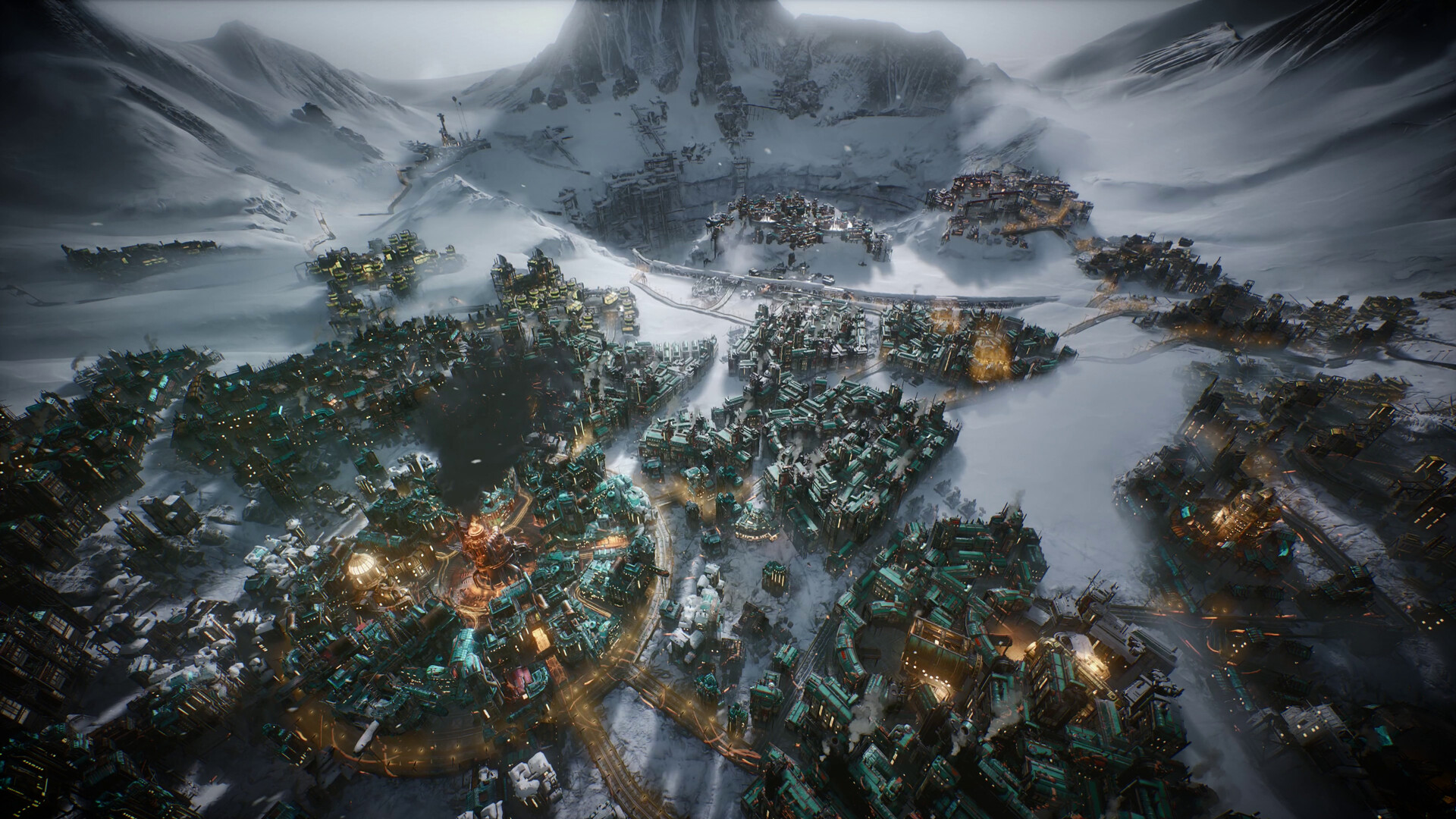
Decades after the original Frostpunk’s crisis, a new steward inherits a city that has survived long enough to argue over its future. Frostpunk 2 makes that disagreement central to the setting. Keeping people alive remains essential, but it no longer answers what kind of society they should inhabit.
District-scale development links resources to political demands. Factions and negotiation complicate expansion, so supplying a new district does not guarantee agreement about it. The story provides one structure for those decisions, while Utopia Builder offers another way to test a city’s direction.
It leads this list for the pressure created when a workable economy meets competing human priorities. This is more than Against the Storm transferred into colder weather: politics takes a substantial share of the work. Choose it if a successful settlement feels most interesting at the point when its people begin asking for different things.
Which should you play next?
Take Frostpunk 2 for a city whose people have competing plans, Timberborn for environmental engineering or dotAGE for thoughtful village runs. RimWorld puts the settlers’ own lives at the center. Our Best Historical Games on PC guide offers more historical building settings, while Best Games Like InZOI brings the management back down to a more domestic scale.