Reviews
Just Dance Series Review (Xbox, PlayStation, Switch & PC)


Just Dance illustrates the fact that you don’t need to be an acrobat to be able to bust a move and break a sweat. It doesn’t force you to be anything other than willing, nor does it make a habit of humiliating you whenever you slip and fall, either. No, Just Dance is far less complicated than your average Zumba class; it’s a breath of fresh air—a casual Sunday afternoon workout that couldn’t care less if you have what it takes to conquer the platform, or if you just want to flick a wrist and accumulate a handful of points along the way. It isn’t a game-game, but rather, an exercise to help you shed a few calories and keep in shape. And what better song is there to lose weight to than a good old-fashioned Bluey ballad? Don’t ask — just dance.
Here’s the downside to Just Dance: it has a significant number of iterations, most of which you would often struggle to differentiate between even on the clearest of days. It’s the FIFA curse, I think; it releases once a year, yet rarely ever changes its format or makes an effort to broaden the scope to elevate its signature elements. In layman’s terms, it’s a cash cow with a whole lot of milk. To say that this is a shameful thing wouldn’t be true, but to be perfectly clear, Just Dance has a lot of installments, most of which orbit the same design and gameplay styles. But, don’t let that fool you into thinking that it’s a bad series; on the contrary, it’s a great series with a huge fan base and troves upon troves of excellent soundtracks. The question is, should you go out of your way to purchase every chapter in the series, or is one enough to keep you busy for the long haul? Let’s talk.
Always Moving
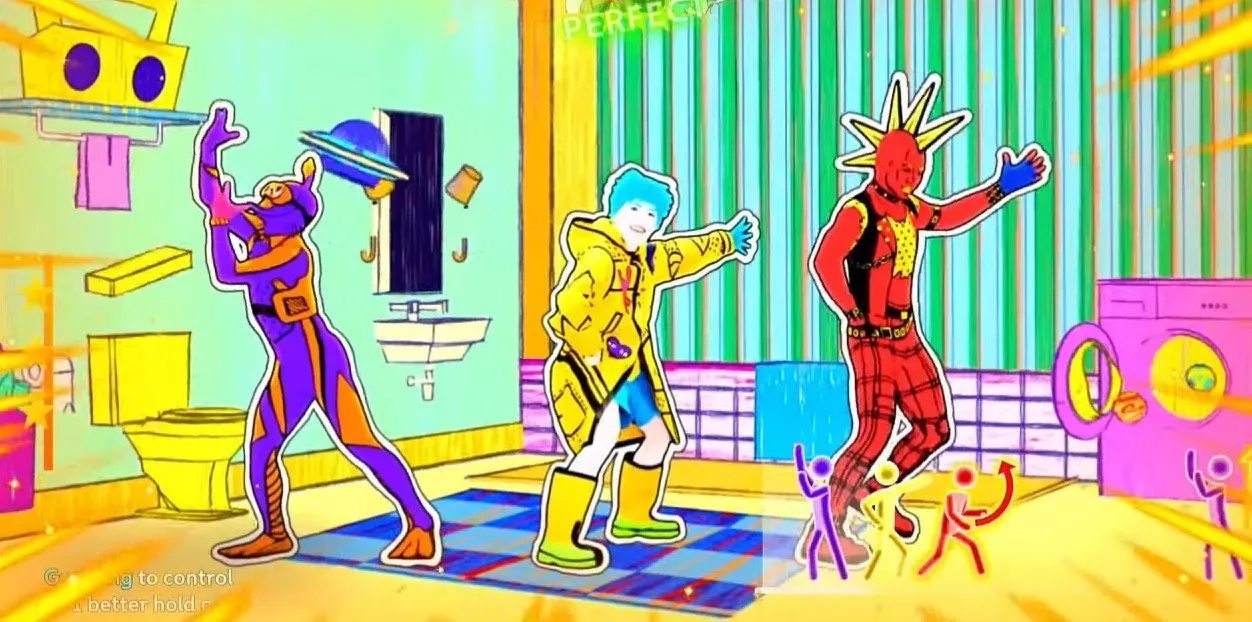
Just Dance isn’t a series that you need to explain, as it does, rather simply, wear its heart on its sleeve and its purpose on its forehead. Similar to, say, Dance Central, the idea is that you utilize the camera on your smartphone to trace your movements, and participate in one of several dance routines on a much larger screen for a shot at accruing points. As a routine progresses, you earn said points by mirroring an on-screen dancer, as well as compliments for whenever you develop a streak and follow a pattern. It’s dancing; it doesn’t need to be any more complicated than that. That said, if it didn’t have “points” to obtain, it wouldn’t be a game, as such; in fact, it would be no different than watching a tutorial from home and simply copying the actions. But, we can turn a blind eye to its tendency to gamify the process. If anything, having a point system makes it a lot more enticing; it adds replay value and a reason to retry each routine.
If you can ignore the fact that Just Dance is, and unapologetically so, a series that coughs up new installments for the sake of earning a few extra bucks rather than just pooling all of its tracks with just the one hub, then you will find yourself pleasantly surprised with the general experience and the quality that each new score brings to the stage. Aside from having a sizable catalog of hits and favorable songs, each routine also contains a unique visual style and a great deal of dynamic moves, some of which require you to think outside of the box, some of which involve little more than shaking a leg or two to an oftentimes easy to follow, by-the-numbers beat. With an XP system and a stepping stone format that allows you to unlock more tracks and challenges, Just Dance also ensures that you have something fresh to unlock. It’s a super simple incentive, but given the concept, it works incredibly well here.

While you could argue that Just Dance isn’t in receipt of anything exceptional, the general consensus here is that, due to popular demand, Ubisoft has every right to blaze an onward trail and continue forking out new iterations for its beloved series. And so it should, because at the end of the day, while it could quite easily cram all of its content into the one neatly packed vessel, Just Dance always provides a lot of bang for your buck. It’s a comfort thing, in that it isn’t something that you would typically turn to to feel amazed, but rather, to feel lost in the motion of it all. And if there’s anything at all that Just Dance serves on a silver platter, it’s an excuse to move.
Verdict

Just Dance might have more stamina than most cardio-based dance franchises, but that isn’t to say that it has the flexibility to be more than a seasoned series with a god complex and a thirst for rehashing the same routines over and over again. Don’t get me wrong, it certainly makes a great effort to introduce fresh soundtracks, visuals, and technical polish to the stage with each passing installment, but at the end of the day, what you see is what you get: a timeline of entries that would’ve been more than capable of filling just the one central nexus as opposed to annual releases. DLC would have been fine, yet Ubisoft clearly has this awful habit of repackaging the same content and slapping a new sticker on it in the hopes that nobody will notice.
With all of the above said, Just Dance is still a solid choice for those who enjoy beginner-friendly workout sessions that incorporate gamification into the core process. Alongside a time-appropriate conveyor belt of soundtracks and routines, the series has also come clean with a lot of great audiovisual elements and aesthetics that make you feel like you’re a small part of the clique. Granted, it doesn’t make you feel like the “‘main character” in a theatrical performance, but it does offer a lot of interactive aspects that help you to understand and ultimately get with the characters. It might be that you wind up feeling like an incompetent fool most of the time, but that’s half the fun, weirdly. It’s dancing; it doesn’t have to be technical, let alone graceful. Thankfully, it is a lot of fun, and not to mention a much greater alternative to your average gym workout. Frankly, we can thank Ubisoft’s habit of gamifying the routine for that.
Just Dance Series Review (Xbox, PlayStation, Switch & PC)
Breaking a Sweat
Just Dance might have more stamina than most cardio-based dance franchises, but that isn’t to say that it has the flexibility to be more than a seasoned series with a god complex and a thirst for rehashing the same routines over and over again. Don’t get me wrong, it certainly makes a great effort to introduce fresh soundtracks, visuals, and technical polish to the stage with each passing installment, but at the end of the day, what you see is what you get: a timeline of entries that would’ve been more than capable of filling just the one central nexus as opposed to annual releases.



