-
around the world
France’s Love Affair with Roulette: From Royalty to the Modern Casino
France was the birthplace of roulette, at a time when gambling was in high demand among the aristocracy and... -
around the world
Tarot and Triumphs: The Italian Origins of Card Gambling
A product of the Renaissance in Italy, Tarot is a game that is wrapped in mysticism and chance, though it is... -
Pop Culture
Lady Luck in Literature: How Authors Portray Gambling
Gambling has been documented and storied in practically all forms of arts and mediums. We have songs about... -
around the world
Tajikistan’s Buzkashi: The High-Stakes Horseback Game
Buzkashi began among nomadic Central Asian tribes and is a game like no other. Some would call it barbaric,... -
around the world
Baccarat: James Bond’s Game of Choice and Its European Origins
What is James Bond's favorite game of chance? If you ask anyone who watched the Daniel Craig James Bond...
around the world
The Evolution of Gambling in Russia: From Soviet Bans to Modern Casinos

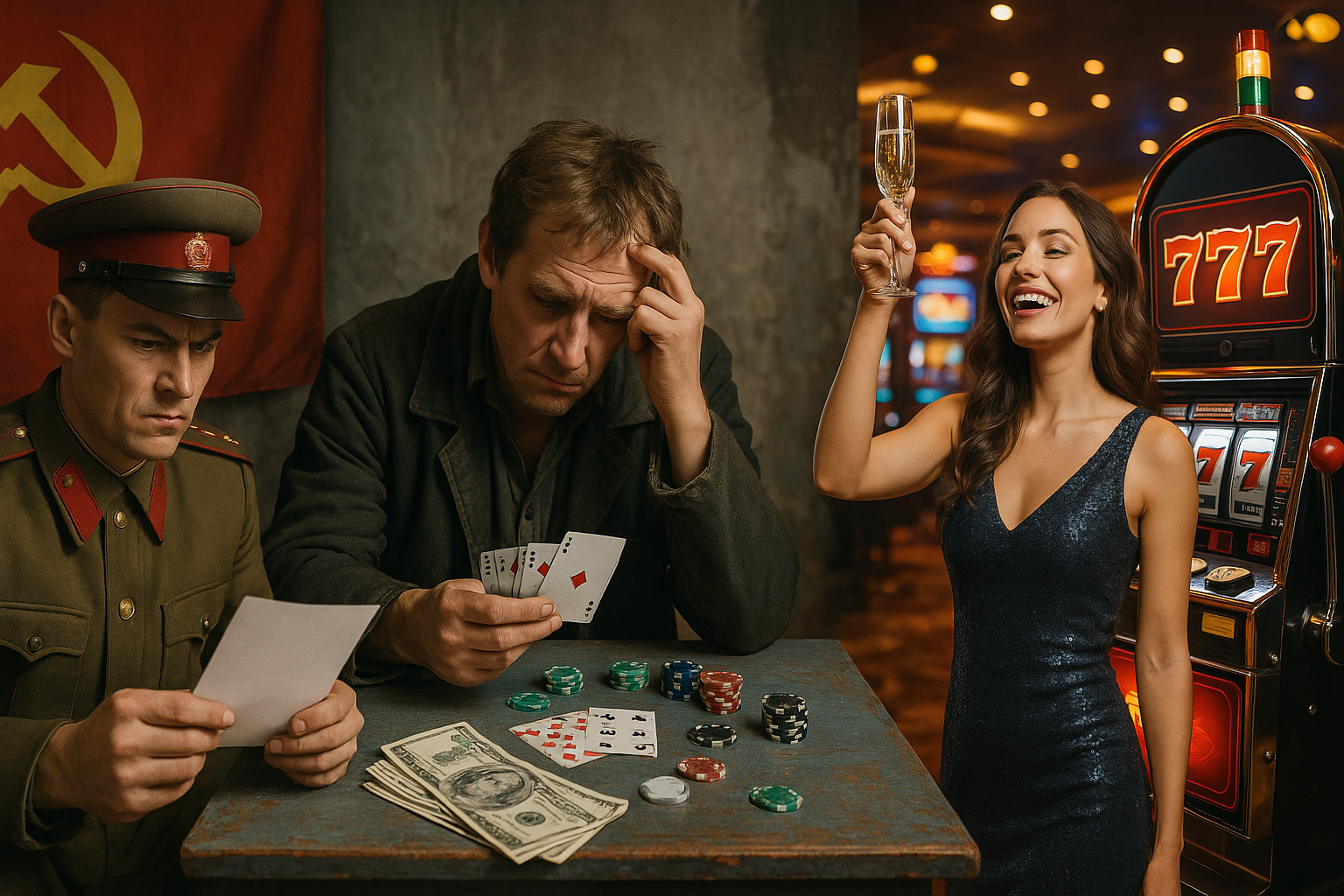
Russia has always had a strange fascination with gambling, and the legal stance on gambling has switched numerous times over the different eras of modern Russian history. The appetite for gambling is certainly palpable, and while it was shunned in the Soviet Union, underground gambling dens remained immensely popular. Famous Russian writers, including Fyodor Dostoyevsky and Nikolay Nekrasov, were known to frequent gambling halls and it definitely inspired their works too.
Yet Russia’s relationship with casinos became highly paradoxical in the Soviet Union. On the one hand, these were the entertainment devices of the bourgeoisie. Gambling could be a type of vanity that only the aristocracy and Tsarist sympathisers would dabble in. Skip forward to the present day, and you can visit tremendous casino resorts in Vladivostok or Sochi. But gambling never really left Russia, even when it was outright prohibited.
Earliest Gambling Legislation in Russia
While gambling was mentioned in the 1551 Stoglav, a collective of ecclesiastic laws made by the Russian Church, the first state official laws emerged in the 17th and 18th centuries. Playing cards, which had most likely reached Russia through Poland or Germany, first came into Russia in the 17th century. But by 1649, they were banned, with gamblers receiving lashes for indulging in the “thief’s crimes”. But by the time of Peter the Great (ruled from 1682 to 1725), these bans fell into obscurity.
Peter I, or Peter the Great, was devoted to modernising Russia to meet Western European standards of the time. He was less restrictive of gambling, but enforced laws to prevent it from creating any disorder. As a result, gambling houses and games flourished in Russia. After him, Catherine the Great was the next big figure to embellish the Russian gambling scene. She carried on where Peter the Great left off, modernising the country, building cities on new lands, and revolutionising Russian laws. She also launched the first official state lottery, in 1764.
By the 19th century, Russia had its own ruletka (roulette), dice games, lottery, and special card games. The latter used Russian card decks – Durak (36 cards), and Preferans/Piquet (32 cards). Durak came around in the 18th century, whereas Preferans was popularised later, in the 1830s.

Gambling in Russian Literary Tradition
The gambling traditions in Russia were not restricted to the upper classes or confined to palatial courts for the aristocracy. There were games of chance for people of all backgrounds and financial means. Gambling even caught the eye of many of Russia’s most influential figures of the time. Fyodor Dostoyevsky was a well known gambler, and his semi-autobiographical novel, The Gambler (1866) was actually written to pay off a gambling debt. The novel explores the themes of gambling fallacies and the spiral into gambling addiction. His portrait of gambling, and specifically the psychology of losing was so intimate and layered, it continues to serve as a moral for gamblers.
But Dostoyevsky was not the only person to write gambling inspired books. Figures like Anton Chekhov, Alexandre Pushkin, and Leo Tolstoy were also known to dabble in gambling, and use it as a metaphor for fate or folly. Nikolay Nekrasov, a giant in Russian poetry, viewed gambling in the underclasses of society. Drawing on his own experiences, it painted a realistic view of gambling in 19th century Russia.
Post 1917 and Early Soviet Gambling Views
Gambling was taxed and regulated in Tsarist Russia, but it was not suppressed. The Imperial Card Factory in Aleksandrovo (St Petersburg), produced Russian playing cards and they were widely available. Casinos and gaming halls were available in abundance. Not just for the wealthier classes, but there were gambling games for the working classes too.
But Russian society underwent a monumental change with the two revolutions in 1917. The February Revolution ousted the Tsar and forced him to abdicate. Then, that October, the second revolution saw the Bolsheviks, led by Vladimir Lenin, take power, with the Tsar and his family executed. There was no going back.
The Bolsheviks scrapped the monarchy and established the Russian Socialist Federative Soviet Republic. Later, the Soviet Union. They adopted Marxist ideals aimed at abolishing the class system and giving workers control over the means of production. And they viewed gambling as a vice of the upper classes, who were deemed idle and wasteful. In 1917 and 1918, the new regime banned gambling establishments and lotteries. But by 1921, the authorities softened their stance on gambling.
To create some revenue for the state, and alleviate the famine of 1921-22, the All-Russian Lottery was launched. Gaming houses gradually reappeared, and, in 1922, The Splendid Palace opened in Petrograd. It was the Soviet Union’s first official casino. The casino, and other gaming houses, featured popular games from before the Revolution. These included the likes of baccarat, chemin de fer, roulette, and various dice games like craps.

Outright Ban and Gambling Goes Underground
The decision to open casinos and serve people games of chance in the Soviet Union was suspect to say the least. Sure, the state took 95% of the gambling revenue and the idea was to use it for social development projects or industrializing the country. But, it just didn’t fit in with the Bolshevik values and it was just not a part of the true spirit of the working proletariat. In 1927, the People’s Commissar for Internal Affairs changed its stance on gambling. By 1928, the Soviet State made an outright ban on gambling and games of chance. The casinos shut, the operators were forced to stop, and finally the state lottery was shut.
But that was not the end to gambling in the Soviet Union. Illegal underground casinos became the source for games of chance in the USSR. These casinos could smuggle in roulette wheels, improvise gaming tables, and source Western cards to play games like poker. They were called “Katrans”, and were generally located in major cities or popular resorts within the USSR. The authorities did know about some of these venues, but they allowed them to keep running their business. Because the owners would be controlled by the KGB, and they could use the dens to lure spies or collect information.
The illegal gambling venues in the Soviet Union were never too far behind the West, despite the strict regulations. The USSR got its first slot machines in the early 1970s, and by the end of the 1980s, slot halls were widespread at the bigger Soviet resorts. Citizens of the USSR could also form pools and informal card games or gambling ventures within their own social groups. So long as they didn’t do anything to attract attention or raise any suspicion, the gambling games continued.
Post Soviet Gambling Boom in Russia
The fall of the Berlin Wall, and the revolutions of 1989 were really the beginning of the end for the Soviet Union. Mikhail Gorbachev, the General Secretary of the Communist Party, formally dissolved the Soviet Union as a sovereign state on the 26th of December, 1991. Boris Yeltsin was elected the president of the Russian Soviet Federative Socialist Republic and began the transition of Russia into a capitalist market economy. Gambling laws were practically lifted overnight, and suddenly the industry boomed.
Casinos, slots halls and sports betting shops popped up all over the country. By 2005, Moscow had nearly 60 landbasd casinos and over 70 thousand slot machines. The Federal Agency for Sports and Body Culture, now the Ministry of Sports (Minsport), became the government agency responsible for issuing gaming licences in the country. From 2002 to 2005, the agency issued over 4,000 licences to casinos and slot halls.
Federal Reforms and Russia’s Gambling Zones
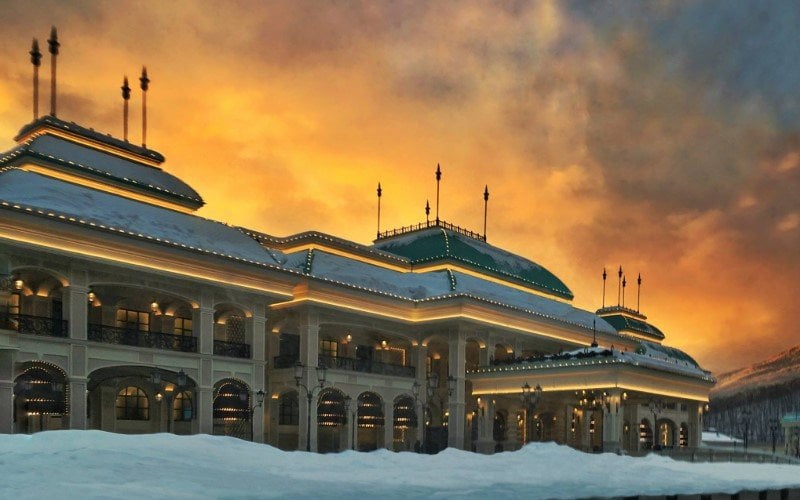
However, in 2007, President Vladimir Putin proposed to create remote gambling zones, effectively limiting venues to designated areas. These also applied to online casinos, and the laws came into full effect in 2009. The government banned gambling nearly everywhere across Russia, allowing it only in four specifically designated zones. Today, only casino resorts in the Altai Republic, Kaliningrad, Sochi, and Artyom (near Vladivostok) are permitted to offer gambling games.
Lotteries are still open and available everywhere, and are a state monopoly. Sports betting, which also became prominent in the early 2000s, is not limited to the zones. Operators and players alike need to pay gambling tax. And the latter need to pay personal income taxes on their winnings.
As a market that is open, but constrained, Russia is not short of illegal gambling spots and players gambling at unregulated sites. A large part of the unregulated gambling scene is on companies that are licensed in Curacao or similar jurisdictions. The lawmakers have cracked down on these sites, but they still persist in the Russian gambling scene.
How Russia Stands with Gambling Today
The current state of affairs in Russia are certainly more open than the USSR on paper, but there are many similarities to the underground gambling back then too. Effectively monopolizing the gambling in Russia, and only assigning permission to select venues, forced many operators to go online. A lot of the gambling providers have also been either forced to move abroad or partner with foreign operators. And their products, while targeting Russians, are not legally recognised in the country.
There are only a handful of legal casinos where you could go to play a game of blackjack or spin the reels on a slot machine. Calling them casinos is a bit of an understatement; they are more like the casino resorts you would find in Las Vegas or Atlantic City.
They are resorts, aimed at locals and also at boosting Russia’s tourism sector. But by cutting off the online gambling and restricting local casinos or slots halls, a major part of the industry is left hanging. The casual players or frequent casino gamers are not really represented in the system.
And as opposed to looking into new ways to introduce a “soft launch” for online casino gaming, lawmakers seem more likely to clamp down on online gambling. So, to summarise, gambling is legal in Russia, but heavily restricted. It is, in some ways, freer than the Soviet times, but in other ways it is virtually the same. The paradoxical nature of gambling legislation in Russia is not a new thing. But neither is the demand for these kinds of games.