Reviews
Best Served Cold Review (PC)


If you’ve ever wondered what it’s like to solve a murder using nothing but a cocktail shaker, a charming smile, and a slightly illegal speakeasy as your base of operations, Best Served Cold might be your new obsession. Equal parts murder mystery, dating sim, and visual novel, this game pours a stiff drink of noir storytelling, then twists it with a dash of social deduction and surprisingly cozy ambiance. It’s rare to find a detective game that sets its mysteries behind a bar counter, making this premise immediately intriguing.
Fans of the video game NIOR will notice immediate parallels. Both games emphasize narrative-driven investigations where character interaction and subtle deduction play critical roles. Best Served Cold focuses heavily on atmosphere, using moody settings and detailed character portraits to immerse players deeply into its world. Both games also challenge the player to navigate complex interpersonal dynamics, requiring careful dialogue choices and nuanced emotional insight.
The appeal in Best Served Cold lies not just in solving puzzles but in unraveling mysteries through intimate conversations. Players accustomed layered storytelling and rich dialogue will find themselves at home here. The game cleverly adopts familiar tension and the art of indirect interrogation, drawing truths from characters subtly rather than through direct confrontation. Yet, Best Served Cold sets itself apart with its unique cocktail-based interrogation system, adding a playful yet sophisticated layer of strategy that distinguishes it from other titles in the genre.
Now, join me in this Best Served Cold review as we dissect what it has to offer.
A Booze-Soaked Murder Mystery
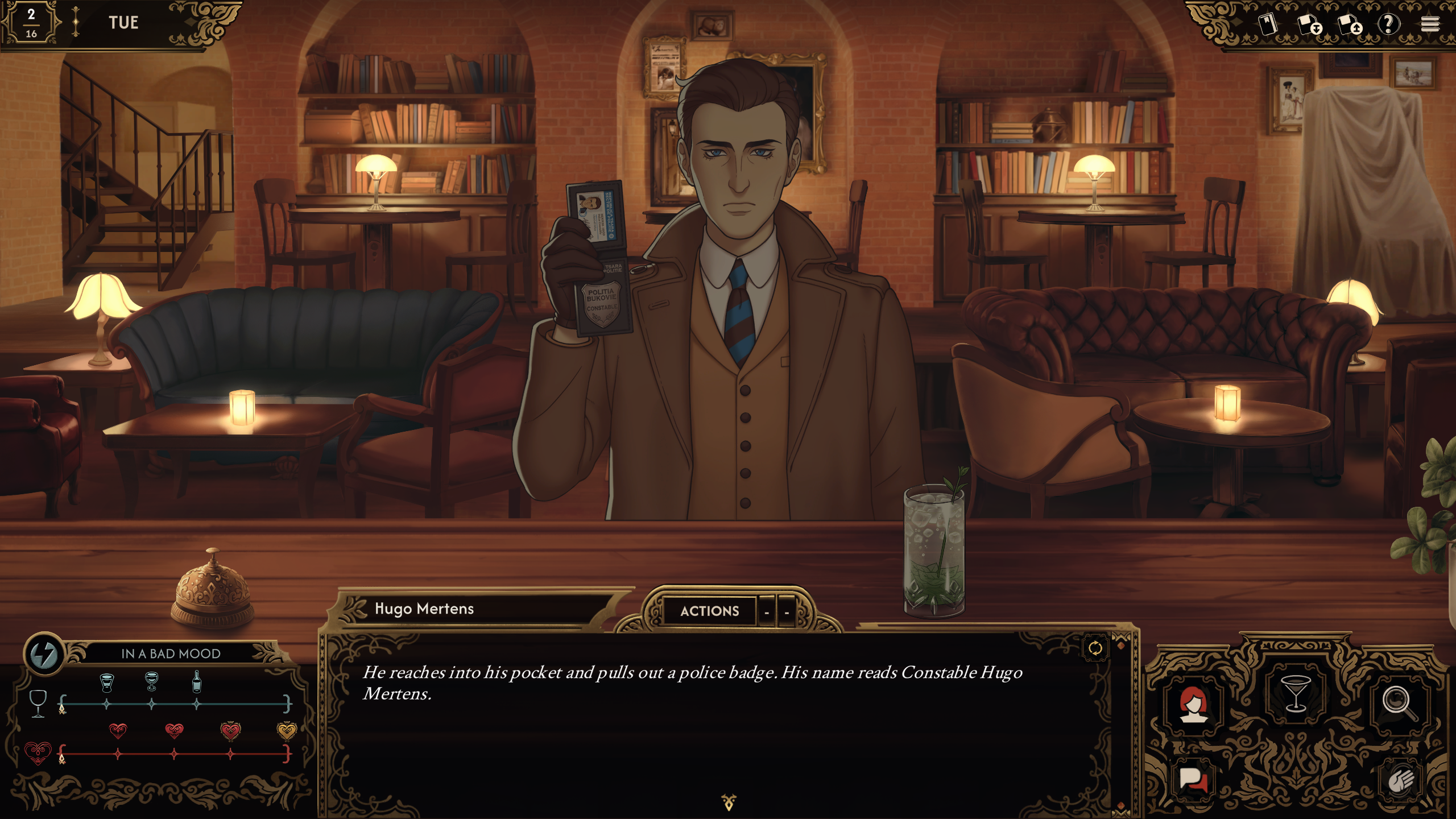
Set in the fictional Eastern European-inspired city of Bukovie, Best Served Cold opens against a backdrop of prohibition, political tension, and a series of murders targeting speakeasy patrons. You step into the shoes of an unnamed bartender who becomes an unwilling informant for a shadowy detective.
After mixing a cocktail to an awkward patron who you later come to know as Hugo Mertens, you soon discover he’s not just any patron. He’s a detective. Hugo threatens to shut your bar down due to its illegal status. Following a tense conversation filled with pointed questions, Hugo makes it clear that cooperation is your only option if you want to keep your bar open and maintain your reformed citizen status.
Hugo reveals he’s working on the case of Natalia Reed’s death and offers a stark ultimatum, help him solve the murder within two weeks, or risk losing everything. Under the pressure of blackmail and the promise of Hugo’s potential promotion, you reluctantly agree to investigate murders occurring just outside your speakeasy doors.
But there’s a catch, your patrons double as your suspects, informants, and sometimes even your friends, or perhaps something more. Each night provides just one chance to coax information out of these characters. This unique mechanic transforms cocktail-making into a delicate dance of interrogation, where choosing the perfect drink at precisely the right strength can unlock secrets or shut conversations down entirely.
Stirred, Not Shaken

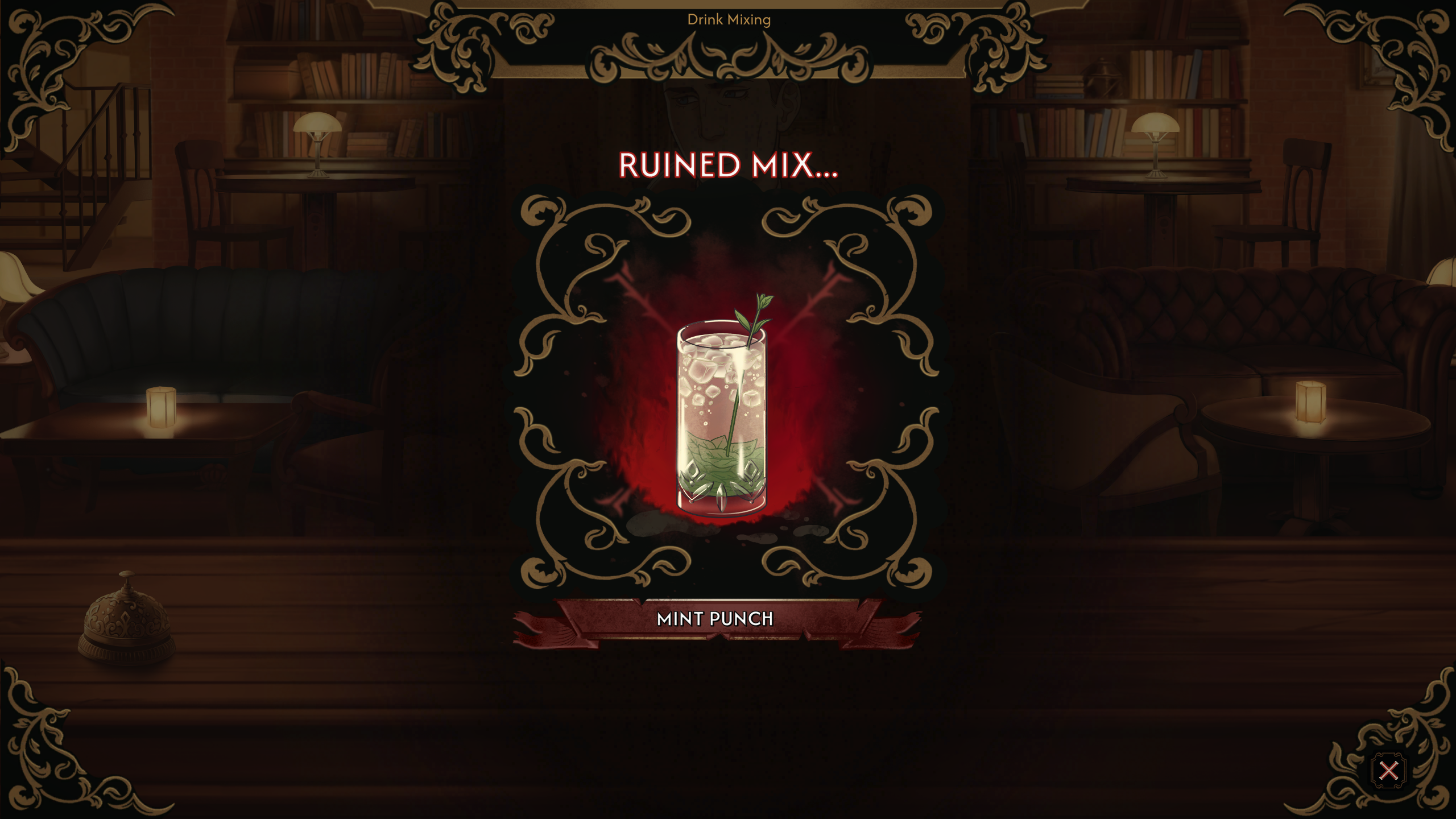
At first glance, the cocktail-making mini-game seems overly simplistic. Tracing patterns with your cursor to “mix” drinks appears straightforward, but beneath this apparent simplicity lies a sophisticated system. Characters reveal crucial clues only under specific emotional conditions; some become talkative when slightly annoyed, others shut down if they’re overly intoxicated, and still more need emotional familiarity before revealing sensitive information.
This layered mechanic becomes a compelling puzzle of emotional manipulation and intuition. Gauging mood, affection, and sobriety through visible cues adds depth to every interaction. With limited actions per conversation, your choices significantly impact the investigation’s direction. Mistakes quickly become costly, locking you out of vital clues until another night.
Over time, you recognize patterns. Certain patrons enjoy being challenged, others seek empathetic listening, and a select few guard their secrets closely, forcing you to patiently earn their trust one carefully prepared drink at a time.
The Nightcap Cast
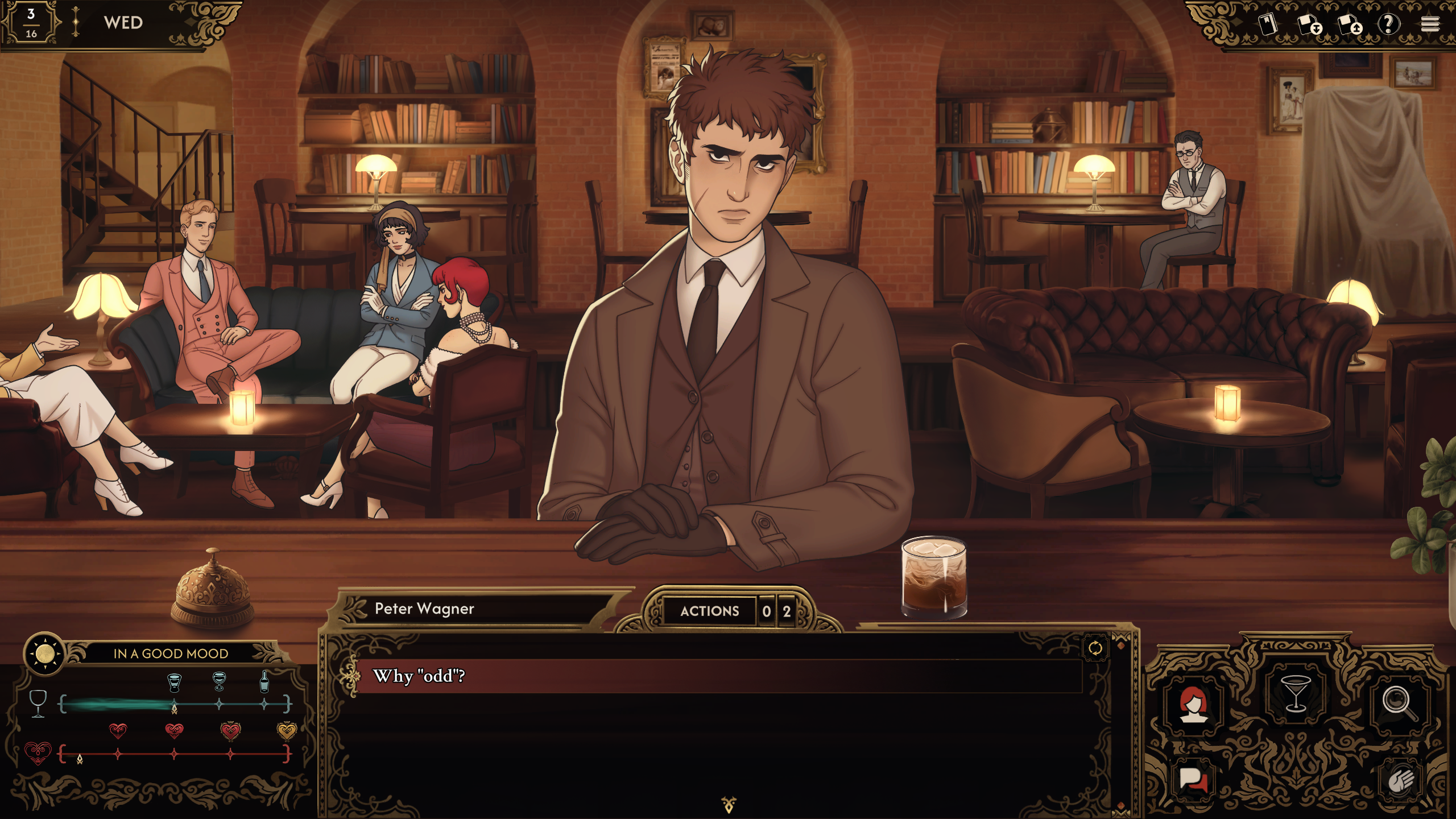
Best Served Cold’s greatest strength lies in its memorable cast. Initially presenting as standard noir archetypes, these characters gradually evolve into nuanced, fully-realized individuals. Through recurring visits, patrons grow more layered, displaying political views, personal histories, and vulnerabilities within the moody ambiance of your speakeasy.
Recurring patrons bring continuity and tension to each new case. Characters react differently depending on past interactions. Serve someone their favorite drink five nights in a row, and they may start opening up about their childhood trauma. Or, ignore someone too long and they might start avoiding your bar altogether.
Relationships evolve organically, and the game isn’t afraid to let affection lead to romantic tension sometimes unrequited, sometimes joyful. It’s rare to see emotional payoffs in detective games that feel this earned. By the time the last case rolled around, I genuinely cared what happened to people I once suspected of murder.
Mystery In Moderation
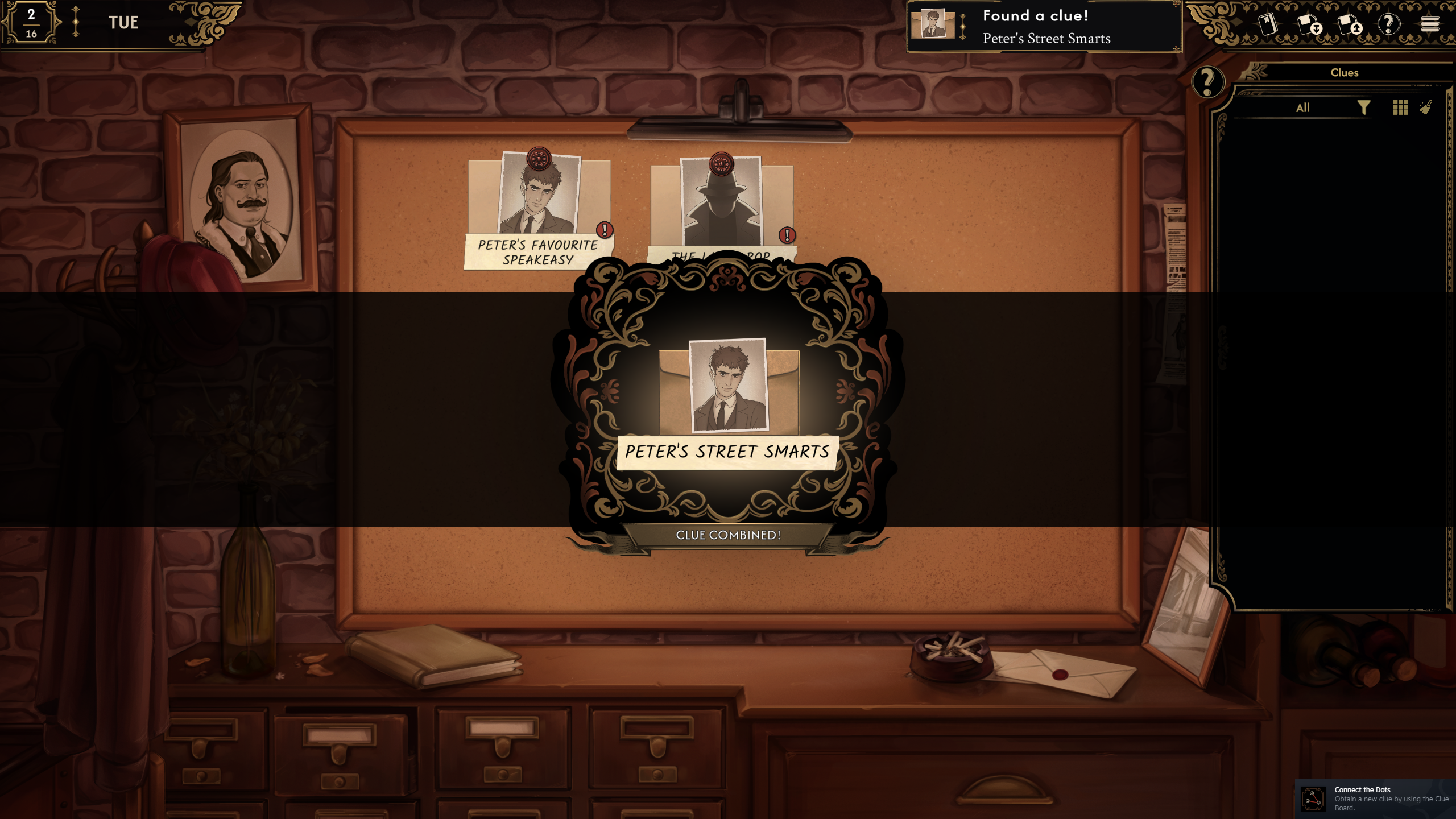
Each case unfolds methodically over a two-week cycle. Animated cutscenes provide brief glimpses of crimes, accompanied by vague suspect pools. Your task involves piecing together motive, method, and opportunity meticulously. However, the game demands precise deductions, sometimes excessively.
Even if your reasoning aligns perfectly with events, missing one specific clue or dialogue interaction can invalidate your entire deduction. This rigid checklist occasionally feels unfair, detracting slightly from an otherwise engaging puzzle system.
Despite this limitation, cases remain thoughtfully paced and satisfyingly intricate. Ambiguity keeps you constantly second-guessing, ensuring investigations stay challenging without relying on misleading red herrings.
Nevertheless, a more detailed aftermath following deductions would significantly enrich the experience. The final revelation often feels abruptly clinical, lacking dramatic confrontation or meaningful follow-up, especially disappointing given the richly developed cast.
Aesthetic Vibes & Audio Jazz
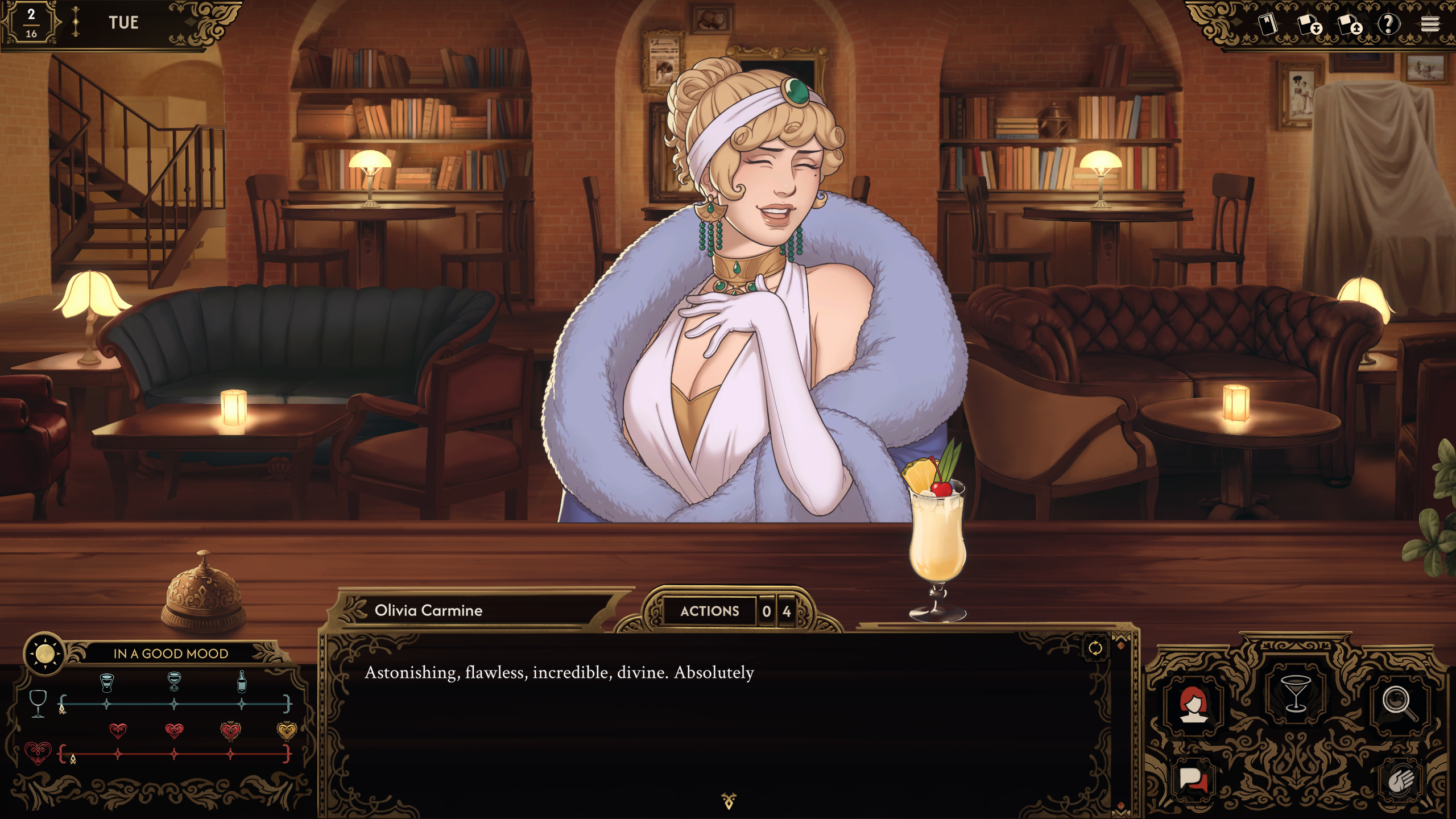
Though confined to your speakeasy, Bukovie feels vividly realized through meticulous atmospheric design and detailed storytelling. Art deco aesthetics, flickering candlelight, and smoky interiors perfectly capture the essence of noir, providing a tangible sense of time and place.
Complementing this visual style, the jazz-infused soundtrack initially enhances the game’s atmospheric charm. However, its repetitive nature becomes apparent midway through gameplay. Without character-specific themes or significant variations, the music eventually fades into background noise rather than enhancing emotional moments.
Technical polish also remains uneven. Occasional bugs like text formatting errors and character sprite inconsistencies disrupt immersion. One severe glitch nearly halted my progress during a critical final case, requiring a reload. Such technical shortcomings undermine the polished visual and narrative quality expected in an investigative experience reliant on clarity.
Cozy Chaos
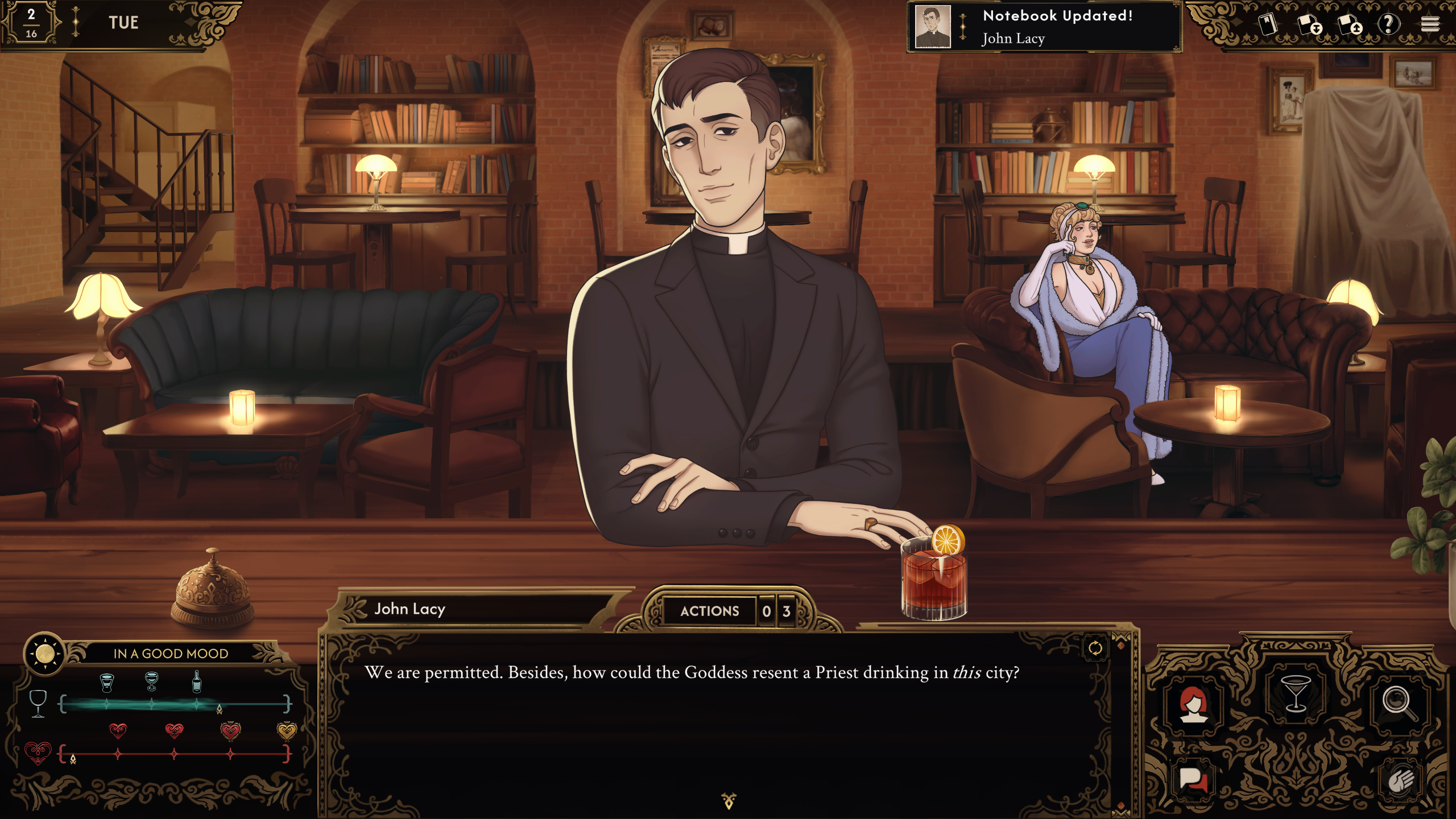
Despite revolving around murder, Best Served Cold emanates surprising warmth and coziness. Stakes remain personal rather than global, emphasizing emotional drama over adrenaline-fueled action. Thrills derive from subtle tension catching patrons in lies, recognizing deception through facial expressions, and mastering social nuances with careful cocktail crafting.
The blend of social simulation and detective elements provides consistent gratification. Solving each case feels rewarding, deepening your connections within Bukovie’s intimate community. Conversations become intricate puzzles, each solved interaction pulling you deeper into the emotional lives of your patrons.
A Few Missing Ingredients
While Best Served Cold already delivers a charming and engaging experience, there are a few areas that could help refine it further. The game would benefit from more interactive case conclusions that let players see the impact of their detective work through cutscenes or dramatic exchanges.
The deduction mechanics, although serviceable, can be a little too specific at times. Allowing for some flexibility in how players arrive at conclusions would make success feel more earned. Additional locations, even small ones outside the bar, would break up the visual monotony and make Bukovie feel more alive.
On the audio side, a wider variety of music cues or unique character themes would add depth to the ambiance. Similarly, a few patches to fix small bugs and formatting quirks would go a long way in maintaining immersion.
Finally, giving players the option to increase difficulty or limit clues could be a welcome challenge for those who want to test their sleuthing skills further. These are not dealbreakers, but small improvements that could turn a great game into something truly special.
Verdict

Best Served Cold isn’t revolutionary. It neither reinvents detective narratives nor drastically redefines visual novel mechanics. Yet, it achieves something uniquely compelling; it humanizes mystery storytelling profoundly. Your speakeasy transforms from a mere setting into a living stage for complex interactions, emotional connections, and subtle intrigue.
Despite noticeable shortcomings, occasional bugs, repetitive soundtrack, and rigid puzzle requirements, the strengths of the game, which goes for only $17.99 on Steam significantly outweigh its weaknesses. Charm, emotional depth, and richly detailed character interactions ultimately define its appeal. Players seeking a thoughtful, narrative-driven experience will find substantial value here.
Best Served Cold Review (PC)
A Cocktail Detective
Best Served Cold delivers a deeply personal detective journey, blending intrigue with emotional resonance masterfully. It invites players into a beautifully realized world where each interaction matters profoundly. If cozy detective experiences resonate with you, this game should not be missed. Pour yourself into Bukovie’s shadowy yet inviting world and discover why solving murders has never felt this emotionally rewarding.




