Reviews
Skate Story Review (Nintendo Switch 2, PS5 & PC)


Skate Story is not interested in making you feel powerful. From the moment you step onto its glassy board, it becomes clear that this is not a power fantasy in the Tony Hawk tradition. You play as a fragile demon made of glass and wire, skating through the underworld after striking a deal with the devil. Your goal is simple on paper and absurd in practice: eat the moon to get your soul back. Why the moon? What does it mean? Well, the game never gives you a clean answer, and it never intends to. Skate Story thrives on ambiguity.
Skate Story never lets you settle into certainty. It keeps players slightly off balance, emotionally and mechanically, like rolling downhill on rough pavement while chasing a light you can see but never quite touch. Right away, it asks something unusual of the player. It asks you to engage with the experience on its terms. If you are looking for a traditional skating game, you may feel confused or even annoyed. However, if you are willing to let go of expectations, Skate Story opens up into something far more personal and memorable. That said, let’s jump right into it.
Skating That Refuses to Feel Easy
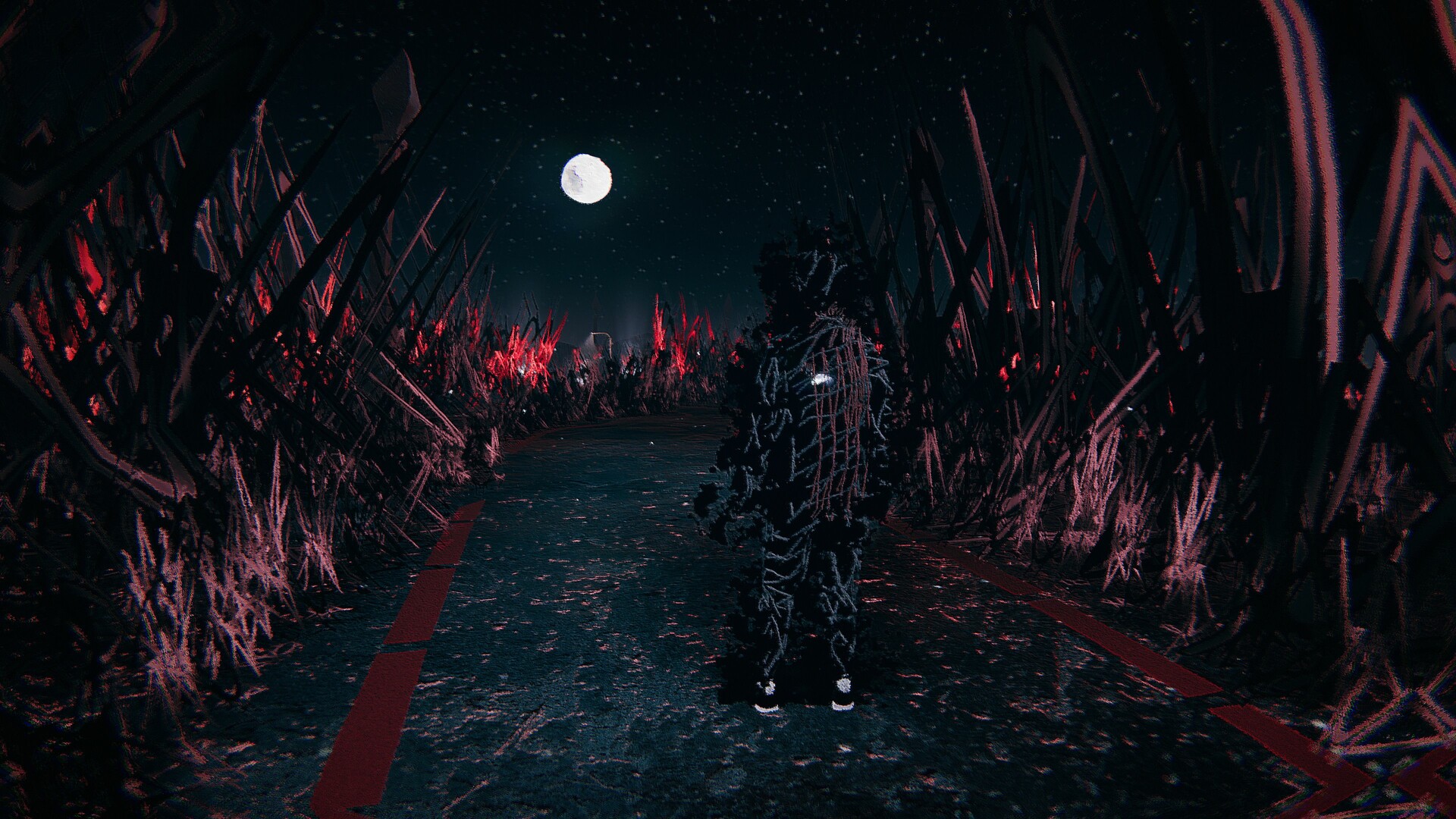
In most skating games, movement is designed to make you feel powerful almost immediately. You build speed without trying. Rails pull you in like magnets. Tricks flow into each other with very little effort. Surprisingly, Skate Story takes those expectations and calmly throws them away.
Here, skating feels fragile. Your character has weight, but not in a heroic, larger-than-life way. Every push, jump, and grind carries risk.o Of course, mistakes happen often, and timing matters far more than flash. Even landing basic tricks demands focus. Early on, this can feel frustrating, especially if your hands are trained by games that reward constant flow.
However, the more time you spend with Skate Story, the more its design starts to make sense. The game is not trying to make you feel skilled right away. Instead, it wants you to feel effort. It wants players to notice the work behind every clean moment. When you finally land a smooth line, it feels genuinely good because it was never guaranteed.
Additionally, Combos are shorter and more restrained by design. You are not launching across massive halfpipes or grinding rails that stretch forever. Instead, you are working with small curbs, short ramps, and awkward little angles. These tighter spaces force you to slow down and think. You stop chasing spectacle and start chasing control.
That said, the controls can feel off at times. There will be moments where you fall and feel like you did everything right. Those moments hurt, and they can be annoying. Still, they fit Skate Story’s overall philosophy. The game treats skating as something you can practice and improve at, but never fully master. You can get better, but you will always be one mistake away from eating pavement.
A World That Feels Like a Dream
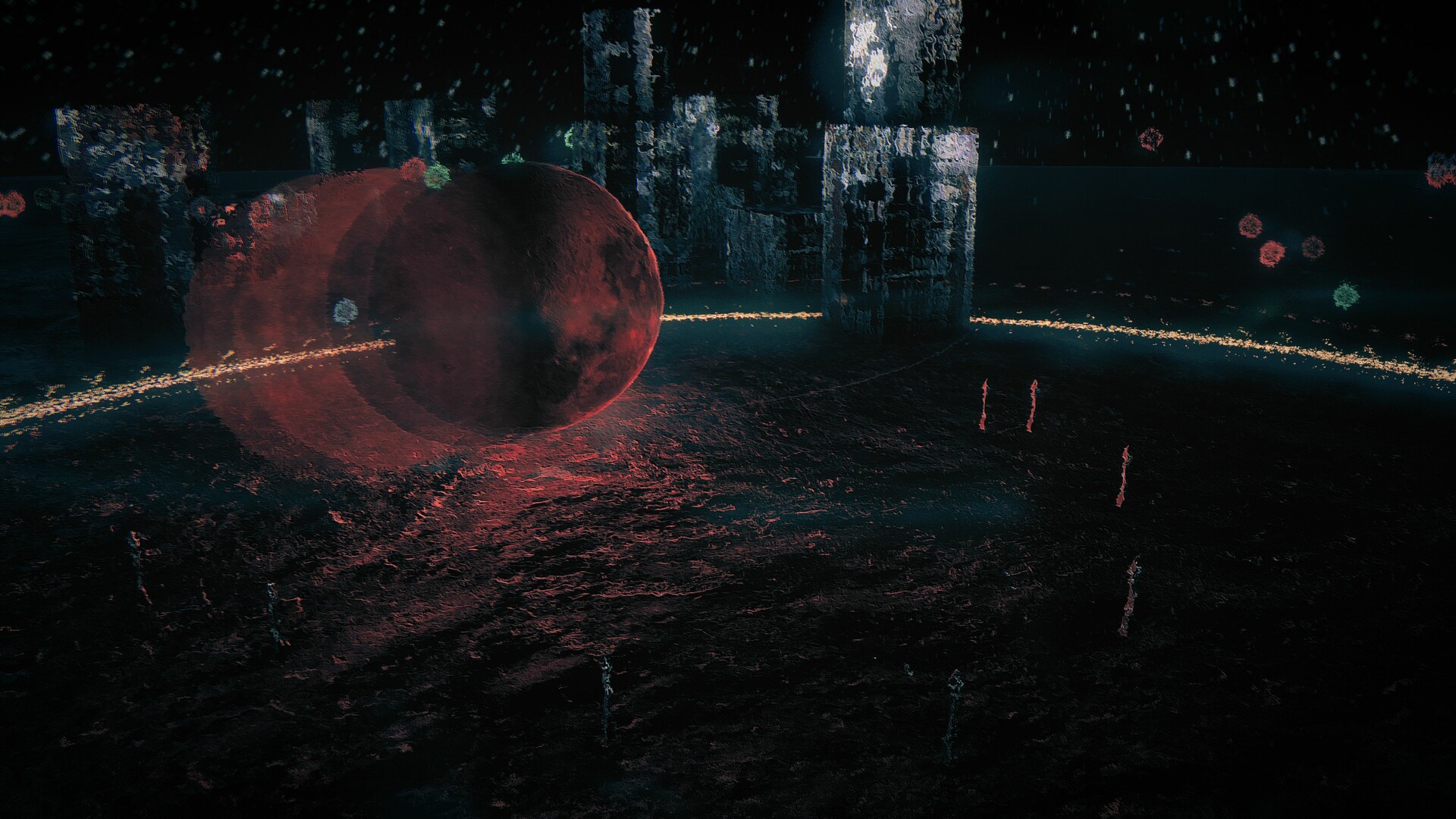
Skate Story looks unlike almost any other skating game. Its world feels like a strange neon dream, full of glowing wireframes, bold colors, and sharp, blocky buildings. Levels float in darkness with no real sense of place, and subway tunnels twist in ways that feel almost alive. It is weird, surreal, and very intentional.
Even though everything looks abstract, the environments are clearly built for skating. Rails, ramps, and ledges show up exactly where you expect them once you get moving. It does not feel like traditional level design. Instead, it feels like spaces shaped by someone who understands how skaters naturally read terrain. At first glance, it might look confusing, but it quickly starts to click.
Movement adds to that dreamlike vibe. As you pick up speed, the camera shakes and bends slightly, making everything feel unstable in a good way. Light reflects off your glass body, giving motion a fragile feel. When you land a trick, the game slows down just enough to let you enjoy it. When you crash, the camera tumbles with you, making every fall feel messy and real.
That heavy focus on style does come with a downside. The camera is easily Skate Story’s biggest issue. While it looks cool, it often makes skating harder than it needs to be. Angles change without warning, and fast sections can get hard to read. Lining up grinds sometimes feels awkward simply because you cannot see clearly enough. Visually, the camera fits the game perfectly. Gameplay-wise, it can be frustrating. It is a clear case of Skate Story choosing mood over comfort.
It’s All About the Ideas, Not Answers
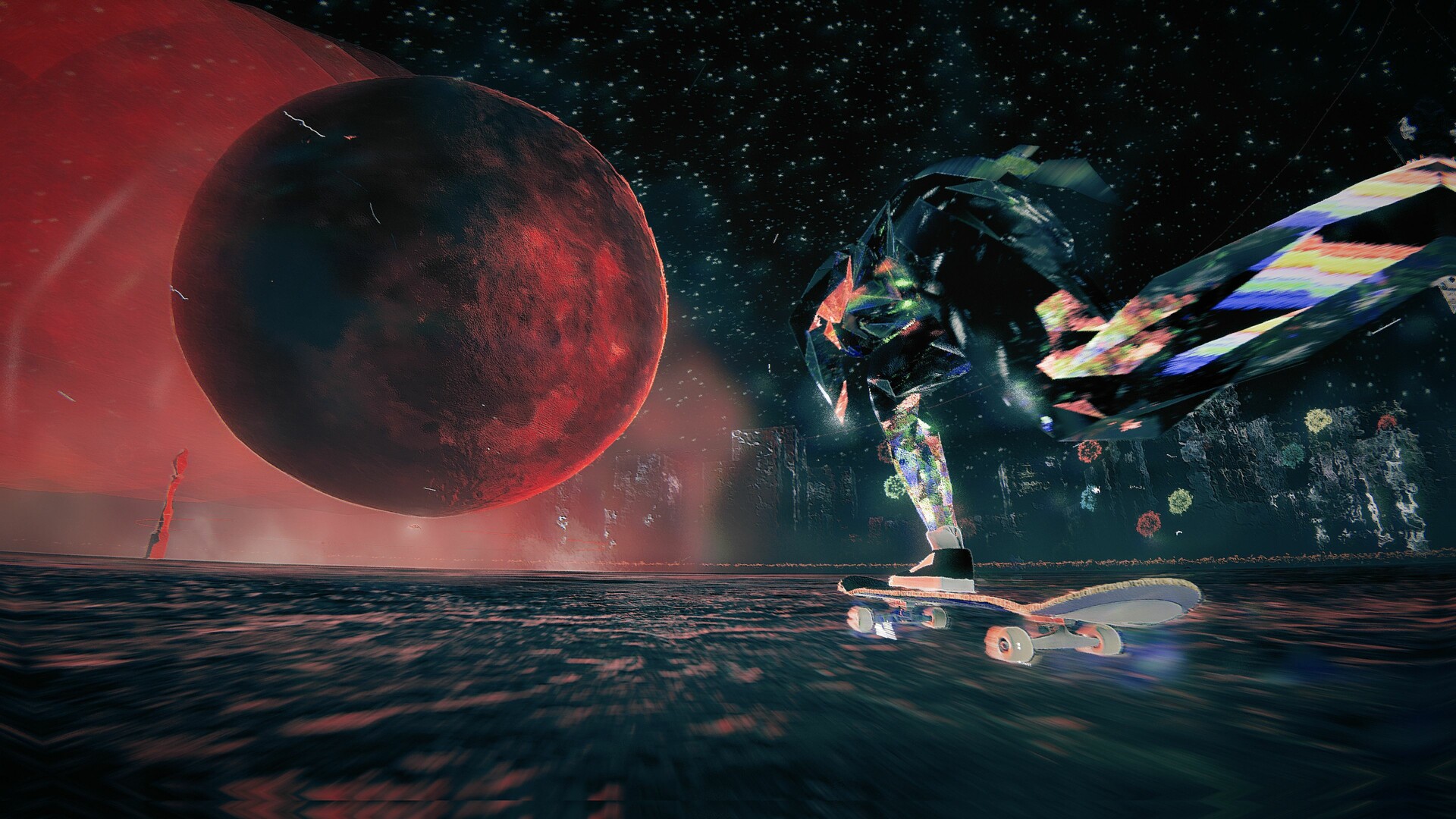
Skate Story does not tell a traditional story, and it is clearly not interested in doing so. There is no clean plot to follow, no strong character arcs, and no tidy ending waiting at the finish line. Instead, the game leans into ideas, moods, and loose moments that are meant to be felt rather than fully understood.
Your main goal, eating the moon, is never properly explained. The game leaves its meaning wide open. That ambiguity is intentional, but it can also be frustrating. Some players may find it hard to stay emotionally invested when the stakes are never clearly defined.
Along the way, you meet a strange cast of characters. Skeletons talk about regret. A pigeon deals with writer’s block in a café. A pillow man runs a laundromat where nothing works. These moments are memorable, but they rarely go anywhere. None of these characters grow or find closure, which fits the themes, but it can make the world feel static.
These interactions exist to reinforce the game’s ideas rather than move a story forward. Everyone is stuck chasing something they cannot reach. Everyone is trapped in cycles of effort and disappointment. While that message is clear, it is also repeated often, and over time, it can start to feel a bit heavy-handed.
Skate Story’s biggest strength is its restraint, but that restraint is also a weakness. The game refuses to explain itself, even when a little clarity could help. Some scenes feel meaningful, while others feel random or disconnected.
Because of this, Skate Story feels less like a full narrative and more like a collection of abstract thoughts. It is thought-provoking, but it can also feel distant. If you are looking for emotional payoff or clear answers, this approach may leave you wanting more.
Always Moving Forward
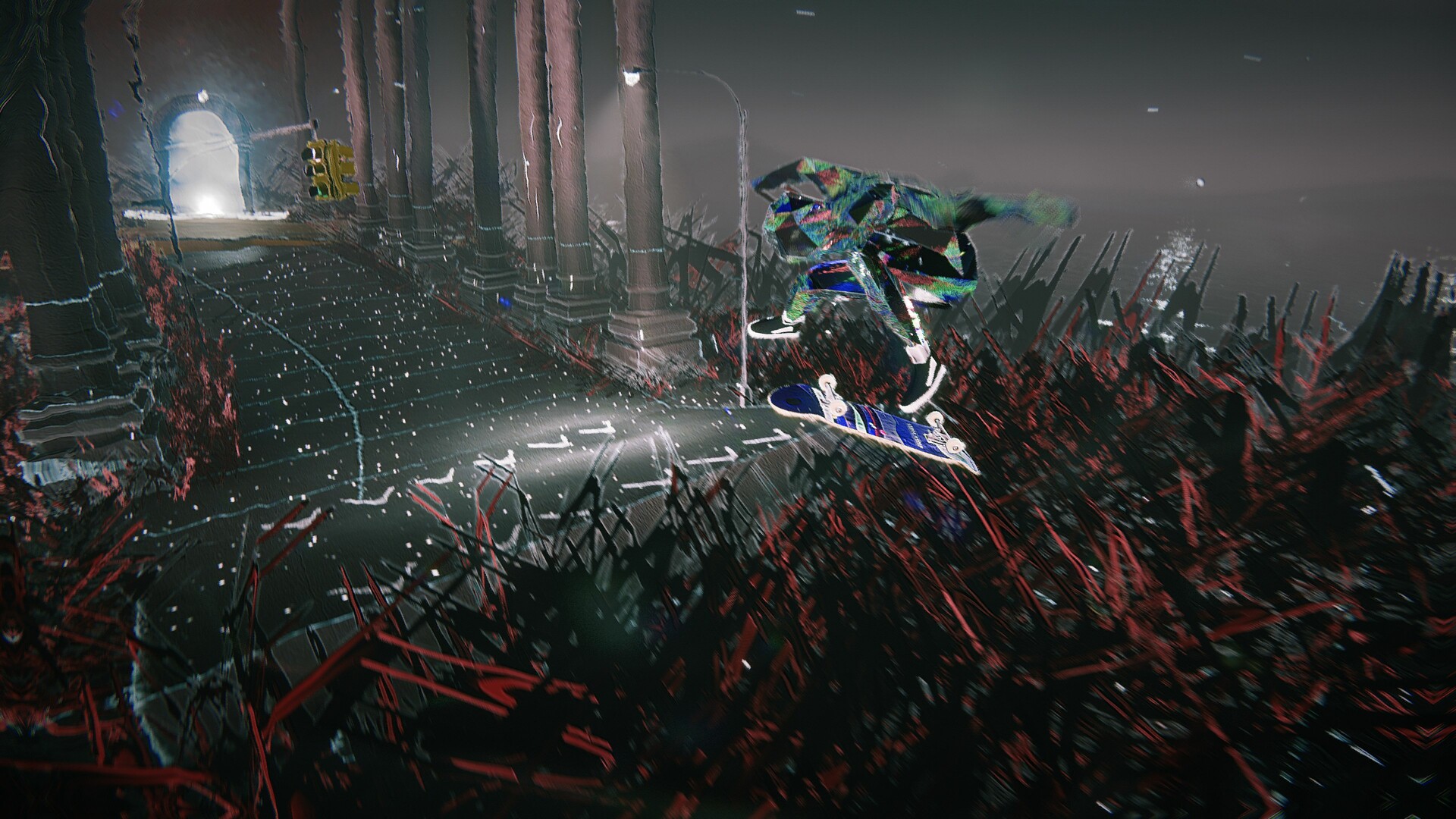
Skate Story is very intentional with how it is put together. It is a short, linear experience that usually runs about five hours, depending on how often you wipe out or stop to explore. The game is split into chapters, and each one follows the same basic flow.
Most chapters start with a small story moment that sets the mood. After that, you are dropped into an open skating area with a few simple goals. These sections feel relaxed and let you experiment without much pressure. Next comes a fast, music-driven gauntlet that pushes you through portals at high speed. Each chapter then wraps up with a boss fight against one of the moons.
The moon battles are straightforward but solid. You build combos to deal damage, then skate underneath the moon to land your trick. Later fights shake things up by making the moons move or dodge, which forces you to react instead of repeating the same approach every time.
What really makes Skate Story stand out, though, is what it does not let you do. There is no free roam mode. No chapter select or no practice area. You cannot replay levels or revisit your favorite songs. Once you move on, those moments are gone.
Of course, this will frustrate a lot of players, and that reaction makes sense. The game can feel restrictive, especially if you want to improve or just enjoy certain sections again. Still, this choice fits Skate Story’s overall idea. It wants its best moments to feel brief and special. By limiting replay options, the game makes those moments linger long after finishing the game.
Verdict
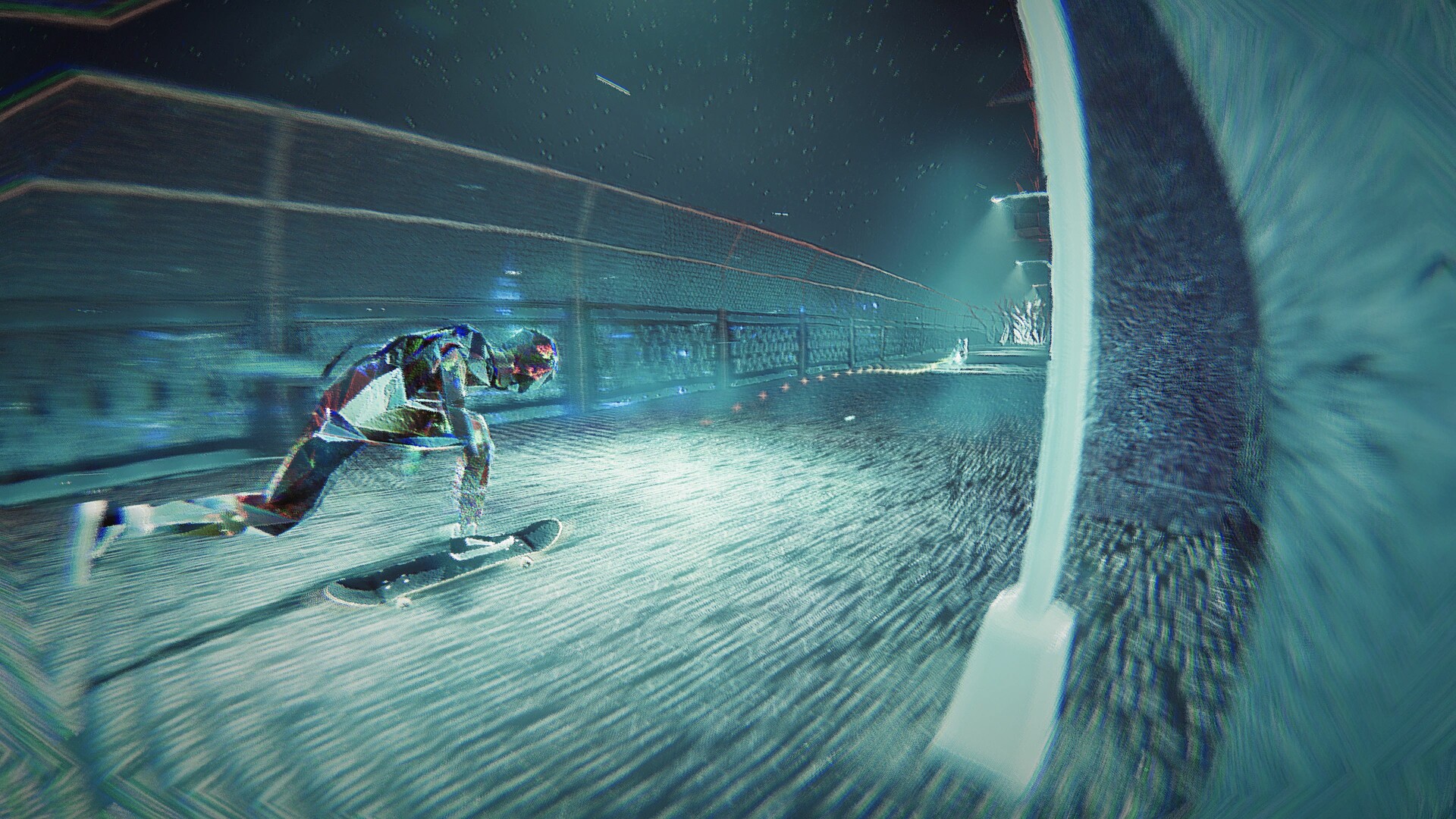
By the time Skate Story ends, it is normal to feel a little unsatisfied. The mechanics may still feel limiting. The camera may still get on your nerves, and in some ways, the game can feel unfinished. That feeling is not accidental. Skate Story is built around the idea that fulfillment is always just out of reach. While most games focus on making you feel powerful, this one does the opposite. It asks you to accept limits and sit with them.
Of course, this approach will not work for everyone. Some players will find the awkward mechanics to be flaws and annoying. Others will find the structure restrictive or even self-indulgent. Undoubtedly, those reactions are fair. Still, it is hard to ignore the impact it leaves behind. Skate Story stays with you long after you put the controller down.
Ultimately, you may not love Skate Story. You might even bounce off it completely. But if it clicks, it becomes something special. It is not just a skating game. It is a quiet reflection on desire, effort, and the strange beauty of chasing something you may never fully reach.
Skate Story Review (Nintendo Switch 2, PS5 & PC)
Not Your Usual Skate Game
Skate Story will not leave everyone satisfied, and that is very much the point. Its rough edges, awkward controls, and strict structure can be frustrating, especially if you want a smoother skating experience. Still, those same choices give the game its identity and make it feel personal. If it clicks with you, Skate Story becomes less about skating well and more about why you keep skating at all.




