Reviews
Demonschool Review (Nintendo Switch, PS4, PS5, Xbox One, Xbox Series X|S & PC)


Ever since Necrosoft first revealed Demonschool back in 2022, it’s been one of those indie games that quietly stuck in the back of my mind. The bold pixel art, the tactical RPG combat with a heavy emphasis on movement, and the promise of a light-horror story all sounded like a perfect match. After a long development cycle and a few delays, expectations were understandably high.
Now that Demonschool is finally here, the big question is whether it lives up to that promise. The answer, like the game itself, is a little messy. Demonschool doesn’t always hit the emotional or narrative highs it seems to be aiming for. However, when it comes to pure gameplay, it absolutely delivers. So, let’s break it down and see whether this long-awaited tactical RPG was worth the wait.
Hunting the Demons
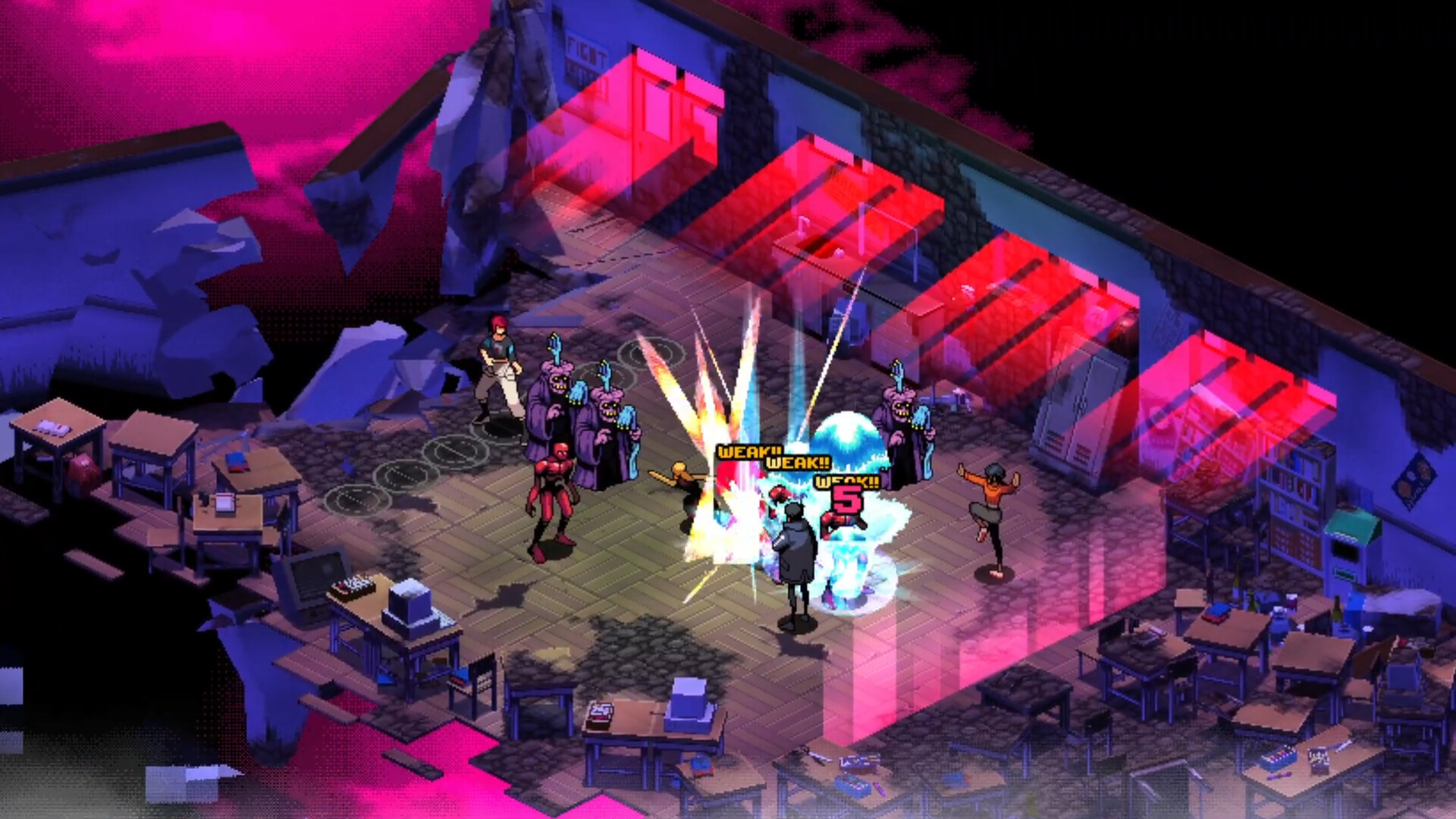
Demonschool follows Fay, a young demon hunter who enrolls at a strange academy located on a remote island. From the start, the game throws a lot at you. There’s a looming apocalypse, secret societies, missing students, haunted VHS tapes, shady teachers, and rival demon hunters all competing for attention. In addition, Fay and her classmates are tasked with uncovering the island’s mysteries while trying to prevent the end of humanity as they know it.
The problem isn’t a lack of ideas. If anything, this RPG game has too many. The early hours move at a breakneck pace. They constantly introduce new plot threads and characters without giving many of them time to breathe. You’re bombarded with intrigue, but it takes a while for any of it to truly stick. There are moments where the story feels like it’s about to dig deeper, only to jump into something else entirely.
Tone is another area where the narrative struggles. Demonschool rarely takes itself seriously, even when dealing with high-stakes concepts like prophecy and extinction-level threats. That playful approach works well for humor and character interactions, but it undercuts the horror elements and makes it harder to feel invested in the bigger picture. By the time the plot does start to come together, it’s engaging enough, but it never quite reaches the emotional payoff it feels capable of.
All About the Cast
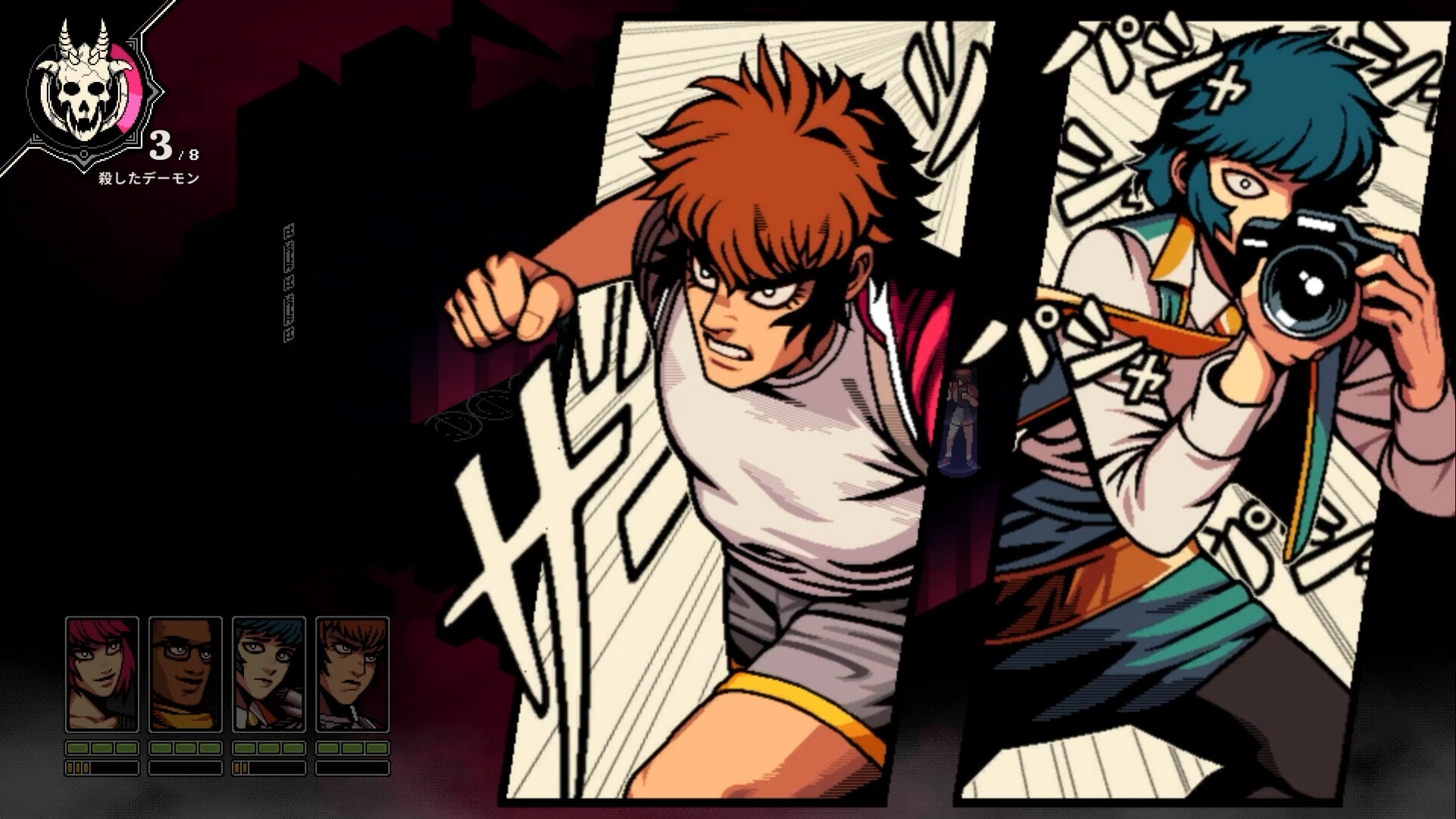
Where Demonschool shines narratively is in its characters, especially its protagonist. Fay is a genuinely fun lead. She’s intense, awkward, overly enthusiastic, and utterly unapologetic about it. Watching her bounce off other characters is consistently entertaining. Additionally, her energy carries a lot of scenes that might otherwise fall flat.
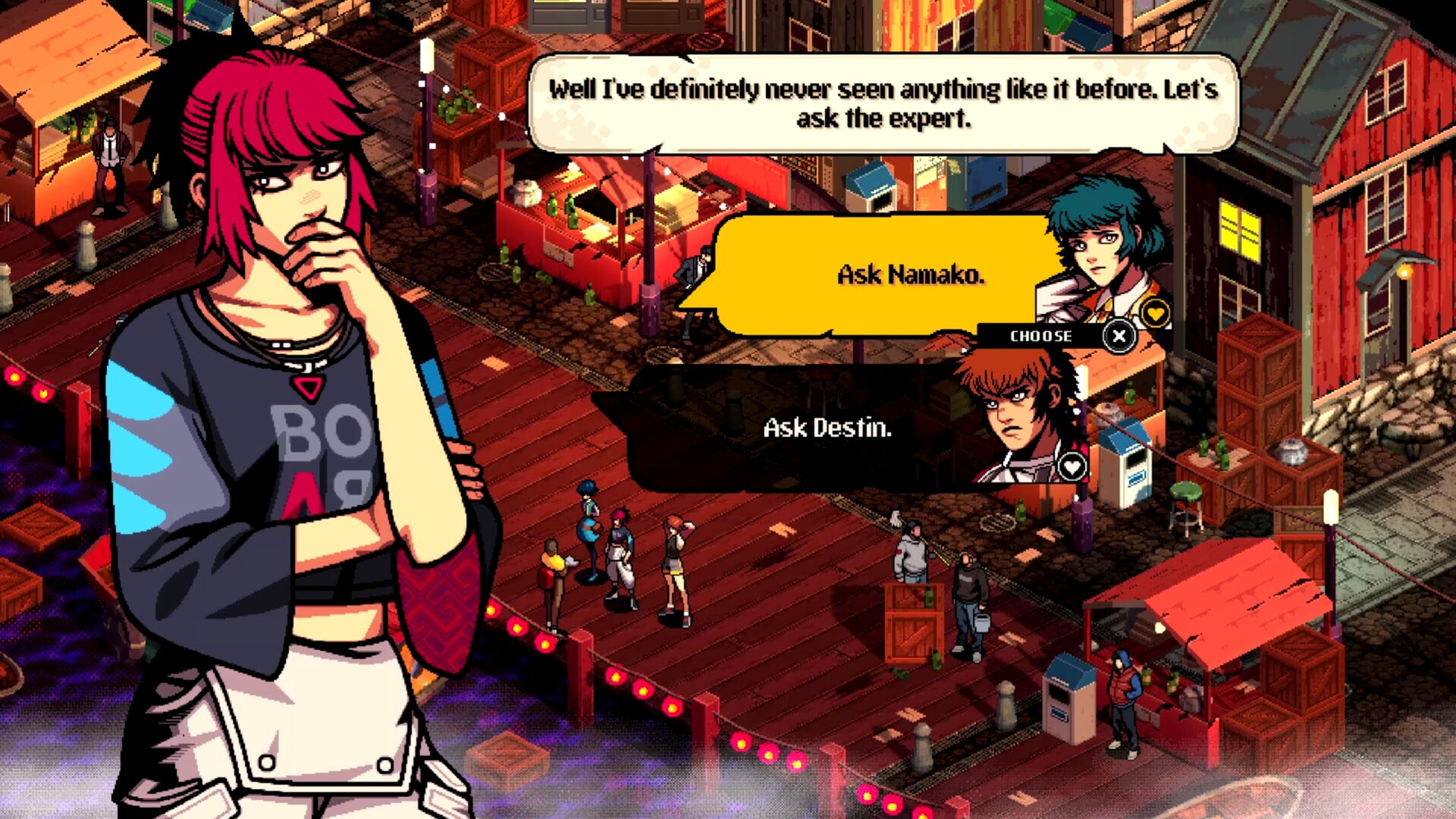
Her early interactions with Namako, who is far more reserved and grounded, set the tone for the group dynamic. Their contrast yields some of the game’s funniest and most charming moments. As more party members join, the chemistry within the group remains strong. Everyone feels distinct, and the dialogue does a good job of selling their personalities.
That said, the depth just isn’t always there. Demonschool features relationship events that allow Fay to bond with her classmates, and while these scenes are usually enjoyable, they rarely delve into the characters’ deeper levels. You get a sense of who they are on the surface, but not much insight into what truly drives them.
The large cast is both a strength and a weakness. New characters continue to appear even late into the game, which helps fulfil the promise of a colourful ensemble but also means some characters barely get the spotlight. It’s hard not to feel like there’s missed potential here, especially since the core cast is so likeable. With a tighter focus and fewer late-game introductions, Demonschool’s characters could have been something really special.
Going Tactical
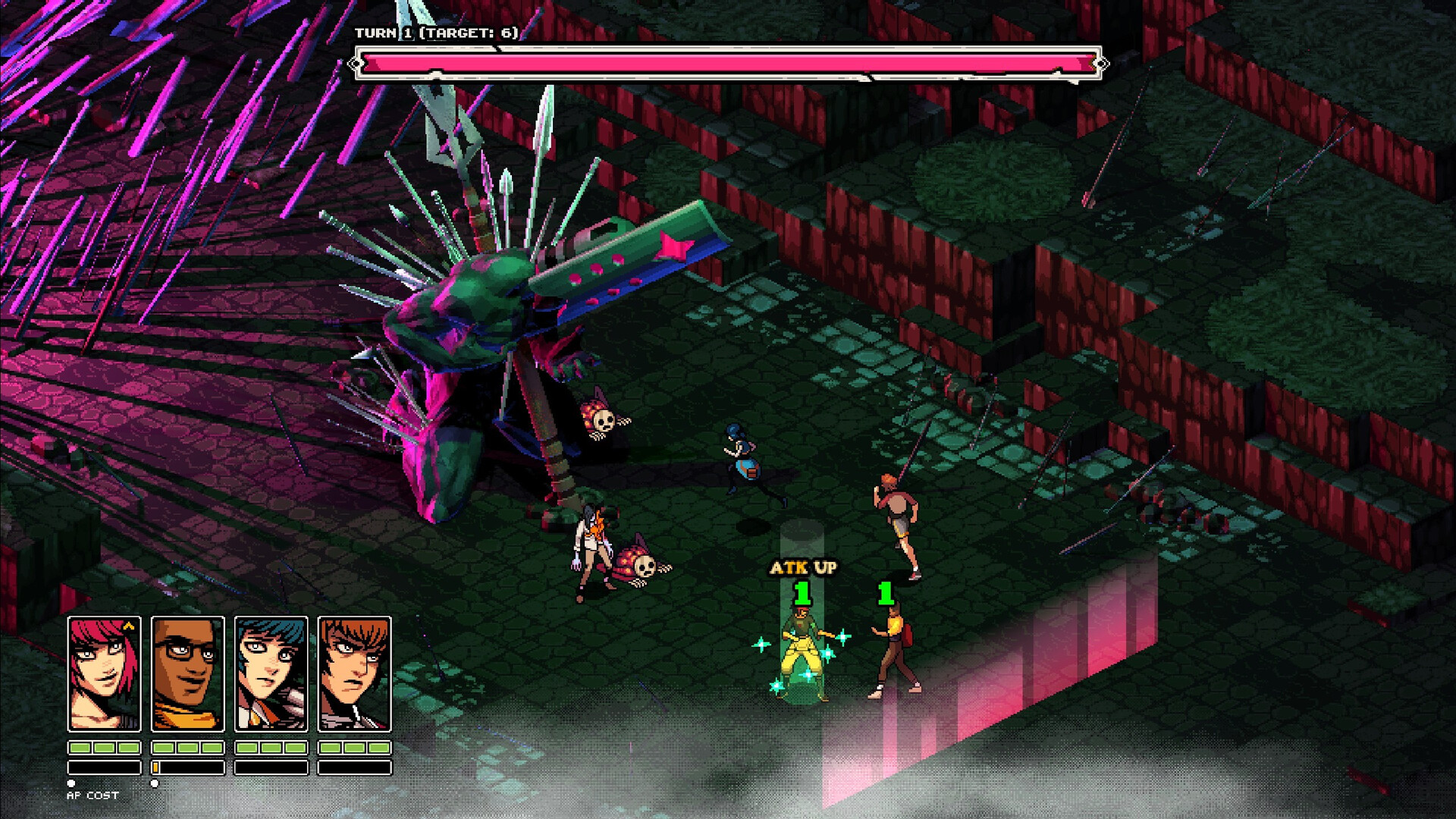
Combat is where Demonschool truly comes alive. At first glance, the system looks simple. Each character has a basic attack and a decisive special move that becomes available once their meter fills. There’s no traditional stat growth, and characters don’t gradually hit harder as the game goes on. Instead, Demonschool focuses on positioning, planning, and clever use of abilities.
Battles are split into two phases: planning and execution. During the planning phase, you can take as much time as you need to position your units and queue actions. Once you hit execute, everything plays out at once. Watching your carefully planned strategy unfold is incredibly satisfying, especially when enemies start flying across the grid like dominoes.
Many characters can push or pull enemies with their basic attacks, encouraging you to line foes up for multi-target hits or combo attacks. If two characters are positioned correctly, they can chain attacks together for bonus damage. This turns each encounter into a small puzzle, where the goal isn’t just to survive, but to solve the fight as efficiently as possible. The result is a combat system that feels fast, clever, and deeply rewarding. Every successful turn feels earned, and even late into the game, battles rarely lose their charm.
Of course, it isn’t perfect. The lack of traditional progression can make early battles feel a bit repetitive, and ability unlocks come slowly at first, limiting your options in the opening hours. Boss fights are also hit or miss, with some encounters failing to take full advantage of the positioning-based mechanics that make regular battles so engaging. Still, these issues never outweigh the strengths. Even late into the game, combat rarely loses its charm, and every successful turn feels well earned.
Progression
Instead of traditional levelling and stat increases, Demonschool relies on horizontal progression through abilities. As you explore the island, complete side quests, and build relationships, you unlock new skills that can dramatically change how characters function in battle. Some abilities are simple upgrades, while others completely reshape a unit’s role.
One standout ability allows Fay to warp across the grid, massively increasing her mobility and letting her strike enemies far from her starting position. Skills like this open up new tactical options and keep the combat feeling fresh, even without stat progression.
The downside is that ability unlocks come a bit too slowly in the early game. You can only research a new skill once a character is ready for it, which can make the opening hours feel somewhat restrictive. As your party grows, this becomes less of an issue, but a slightly faster early unlock pace would have helped ease players into the system more smoothly.
Still, the variety of units and abilities encourages experimentation. Even if some characters inevitably get sidelined, having so many options makes it fun to try different team compositions and strategies.
Boss Battles
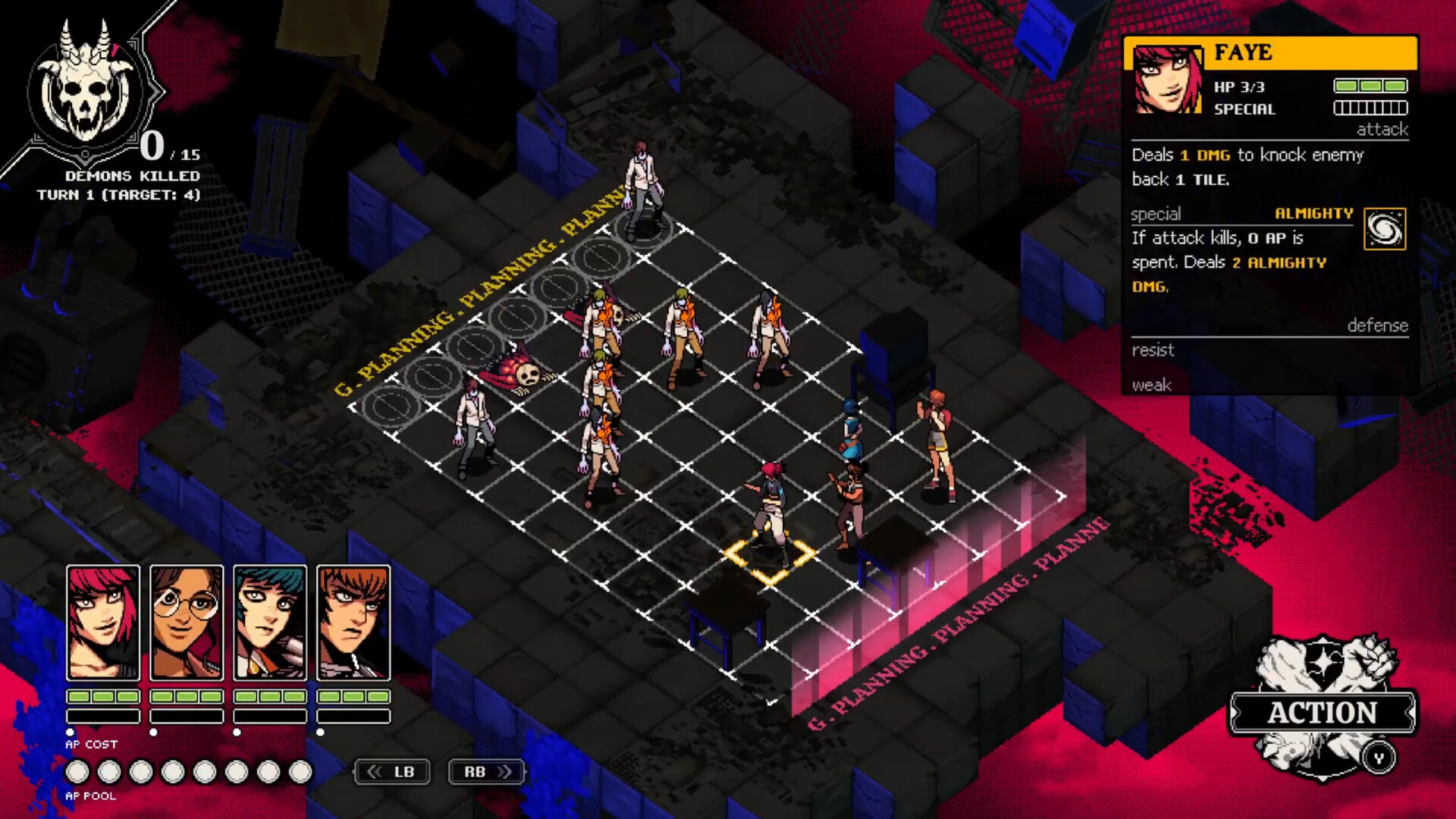
While regular encounters are a highlight, boss battles are a mixed bag. Many of the mechanics that make standard fights fun don’t translate well to single enemies with massive health pools. Some bosses feel underexplained, and a few rely on attacks that aren’t clearly telegraphed, making success feel more like luck than skill. Thankfully, bosses don’t completely derail the experience, but they stand out as a weaker element in an otherwise strong combat system. With a bit more clarity and design polish, they could have matched the quality of regular battles.
On the technical side, Demonschool isn’t flawless. During my time with this RPG, I ran into occasional crashes that sent me back to the title screen mid-fight. Autosaves are frequent, but losing progress is still frustrating. I also encountered visual bugs where the battlefield shifted off-screen, forcing a reload. These issues weren’t constant, but they happened often enough to be noticeable. Hopefully, post-launch patches will smooth out these problems.
Verdict

Presentation is one area where Demonschool absolutely nails it. The pixel art is gorgeous, with strong lighting, detailed environments, and memorable character designs. Animations are fluid, movement is snappy, and the execution phase of combat looks especially slick as characters slide and collide across the grid. It’s the kind of pixel art that feels intentional and high-quality. It shows a lot of care in both design and execution.
On the other hand, the soundtrack is just as impressive. Synth-heavy battle themes add real energy to combat. Similarly, the rest of the score blends modern and retro influences to create a moody, occult atmosphere that fits the game perfectly. The music does a lot of heavy lifting when it comes to mood. Undoubtedly, it’s the reason the game feels so stylish moment to moment.
That said, Demonschool isn’t without its flaws. The story never fully comes together in a satisfying way. Additionally, the pacing can feel uneven. This is noticeable early on when the game throws a lot of ideas at you without giving them room to breathe. Some characters also feel underdeveloped, and a few boss fights don’t make the best use of the game’s otherwise excellent combat system.
Still, Demonschool is an RPG game of contrasts in the best and worst ways. Its tactical combat is smart and deeply satisfying, its presentation is stylish, and its moment-to-moment gameplay is consistently fun. If you value strong strategy and aesthetics over a tightly focused narrative, Demonschool is absolutely worth your time. It may not be perfect, but it’s a confident, creative RPG that leaves a lasting impression long after the final battle.
Demonschool Review (Nintendo Switch, PS4, PS5, Xbox One, Xbox Series X|S & PC)
The Return of The Legends
Demonschool may stumble when it comes to storytelling and pacing, but its tactical combat and stylish presentation carry the experience. The movement-driven battles are consistently fun, and the game’s strong visual and audio identity help it stand out in a crowded genre. It’s not a perfect report card, but Demonschool still earns a solid passing grade.




