Pop Culture
The Real World of Poker: How Pop Culture Shaped the Game

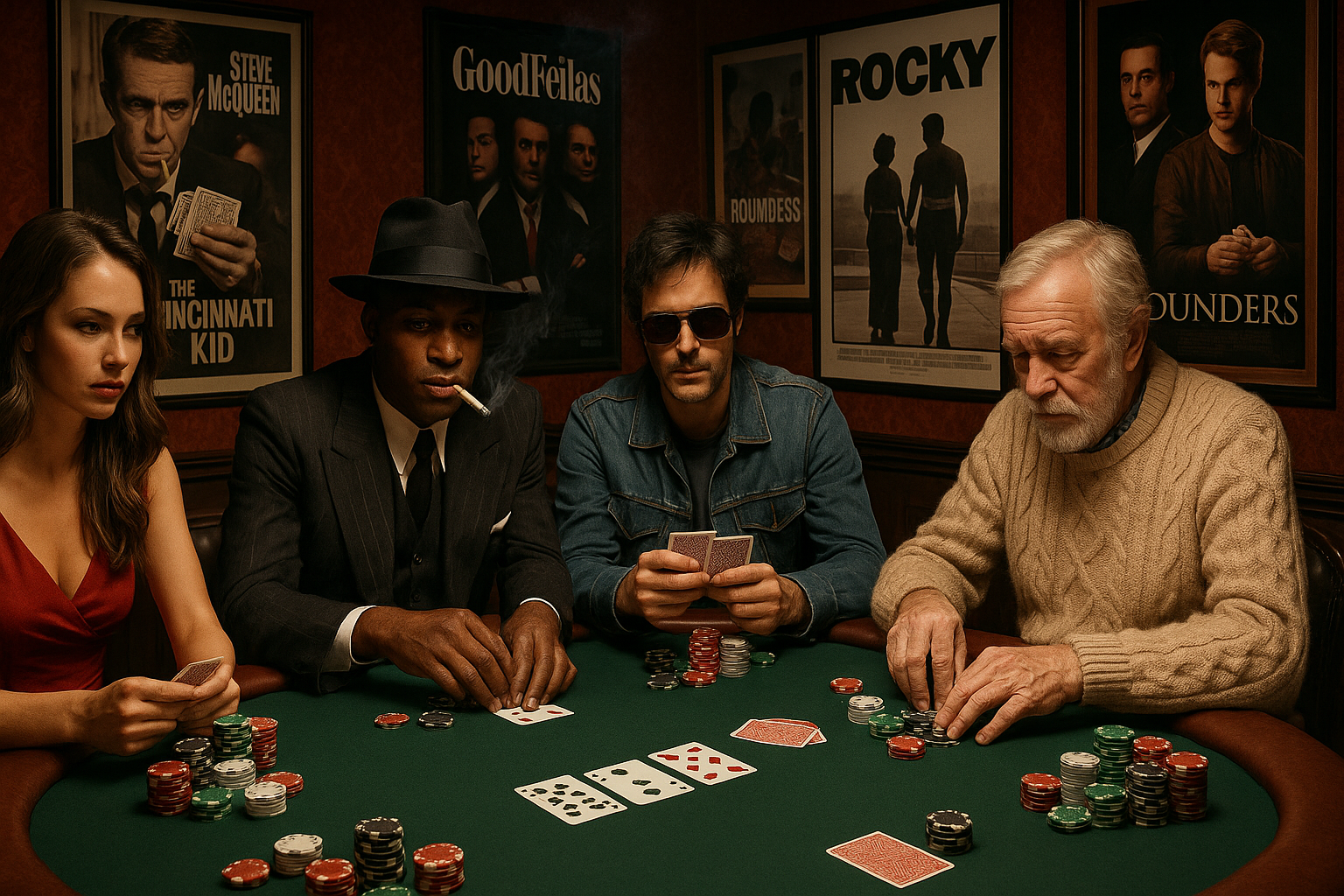
Famously described as a game of wits, it is easy to see why poker is so appealing. In other casino games, you play against the house, and important parts of the game hang on chance. In poker, you play against your peers, and your actions can directly influence the outcome of each hand. To make it more exciting, there are no fixed payouts or paytable structures in poker. No, you can raise the action right up to the table limits, or, if playing at no limit tables, you can go all in. The strategic elements of the game, and the possibility of huge money exchanging hands in minutes, makes poker a tantalising game to play.
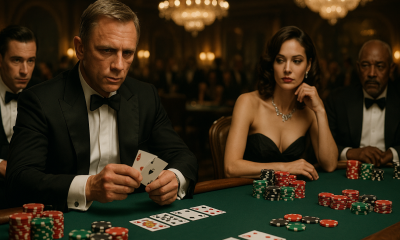
It is also exhilarating to watch, and poker has appeared in practically all the arts and media. There are films, books, TV series and even songs that refer to poker. A lot of the poker players now may have grown up watching the WSOP TV series, or got inspired watching Casino Royale, the James Bond film. But these media depictions of poker can be pretty dangerous, as they tend to gloss over the brutal realities of how poker gaming works. And the undeniable role chance has to play in poker games.
How We See Poker in Pop Culture
The depictions of poker on screen or in media often exaggerate the realities of everyday poker games. The glamorous side of poker is romanticised through sharp players who seemingly never make a bad move. With nothing in the hole, they may outbluff the entire table using their superior judgment and deception skills. But in most poker games we see on screens, players don’t really get drawn stinkers. They get pairs, suited high value cards, or Aces and Kings, and the key antagonist will get a similarly powerful poker hand.
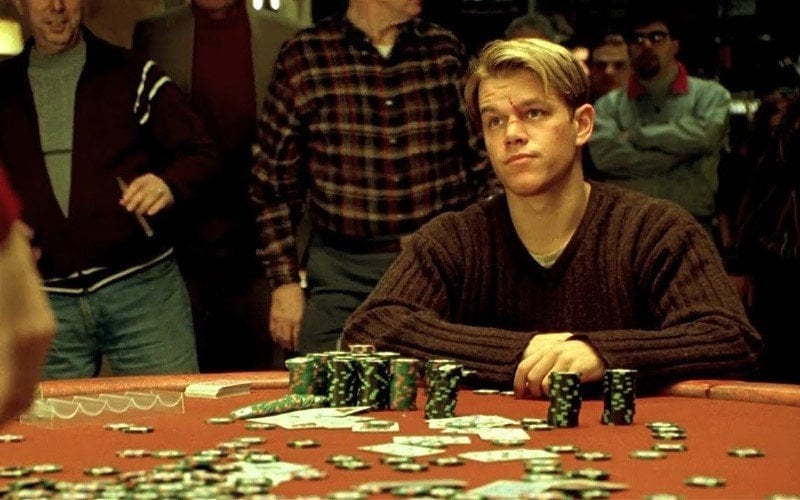
In films like Molly’s Game or Rounders, poker is hugely romanticised. We see overly aggressive players staking huge sums of money, and tilting from one moment to the next. Cinematic timing is important to captivate an audience, but the details are dramatized. Anyone who plays poker regularly will tell you that generally, money doesn’t move that fast at cashgames. Players may get onto a lucky streak, and there may be Royal Flushes at the table, but it is rare. The general pace is a lot slower and more calculating.
Real Life vs Onscreen Poker Games
Folding is a lot more common than the books and films would have you believe. Films don’t really examine real poker player profiles. We aren’t talking about James Bond here. But the limpers who never raise and play for the blinds. Or, the tight aggressive who doesn’t play many pots, and are highly selective about playing their starting hands. It is rare for a poker player to go fully bust in a game, especially at serious cash games. Poker cashgames have buy ins, and a lot of games have fixed pot limits, meaning you can’t throw your Aston Martin car keys into the pot.
These buy ins are made to ensure that players can create a bankroll for a specific game. The buy-ins can be as low as $50, and the resulting blinds will be $1/$2. Even at the bigger tournaments and no limit tables, you won’t see the same aggression or tilting at real tables as in films. Another aspect is tells.
The pop culture depiction of poker has romanticised tells to an almost mythological level. Key film plots, or story narratives may revolve around tells and how players can read others. But in real life we aren’t that one dimensional. Poker players are constantly changing their tactics and adjusting them to keep their opponents guessing. Some have a more rigid plan and will throw in the occasional calculated random move. Whereas others will keep changing their styles so that the other players can’t latch on. It is a silent and serious art form, something that doesn’t translate to the noisy and visually pleasing mediums of television.
The Impacts of Pop Culture on the Game
But this is not a one way street. Pop culture has also inspired the game, like a cyclical relationship between an artist and their work. The art inspires the artist. An increased volume of poker in media and on screen brought scores of new players into the game.
The televised WSOP series was one of the biggest game changers for poker in media. This show, which integrated hole card cameras and characters like Phil Hellmuth or Daniel Negreanu, glamorised Texas Hold’em for a new generation. The shows, which still runs in some form or another today, made poker far more accessible. They showed watchers just enough of how the game works for them to appreciate the finer details of poker. It came out in the 2000s, at a time when online poker rooms were in their infancy. And this, this was the cocktail that put poker into mainstream entertainment.
Poker was no longer a mysterious underground game. Or, the card game of the Wild West that you could play at Las Vegas Casinos. You could play it at home, and make serious money online if you played your cards right. It wasn’t just a US thing either, as players from all over the world jumped in on the action.

Poker Tournaments and Hyped Up Events
At the bottom of the ladder, you would have gamers playing online poker for real money, and slowly building their bankrolls. Playing dollar cashgames, for some it grew into a career path. The publicity around poker gave organisations such as WSOP more money to play with. And it was only natural that bigger and grander events were launched.
Televised gladiator games, high stakes poker events, and world class events ran rife. Players like Chris Moneymaker, an accountant who won the WSOP by qualifying from a satellite tournament, created a media frenzy around poker. Moneymaker, a poker enthusiast, went on to win $2.5 million. People like him broke down the barriers and proved that poker was accessible to all. You just needed the arithmetic skills, experience playing, and an ability to deceive, and poker could turn you into a millionaire.
Themed Poker Games and Expansion to RNG Poker
With poker gaining cultural weight, it was time for the game to evolve further. Before long, RNG poker became more prominent, and new types of poker were pushed by casinos. For instance, themed poker games, beginner-friendly variants that pitted players against the house, and offshoots like video poker. Incidentally, video poker is just a variant of 5 card draw poker. Nowadays, there are loads of Casino Poker games (against the house, not other players).
Poker cashgames have also flourished, with lots of new types of game mechanics and tournament structuring. Now, you could head to an online poker site and find Knockout Poker tournaments, or Sit and Go poker. There are also All in or Fold, Rush and Cash, and poker Mystery Battle Royales. New types of tournaments and poker game mechanics are cropping up all the time.
Poker in Practice
It is quite easy to get carried away with the hype. The caricature-esque players we see in film can inspire use to get into poker. But the truth is that, like all casino games, luck governs the outcomes in poker. You have to prepare yourself for the harsh realities that it is not an easy game to master. And even the professionals have tasted their fair share of defeat.
Mastering poker is very much a game of numbers and patience. You cannot afford to go all in every time you are dealt a good hand. The best scenario is a slowly raising pot, in which your opponents are just as convinced they can win. Going too aggressively will scare off the others and you won’t get the most out of your strong hand.
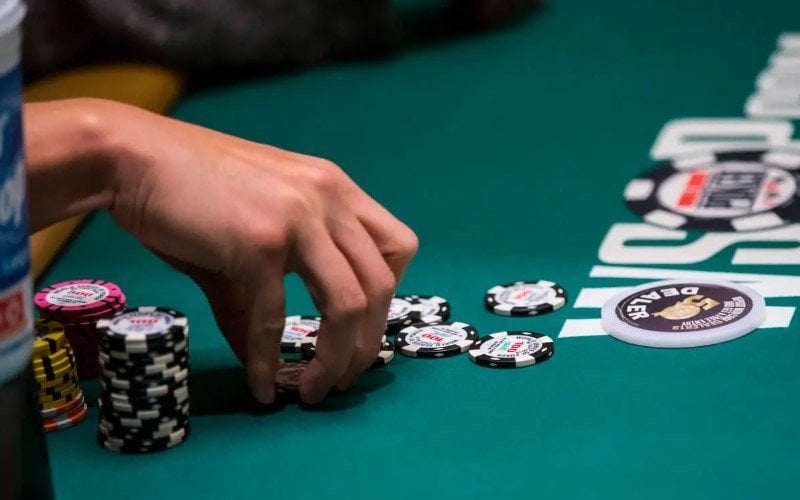
Playing only for these hands, like a tight aggressive, will mean you fold a lot. That means, prepare for a steady outflow of money throwing away the small and big blinds. Bankroll management is your best skill in the game. Beginners are advised to set aside a bankroll and only dedicate 1% to 2% per hand. If you bring $50 to the table, that means bets of $0.50 up to $1.
Getting Started Playing Poker
The best place to start is with RNG demos or free poker games where you can get a feel for the game. The base rules are pretty easy to understand, but beneath that, you need experience. Experience in understanding the probabilities of the draw, figuring out what your peers may hold in the hole, and how you can make the most of your bankroll. It takes patience and time.
When you are ready, you can move onto the cashgames, starting small, and cautiously building your bankroll. If you are ready to take it to the next level, then you can test it in increments. But don’t think you will go to Chris Moneymaker’s level from one moment to the next. This is a game of patience and timing just as much as it is a game of wits.