Science
The Hot Hand Fallacy: Misconceptions in Gambling


The hot hand fallacy is one of the most common phenomena that gamblers can experience. If you have ever felt “lucky”, or that you are at the beginning of a winning streak, you will recognize the symptoms of the hot hand fallacy. It is a perfectly natural feeling and something that can undoubtedly make gaming more pleasurable.
However, the fallacy can become dangerous if you don’t understand how it works. When gut instincts overpower logical thinking, you can get into deep waters and quickly. Here, we are going to analyze why people get winning hunches. Delving into the chemistry behind the feeling, and what you can do to keep certain emotions in check.
Defining the Hot Hand Fallacy
The term was first coined in a 1985 article, describing how basketball players score more if they have “hot hands”. A player who shoots a successful hoop will have a greater chance of scoring the next one. The hot hand fallacy has some theoretical basis, as someone who shoots a hoop will have a little boost of confidence and can concentrate better on the next shot. Though it may also lead to overconfidence or additional pressure that could put the player off. The concept of hot-handedness probably best applies to sports, where these little psychological effects have a greater influence over what can happen.
The concept does not really apply to examples where the outcome is, so to speak, “out of our hands”. For instance, you couldn’t really say the same for a coin flip. If a coin lands on heads in the first round, it won’t have a greater chance of falling on heads after the next flip. The same goes for casino games. Whether you win the first round or not, the outcomes are always random.
But that doesn’t mean we don’t sometimes feel the hot hand fallacy with such games. For instance, you may win 3 rounds of blackjack in a row, and then feel like you have a better chance of winning. Or even the opposite. Let’s say you draw nothing across 3 rounds of video poker, and feel like you are overdue a win. The games are random, as you play with shuffled decks and never know what card the dealer may draw next.
Psychological Effects Behind the Fallacy
Gambling and risk taking riles people up and puts them through the motions. Casino games stimulate us, and occasionally, we can get carried away between hits of dopamine and crushing remorse. But it all boils down to randomness. When playing with a shuffled deck of cards, there are no patterns or formulae that you can use to predict which card will be drawn next. Say the decks are reshuffled after every draw, which is the case in online blackjack or poker, there is a possibility that you will draw the same card twice. Or, that you draw 4 Kings in a row, alternate between red and black for 10 successive rounds, and any other outcome. The probability may be small, but it does not rule out the real possibility.
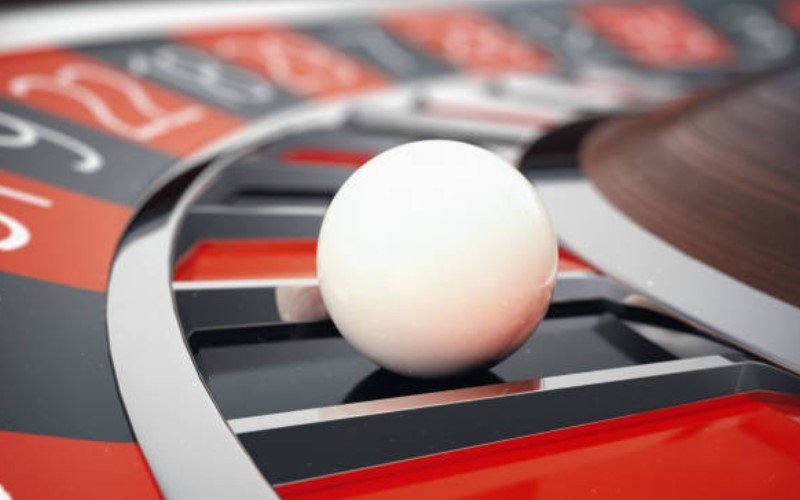
This is a common topic that players make mistakes on or misunderstand. In French Roulette, you have 37 segments, of which 18 are black, 18 are red, and 1 is green (the zero). The chances of the ball landing on black for the next 5 rounds in a row is around 2.7% or 1 in nearly 37. But those are the odds before the rounds have started.
The odds of landing a black segment are always 18/37 (48.64%) in each and every round. Some players may think that if the ball lands on black 4 times in a row, it may be due to falling on red to balance out the results. But that is never the case.
Hot Hand Fallacy in Games with Higher Variance
A more abstract example is a game of slots. Variance is a lot higher in slots, with complex paytables and a range of design features. Payouts can range from partial paylines which pay an amount smaller than your stake, to huge full payline payouts worth up to 100x, to 500x, or more. And most slots have bonus rounds, you can win tremendous sums of money if you trigger the round. The results are extremely diverse, and it makes it more difficult for players to understand whether they are ahead or not.
This can make smaller, or partial, wins seem like nothing, and compel you to keep aiming for bigger wins. You may keep waiting for the next bonus round, or mega payout, believing that you are due for one after a good number of rounds. But slots use powerful algorithms to ensure every spin is fully random. You may spin the reels 100 times without hitting anything bigger than 100x on a couple of occasions. Or, you may encounter a handful of bonus games, some of which may only bring 250x while others may turn profits of 5,000x or more.

How the Fallacy Influences the Way You Play
Gambling fallacies can lead to dangerous behaviour, or compel you to take greater risks. For instance, you could be sitting at that slot machine for hours on end, compelled to stay until you hit a bonus round. After all, the odds are that sooner or later, you should trigger it. But then it may not live up to your expectations, and then should you keep playing or accept your losses?
Playing until you have nothing left is not just an occurrence among slots players. Similarly, you could ride out your entire roulette bankroll, baccarat budget, or your allocated money for any other casino game. At slots it just hits harder because there is a chance that you can win it all back, and then some, if a jackpot falls your way.
On the reverse, if you have just finished a bonus round that has brought you huge money, you may feel compelled to play your winnings. But bonus rounds do not necessarily mean you will win big. When triggered, they have the same feeling as hitting a jackpot, but the round can peter out and bring nothing more than a simple full payline’s worth of cash.
Illusion of Control and Hot Hand Fallacy
In games where there is (statistically) less variance – such as blackjack, baccarat, or certain bets in roulette, you won’t have the same possibility to make up all your money on a 1,000x win (unless it is a jackpot side bet). In blackjack or poker, the additional element of control also adds to the notion that you can beat what is random. Using mathematically optimal strategies and making good decisions, it can feel more like a game of skill between you and the house. But it is not. You just have a chance to influence the outcome and decrease the house edge ever so slightly.
The hot hand fallacy kicks in games where you have an element of control (blackjack, video poker, poker). Players can come under assumptions such as their strategy is beating the house, or that they will continue to win. False assumptions can easily lead to overconfidence. And the overconfident bettor is more likely to raise the stakes and bet more aggressively.
Do Casinos Exploit the Hot Hand Fallacy
Running a casino is a business, and all companies need to sell products to bring in revenue. The games are designed to run on pure chance, and results can be completely random. Casinos will not rig their games in any way. Whether that comes through shaving dice, rigging roulette wheels, or shuffling decks to favour the house. But they don’t need to. Because the games are created in a way that over the course of millions of rounds, the casino will get its cut.
They just need you to keep playing and spending money, and gambler’s fallacies can help them enormously. Online casinos must provide users with tools to control their spending limits, or time spent gaming. This ensures that players are always safe from overspending, and do not get addicted. However, casinos have a plethora of tools through which they can also reinforce any gambler’s fallacies. Loyalty programs, jackpots, additional side bets, bonuses and perks are just a few tricks they can use to get you back in the gaming seat.

Similar Types of Gambler’s Fallacies
The hot hand fallacy is not the only typical psychological pitfall players can encounter. We can also buy into winning streaks, experience altering dopamine regulation after longer periods of time, and attempt to read patterns from previous results.
We like to solve problems, and to find explanations or solutions to things we cannot understand. But there is no way to predict chance. Some players develop superstitions or gambling rituals to test luck. While they can be comforting, they do not affect what happens in your games.
The absolute worst thing you can do is chase your losses. This is a slippery slope that doesn’t just lead to bigger losses, but if it becomes habit, it can lead to gambling addiction.
Control Your Instincts and Avoid the Hot Hand Fallacy
Gambling should be a form of entertainment, and you should never assume that you will make money through casino games. You can learn betting systems and apply advanced strategies but don’t guarantee wins.
Your best chance of making money is to have a large bankroll that can sustain a good long gaming session. Then, if luck and variance play into your hand, you should pick the right time and quit while you are ahead. Always keep an eye on your bankroll, and be ready to accept any losses. After all, whatever is left can always fund your next gaming session, when you may experience more luck and come away with a sizable profit.