Reviews
Life Is Strange Review (Xbox, PlayStation & PC)


Don’t Nod and Square Enix has a keen eye for teenage rebellion and cringe culture, pulpy characters and apt dialogue that, with all due respect, you would typically find in most, if not all B-movie tween drama television series ever created. This isn’t a snide jab at Life Is Strange; it’s merely accepting the fact that, before you traipse into a world where “HELLA AWESOME” is the language of life, you’re likely to experience a whole lot of nostalgic frequencies, complete with hipster soundtrack and the occasional middle finger to “the system,” among other eye-rolling cliches that you would naturally expect to unearth from an episodic saga about college teens and their knack for associating adulthood with drone-like characteristics. If I was twenty years younger, I’d have been on the same wavelength. In my thirties, though, it hits a little different.
Of course, if you can immerse yourself in a world where “coolness” is commonplace, and the Magnum Opus of life is a graffiti-riddled hideout in a disused scrapyard, then you might just find yourself willing to hop along for the ride. Granted, it’s a journey that will make your skin crawl, but, to give credit where it’s due, it’s also one that will give you a lot to think about once the final cord on the curtain gets pulled. Besides, it isn’t the cliches that steer this vessel; it’s the drama, the weirdly likable characters, as well as the twists and turns that orbit the climaxes of each chapter. Arcadia Bay is brewing a world-shattering climatic shift, and somehow it’s you, of all people, who has the power to alter its fate, come hell or high water.
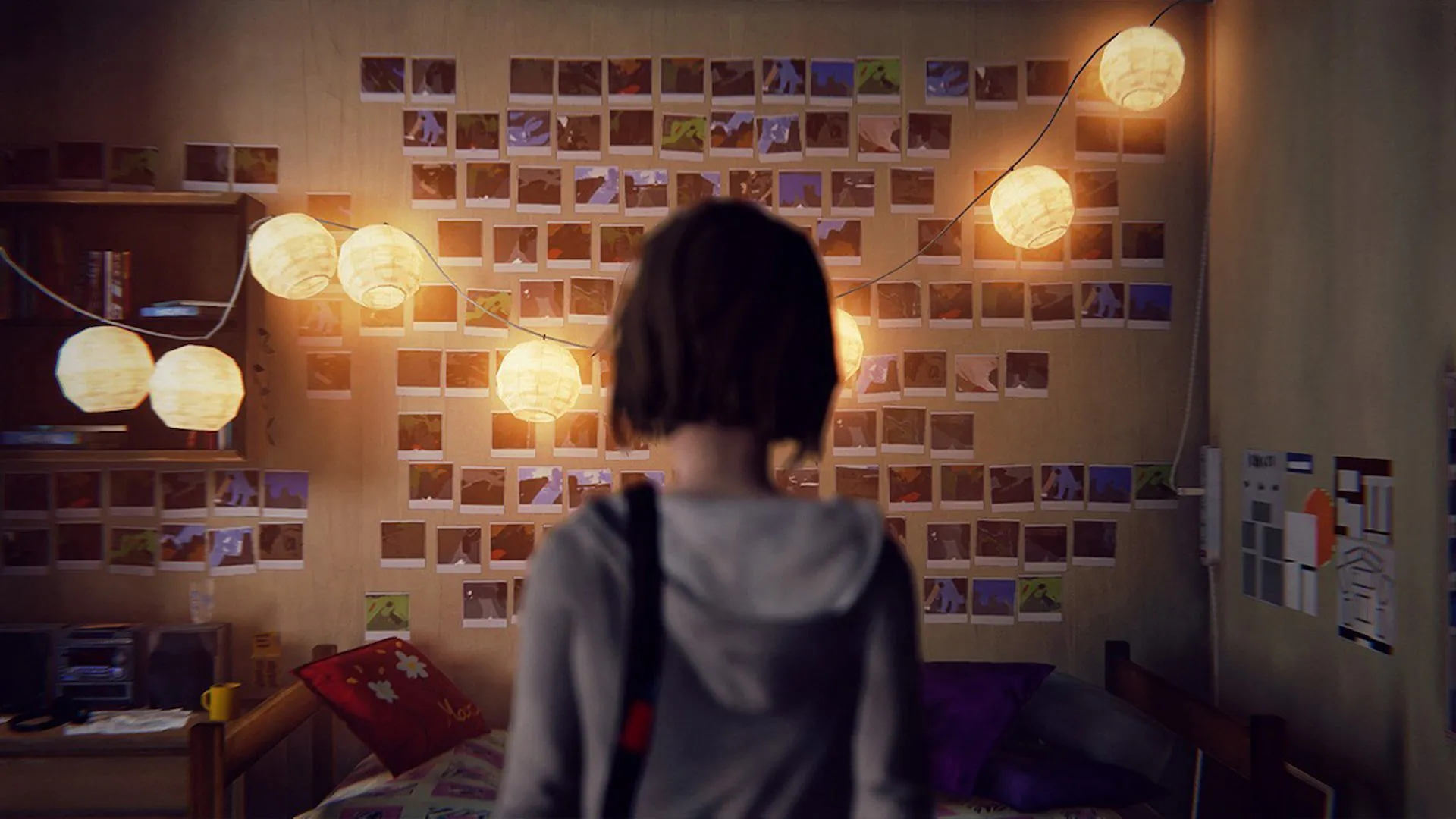
Life Is Strange finds a good balance between being a melodic symphony of indie ballads and pulpy dialogue and a surprisingly complex episodic drama that bears the brunt of a provoking narrative and a fatal climax. At the heart of its five-piece journey idles a signature Don’t Nod schematic—a suite that you would typically associate with QTEs, drawn-out dialogue, and pivotal moments that ultimately lead to butterfly effects and “they will remember that” text boxes, similar to what you might find in one of Telltale Games’ anthology. It has all of that, with the addition of a band of cast type characters, good-versus-evil, jock-versus-geek tropes, as well as a supernatural undertone that just so happens to fit into the grand scheme of its rolling plot. It is, in short, Don’t Nod in its prime, and you’ll either love it or you’ll hate it.
The story follows Max, a photography student who, after encountering a vision of a storm engulfing her hometown of Arcadia Bay, inherits an ominous power that allows her to shift time and alter the world as she sees fit. As Max, we get the opportunity to befriend characters, navigate the lulls of teenage life, and, in short, devise a foolhardy plan to turn the tide of the storm on its axis before it consumes Arcadia Bay. But, there’s more. Alongside a wicked storm that threatens to deplete the entire borough of a somewhat sleepy hollow of a town, there are also folks that pose other issues for you tackle; a school bully with a firearm; an evil father figure with a god complex; a lecturer with a questionable background, and so on and so forth. I won’t divulge too many details, but you get the idea.

While Life Is Strange does take a bit of time to grow into, I can vouch for it and say that, in spite of all its snail-like progression tropes and seemingly pointless teenage interludes, the game itself does foster a genuinely interesting plot, and not to mention a ton of life-altering dilemmas that can give you something to think about between chapters. It’s pulpy, true, but it’s also in receipt of some surprisingly fantastic scenes, with a rolling timeline of events that provide you with numerous opportunities to bend the narrative and formulate your own outcomes, relationships, and moral principles. Again, it’s a little slow, though it does manage to keep you on tenterhooks throughout its relatively short eight-hour journey, often making you question your actions, your moral compass, and the future of Arcadia Bay. That’s a huge plus, truly.
Frankly, there isn’t a lot of traditional gameplay to sink your teeth into here. In fact, if you’re not hitting dialogue prompts or exploring small areas, analyzing almost every single trinket and heirloom in sight, then you’re probably sitting through drawn-out cutscenes, where indie folk ballads and dream-like monologues take center stage and curb the experience. This isn’t a bad thing, mind you. However, if it’s an action-driven affair that tickles your fancy, then you might be in for a rude awakening with Life Is Strange. Stick around long enough, though, and you might just come to appreciate the beauty in the little things. It’s hearty, relatable, dramatic, and surprisingly melancholic. And yet, even with all of these facets to call its own, it still isn’t all that strange. Go figure.
Verdict

Life Is Strange is as comically pulpy as it is nostalgic, thus making it a perfect crème de la crème for Don’t Nod’s style of storytelling and choice-driven gameplay matchmaking. It’s a little slow, and it does require a lot of effort to gel with right off the bat. That said, once you begin to form ironclad connections with its characters and gradually untangle the boundaries of Arcadia Bay and its sleepy citizens, it becomes an absolute joy to watch unfold. With a ton of possible outcomes, too, it presents you with the opportunity to rewind the clock and experience alternate realities. There’s a lot of replay value, is the point I’m trying to make here — and that alone counts for a great deal, all things considered.
Suffice it to say that, if you enjoy Don’t Nod’s way of telling stories and weaving worlds with dialogue and character-driven butterfly effects that lean on your every decision, then there’s no reason why you wouldn’t enjoy slipping into Arcadia Bay and enrolling in its episodic adventures. It’s a teenage drama with a supernatural twist and a lot of indie folk ballads. Honestly, what more could you want from Don’t Nod?
Life Is Strange Review (Xbox, PlayStation & PC)
Photogenic Pulp
Life Is Strange is as comically pulpy as it is nostalgic, thus making it a perfect crème de la crème for Don’t Nod’s style of storytelling and choice-driven gameplay matchmaking. It’s a little slow, and it does require a lot of effort to gel with right off the bat. That said, once you begin to form ironclad connections with its characters and gradually untangle the boundaries of Arcadia Bay and its sleepy citizens, it becomes an absolute joy to watch unfold.



