Reviews
Flint: Treasure of Oblivion Review (PS5, Xbox Series X/S, Switch, & PC)


If a world of piracy sounds like a dream for you, Flint: Treasure of Oblivion might be just what you need. Keeping in mind, of course, that pirate-themed games off late haven’t quite been the pleasant experience we were hoping for. But the new game by Savage Level and Microids does harbor some attractive charm and innovativeness. It does attempt to coin itself a new space to experiment with a clever toss of ideas. Now, whether those ideas marry well together is a matter best left for the end of our Flint: Treasure of Oblivion review down below.
Smell of Buried Gold

It turns out Treasure Island’s story isn’t quite done with us just yet. The adventure and historical novel by the Scottish author Robert Louis Stevenson relays a 1700s buccaneer story and their hunt for buried gold. Well, Flint: Treasure of Oblivion simply makes the most of that universe and takes us to a prequel featuring the titular and fictional golden age of piracy, Captain Flint. Although the setting and atmosphere may seem familiar, for those who’ve consumed the media at least, the game tells a new story.
Flint has just caught wind of buried treasure while doing his time at a prison fort. More piracy goodness continues to ooze through the game’s canvas as Flint begins making friends and plotting a way out of prison. He soon coddles up to his second-in-command, Billy Jones, and they set off recruiting even more pirates and assistants to their crew. Soon, you’re setting sail on a wild adventure, encountering all sorts of bizarre foes and making your way closer and closer to your goal.
Deeper into the Abyss

In roughly ten hours or so, you should have wrapped up the main game, which is admittedly rather short but sweet. See, there are a few reasons to branch off the beaten path, with Flint: Treasure of Oblivion leaning heavily on a more linearly structured path. Worse? The main game almost demands that you go after a specific item or meet certain NPCs in ways that barely give you room to breathe. Even worse? You don’t have a map, mini-map, or any kind of navigation tool to help you get your bearings straight.
Overall, navigation and exploration, in general, can be cumbersome. Certainly not because it’s boring and bland but because you simply sometimes never know where to go next. As a result, you end up randomly clicking on items on the screen, hoping to land on something interactive. Worth mentioning, also, is that the screen, although incredibly detailed, can be a pain to properly examine areas around you. Part of this reason is because the camera is fixed and, oddly enough, more flexible during combat.
Comic Book Age

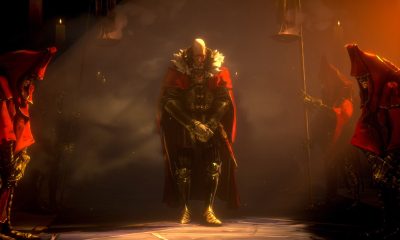
Otherwise, though, you have to give roses where they’re due, and that’s with regard to the visuals. They ooze off the screen with charm and delight. Flint: Treasure of Oblivion uses an immersive gloomy atmosphere riddled with historical pirate-themed areas and characters. You’ll hop from cities to camps to jungles and caves, each place diverse and oozing with a historically inspired piracy world. You find pirates soaked in rum and, in other regions, stumble onto breathtaking forests.
The deal is sealed further when the game uses its comic book art style to tell its story. Sifting through comic book strips, drawn to outstanding professionalism and bursting with creativity, they invoke in you staggering emotions that pull you further into the events of Flint and his crew.
Speaking of Flint, he’s quite the charmer with an intriguing personality. He’s smart and often talks his way through hoops and hurdles. Many of his recruits agree to join him based purely on the slick of his tongue. Overall, although a simple story, Flint: Treasure of Oblivion’s invigorating comic book art, immersive atmosphere, and detailed world manage to reel you in for a wild ride.
Meat to the Bone

Exploration doesn’t just deliver piracy lore. It also gifts you with item drops and found treasure. Item drops can be anything from weapons to grenades. However, found treasure can be split between your crew for leveling up. You will need the leg up because battles do grow from smaller-scale to military-sized ones. You’ll soon be controlling as many as dozens of characters at a time.
Luckily, you can switch between them on the fly. Also, characters take up varied roles, whether in your ship or combat. Each crew member will have an assistant, and if they were to die in battle, the assistant will take their place. As far as content goes, there are not many hidden items to discover. The locations you explore and fight in are relatively small in scale, and so the joy of Flint: Treasure of Oblivion ends up relying on the combat system itself.
I have to say, Flint: Treasure of Oblivion has far outdone itself on the combat system front. It’s incredibly complex and offers nearly dozens of ways to strategize and mix and match different ideas. You have your characters – as many as 15 playable pirates—fighting against roughly the same number of foes. Each character has its strengths and weaknesses that you need to consider before taking them out to battle and, sometimes, synergizing between crew members. This is regulated by a card system, where each card determines the skills and attributes a certain character can equip in battle. Being careful when choosing cards goes without saying, as they can drastically affect statuses and the battle outcome.
On the Grid

In addition to wisely managing your cards, you have the actual tactical turn-based combat system to consider. You have action points that you spend on movement and attacks. Movement actualizes across a hexagonal grid. It’s not just moving your characters toward the enemy but actually considering several factors. For example, you can move your character beside a character who synergizes more powerfully. Or you can move your character through a foe and squash them as a result or drain their health. Still, you can take advantage of the environment to actuate certain outcomes, like pushing an enemy off a ledge or dropping onto an enemy’s head. All of these require careful planning and strategizing before making your next move.
As for the attacks, they aren’t too deep. They are more informed by each character’s skills and attributes as well as weapons. Some characters will be heavy hitters, burying enemies with ease. Others inflict more strikes per turn and make the best characters who break enemies’ shields. Still, others can take on more damage, and so on. So, you have to be wise in your placement while also considering the enemy’s agenda and the environment, too. Say, you may choose a crew composition that thrives on AoE, but if you are going to fight in tight spaces, the enemy could use the small scale against you.
Santa’s Bag

Weapons, on the other hand, are pretty varied, from spears to sabers and pistols. So, it’s a matter of deciding between unarmed and weapon-based combat. This is more so important when you consider the limited three-slot inventory for each character for items and weapons. Two-handed weapons take up two slots, for instance. With just fists, though, you could have all three slots for items, which range anywhere from rare healing bandages to grenades. But the biggest trick in the book is in the dice roll.
Random Chance

See, outcomes of battles are determined by the roll of a dice, by random chance. It’s such a dealbreaker that one dice roll can be enough to turn the tide in your or the enemy’s favor. Health simply isn’t too generous. Alternatively, losing a dice roll can result in weapons breaking, influencing weapon effects, and attacking damage. When it works in your favor, it’s a joy, especially given how much planning and thought you have put into your crew composition, movement, and attacks. However, when the odds aren’t in your favor, it can be incredibly frustrating, especially in larger-scale battles. Having to redo them can take its toll over time, with eventual battles beginning to feel like a drag.
You can, however, better your odds by exploring the world for dice re-rolls. While they are hard to find, re-rolls can make all the difference in achieving victory. However, re-rolls must also be used sparingly and smartly. Overall, Flint: Treasure of Oblivion has many cogs running its wheel. While it makes the combat deep and complex, it can also feel daunting to wrap your head around. The tutorials and rules section doesn’t do much to ease your way into the complexity. Often, you’re figuring out the combat system on your own.
Verdict

It’s no secret that Flint: Treasure of Oblivion has plenty of charming and innovative concepts going for it. However, it has rough edges that are just the same. Exploration is wound tight, suffocating you with its rigidity and giving you no navigation tool to find your way around. Meanwhile, combat can be a little too much to decipher and get right. For fans of pirate-themed games, though, and the RPG genre in general, you may find the playthrough well worth it.
Flint: Treasure of Oblivion Review (PS5, Xbox Series X/S, Switch, & PC)
Buried Treasure Awaits You
Flint: Treasure of Oblivion is a nice way to ease into the RPG genre in the combat style of games like Bladur’s Gate. There are some genuinely creative and exciting ways to plan your next move. Plus, the art style is simply invigorating. However, it’s best to prepare for an imperfect experience both in combat and exploration.