around the world
Mahjong Masters: The Cultural Significance of China’s Favorite Game

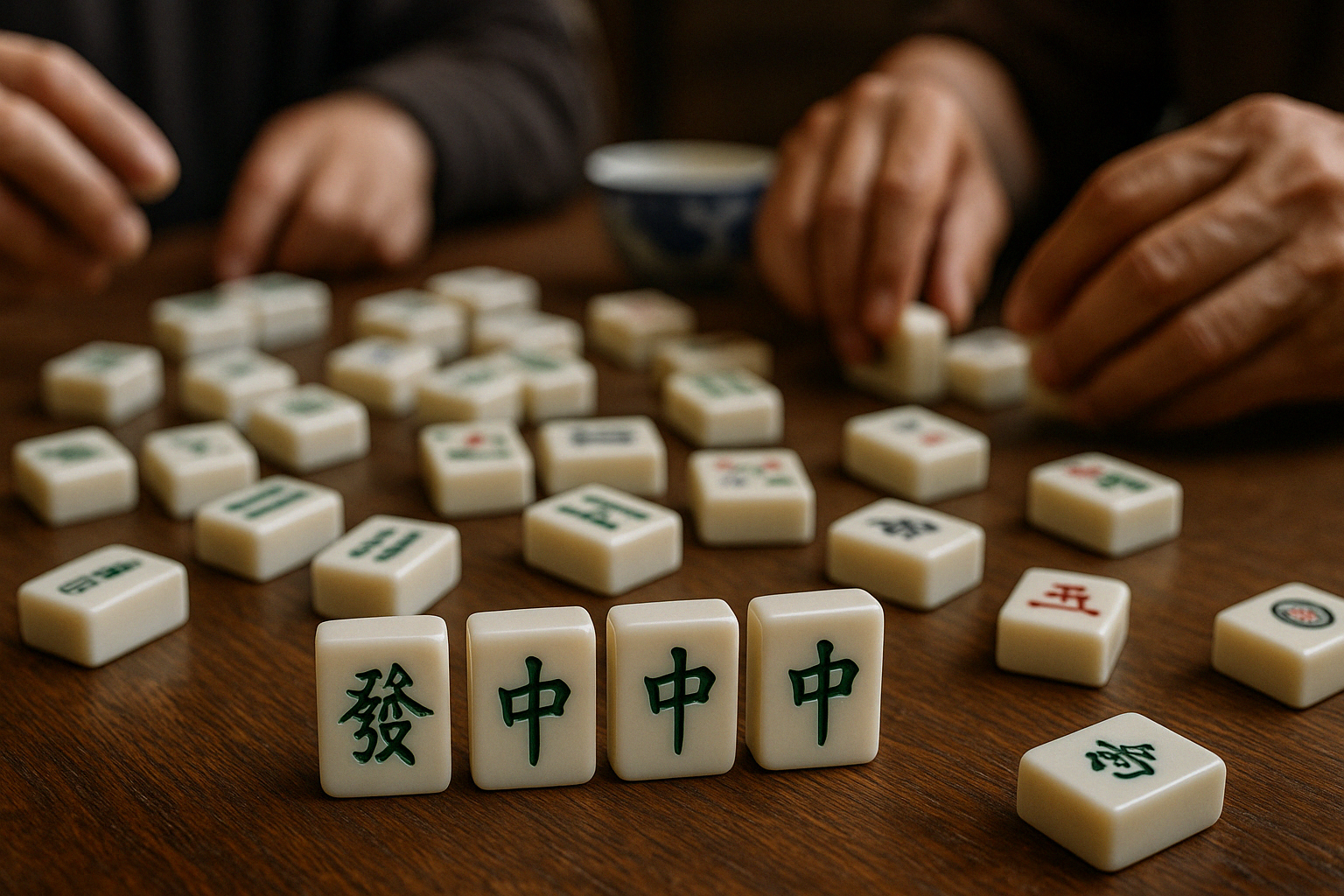
A traditional Chinese tile-based game, Mahjong is hugely popular across the world and there are many variations of the game. The classic Mahjong has elements of rummy, with hints of bingo, but it is quite a unique game in its own right. Mahjong is very much a social game, and ideally requires 4, but could have 2 or 3 players. Though it shouldn’t be confused with Mahjong Solitaire, a game with similar tiles and strategy, but completely different rules. And, Mahjong Solitaire only requires 1 person to play – it is the one you can find on loads of mobile gaming apps.
Mahjong has not just inspired a huge array of board games and variants, but it is also very much a cornerstone of Chinese culture. Naturally, gambling and betting traditions have also emerged around Mahjong, though little to no casinos offer bona fide Mahjong games. Instead, many casino games have drawn influence from Mahjong tile patterns and symbols, adapting and reimagining this game into endless different forms of entertainment.
The Roots of Mahjong
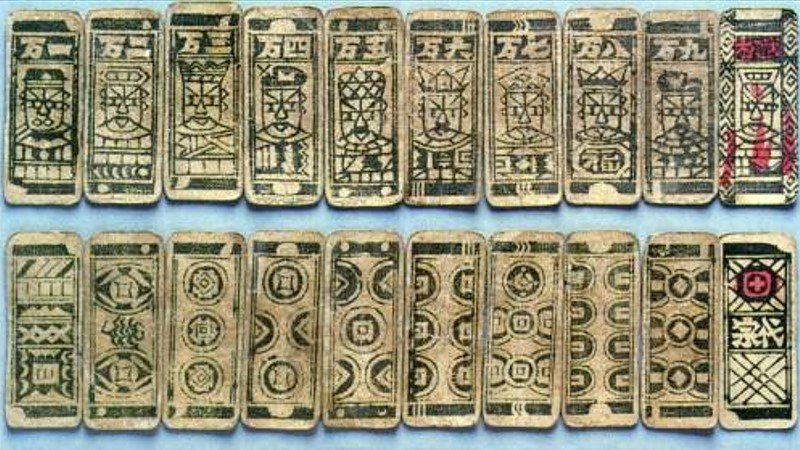
Between the 18th and 19th centuries, draw and discard card games were hugely popular in China. These were either played with Chinese playing cards, dominoes, or shortened decks, with different suits and ranks. The premise of these games was for players to draw and discard cards, building winning hands and combinations. Some of these games, such as pènghú, the most likely ancestor to Mahjong, was played with 120 to 150 cards.
Around the middle of the 19th century, cards were exchanged for tiles. By the 20th century, Mahjong was a popular staple among Chinese households, and it spread to Japan, Southeast Asian and even the US. The widespread adoption of the game also led to more derivatives and gameplay, but the core principles of Mahjong are still universally the same. In that it is a tile-based game based on strategy, building hands, and played in groups. There is an element of skill in the game, but that doesn’t take away the fact that the actual results boil down to chance and randomness.
How to Play Traditional Mahjong
Traditional Mahjong, or Old Hong Kong Mahjong, is played with 144 tiles. These are split into Suited tiles, Honors tiles, and Bonus tiles.
- Suited Tiles: 108 Tiles Total (Dots, Bamboo and Characters)
- Dots: 36 Tiles (1-9)
- Bamboo: 36 Tiles (1-9)
- Characters: 36 Tiles (1-9)
- Honors Tiles: 28 Tiles Total (Winds and Dragons)
- Winds: 16 Tiles (East, South, West, North)
- Dragons: 12 Tiles (Red, Green, White)
- Bonus Tiles: 8 Tiles Total (Flowers and Season)
- Flowers: 4 Tiles (Plum Blossom, Orchid, Chrysanthemum, Bamboo)
- Season: 4 Tiles (Spring, Summer, Autumn, Winter)
You choose the table positions and first dealer by rolling dice. Each player takes on a wind direction, and in every round 4 hands are played, with each player taking on the role of the dealer. Every player draws 13 tiles, with the dealer drawing 14 to start the round. Each turn has two steps: draw a tile and discard one tile, face up, to the center. Another player can claim your discarded card only if it completes a winning hand.
Mahjong Winning Hands
Each player builds their wall, and must craft a winning hand with 14 tiles. The winning hand is made of up 4 “melds” (4 x sets of 3) and One Pair (1 x set of 2). There are three types of Melds:
Winning Hand: 3x Melds (Pung/Chow/Kong) + 1x One Pair = 14 Tiles
- Pung: Three identical tiles (AKA three of a kind)
- Chow: Three consecutive tiles of the same suit (AKA straight flush)
- Kong: Four identical tiles (AKA four of a kind)
- One pair: Two identical tiles
You have to build 18-tile-wide and 2-tile-high wales (36 tiles per player), and try to form a winning hand before any of your opponents. When you win hands, you gain points, which can vary drastically depending on the specific variant of Hong Kong style Mahjong.
When a person wins the hand or their wall runs out, the round ends. If no one wins in the round, it is a draw.
Quick thinking, strategy, and experience can definitely influence the outcome of a hand. And learning to predict what your opponents will do is integral to winning at Mahjong. Though it is still very much a game of chance, and whatever tiles you draw will either give you opportunities to leave you hanging. But as you can see, it is very much a social game and one that can be influenced by skill.
These elements of the game are present in nearly every derivative of Mahjong. Except for Mahjong solitaire, an invention of the 1980s, which became a hugely popular form of the game.

Mahjong Solitaire
In truth, this game is more of a logic puzzle than a strategic match between players. You can play Mahjong Solitaire on your phone or computer, and the premise of these games is simply to match tiles and clear them off the board. You win if you can clear all the tiles, but be careful. If you don’t clear stacked tiles, you may end up running into a deadlock. With no remaining patterns left, you lose the game and have to undo your previous moves or start again.
This format doesn’t have any of the social interaction of traditional Mahjong. Instead of building hands and discarding tiles, you are solving a puzzle that uses the same tile motifs and patterns. Mahjong solitaire is the most notable example of how Mahjong has been reimagined and repurposed into a modern game. It is not the only one of its kind, the influence of Mahjong stretches out to many types of games. Including various casino games.
Mahjong in Gambling
Traditional Mahjong is not commonly offered in casinos. Though it has its own gambling culture, from casual wagers amongst friends to Mahjong cash games in professional circles. Though you won’t really play Mahjong at landbased casinos, or even at their online casino counterparts.
Instead, a lot of games have taken on motifs and inspiration from Mahjong. There are many different types of Mahjong themed games, which adopt Mahjong tiles and symbols.
Mahjong Themed Casino Games
The most prominent example of this is in online slots. Mahjong fans can revel in slots that use the same symbols and tiles, even going as far as to make thematic sound effects that feel like you are playing Mahjong. They may mimic tile stacking or symbol matching in slot machine gameplay, though they are fundamentally different from Mahjong. In that these are not games based on the draw of tiles or cards. Slots use complex RNGs to determine outcomes, and you don’t have any influence over what happens in a round.
Here are some of the most popular Mahjong themed online slots:
- Mahjong Panda (Pragmatic Play)
- Mahjong 88 (Play’n GO)
- Mahjong Ways (PG Soft)
Similarly Functioning Casino Games
Instead of looking for online Mahjong games, or Mahjong themed titles, Mahjong lovers could turn to similar card-based games. Games such as Three Card Rummy, Video Poker, Pai Gow and Poker have similarities to Chinese Mahjong. In that you need to form winning hands, draw cards, and have an element of control in the gameplay. Pai Gow Tiles are perhaps the most similar, as they also use tile hierarchy and strategy. Though you have to build two hands and form combinations.
If you expand the criteria, then Video Poker games are easily comparable to Mahjong. The rounds are far shorter, as there are only 2 steps to complete. But there are various different types of video poker to try out, each with its own paytable structure, resulting in different RTP and strategies.

Why Mahjong Isn’t Offered at Casinos
You would think that, for its immense popularity and complex rules, Mahjong would be ideal for online casino gaming. But it is not an easy game to reimagine for casino gambling purposes. The gameplay is too slow paced, it is a player vs player game, and the casino cannot really enforce a house edge. Traditional Mahjong games could take hours to finish, and rounds have loads of steps and turns. In casino terms, this is just too slow. And while some casinos offer player vs player poker, they use a rake to take a little commission from each round. If it were P2P Mahjong, it would take too long for the casinos to take their commission.
So instead, you will find casino-friendly games such as rummy, video poker, poker cash games, baccarat, blackjack, roulette and slots. Mahjong has a more social betting culture, and is very unpredictable. A sports betting site would not provide betting odds on players to win a game of Mahjong, as there are just too many variables that can impact the game.
The Timeless Appeal of China’s Signature Game
Mahjong is a game that is commonly played between families during the Lunar New Year, and is a big part of Chinese social culture. The social aspect of the game, and its lengthy gameplay, bring people together and serves as a prime form of entertainment. It could be played for some money, just as it can be played for pride or the pleasure of company.
One thing is certain, Mahjong is not just another pastime. This game is really a symbol of Chinese culture, community and tradition. Many adaptations and variants have been made, but the traditional tile based game continues to be one of the most popular games of chance in China.




