Interviews
DankHearts’ MYU Talks Type-NOISE: Shonen Shojo – Interview Series

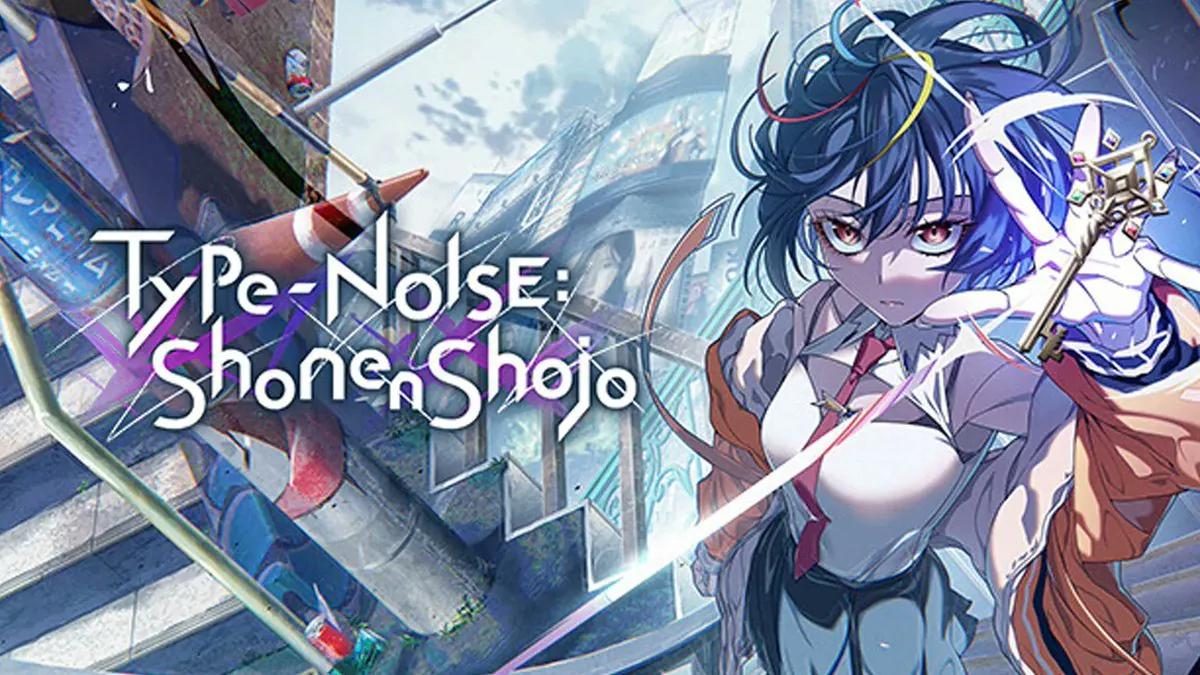
Japan-based developer MYU of DankHearts has formally announced their plans to bring Type-NOISE: Shonen Shojo, a 2D point-and-click puzzler with deep ties to traumatic memoirs and cultural influences, to PC. According to its creator, the game will bring a vast array of thought-provoking puzzles and a distinctly “unique prison design that blends reality and emotional depth.”
In a bid to learn more about Type-NOISE: Shonen Shojo ahead of its global debut, I decided to reach out to MYU, who was ever so kind as to share some information on the game’s current status.
Type-NOISE: Shonen Shojo is on the horizon, and we’re super excited to see more of its labyrinthine features as it edges towards its official debut. Speaking of which, would you mind introducing the game to our audience? What is Type-NOISE, in a nutshell?
It’s a “trauma-resolving mystery adventure” that depicts the escape of six boys and girls transported to Noise Scramble City, a town both similar to and different from Tokyo.
The game is primarily a 2D point-and-click exploration and puzzle-solving.
The theme of the game is “trauma”, with each character having their own personal trauma. These traumas manifest as mysteries within the game, allowing players to enjoy completely different puzzles for each character. There are very few puzzles that feel similar.
The core of the game lies in progressing through exploration, recalling past traumas, and using hints from those memories to solve the puzzles.
Tell us more about this “mental prison” of yours—Noise Scramble City. From which portion of the world did this Tokyo-esque dreamscape stem from?
I live in Japan, so I wanted to create a game that uses Japanese scenery. The reason for Japanese landscapes is because the boys and girls in the story lived there, created memories there, and experienced their traumas there.
I wanted to convey the shift and emotions of a familiar, everyday landscape transforming into a prison through the screen. To achieve that, I felt it was essential to have visuals unique to this game, and I went through a lot of time to design an original “prison” that would stand out.
For players to instantly recognize the game, I needed something powerfully striking and inspiring.
That inspiration came from an experience in my childhood.
My father was a strict and stern man. When I was around 10 years old, he would take me to art museums and galleries. Afterward, he would make me write essays on what I saw and thought. I hated it. On weekends, the thought of going out became something I dreaded. If I couldn’t write a good essay, my father would yell at me. I still remember crying as I wrote those essays. It was, in a sense, a kind of traumatic experience.
However, looking back now, what I saw at those museums and galleries were incredibly valuable and new experiences.
I saw works by various artists such as Picasso, Van Gogh, da Vinci, Botticelli, Vermeer and many more. While they were replicas rather than originals, for someone like me who had grown up with anime and manga, it was shocking. Until then, I knew nothing about abstract or impressionist art.
The one that left the greatest impression on me was the work of Salvador Dalí. His style broke free from conventional ideas, blending the real world with the “world of perception”. Inspired by Dalí’s works, I created the design for the prison backgrounds in Type-NOISE.
By combining elements of the boys’ and girls’ traumas with elements of daily life, I created a unique prison design that blends reality and emotional depth.
And then there are our six teenage protagonists. Mind telling us what their roles are in this internal drama? Who are they, and what exactly is it that they’re trying to accomplish?
While I can’t reveal too much to avoid spoilers, the boys and girls came to Noise Scramble City to forget their traumas. Although they must recall these memories to progress in the game, their bad memories were originally erased.
The protagonist, Zena, has amnesia but is determined to escape the city to help her single mother.
Itsuki is a boy who is constantly irritated and seems to be angry at something.
Honoka is a flashy high school girl who wears an orange hair accessory and has customized her uniform to match her own style.
Kaito has amazing hair and accessories to hide a large birthmark on the left side of his face. Despite his flashy appearance, he is shy and struggles with social interactions.
Hiyori is a girl who seems to be a popular content creator but often tells unnecessary lies, unintentionally, to grab people’s attention.
Soto wakes up in the same place as Zena and cares about her, providing support. He is a helpful boy who can’t ignore others in trouble.
Spectre is the overseer of this city. He tries to persuade Zena and the others not to leave.
These characters are all vividly unique, but that’s because they are inspired by emotions everyone has experienced.
In Japan, there is a concept called bonnō (worldly desires), which is a Buddhist term meaning “mental activities that disturb and trouble the body and mind.” It’s the idea that we are not tormented by others but by our own desires and attachments. Among these, six main desires form the foundation:
貪 Tonn (Greed): The desire to possess everything.
瞋 Jin (Anger): The shallow tendency to get angry through your selfish behavior.
癡 Chi (Foolishness): Complaining and grumbling over things that don’t go your way.
慢 Man (Arrogance): A heart filled with pride and conceit.
疑 Gi (Doubt): Doubting the truth.
悪見 Akken (Distorted Views): A pessimistic view of things.
Everyone has experienced these feelings at some point. These emotions became the foundation for designing the characters’ traumas and their appearances.
Why is the boy here? Where is this place? Why have their traumas manifested as prisons? What are these traumas based on the mind which everyone has? Play the game to uncover the answers for yourself.
We would love to hear more about the art style. Would you mind walking us through the early stages of its development? What inspired this look, in particular?
Since I talked about the background of the prison earlier, I’d now like to talk about the character design. Initially, this project started as a music video (MV). A video that combines anime-style visuals with music. However, I realized it would be difficult to convey the theme and story effectively, especially since I had no experience in that area. That’s why I decided to shift to creating a game, something I had experience with.
As a result, this work incorporates cel animation throughout, utilizing the skills and techniques I developed while working on music videos.
I think the character art reflects inspiration from game titles that influenced me, such as Danganronpa and the Persona series. Since I’m not so good at creating complex or decorative designs, I aimed for simplicity while ensuring the characters remained appealing. It took me around six months to a year to develop the designs.
The concept began with the idea that it would be interesting to create an escape game similar to Danganronpa with characters from a psychedelic world like Persona. You could say this project is simply a collection of things that I love.
【お知らせ】#INDIELiveExpo 2024.5.25にて、僕が企画/シナリオ/キャラデザをしてる脱出アドベンチャーゲームが紹介されましたーーー❗️
トラウマ ❌ 迷宮都市 ❌ 謎解き
『雑 音 系 少 年 少 女』⬇是非ウィッシュリスト登録お願いしますー!🙏https://t.co/ZJrIuU9nNv#雑音系少年少女 pic.twitter.com/p0VZmiBUWq
— MYU@雑音系少年少女 (@myu060309) May 25, 2024
So, what sorts of internal conundrums are we looking to solve in this alternate reality? You’ve mentioned things like “story-rich puzzles” and a “maze-like” metropolis. Care to shed some light on these obstacles and how they will influence the storyline?
That’s an interesting question. For example, in the demo, the character Hiyori is an online streamer who constantly lies to her viewers. From an outside perspective, this behavior might seem embarrassing—something people wouldn’t want anyone else to know. However, Honoka and Soto who were with her, come to understand her past as if it were their own experience. This is one of the strange phenomena that occur in Noise Scramble City.
I believe that understanding another person’s pain is essential to overcoming trauma.
As the boys and girls work together to escape, they share and empathize other’s pain. But is simply recalling a trauma enough to overcome it? While not included in the demo, each character’s story culminates with them confronting the source of their trauma—a person tied to their pain who appears before them. Having learned to understand the pain of others, the characters will face this individual, engaging in a dialogue that is critical to resolving their trauma.
The only way to escape is for the characters to influence one another through their trauma. I hope players will experience the flow and development of this story through the game.
Would it be possible to grab a few pointers from you whilst you’re still here with us today? Do you have any words of advice for those who might be looking to pick up a copy of the game and/or demo?
The puzzles in this game are based on the characters’ traumatic experiences, serving as hints to progress. It might be more challenging compared to other games. If you think of it as being similar to real-life escape rooms, that might be a better picture.
If you find yourself stuck, try revisiting the noise—you might gain new inspiration.
Additionally, I hope players will enjoy the visuals of the prisons and the cel animation art in this game!
Suffice it to say that we are thrilled to see a fresh demo for the game. What we would like to know, however, is whether or not we will be seeing more of it before year’s end. Any chance of another update ahead of the forthcoming season?
As for whether there will be updates within the year, that’s a very exciting question. Currently, there is a demo campaign, where anyone who completes the demo game can send their opinions and feedback through a special form. Participants in this campaign will have their names included in the end credits of the full version which I think is pretty unique.
There are already over 150 submissions, and I’m both surprised and thrilled by the enthusiasm. The deadline for this demo campaign is December 19th. Therefore, by the end of the year, I plan to announce via Steam News how we will address the feedback, suggestions, and areas for improvement we’ve received.
My goal is to make the game easier to play and more enjoyable, and I will continue to refine it accordingly. While updates to the demo are planned, they may come after the start of next year. Please stay tuned for further updates!
Would you mind providing us with a few useful links for the game? Any social channels, newsletters, or upcoming events that you would like to share with our readers, perhaps?
A demo of the game is available. I would be really happy if the player leave a review!
I will also be very happy if you wishlist the game! Wishlisting is a direct support you can do for the game and developers, so please! Push that button! I will do my best in developing the game!
Is there anything else that you would like to add to the page before we wrap things up here?
This game uses a classic point-and-click system and does not have a particularly surprising gameplay feature. However, its unique process of turning characters’ traumas into prisons, recalling their past traumas, and using that information to solve puzzles sets it apart.
The story isn’t just a reward for solving puzzles; instead, it’s intricately designed as part of the mystery itself. Players need to carefully read and understand the narrative to progress. This integration of story and puzzle design is what makes Type-NOISE: Shonen Shojo stand out and serves as its main selling point.
The game offers around 40 different puzzles, so I think players won’t get bored as they progress. The catharsis of connecting the dots from puzzles to the “Noise” and seeing your predictions confirmed is an experience only possible because of the deep connection between the puzzles and the story.
We hope you’re looking forward to the full release!
Thank you so much for your time!
You can source more information on MYU’s Type-NOISE: Shonen Shojo over on X.

