News
California’s $700M Vallejo Casino Project Shut: Tribal Sovereignty vs Federal Power

 Add Gaming.net to your preferred sources on Google

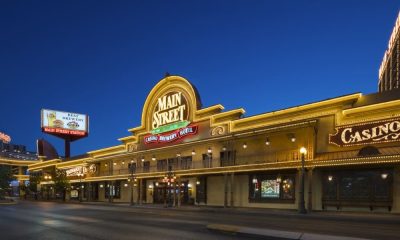
The Preview Casino in Vallejo, a temporary casino to attract attention to a $700 million casino resort project, was forced shut by the Interior Department after just a week of operation. The project was approved back in 2025, and would have given the Scotts Valley Band of Pomo Indians their first tribal casino, but it was not to be. Now looking to challenge the case, the saga raises a very important question about tribal gaming in America.
Who gets to decide where or if tribes can build casinos in the US?
They have tribal sovereignty through the Indian Gaming Regulatory Act, but still it is the Feds who can determine whether the land qualifies for gaming. California is also a hot territory for tribes, it boasts a good 65+ tribal casinos and as landbased commercial casinos are not legal, they practically run a sort of monopoly. But even there, it seems the Federal Government has influence over the sector.
Feds Shuts $700m Preview Casino After a Week
It was a pretty tumultuous few days for the Scotts Valley Band of Pomo Indians. The tribe had seemingly bagged the approvals to start building, had broken ground on the $700m project, and on July 25 they opened a temporary casino near Columbus Parkway. As far as locations go, this was a gold mine, as it was just a ~40 mile drive from downtown San Francisco, making it highly accessible from the major city.
But on August 1, barely a week after the temporary casino was opened, the Federal Government forced the project to stop. It determined the tribe didn’t have the “required historical connection to the land”. The approval which had been given back in January of 2025 was revoked on July 30. The Assistant Secretary for Indian Affairs, William Kirkland, determined:
“the Band has not demonstrated the requisite significant historical connection… Consequently, the Vallejo parcel does not qualify as restored lands within the meaning of applicable law, and the Band may not conduct gaming on the parcel pursuant to [IGRA’s] restored lands exception.”
The gaming operations were suspended quickly, and the tribe announced that it will challenge this decision.
Project and II vs III Gaming
The $700m project Vallejo casino project, which would have seen the band erect a casino resort for the San Francisco area, The project would have totaled 400,000 square feet of building space, with plans to create a hotel & amenities, entertainment facilities, dining, and a casino floor with Class III gaming machines. Class II encompasses your typical slot machines, video poker terminals, house-banked table games like blackjack, baccarat and roulette, dice games and various sports betting functions. The preview casino only offered bingo-style games, it didn’t have slots or table games, but Class II gaming machines.
Quickly summarizing:
- Class II: Bingo and non-banked card games (like peer poker)
- Class III: Vegas-style table games and slot machines
Class II gaming machines can have the same look and feel of regular slot machines, but these are centrally controlled and you compete against other linked players in a network. They don’t run on standalone random number generators. These are regulated under the IGRA and tribes have the sovereign autonomy to run these games.
Class III, on the other hand, are regulated by the state gaming agencies and approved of by the Secretary of the Interior, before tribes are allowed to serve them.
Who Are the Scotts Valley Band of Pomo Indians
The case is made a little more complex by the fact that the Scotts Valley Band of Pomo Indians are a small tribe, which only gained federal recognition back in 1991. They were based in Lake County, and their original reservation was Sugar Bowl Rancheria on the western shore of Clear Lake. But their status was terminated under the California Rancheria Act back in 1965, and after regaining recognition in 1991, the tribe was landless. In 2025, the Department of the Interior gave the tribe a 160 acre land parcel in Vallejo, and from there, the tribe tried to set up their casino resort.
Now California has over 60 recognized tribes and 65 tribal casinos, and there are definitely smaller fish amongst these tribal communities. The Feds definitely have a point, in that this smaller tribe was only just given a trust parcel a year ago, which isn’t anywhere near the rural location they were historically based in, and they practically went straight ahead with plans to build a casino resort. But how does this fit into the greater picture?
California’s Tribal Gaming Sector
For California has a bustling tribal gaming sector. Landbased casinos are illegal for commercial partners, as are online casinos and California even banned sweepstakes casinos. Needless to say, they aren’t close to legalizing sports betting, and so these tribes enjoy a “nearly” full monopoly on gambling (apart from the CA card rooms, which we will get to in a bit). Only Oklahoma has more tribal casinos than California (110+ to 65+), but California is the major winner in terms of revenue.
The National Indian Gaming Commission published its 2025 GGR report, where it recorded $46.2 billion in total GGR – a 5.3% growth on the 2024 financial year. It didn’t share the revenue by state, but instead by region, and the top players were:
- Sacramento (CA and northern NV): $12.6b across 88 operations
- DC (NY, NC, FL, AL, MS, and LA): $11.2b across 46 operations
- St. Paul (MN, WI, MI, IA, IN, and NE): $5.3B across 101 operations
- Portland (WA, OR, and ID): $4.9b across 58 operations
- Phoenix (southern NV, CO, AZ, and NM): $4.2b across 54 operations
- Oklahoma City (Western OK and TX): $3.7b across 870 operations
- Tulsa (KS and eastern OK): $3.7b across 74 operations
- Rapid City (MT, ND, SD, and WY): $0.4b across 44 operations
California’s biggest landbased casinos are mostly based outside the main cities, in regional or rural locations. Now going back to that monopoly, it is not entirely an open and shut case. For California also has card rooms. These are small, localized venues where you can play blackjack-style card games (and other “house-banked” casino games), and they are legal. On the condition that there is no house dealer, but stand-in dealers, and the house bank (the money you pay into when you lose, or get your winnings from when you win), is not owned by the venue, but by a third party.
These card rooms had legal tussles in California, as the tribes wanted to force them shut. After all, they did eat up smaller revenue pockets that otherwise may have gone to the tribes, and represented a rival gaming niche. This is a $5.6b industry, and considering California’s tribal gaming is ranked at $12+ billion, they have a right to be concerned. But the courts determined that the card rooms are legal, and as such, they can continue to operate in California.

Federal Power Over Tribal Gaming Industry
While tribes across America are protected by the Indian Gaming Act, the Commission, and enjoy state-tribal compacts in several regions, they are not completely autonomous. The Federal Government, and even state gaming authorities, still have varying levels of influence over the tribes.
We have seen this work in favor of the tribes, such as in states where commercial landbased casinos remain illegal and the tribes are the only ones with the rights to provide gambling products. Or, even in the online casino sector in America. Maine was the last state to legalize online casinos, and did so by giving the tribes exclusive licensing rights to the sector. A lot of states with legal sports betting also created systems with tethered licenses, where commercial operators could only gain access by partnering with local organization, or tribes, or a combination of both.
However, there have also been cases of the opposite. Like this case, with the Vallejo Casino project, or, the North Fork Mono Casino and Resort, where the California Supreme Court blocked a proposed casino on Federal trust-given land. Going off reservation land, or using “disputed land” like the Scotts Valley tribe has (land it received through a trust parcel, but not historically associated with the tribe), leads to complications. Complications that the tribe thought it had addressed when the approval was given earlier this year, but it has been revoked.
Where The Ruling Leaves Tribes
Going forward, the tribe has stated it will challenge the case. It may win back the approval, like the Alabama-Coushatta Tribe (TX) won with the Naskila Casino Resort, which was approved on non-tribal land (and near Houston). Whatever the case, it highlights a key milestone in the native tribes’ plight, pitting tribes against feds, and the Indian Gaming Regulatory Act against the decision of the Interior Department.