News
Merkur Expands into France With Acquisition of 7 Le Stelsia Casinos

 Add Gaming.net to your preferred sources on Google
Merkur has reached an agreement to acquire a 95% majority of the company that owns the Société Française de Casinos. If the approvals are obtained and all the necessary legal permissions are satisfied, it could give the German gambling company control of a small portfolio of mid-sized French landbased casinos. These are mainly regional venues, spread out across the country from Normandy to the Pyrénées-Orientales area. It would be a very important expansion for the German company, which specializes in gaming software, landbased gaming cabinets, online casino and sports betting; Merkur also owns a portfolio of landbased casinos across its native Germany.
The acquisition, which should be finalised in Q1 2027 if all goes to plan, would also be yet another twist in the French landbased casino saga this summer. For it was only back in July when Banijay Group announced it would acquire JOA Groupe, and with it, become the third biggest operator in France.
Merkur To Acquire Majority Shares in Casigrangi
Merkur Spielbanken has agreed to acquire 95% of Casigrangi, the holding company behind the Le Stelsia casino group. This would give them control over the Le Stelsia casino portfolio, which comprises all seven Société Française de Casinos (SFC). So it is not direct ownership, but one that can give Merkur Group – the parent company – a hold over some luxury-class French casinos to add to its portfolio. Here is a quick breakdown of who is involved and the parts they play in the transaction.
- Merkur Group: German gambling group active in gaming machines, software, online gambling, betting and land-based casinos
- Merkur Spielbanken Beteiligungs GmbH: A subsidiary of Merkur Group that is focused on running retail casinos and gambling venues
- Casigrangi: The holding company behind the Le Stelsia casino group, which operates 3 of the 7 casinos directly
- Le Stelsia: French casino group operating seven casinos and related hospitality and entertainment businesses
- Société Française de Casinos (SFC): French casino company operating the remaining 4 casinos
- Merkur Spielbanken would gain access to all 7 casinos across the holding company and the casino group’s portfolio.
The Casinos In the Deal
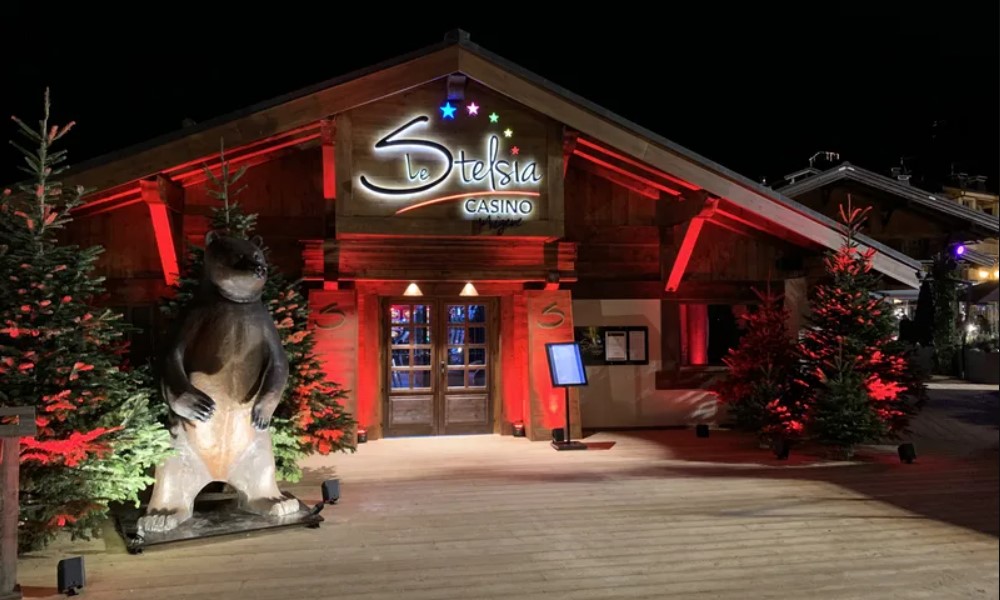
All seven casinos operate under the same corporate umbrella and they are widely marketed through Le Stelsia Casinos. They share a unified loyalty program, and most of the games are the same across the casinos – but there are slight nuanced differences between the type of experience offered.
The Casigrangi-run venues are luxury and premium casino hotels, featuring VIP table lounges and focusing more on traditional tables and poker. The SFC group’s venues are more affordable, targeting traveling tourists and locals alike, with more focus on quick play slots and gaming machines.
Casigrangi Casino Portfolio
Merkur would be getting good exposure to some of France’s most recognizable tourist destinations through these casinos. These are scattered across France, with Megève sitting deep in the French Alps, Granville up on the Northern Atlantic Ocean coast, and Mimizan on the Western coastline South of Bordeaux.
- Casino de Megève (Haute-Savoie): An Alpine casino aimed heavily at tourists and visitors to the luxury ski resort, offering slot machines, roulette and blackjack
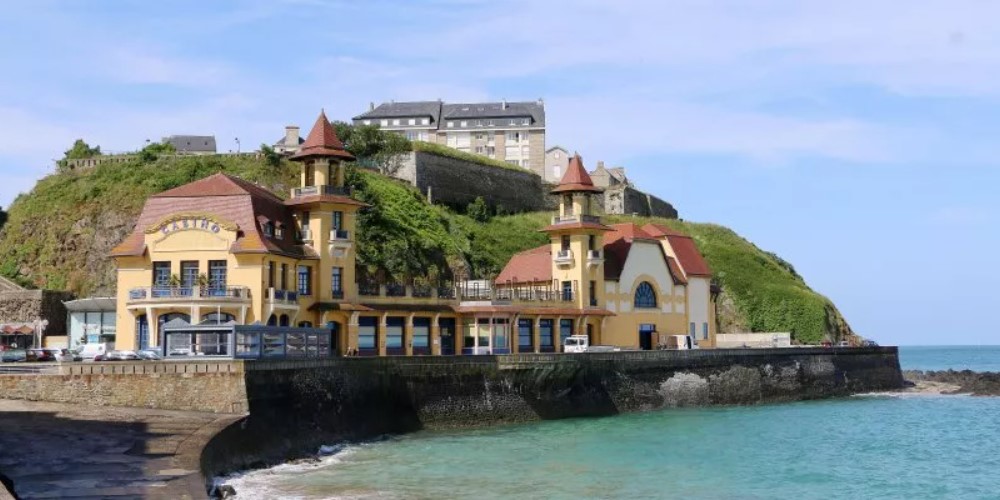
- Casino de Granville (Normandy): A coastal casino serving both local customers and tourists visiting the Normandy seaside resort, with slots, electronic table games and traditional blackjack
- Casino de Mimizan (Landes): An Atlantic coast casino catering to locals and holidaymakers, with 75 slot machines, blackjack and electronic roulette
These casinos offer luxury experiences, combining gaming machines and table games with restaurants, bars, and other leisure and entertainment options.
Société Française de Casinos Portfolio
SFC operates four casinos, three of which are located in the South of France, and the last in the town of Châtel-Guyon in the center of France. The Le Stelsia Gruissan is by far the largest property and also generates nearly have of SFC’s gross casino revenue.
- Casino de Gruissan (Aude): The largest SFC property, located on the Mediterranean coast and offering more than 100 gaming machines alongside table games
- Casino de Châtel-Guyon (Puy-de-Dôme): A casino in a historic spa town, offering gaming machines and table games for local residents and visitors
- Casino de Collioure (Pyrénées-Orientales): A smaller Mediterranean casino serving tourists and locals in the popular coastal town, with slots and table games
- Casino de Port-la-Nouvelle (Aude): A smaller seaside casino offering gaming machines and table games to local players and holidaymakers
Together, the four casinos offer a mix of slot machines and table games, with gaming machines making up the vast majority of SFC’s gambling activity.
Merkur Spielbanken German Venues
Merkur is no stranger to running casinos, the Spielbanken division operates 15 casinos in Germany. It is one of the biggest operators in Germany, attracting more than 2.5 million visitors every year and offering a mixture of table games, poker, gaming machines and other entertainment. The group is also involved in gambling venues outside Germany, specifically, in cruise ship casinos.
But Merkur Group, the company as a whole, is perhaps best known for its gaming software. The company has retail gaming cabinets all over the world. In 2025, Merkur acquired Gaming Arts, a Nevada based company, to give them broader access to the US casinos, and they strengthened this relationship further when they acquired White Hat Studios in 2026. Merkur gaming machines are available in all the major retail gambling markets, with distribution in:
- UK casinos
- Spain casinos
- Netherlands casinos
- Austrian casinos
- Australia casinos
- Mexico casinos
- Argentina casinos
And more. This deal with Casigrangi would open up the doors to their neighbors, France, which has a very intriguing casino industry.
French Landbased Casino Sector
For France has a big retail casino industry but online casinos are illegal. It is one of the few countries in Europe that still bans iGaming, and despite efforts to legalize online casinos in France, realistically a full licensed sector could be years away. Online state lotteries, sports betting, horse race betting, and online poker (peer to peer, like Texas Hold’Em), are all allowed. But online casino games like slots, blackjack, roulette, baccarat, and craps, are not.
As for the retail sector, right now it is dominated by two large domestic operators: Groupe Barrière and Groupe Partouche. These two own some of the largest casinos in France, with many based in seaside resorts, tourist destinations and spa towns. What’s more intriguing is that retail casinos are not legal in Paris. In fact, casinos cannot be built within a 100km radius of Paris, with the exception of Enghien-les-Bains, and only clubs de jeux – or gaming clubs – are legal.
Despite the restrictions, France was ranked fourth in Europe for total gross gaming revenue in a 2025 EGBA report. The GGR was estimated at €14 billion back in 2023, which is just behind Germany at €14.4 billion, the UK at €19.8 billion, and Italy at €21 billion. Of that €14 billion, €3.8 billion came from the online sectors (sports betting, horse racing, lotteries and online poker), and the remaining €11.2 billion was from the landbased sector.
Changes in French Commercial Gaming
France has no online casinos, and it also takes a hard stance against prediction markets, being one of the most outspoken EU regulators on that industry. This, however, has not damaged the French gambling industry, which remains among the biggest in Europe. Merkur, which undoubtedly has a big portfolio in online casinos, seems to think there is a lot of potential in France. And they are not the only ones.
In July, Banijay Gaming took a similar approach to enter the French landbased casino industry. It acquired JOA Groupe, a regional operator with a network of 30+ mid-sized casinos spread out across the country. Banijay had, before that, acquired Tipico Group, and the idea for JOA was to integrate the digital sports betting solutions into the French casino network.
Merkur’s deal is much smaller, and it is only looking to control 7 casinos. But there could be more behind this. While it may not be something that happens in the near future, there are still lawmakers and insiders advocating for the legalization of online casinos. If it were to happen, then operators with a foothold in the landbased sector would already have the infrastructure and the knowhow to hit the ground running. It is still speculative, but it may not be a coincidence that two major digital gambling powerhouses have invested in the French landbased casino sector this summer.