Reviews
Ghost of Yōtei Review (PS5)

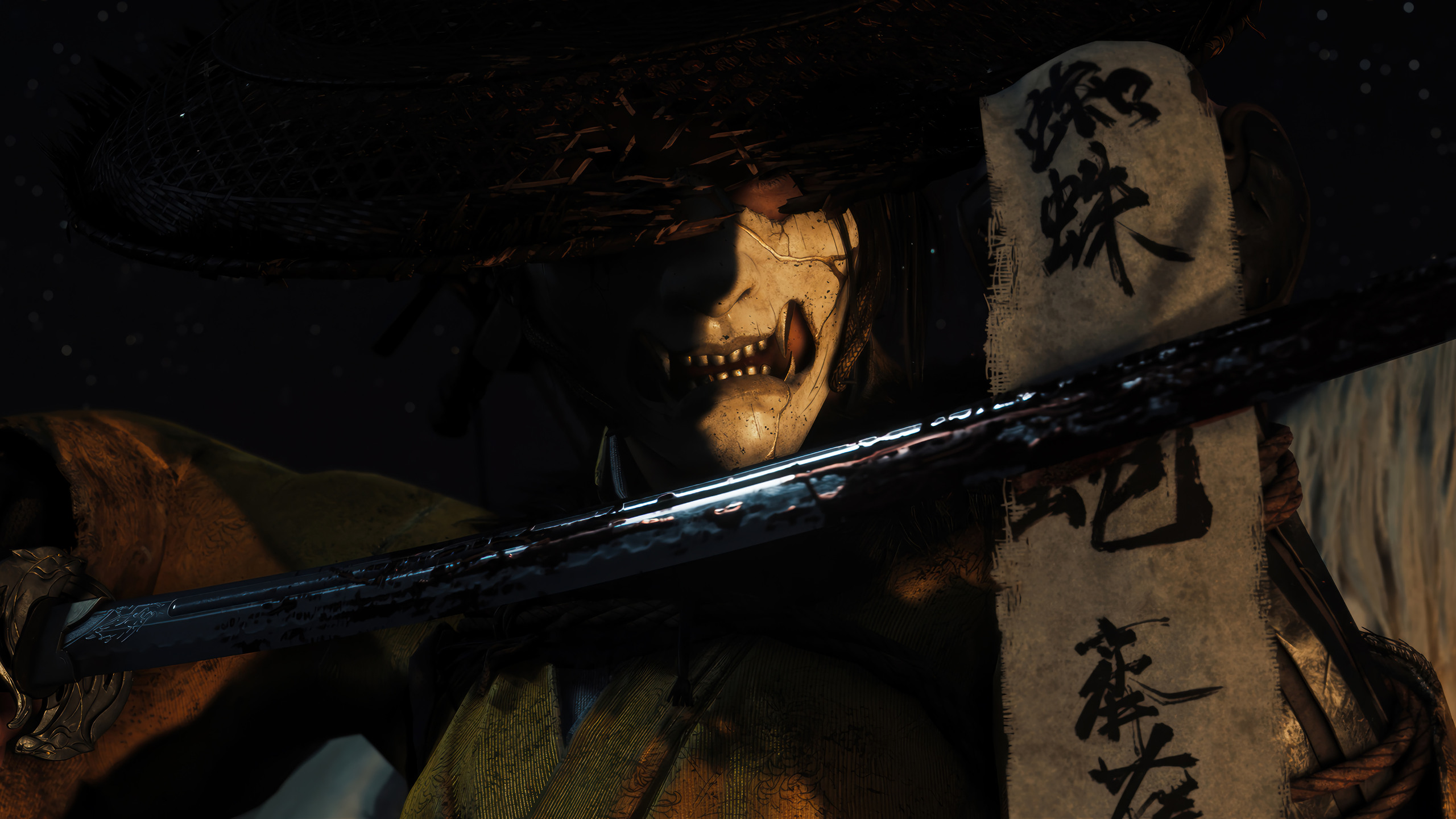
Blind rage will cause you to do crazy things. To step out of your character and dive right into a hotbed of blood and violence. For Atsu, the new mercenary protagonist of Ghost of Yōtei, the sequel to Ghost of Tsushima (2020), blind rage has become a new norm. She’s been off hacking and slashing through fiends, finally returning to her home province of Ezo to enact the vengeance that fueled her blood bath.
For those who’ve already traversed Tsushima’s 1274 Mongol Invasion of Japan, you’ll already know the thrilling sword fights and beautiful sceneries that await you in the sequel. Scaled up a notch, in the vastness of the world itself and battles therein, you’ll quite enjoy a most thrilling time. But as sequels often suffer the flaws of their predecessors when they stick to their guns, you’ll occasionally run into a few bumps in the road.
Nothing game-breaking, to be fair. Ultimately, Ghost of Yōtei is a heavy action-adventure RPG you’ll definitely want to slot in some time in the coming weeks to appreciate fully. Diving further into all you can expect is our Ghost of Yōtei review of the game’s core features.
Revenge Best Served Cold
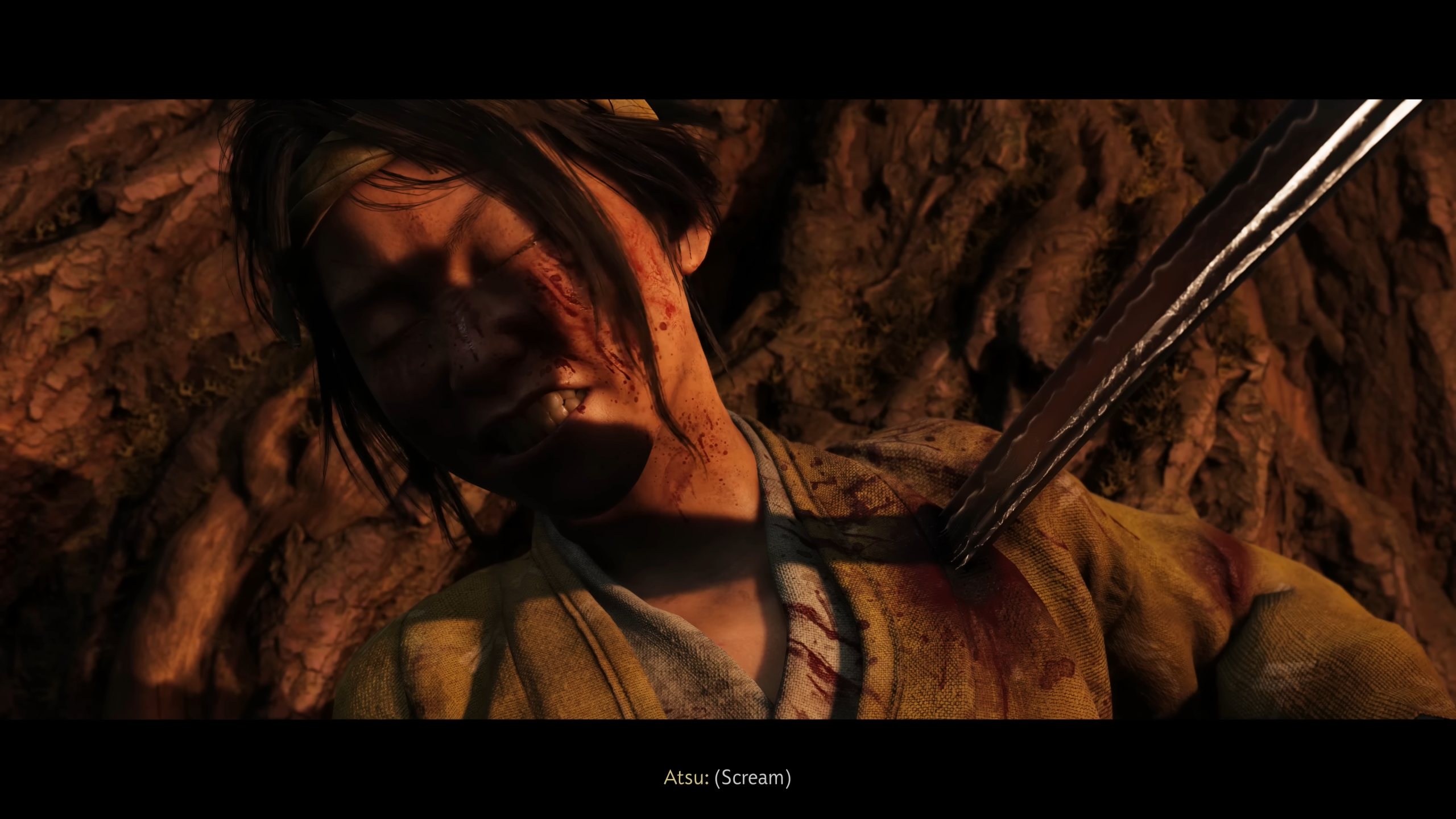
You know what, I completely identify and root for Atsu’s hellbent track of revenge. Imagine your parents were ruthlessly murdered when you were a child. Your brother left, wandering off into the unknown. And yourself, pinned by your father’s sword to a tree, set ablaze, and left to die. It’s a miracle you survived, earning the moniker Onryō, a ghost of wrath and demise.
After honing your mercenary skills far off into battles you couldn’t care about, you return to your home province of Ezo to enact the vengeance you’ve so thoughtfully planned. Well, not so smartly, given all your plan is is to go one-by-one, taking out all of the masked warriors involved in wiping out your family. They’re called the Yōtei Six, pretty vicious and easy-to-hate villains.
From the premise, you’re instantly hooked into Atsu’s narrow lens for revenge. You feel for her loss and grief, and understand what needs to be done to bring peace to her raging thoughts. Even when the plan is mostly to maim and kill one and all, it’s at the very least fun for happy-trigger/sword people.
Great Start That Trails Off

I must admit, though, the drama trails off onward into the story. While in the beginning, you’re heart-wrenched by the level of cruelty over Atsu’s family, and want to find out why, exactly, anyone could be so cruel, the plot winds up leaning heavily on revenge-based stories, where your only focus is to kill your enemies off. It gets boring, frankly, without diverging political drama and romances. But ultimately, it’s still a fun ride to unravel the strings all through to the end.
Plus, Atsu is an absolutely fantastic protagonist in the ruthless and vengeful role she plays. And she’s supplemented by the exploration of the Yōtei six’s backstories and motivations. Turns out, Atsu’s family’s demise wasn’t random, and her parents’ history ties into the larger Ezo’s gripes with the status quo. Nothing too deep, but ultimately interesting enough to give purpose to the blood rage.
Chasing Sunsets
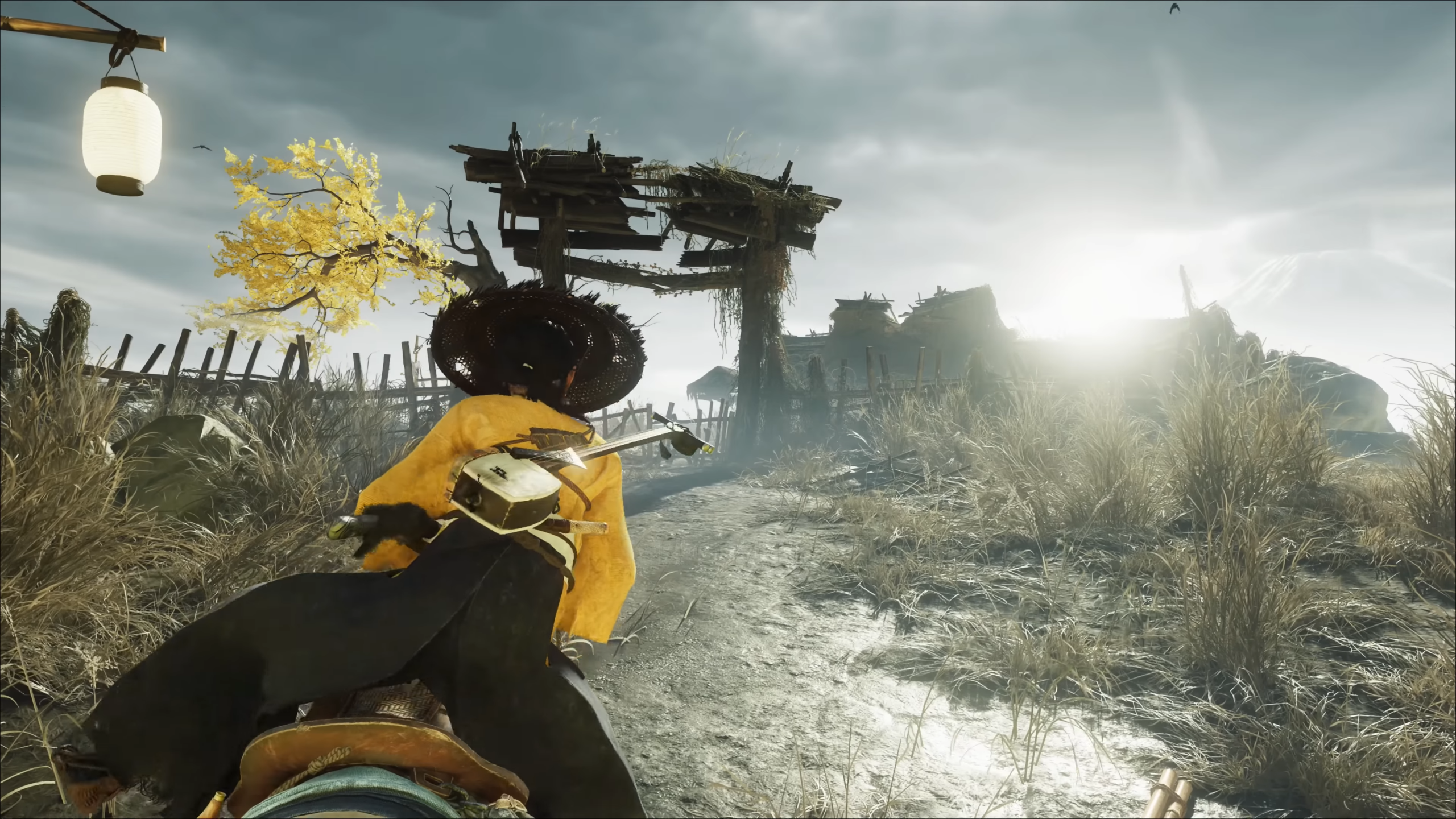
As for Ezo’s look and feel, my God, does it feel like heaven, if heaven were nature-centered. Getting lost here isn’t a matter of if but when, especially with the freedom to branch off the beaten path. Not that there’s a beaten path even, with Ghost of Tsushima’s returning in-game map guides. The whistling wind serves as your guide to the next side quest. And the golden birds fly ahead of you to your next juicy collectible.
In the world design and impeccable detail lie the clarity of where your next adventure will lead. And in the moments when it’s spontaneous, you can’t help but feel lost in the awe of it all. The moments when you talk to a random guy and he drops hints about a reward nearby. When you allow curiosity to get the better of you and wind up encroaching on a camp with assailants hiding in the bushes, waiting to spring up when you least expect it.
It’s simply a joy to be galavating in Ezo, on horseback with the flowers lifting off your hooves. With the sunset casting its glares on your back, carefree and alive. And even though it’s often touristy, this does feel like a cultural experience authentic to Japan’s history and seasons. Now, you might compare Ghost of Yōtei’s open world with Elden Ring and Breath of the Wild’s free-form discovery and come up short for a few reasons.
Not Quite There Yet

Dense as Ezo is, with a myriad of side activities to do, they soon become repetitive, especially with how simple they can be. Merely following the wind to your next reward hardly poses any risks or dangers, most of the time at least. Or when a side quest springs up with fiends, it eventually becomes boring to fight some bad guys encroaching from out of the bushes. It’s a fine line sustaining that spontaneity with variety. And Ghost of Yōtei, at times, falls short.
You can save a pack of wolves, enacting justice even as you seek your own. But after completing a bunch of these, it grows repetitive. At least you do earn a side buddy wolf you can summon when you’re caught in the thick of things. And there’s a wolf skill tree independently dedicated to upgrading this. You can hunt down the most lucrative bounties while also keeping an eye out for the one on your head. And it’s nice that as the bounties increase, so does yours and the skill level of your rival bounty hunters.
Simply pay attention to NPCs you bump into, and you’ll grab hints of your next side activity or reward, like the hot springs that restore your health. Or the maps you can buy that correspond to your map, revealing hidden spots for perks and rewards. You can pet the foxes and follow them to find charms in shrines, returning from Ghost of Tsushima. In fact, many of the exploration, clue-acquiring, and side quests return from the first game.
If You Can Avoid Drawing the Sword

Stealth returns, too, from the first game, in many of its rawest forms. Crouching in tall grass and firing arrows at unsuspecting enemies. It’s pretty fun with the kusarigama, in particular, swinging it at faraway enemies, Mortal Kombat Scorpion style. It’s a shame you aren’t necessarily punished for getting spotted. If anything, you can do away with stealth completely.
Vengeance is Mine
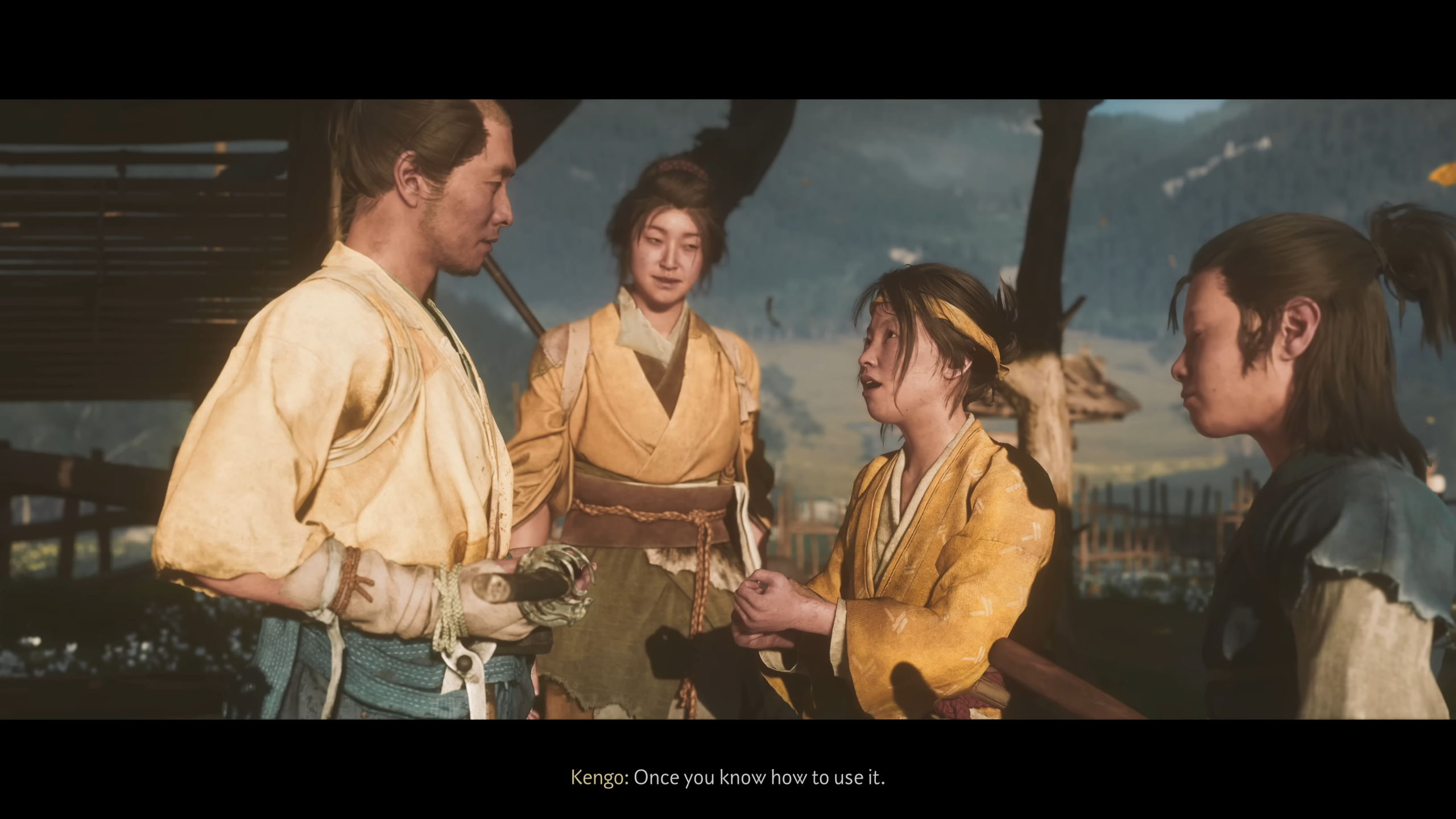
Very clearly and brazenly, Ghost of Yōtei’s focus is on brutal and visceral combat. Primarily katana-based, it should get you through many of the demanding fights. The dual-katana, though, will be faster and more agile for pesky groups of enemies. But the kusarigama will be mandatory for breaking enemy shields. As such, you can’t go without swapping weapons if you’re to survive the often varied enemy types you meet at a go. The same goes for the ranged bow and rifle, and odachi and yari, which each have their specific use cases in battle.
In that sense, Ghost of Yōtei moves away from the first game’s stances for dealing with varied enemy types, and to swapping weapons. And in turn, achieves a more dynamic, more satisfying battle sequence. It’s a rock-paper-scissors mechanic, to be fair, where you anticipate the enemy’s next weapon swap and counteract with the most effective weapon type. Yet, the parry timing windows can be pretty brutal if you lose your cool for even a millisecond. The hints are quick, and must be keenly paid attention to if you’re to come out swinging.
Attacks, blocks, parries, and dodges, all dead-on, fluid, and smooth, all hella satisfying to weave in and out of. And against the boss battles, all the more frantic and exhilarating. If the rock-paper-scissors never quite thrills you as much as proficiency and progression in certain loadouts, you can always discover clever ways to stretch out combos. Think smoke bombs and kunai, alongside pistols, and you should have an absolute blast cleansing Ezo of its villainous rot.
Verdict
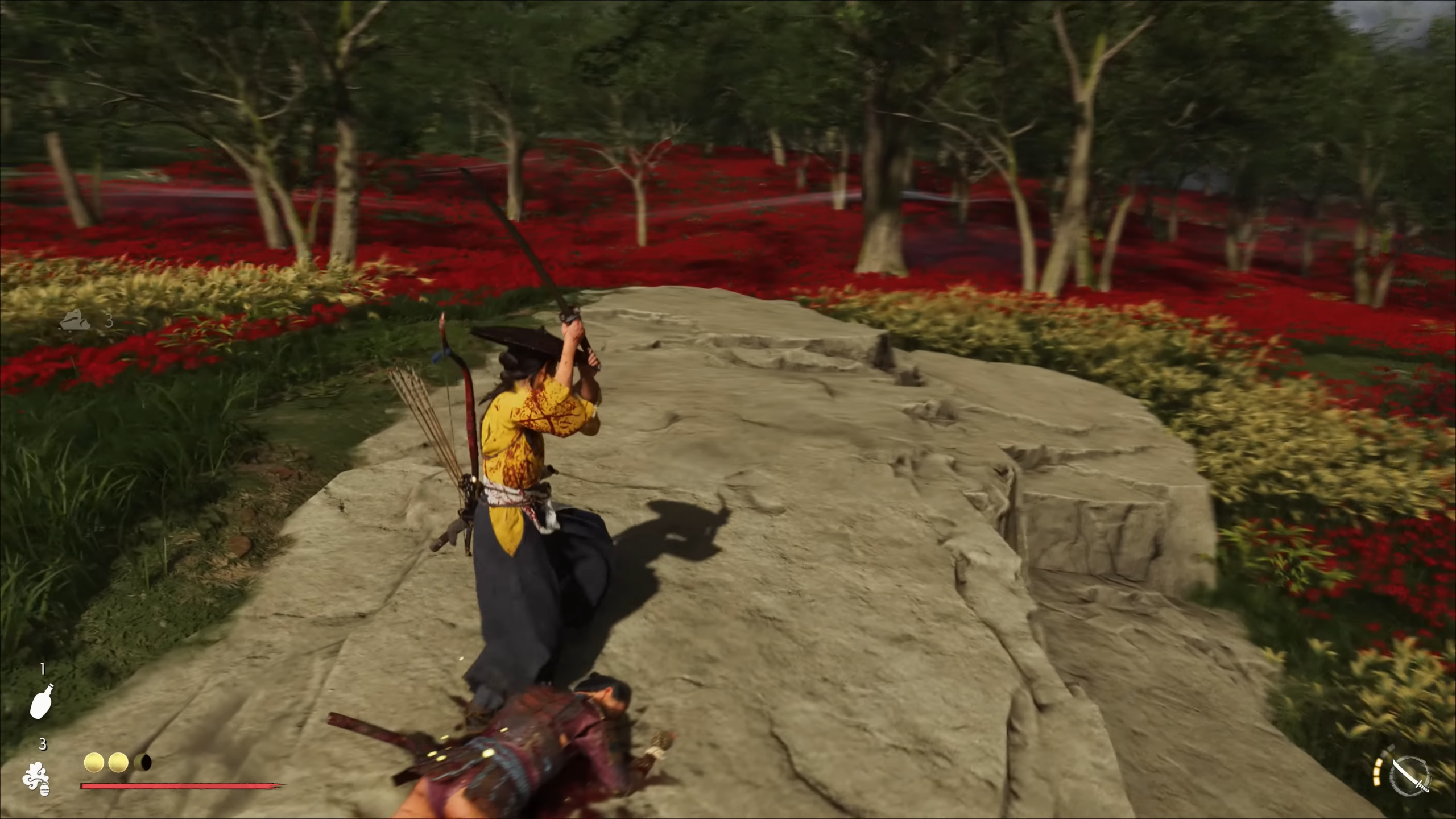
It’s here, the follow-up to the critically acclaimed and many’s favorite game of all time, Ghost of Tsushima. And Sucker Punch didn’t at all disappoint, with their refinements of the original formula, and addition of quality-of-life features and updates. Now, you have an almost flaw-free RPG to dive right into. One that will fulfil your craving for discovery and wonder. Your thirst for bloodthirsty, vicious katana clashing and slashing.
Three hundred in-game years later, and Atsu, the new protagonist, forges on forward with a ruthless bloodlust for violence. Now, we set our sights on the next “Ghost of” that’ll bring the trilogy full circle. If Sucker Punch can finesse the spontaneity of exploration and the dynamicity of combat, the next game should be well on its way to claiming the best RPG game series of all time.
Ghost of Yōtei Review (PS5)
Quest for Vengeance
Rung out by now, but Ghost of Yōtei’s quest for vengeance still proves the plot thread is far from retiring. It still carries its emotionally heavy moments that fuel the visceral battle sequences. You follow along Atsu’s journey restoring peace within her soul, the best way she knows how: slaying every Yōtei that took her family from her. With only a few faults, many of which you’re less likely to find bothersome, you should enjoy a most brilliant take on exploration and katana blood bath.




