Legends
The Legend of Pappy Smith: The Father of Modern Blackjack

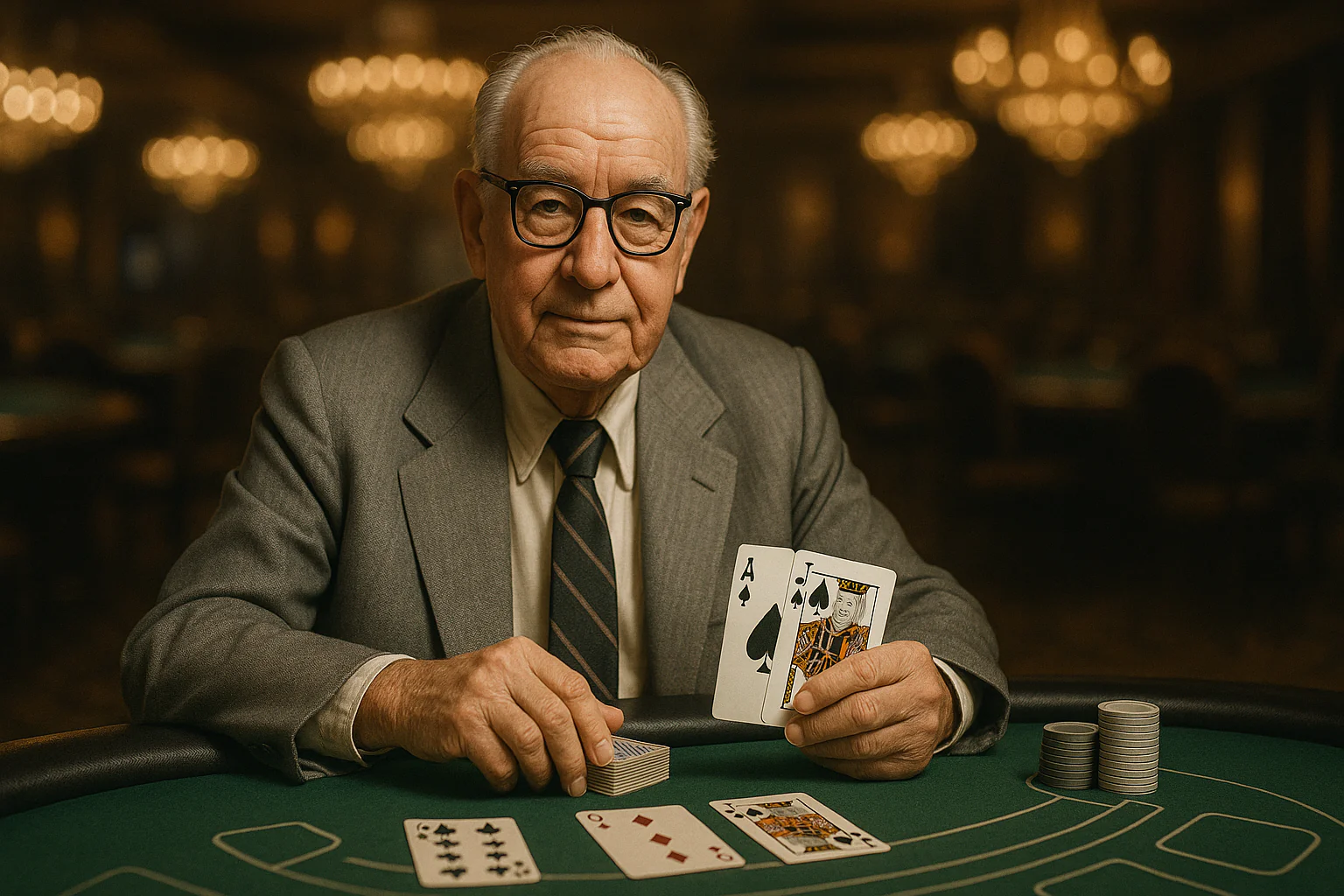
Blackjack’s popularity in America is staggering, after slots, it is one of the most highly demanded game at both landbased and online casinos. We see the games in films like Rain Man, 21, and, more recently, The Hangover series. And blackjack is also played by many celebrities, most notably Ben Affleck, who was even banned from some of the big Vegas casinos. It is almost unthinkable to think of casinos not having blackjack these days, but that was not always the case.
The hype around blackjack in America really took off in the 1950s, and Raymond I Smith, or Pappy Smith as was affectionately known, was the driving force behind it. Blackjack was played at casinos, but it was a very niche game that only specialists really dabbled in. Pappy Smith’s promotional efforts and marketing of the game pushed blackjack to the forefront. And as soon as the American public got a taste for the game, Blackjack shot to all new heights.
Early History of Blackjack in America
Before going into how Pappy Smith brought blackjack to America’s attention, it’s important to know a bit of the backstory. The game of 21 was first documented in a Spanish book by Miguel de Cervantes, in Sevilla. Rinconete y Cortadilla, written in 1601, mentioned the game Veintiuno (21 in Spanish). So we know it was around in the early 17th century, but the exact origins of blackjack are lost to time. Blackjack spread to England at the end of the 19th century, introduced as “vingt-un”. There were various games based on the early blackjack rules, but it was the English Vingt-Un that was brought to America in 1825.
Now, the game didn’t really take off, and gambling houses had to really sell blackjack to get any customers. One popular myth was that the gambling houses offered bonus side bet payouts to incentivise players. Drawing the Ace of Spades and a black Jack would pay out a 10 to 1 bonus. Whether the side bet ever existed or not is questionable, but the name “Black Jack”, or “Blackjack”, stood.
Still, this niche card game was overshadowed by the likes of draw poker, stud poker, and faro (a popular French card game). The legalization of gambling houses in Nevada in 1931 brought more attention to these games. Las Vegas opened for business, and blackjack arrived in Vegas. Though it was considered an exotic game, and something only veteran card gamblers took any interest in.

Who Was Pappy Smith
Raymond Smith was born in 1887, and was a showman early in his career. He ran carnival concessions across the Pacific Coast, learning how to attract and engage audiences. These skills would become invaluable later. Smith’s business took a hit during the Great Depression, and he traveled to Reno in Vegas. Accompanied by his sons Harold and Raymond Jr, he recognised Vegas’ potential to become a gambling hotspot. The Great Depression had sunk American businesses for a good 5 years by 1935, and Smith was keen to start a new venture.
Gambling had been prevalent in Las Vegas before the 1911 ban, and the potential was there after the ban was repealed in 1931. To make matters more interesting, the Hoover Dam was under construction nearby to Vegas, and there was a huge population of working males living in and around the area. There were already a few casino businesses running in 1935 when Smith arrived on the scene. With his sons, they took a $500 loan and rented a narrow storefront in Downtown Reno. It was named, “Harolds Club“, after Pappy Smith’s son, Harold.
Opening “Harolds Club” in Reno
The club started with 2 slot machines and 1 table in 3,750 square feet of space. A humble business, it did well enough but Harolds Club was not a booming success from the day the Smiths opened shop. The club was called “Harolds Club”, without the apostrophe, because the painter who made the signage charged for words and characters. So money was tight, and the business was slow in the beginning. It was through Pappy’s eye for casino marketing that would draw the public’s eye on Harolds Club.
Pappy renovated the storefront, ripping out a wall to install a window on the street side, and then positioned the blackjack table right beside the window. At that point, any casinos or gambling houses that had blackjack tables would stuff them in the furthest corner, as they weren’t the most profitable service. But Pappy Smith saw the potential in the skill-based card game. Taking it from the dark corner and propping the table against the window. That way, people could spot the game from the street as they passed Harolds Club.
Smith set 10-cent minimum table limits and invited people to come in and test their luck. Before long, the humble gambling space was earning more than its casino hotel competition. And Pappy Smith didn’t stop there.
Marketing Techniques to Promote Blackjack
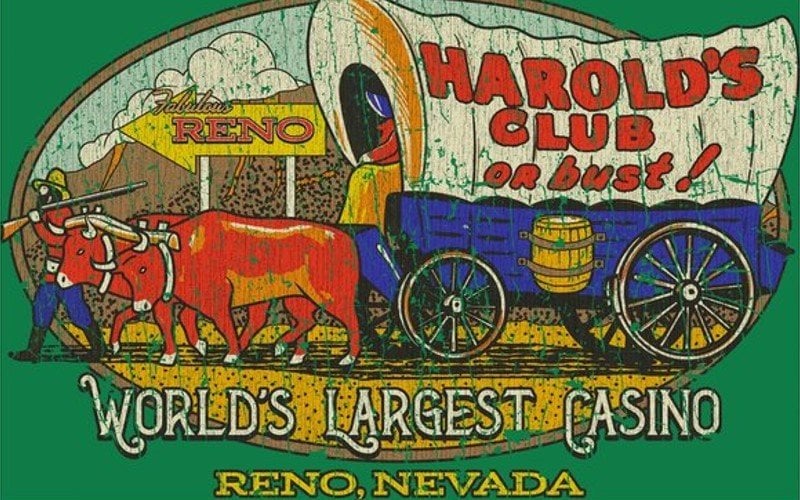
Pappy was one of the first casino owners to invest in big advertising campaigns properly. In 1941, he bought thousands of billboards saying “Harolds Club or Bust”, a slogan that would appear on roads all across America. It built a huge reputation for the Downtown Reno gambling house. He also made the casino more customer-friendly, hiring women dealers, occasionally doubling payouts or gifting players loans, and even refunded some players who lost their money. Harolds Club became the casino with that extra “personal touch” that attracted players to come back for more.
He had a generous spirit, and wanted to make an honest living providing gambling games such as blackjack. Of course, it did cost Pappy, and quite a bit sometimes. Patrons could request loans from the elder Smith, worth up to $50 (in 1950s USD), and pay it back within a year. Pappy was all about fair play, and put up signs reminding players to gamble cautiously. But players who did end up losing more than they could afford could reach out to Pappy. And more often than not, he would refund them part of their losses to reduce the damages.
Did The Marketing Work?
Now you’d think that his generosity, or naivety in some aspects, would have hurt the Club’s finances. It didn’t whatsoever. In fact, Harolds Club grew so big that it attracted travelers and motorists from all over the country. The quality casino atmosphere, affordable table limits and this new game that seemingly came out of nowhere, blackjack, gave Harolds Club an indomitable reputation.
By the 50s and 60s, Harolds Club was nearly always full, and it expanded tremendously. From 2 slot machines and 1 blackjack table, Harolds Club had over 1,500 slots and 60 table games at its height. It also included restaurants, several bars, and had 7 floors. The benefits extended to the casino staff, some of whom stayed for 20+ years at Harolds Club.
Harolds Club’s Legacy
Pappy Smith passed away in 1967, when the Club was at the peak of its popularity. And 3 years later, the Club was sold to the Howard Hughes Corporation for an estimated $11 million. New management was introduced and the business model changed, which slowly led to Harolds Club’s decline, and in 1995, the club closed for good. It was bought by Harrah’s in 1999, which demolished the building and replaced it with an outdoor plaza.
Harolds Club was one of the most important casinos in Vegas, and had monumental importance in bringing Blackjack to the forefront of US gambling. Smith’s casino marketing initiatives placed the spotlight on Harolds Club, but it may not have caught on as well if he was advertising a slot machine or another type of game. There was something about blackjack that caught American gamers in a frenzy. It had the pace of draw poker, but some of the skill elements of Texas Hold’em or Punto Banco. Somehow, that unique blend of chance and skill put blackjack in a league of its own.

Why Blackjack Is So Popular
The rules of blackjack are pretty straightforward, and even if you have never played a hand before, you should more or less grasp the ropes within 2 or 3 games. But beneath the simplicity, there are all kinds of strategies and possibilities that you can uncover. The game has a low house edge, and you can get better at blackjack by learning masterful strategies or assessing the probabilities.
In the 1960s, a mathematics professor, Edward Thorp, published a book about the probabilities of card decks. The book became a bestseller, and showed America how players could count cards in blackjack. By doing so, they could make more informed decisions and reduce the house edge down to just 0.5%. The decision making in blackjack is one of the game’s key selling points. The fast paced round is another part of blackjack’s great appeal. Unlike traditional poker cash games, where rounds could last a good few minutes, blackjack rounds last seconds.
Blackjack Nowadays
Nowadays, there are many variants of the game, some of which have added side bets (none like that 10 to 1 Ace of Spades and black Jack one though), or even rule deviations to tweak the gameplay. You can find loads of material on blackjack basic strategy and mathematically optimised guides to beat the house. They won’t provide guaranteed wins, but they lower the theoretical house edge quite a bit. Looking back, it is quite amazing that blackjack didn’t become a hit instantly. We don’t know the extent to which Pappy Smith was familiar with the game.
But his knack for marketing and the fact that he chose blackjack (whether by coincidence or design), have become a part of blackjack’s history. Pappy Smith may not be the first name that comes to mind when you think of blackjack. But it is thanks to him that the game is so prevalent in US casinos, and why you can find it at all landbased and online casinos.