Reviews
Dead Rising Series Review (Xbox, PlayStation & PC)


A zombie-infested shopping mall; a hundred vacant stores with weaponized tat; a one-way radio belonging to a concerned janitor with a knack for highlighting potential survivors; and seventy-two glorious hours of me time. With a foam sword and a lawn mower, I can hack through hordes, ricochet pellets from the bloody scalps of the undead, and, for good measure, make sociopathic photographers wear Mega Man bucket hats, if only to pass the time and satisfy that craving for unhinged violence and immature behavior. In Dead Rising, there are no right or wrong answers, only days to whittle down and a million opportunities to fill them with absurdly immoral antics.
Looking back, Dead Rising was one of the first zombie sandbox games to truly captivate me, not because of its open-ended, time-locked format, but because it opened the doors to endless possibilities and creative avenues of play in a world that had no real limitations. Initially, it made it out that, to make the most out of its mall-based shenanigans, you needed to invest in a series of timed missions and follow a strict schedule. But then, after unveiling its cards, it offered another option: to ignore everything and simply act as you typically would in your wildest fantasies. It didn’t matter if you wanted to spend three days hiding in a locker room, or if you wanted to embrace the final moments of humanity with an iron fist—an assault rifle and a scythe, a flower dress and a guitar. The combinations were endless, and the opportunities to bend the rules were abundant. And I think, really, that’s precisely why I thought so fondly of it.
He Covered Wars You Know?
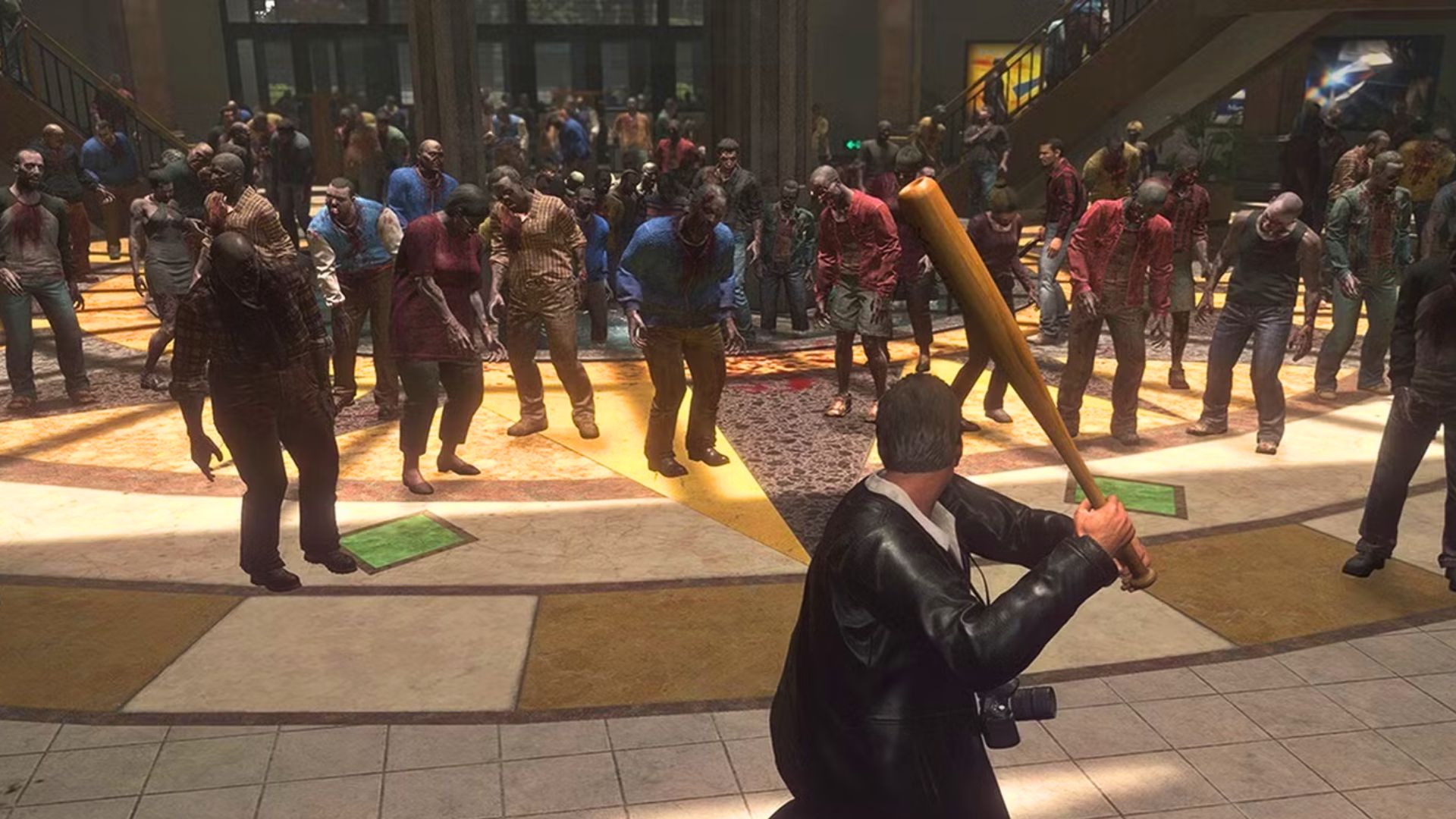
Dead Rising took a huge toll on me back in 2006 — but in a good way, thankfully. Consumed by the sheer number of avenues that I could potentially venture into, I must have scrubbed the mall and mopped up dozens of in-game days before finally putting a knife in the back of Otis’ head and leaving to start anew in an alternate zombie apocalypse. I figured, if I was able to easily spend a handful of additional days roaming the mall without a formal mission structure to follow, then I must have been having a whale of a time. And I suppose that’s exactly what Dead Rising was at first: a mindlessly entertaining zombie game that needed no formalities to make the simple act of hacking up dead hordes feel immensely satisfying. It developed more of a serious tone a little later on I’ll admit, but Dead Rising found its feet with oversized clown shoes, not formal loafers, if you catch my drift.
I won’t pretend that Dead Rising has been historically formidable in terms of narrative design and character development, because the simple truth is that, chaotic and absurdly fun gameplay aside, it hasn’t ever really ascended from a gimmick to a full blown horror story. It’s a comedy, if anything—the brunt of a joke that it often acknowledges, but also tends to disguise with the occasional piece of emotional baggage; the need to find medicine for a sick relative, for example. But to state the obvious, at no point has Dead Rising ever been a thrilling series. Frankly, it has harbored a lot of poor dialogue choices, characters, and missions. But, when all’s said and done, you don’t really turn to it for the gut-punching twists and turns; you turn to it for an excuse to roundhouse kick a zombie with a pair of snow boots. That, in all fairness, is what Dead Rising has always been about.
Beyond the Willamette Outbreak

Of course, in the wake of Dead Rising’s debut reaping back in 2006, Capcom eventually went on to find a sturdy foothold that would, after numerous attempts to establish its own identity, become a true cult classic among zombie parodies, which, in turn, gave it more breathing room to explore different protagonists, weapons, as well as mission structures and settings. That seemingly contained virus eventually became a nationwide outbreak, and that beloved mall soon unbolted its hinges to broaden the horizons and latch onto wider worlds. The question is, should it have remained isolated within the quarters of Willamette Parkview Mall, or did Capcom make the right choice to expand into new territories beyond the walls of its original headquarters?
While the series did make a few major changes to its signature formula during the aftermath of the original release, it never really lost its charm, its witty style or its open-ended gameplay. Granted, it never took off and evolved into anything particularly special, though it did remain true to its roots with a conveyor belt of faithful sequels that each had a certain sense of humor and nostalgia stitched into the shared framework. The combat never progressed, nor did Capcom’s ability to tell meaningful stories. However, Dead Rising did, in all honesty, remain a perfectly balanced and, more importantly, enjoyable series that had a tremendous amount to offer. It was ridiculous, but I think that was sort of the point. Heck, it never really pretended to be a perfect storm, though it did make all of the right moves to ruffle a few matted feathers — and that was just enough to make a lasting impression.
Verdict

Dead Rising might be more of an undead caricature of itself than a full-fledged sandbox horror, but that doesn’t make it any less of a memorable saga, much less a stupidly satisfying anthology with all of the morbid pulp and gimmicks of a cult classic. Granted, at no point has the series ever been structurally sound or even coherent in its own right, but to give credit where it’s due, it has always managed to make each of its iterations a whole lot of fun to work through. Does that make it a worthy choice for those with an undying love of zombie horrors? Absolutely, so long as you don’t waltz into its corridors with the hopes of finding a spiritual successor to the likes of Resident Evil. For the record, it isn’t Resident Evil; it’s slapstick slop with a pulsating heart that you’ll want to take a big ol’ bite out of.
Dead Rising Series Review (Xbox, PlayStation & PC)
Dead But Definitely Not Buried
Dead Rising might be more of an undead caricature of itself than a full-fledged sandbox horror, but that doesn’t make it any less of a memorable saga, much less a stupidly satisfying anthology with all of the morbid pulp and gimmicks of a cult classic. Granted, at no point has the series ever been structurally sound or even coherent in its own right, but to give credit where it’s due, it has always managed to make each of its iterations a whole lot of fun to work through.




