Reviews
Plants Vs Zombies: Replanted Review (Nintendo Switch, Nintendo Switch 2, PS5, PS4, Xbox One, Xbox Series X/S & PC)


Plants vs. Zombies is one of those timeless games that never needed much to be fun. The idea of stopping a zombie invasion using cute plants is weird, creative, and instantly charming. It became a classic because of its simple gameplay, clean visual style, and unforgettable music. So when Plants vs. Zombies: Replanted was announced, excitement grew fast. Fans expected the same great game, just cleaner and updated for modern platforms.
Fortunately, Plants vs. Zombies: Replanted didn’t disappoint. The game brings that experience back. Of course, it’s not a reboot or a reimagining. It’s a recreation of the original game made to run smoothly on modern hardware without feeling like it has been rebuilt from scratch. The moment the first sunflower appears and the music starts playing, it hits you: this is exactly how the game used to feel, except better. That said, let us break it down in this review and see how well this remaster holds up.
The Gameplay Loop

The heart of Plants vs. Zombies has always been its gameplay loop. It’s incredibly easy to learn, yet it never becomes mindless. Every level begins with calm planning. You place sunflowers to build your economy, watching them drop small sun icons that you collect. Now, those little suns are your currency, and the act of collecting them somehow remains satisfying even after dozens of levels. As more sun accumulates, players start building their attack line: peashooters, snow peas, wall-nuts, and eventually more exotic plants that shoot melons or blow up everything in sight.
The zombies begin slowly, almost politely. A basic zombie lumbers toward your lawn. You place one peashooter. It’s enough. Then the game adds variations. Some carry doors as shields, while some dig underground and pop up behind your plants. Each time a new zombie appears, you adjust. The game gently teaches you strategy without acting like a tutorial.
This loop stays engaging because every plant has a purpose. Nothing feels like filler. You constantly experiment, swapping combinations until you find your favorite strategy. One moment you’re calmly placing sunflowers, and the next you’re panicking because a football zombie is sprinting down your row like he’s late for the Super Bowl. Even after replaying levels, the game never becomes boring. That rhythm has aged shockingly well. Replanted proves that a tightly designed gameplay system does not need complicated mechanics to stay relevant. It just needs to be fun.
The Upgrades

The upgrade that immediately stands out in Replanted is the visual cleanup. The art style remains the same, but everything has been redrawn or upscaled in a way that fits modern screens. The plants look lively and bright. The zombies have more defined expressions, making their silly personalities stand out more than ever. The colors pop, especially on a 4K display, and you can finally appreciate all the tiny details that were once hidden behind low resolution.
Performance on PS5 is just as smooth as you’d expect. There are no frame drops. No stuttering, even when the screen is absolutely packed with projectiles, explosions, and flying melon ammo. The game loads quickly, transitions between stages are immediate, and it feels like a natural console experience despite its origins as a mouse-and-keyboard game.
What really surprises players is how good the controller support is. On paper, Plants vs. Zombies is a game built for clicking, not dragging with a joystick. Yet the radial plant selection and placement feel precise. The cursor snaps enough to keep you moving, but not so much that you lose control. After a couple of levels, you forget the game was ever designed for anything else.
The sound is just as important as the visuals. The soundtrack is one of those rare game soundtracks that match every moment. Calm during planning. Energetic during waves and tense when zombies get too close. And if you ever finished the original, hearing that end-credit song again feels like a reward all by itself. Replanted doesn’t remix or replace anything. It keeps the original audio identity intact.
More Than Just a Port

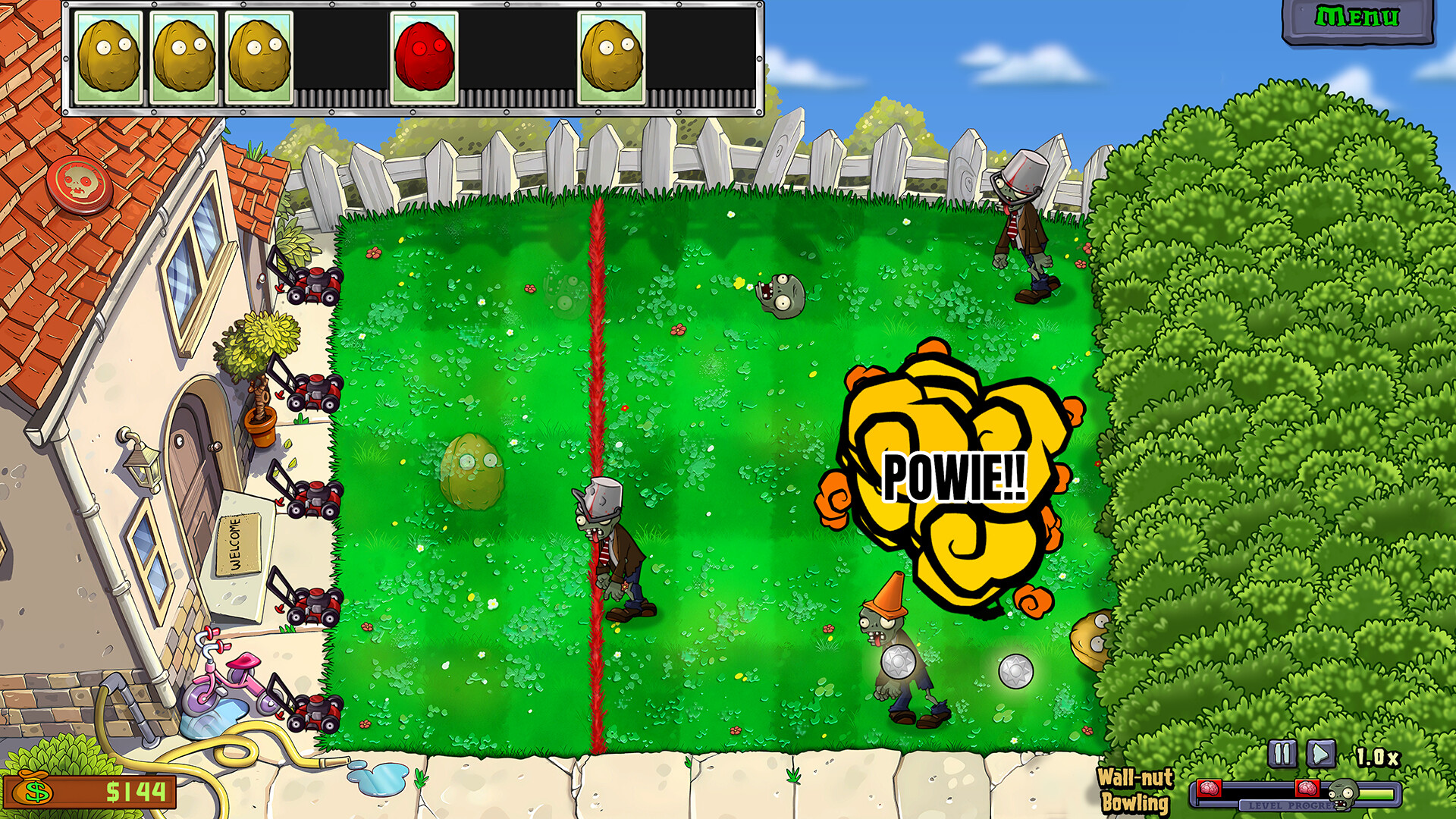
Once the main campaign pulls you in, Replanted surprises you with the amount of content it offers. Now, this isn’t just an adventure mode and credits. It’s a full package with different ways to play the same core concept without burning out on it. After finishing a few chapters, the game begins unlocking side modes. Mini-games appear first, and they are delightfully weird. There is the walnut bowling game, where you roll huge walnuts into zombie lanes like bowling balls. There is a slot machine mini-game where you’re given random plants and must improvise a defense with whatever happens to fall out. These modes break the routine in smart, short bursts.
Puzzle mode flips the script entirely by letting you control the zombies. Suddenly, you’re the one trying to overwhelm the plants, and it gives you a different perspective on how clever some plant setups can be. Survival mode adds endurance challenges that increase in difficulty wave after wave, forcing players to plan a long-term resource strategy rather than just reacting.
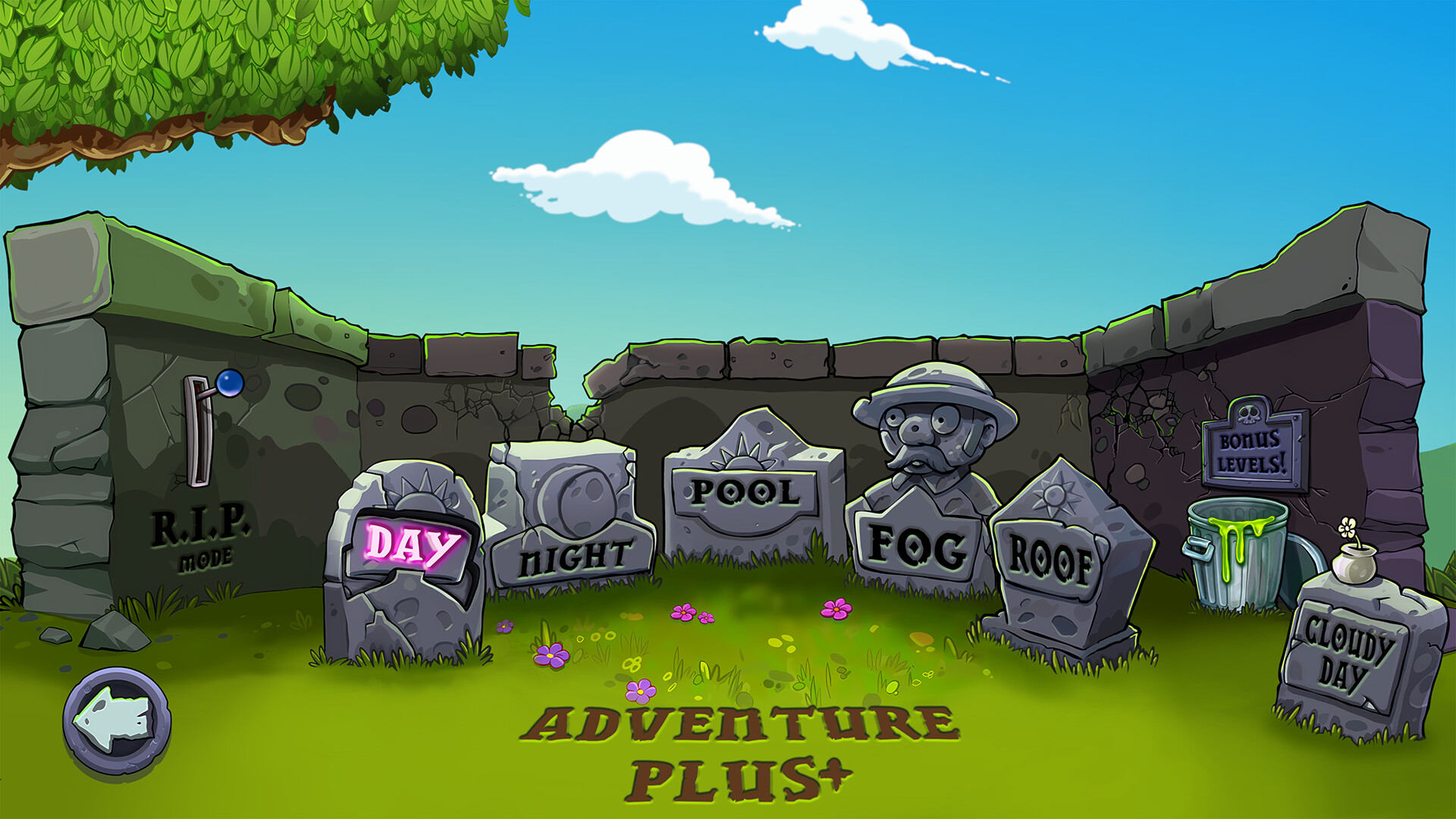
Then there’s a mode called R.I.P., which might be the most intense addition in this strategy game. If the zombies reach your house, the run ends. There are no retries. There is no checkpoint. You start the whole campaign over. It sounds brutal, and it is, but for longtime fans, it’s a thrilling way to push yourself beyond casual play.
Multiplayer also makes its return. Co-op lets you play with a friend on the same side, but versus mode is where the real chaos is. One person becomes the zombies, the other stays with the plants, and you try to outsmart each other. It reinforces that Plants vs. Zombies isn’t just a single-player puzzle game. It’s a flexible sandbox of strategy and improvisation.
High Resolution, Low Identity

Visually, Replanted is sharper and cleaner than the 2009 game. Plants and zombies have clearer outlines. Animations are smooth. Grass tiles, backgrounds, and UI elements look crisp on modern screens. At first glance, it feels like exactly what people wanted. The bright colors look good in motion, and character designs still pop. But the more time you spend looking at the details, the more the charm of the original slips away.
Notably, some assets look beautifully redrawn. Others look blurry or strangely sharpened. It almost feels like the game mixes high-quality artwork with rushed AI-upscaled images. Certain plant icons, like Squash, look grainy. A few visual elements appear stretched or uneven around the edges. Even worse, the “concept art” shown in one of the menus has been confirmed by fans to be AI-generated, which is extremely disappointing.
Now, the biggest shock is the ending in this strategy game. Instead of remaking the final cutscene in HD, the developers recorded footage from the Xbox 360 version, placed it into a fake TV border, and used that as the finale. It looks lazy, and it breaks immersion at the exact moment the game should be at its best. When a remaster makes you miss the low-resolution version, something has gone wrong.
Charming, But Still Annoyingly Expensive
If there is one flaw that remains present, it is the coin economy. Crazy Dave’s shop is still expensive. Painfully expensive. He’s still selling useful upgrades like additional seed slots or special gardening tools, but the prices are inflated enough that collecting coins starts to feel like a chore. Even after finishing the main campaign and spending a reasonable amount of time in the mini-games and side modes, reaching the amount needed for a seven- or eight-slot upgrade can take longer than expected.
The frustrating part is that these upgrades are not purely cosmetic. They have real gameplay impact. Having more seed slots opens up better strategies and unlocks more creative setups. Locking them behind such a slow grind feels like an unnecessary hurdle. Zenguard mode tries to soften this by offering a slower, more relaxed way to generate income, but the items needed to care for plants are also pricey. You end up thinking twice before investing coins, because you know how slow they come in.
This is not a deal-breaker. It doesn’t stop the game from being fun. But it does feel like one part of the original that could have been thoughtfully improved, instead of being replicated exactly as it was.
Verdict
Plants vs. Zombies: Replanted proves something many remasters forget. A classic strategy game doesn’t need to be reinvented to be enjoyable again. It just needs to be respected. Replanted respects the original game in every way, and the humor is still intact. Similarly, the gameplay loop is just as addictive. Instead of trying to modernize the game into something unrecognizable, the game preserves what made Plants vs. Zombies special and gives it a sharper, more polished presentation.
Of course, Replanted is not perfect. The coin economy remains slow and could have used a balance update, and there are occasional minor bugs in bonus stages. However, these issues are small compared to everything the game does right. Ultimately, Replanted is the best way to experience Plants vs. Zombies today.
Plants Vs Zombies: Replanted Review (Nintendo Switch, Nintendo Switch 2, PS5, PS4, Xbox One, Xbox Series X/S & PC)
The Return of a Timeless Classic
Plants vs. Zombies: Replanted doesn’t try to reinvent the wheel; it just makes everything smoother, prettier, and more fun to play. It feels like coming back to an old favorite, but without any of the rough edges. If you loved the original, this is the best version to jump right into it again.




