News
Austria Considers Ending iGaming Monopoly with 2027 Contract Expiry Nearing

We just talked about Finland’s state run gambling monopoly coming to an end earlier this week, and the single sportsbook situation in Rhode Island. Here’s another one for the books. Austria’s gambling monopoly, which is run by the state authorized Casinos Austria AG, is running into the last 2 years of its 15-year single online casino license in the country. In 2027, that contract, held by the Austrian Lotteries, will expire.
Now it still may be a way off, but with the tightening of gambling legislation going around Europe, the question regarding Austria’s online casino monopoly will get asked more in the coming months. The sentiment about the gray market, and the reactions to it across the continent, have been varied and wide-reaching. Austria, which is an important market in Central Europe, will soon have to decide whether or not it wants to stick with its longstanding monopoly system.
How the Austrian Gambling Monopoly Works
Right now, under Austrian federal gambling laws, Glücksspielgesetz (GSpG), grants the exclusive rights to online casino-type games to the Austrian Lotteries, or Österreichische Lotterien GmbH. The Austrian Lotteries works in partnership with Casinos Austria AG, and the Casinos Austria online brand, Win2Day. They were granted the 15 year license in October 2012, and this gambling license will run out on the 30th of September, 2027.
The GSpG is overseen by the Finance Ministry, which also has a 33.3% stake in Casinos Austria and the Austrian Lotteries. Casinos Austria doesn’t just run the online casino scene in Austria, it also runs all of Austria’s landbased casinos, thereby giving the Finance Ministry (and state) the entire legal monopoly on gambling in the country. But here is the controversy. The same institute is responsible for gambling taxation and license allocation, and it is a one-third majority stakeholder in the monopoly operator.
Why This is Controversial
This is in direct breach of the EU principle of Freedom to Provide Services, since no foreign EU operators can get into the Austrian market. Plus, awarding and renewing licenses for landbased casinos – or B2B game vendors, is not fully transparent. If you are thinking how that affects you (just looking at the online platforms) – think about this. Yes, there is just one legal platform for you to play at.
But the games it provides, and software developers it partners with is not a transparent process. This is completely decided by the state – they can choose which brands and B2B vendors they want to partner with to choose their games. So you are left with a heavily limited and controlled gaming environment.
Elections and Preliminary State Proposals
The main catalyst for change lies in the new political situation in Austria. The Austrian elections of 2024 resulted in no party forming a government because no majority vote was established. In February 2025, the People’s Party (ÖVP), Social Democrats (SPÖ), and NEOS Freedom Party (FPÖ) formed a coalition, led by Christian Stocker, the new chancellor.
The preliminary talks between the three-party coalition looked as if the matter was done and dusted. The coalition agreed to maintain the current situation on March 2, but the Austrian Betting and Gaming Association (OVWG) pointed out that there were hints at further development of the monopoly system, leaving the doors open to adjustments.
The government suggested that just one license would be granted for the operation of online casinos when the current one expires in 2027. And that would be another 15-year license. But recent sources suggest the coalition has changed its stance, and that it is now exploring the idea of a multi licensing model.
Austria Considers New Gaming Authority and Multi-Licensing Model
The Austrian Association for Betting and Gambling (OVWG), is quietly optimistic that major reforms are on their way. The group, which is not related to the government, represents some of the bigger brands such as Merkur Bets, bet365, LeoVegas, Betway and Entain. The OVWG made an estimate that liberalising the market and opening it to foreign EU operators would not just benefit players with better options. It could also increase the state’s revenue significantly.
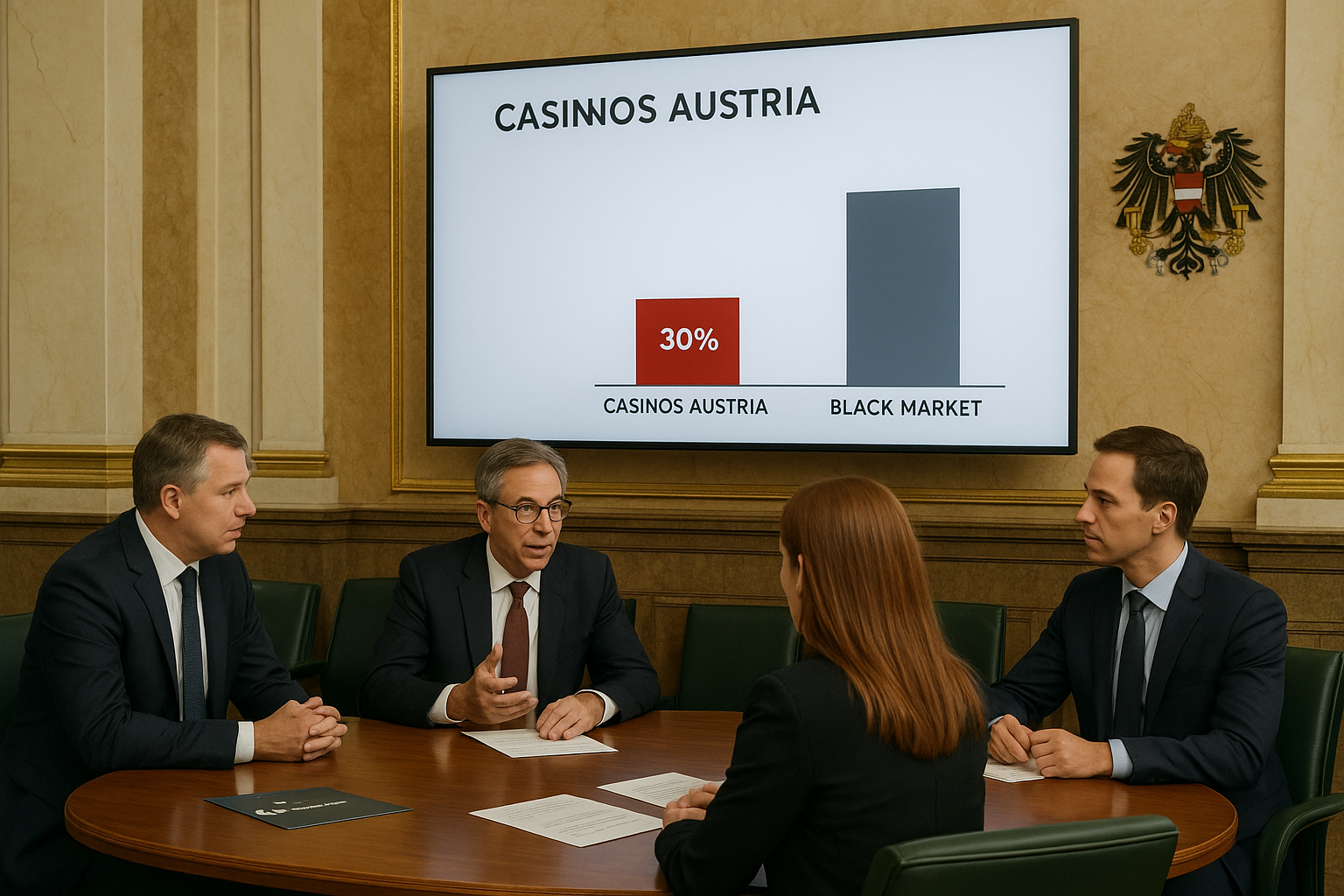
This is because 70% of the online casino market share is controlled by unregulated operators. Casinos Austria only captures around 30% of this market, which is just shocking. The majority of the black market operators in Austria are said to be operating in Malta, with full MGA licensure. Malta-licensed casinos are well represented in Austria’s unregulated market, and should they bow to pressures and liberalise the market for EU operators, these popular gaming sites could become whitelisted or apply for their own Austrian iGaming licenses.
What Win2Day Online Casino Looks Like
Win2Day is not actually a terrible platform, from a player’s point of view. The casino covers all the basics and has the games that you would expect at any decent Malta based online casino. In 2023, Win2Day partnered with Pragmatic Play, significantly expanding its portfolio of games. It has partnerships with some of the leading software providers in the industry, including:
In total, there are over 750 slots games at Win2Day at the time of writing, and the casino also supplies live dealer games, with loads of entries from Pragmatic Play Live and Evolution Gaming. These include German language titles and loads of popular gameshows. However, despite the formidable selection of games, Win2Day still struggles to win over Austrian gamers.
Pressure from the EGBA and the European Market
Gambling monopolies are perhaps just outdated, and players just want to access something new. Competition is healthy in any iGaming market. The best examples are the Scandinavian countries, Sweden and Denmark, which switched to open markets in 2019 and 2012, respectively, and have created a robust framework.
It is no wonder that Finland wants to follow in their footsteps and end the state-run Veikkaus monopoly. The Netherlands authority, KSA, ended the monopoly back in 2023. And it seems these monopolies are slowly fading away.
There are also external pressures on Austria, as part of the EU, to end its controversial monopoly. At the end of 2024, the EGBA, or European Gaming and Betting Association, called for Austria to revise its gambling laws. It stated that the thriving black market are explanation enough, and that it puts the players who join these sites beyond any local consumer protection measures or government oversight. In that post, the EGBA stated how Denmark’s example worked wonders, creating a channelization surge to the regulated market, from 72% up to 90% in 2023.
Other Proposals in Austria’s New Gambling Vision
The new model under discussion would create a dedicated gambling authority similar to those in Denmark or the Netherlands, separating financial and regulatory powers. This independent body would handle licensing, compliance, player protection, and enforcement against unlicensed operators. The Austrian Finance Ministry would still collect the taxes, but not regulate the gambling sites, thus creating a fairer and more transparent system.
The reform proposals also include:
- Stricter Player Protection Measures: Implementing stronger deposit limits, self-exclusion tools, and advertising controls that would apply to all licensed operators.
- Increased Tax Transparency: The government would still collect significant gambling revenue, but under a fairer tax structure applied evenly across all licensees.
- Black Market Enforcement: With the majority of Austrian online gambling still taking place on unlicensed platforms, authorities plan to ramp up efforts to block payments and access to these sites. Not too dissimilar to what Sweden and Norway have already implemented.
These ideas are still at an early stage, but the political appetite for reform seems to be growing, particularly as pressure mounts from both EU regulators and domestic industry groups.
What to Watch Next
At the end of the day, this is a big opportunity for Austria to establish itself as a European powerhouse in the iGaming market. Even if the reports are somewhat hopeful or overly eager to push the lawmakers to liberalise their market, it would help swing back the market share to regulated ventures, bring in more revenue and give players better protection.
Now, all that’s left to do, is wait to see if the lawmakers respond with any official announcements or proposals regarding potential gambling reforms, and then see how the space evolves in the coming months.




