around the world
The Tradition of Boule in France: A Game of Skill and Betting

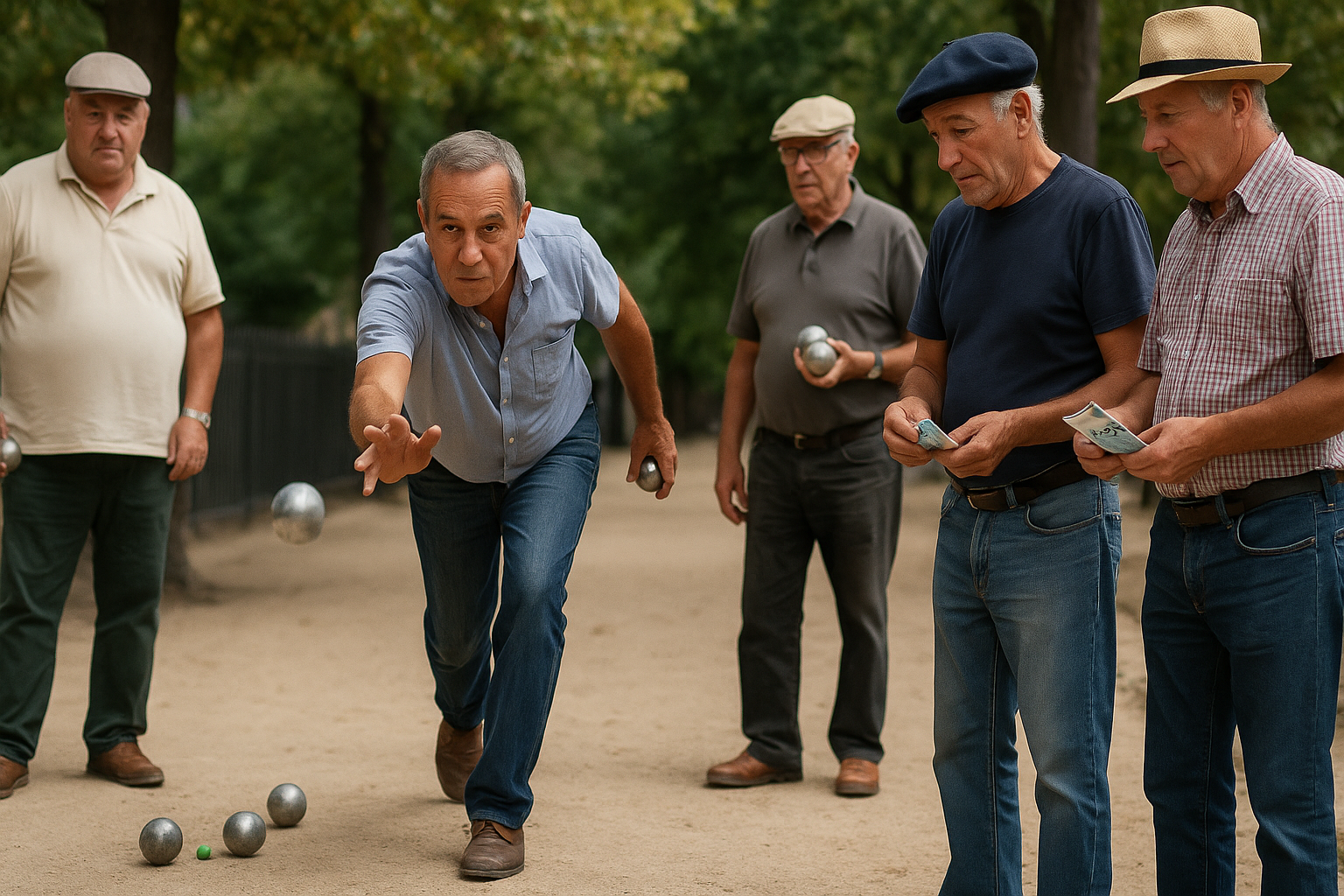
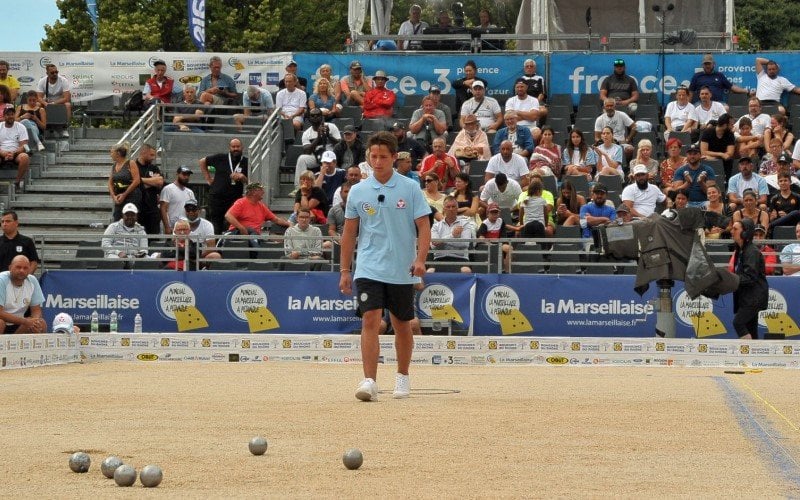
Betting traditions can be found in the most innocuous and seemingly simplest games. It is something that can add a layer of competition, bring out more excitement, and give players more to play for in games. One of those games is French boule, which also goes by French bowling or Pétanque. The point of the game is to roll heavy balls, or boules, towards targets. All players have the same number of boules, and take it in turns to get as close as they can to the target.
It is a game for players of all ages, kids could find it just as exciting as the elderly. Boule is not quite a game of chance, though there are elements of luck and randomness in the results. Rough lawns or dirt courses can cause surprise even to the skilled veteran players. And it is not uncommon to find players making friendly wagers and bets.
What is Boule and How it Came to Be
Boules, which are the heavy bowls themselves, date back to ancient times. Throwing games are not unique to any part of the world. From the South American games of Tejo or Sapo right to the boules and even darts, these types of games have entertained people since time immemorial. But the game of boules dates back to ancient Greece.
The game as we know it was developed in the 19th century, and was known as Jeu Provençal. This modernised version of throwing bowls was formed in Lyon. The main distinction was simple. A player named Jules Lenoir was afflicted with rheumatism and his condition was so severe that he couldn’t run anymore with the ball. So, a version of throwing boules was made in which players didn’t need to run or move much when throwing the ball.
The game was called pied tanqués, or feet planted in English. This was later shortened to pétanque. Original boules used solid wooden balls. But these were not lightweight or easy to throw. They were made from a dense hardwood, and later they were covered with nails. The metal boules came in the mid 1920s. These hollowed metal balls became widespread for their durability and ease of manufacturing. And then Pétanque spread across Europe, to the Francophone colonies, and then around the world.
How Boules and Pétanque are Played
Nowadays, it is a highly familiar game wherever you go. It is one of those French inventions, like roulette, that has become recognisable the world over. Boules, pétanque, French bowling, and there are many other names for boules. Needless to say, there are countless variants of boules around. And you could even make your own, the game is so simple and beginner-friendly.
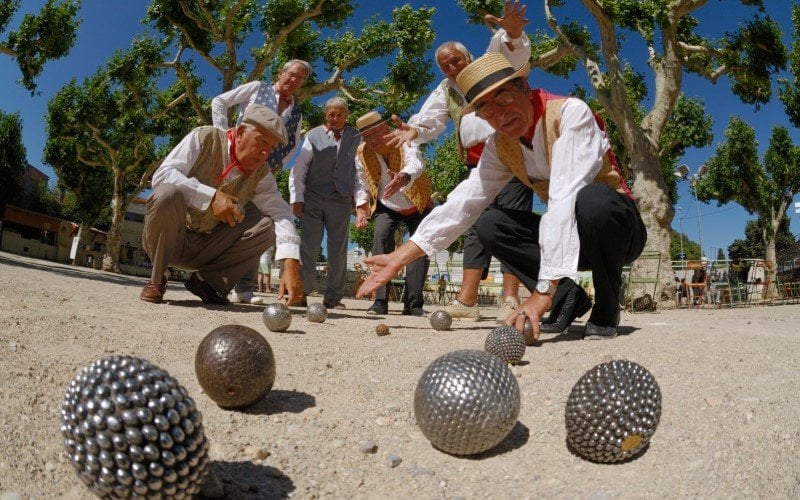
But the base game works in the following way. You can play solo or in teams, and the objective is to land your boules as close to the target as possible. It may be a fixed target, or a smaller colourful ball – not necessarily metal. And when the target is on the playing field, you can start throwing.
There will be a dedicated zone from where you can throw your boules. This is done in an underhanded motion, with the players releasing their boules as the right point to launch them towards the target. Hitting the target is no good unless your boule stays there. And then, there are rules about what happens if you hit a boundary, another person’s boule, or hit the target and remain there.
There are governing bodies of Pétanque, such as the Fédération Internationale de Pétanque et Jeu Provençal, which have an austere set of rules. You can also find boules or pétanque world championships, regional competitions and age-based tournaments.
Betting on the Sport
This is pretty much a skill based game. Your ability to accurately throw the boule, experience in how to strategise your play, and ability to outwit your opponents can give you a huge edge. But you can’t rule out the randomness that may occur from a simple throw.
The evenness of the playing surface, the elasticity of the bounce, and how easily the boules roll on the surface all make it virtually impossible to predict where the ball will end up. It is the same as the physics of a dice throw – you just don’t know how they will bounce or roll in any given throw. So therefore a highly skilled player could still lose to a rookie if the rookie has a stroke of beginner’s luck.
Where there are sports like boule, there are gambling traditions that span way back. You won’t find formal sportsbooks taking bets on boule (or only the very, very niche books). Gambling here is more of a social ritual, or community bonding practice.
Boule players and onlookers alike can make secret bets on what will happen next. It doesn’t have to be all money either. It could be a bet for who buys the next round of drinks, who will cover the lunch bill, or even who cleans the pitch after the game.
Can You Bet on Professional Boule?
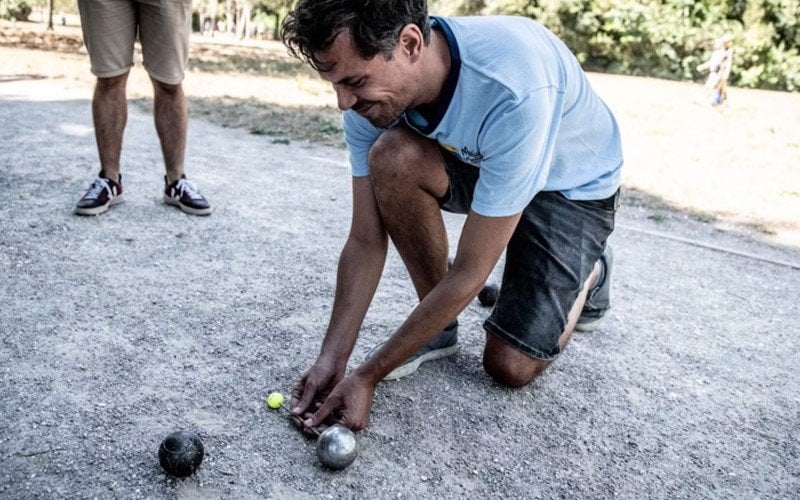
Like Colombian Tejo, which is a similar sport but with explosive targets, finding bets for boules is difficult. Outside France, it is next to impossible. Even within the country, betting on boules or pétanque is very rare and you will have to look for very niche sportsbooks.
The main issue here is that boule is not a very widespread game. There are governing bodies and regulated tournaments, but the data on these is not massive. New teams come in all the time, and the statistical records don’t always give us everything there is to know about them. Not like the NFL, where you can pull up the rookie college and even high school files on any player.
So this makes it difficult for books to calculate betting odds on boules. Yet some regional sportsbooks in France, such as NetBet FR, has betting on Pétanque events in Soustons and La Talaudiere.
You can bet on these organised events and place moneylines, outright bets on the tournament, and various others. Don’t expect to find a huge pool of player bets or props, as the sportsbooks don’t have enough data to give accurate odds for these.
Similar Games with Betting Traditions
If you want to bet on something like boule though, there are plenty of options. Bookmakers generally exclude throwing sports, unless the sport is just too big to ignore. Too many people follow these sports, and excluding them would be missing a key demographic in the market.
Darts, for example, is a sport that you will find no shortage of bets for. It is not really the same as boules, because these are lightweight darts being thrown at a board. But, there is a complexity and strategic element to darts that opens up a whole load of betting opportunities. It’s not all moneylines either, you will find totals, method of victory (darts version), and all kinds of scoring props.
Then, there is curling, or if you like, “boules on ice”. It is not too dissimilar from boules, and curling does pop up among the niche sports at any expansive sportsbook.
Gambling Fallacies: Pitting Skill vs Chance
Betting on boule, whether you are doing it among friends or online on real events, is not as simple as it seems. On the surface of it, this is a very simple game, and it may con bettors into thinking that betting on it is easy. This is because the skill part of the game seems a lot more decisive than the chance element. Like in darts, where it feels like there is nothing to it but muscle memory and concentration.
But even the most talented and experienced players can throw stinkers and shock upsets can occur more frequently than they should. You never know when a player will throw a heavy handed delivery. Or, if they will get the angles, power, and trajectory exactly on point.
So when betting on boule, darts, or any other throwing sports, be cautious. Don’t assume there are any safe bets, or that a hot handed player will always win. Bet responsibly, and don’t spend more than you can afford to lose. Betting on boule can be highly enjoyable and rewarding if your predictions come through. But you should be ready to accept a loss, and don’t end up overspending on any wagers.