Reviews
Psychroma Review (PS5, PS4, Nintendo Switch, Xbox One, Xbox Series X|S, PC)

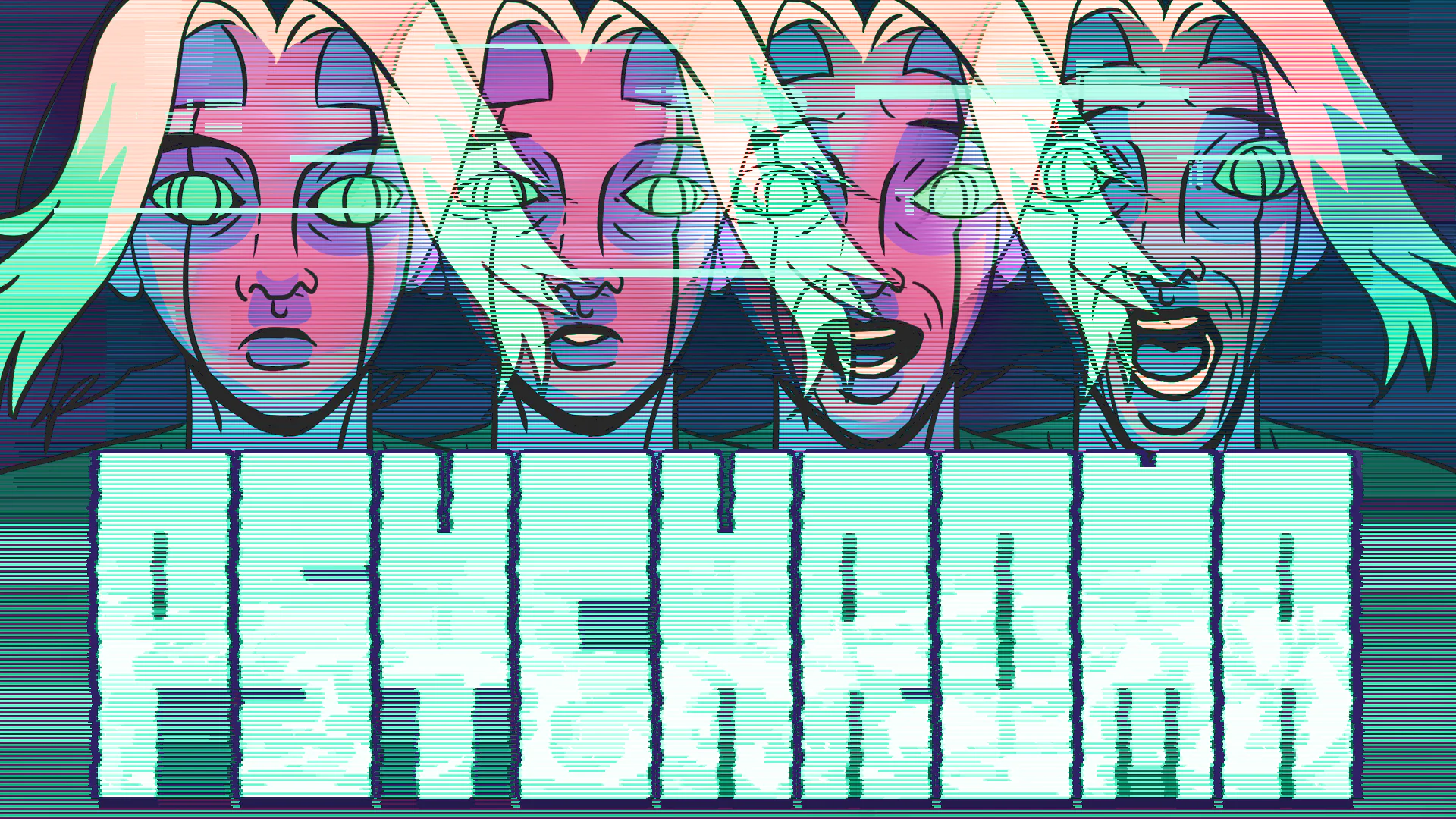
For fans of indie titles, Psychroma might be a familiar name. The game was first teased in 2022 during the Future of Play showcase. Shortly after, the developers released a demo version on Steam. Now, the developers are offering the full experience with its final release.
As a narrative-driven side scroller, the title blends cyberpunk with horror. It’s not uncommon to have such a combination, given that games like Resident Evil have waded these murky waters. However, Psychroma goes the extra mile with its captivating storyline. Every moment and step is filled with discoveries that unravel the mystery and a few well-placed jump scares. If this sounds like your cup of tea, let’s delve deeper into what this title has in store in our Psychroma review.
A Galactic Trip

Psychroma follows the story of Haze, a digital medium experiencing a case of amnesia. The game opens with her lying on a couch while a figure stands nearby, shouting insolent words. She awakens with no recollection of how she got there. Before delving into the mystery, the game provides some background on the narrative.
The year is 2489, and humanity’s memories have been largely wiped out by a tragedy known as the Great Collapse. This catastrophe presented an opportunity for a team of scientists called The Cerulean Group. They aimed to unlock immortality by moving human memories to data storage (what a massive relief would this have been in today’s world). However, a fire engulfed their facility, destroying most of their work. Now, humanity stands on the edge of vulnerability.
Fast-forward to the present, new tenants move into the house. A couple intent on rescuing humanity by offering shelter is unaware of the deep secrets that survived the fire. This sets the stage for our protagonist, Haze, who must piece together fragments of her memory. Haze is a non-binary cybernetic medium who also suffers from PTSD.
As the storyline unfolds, we relive parts of Haze’s past, from kidnappings to mind control. Haze has endured significant trauma, but her flashbacks are just the beginning of the terror that awaits in the house.
Glitches and Ghouls

Psychroma throws you into a haunted house, locked and shrouded in semi-darkness due to lack of power. This side-scrolling adventure lets you explore every nook and cranny of the house to uncover its mysteries and make sense of your situation. Movement is seamless, requiring you to only move forward or backward. When you reach an item of interest, hitting ‘interact’ allows you to investigate it. This could be a TV, computer, generator, or even someone trapped in a cell.
The title keeps close to its complex story, giving you bits and pieces at a time. It doesn’t necessarily provide clear objectives but lets you figure things out for yourself. Initially, most items you can interact with appear inaccessible, mainly due to the lack of power, which subtly presents your first mission: power up the house. This involves getting to the generator room, which is, of course, locked. You must search for the key, which is hidden in no obvious place.
Every task involves scouring the different floors and rooms to uncover new or unlocked items. The gameplay has an atmospheric tension, and the side-scrolling mechanics make navigation straightforward and immersive. Haze walks across each room with poise, unaware of what lies behind each door. Plus, each discovery propels you deeper into the house’s dark history.
Ghosts are an intricate part of the storyline. Occasionally, you’ll experience weird sightings, as if your character is on an insane psychedelic trip. There is also a time loop where each time Haze experiences something disturbing, they end up back on the couch. It can be frustrating, to say the least. But as a core part of the gameplay, it keeps things interesting.
Everything, Everywhere, All At Once

Psychroma’s gameplay is what I’d like to call self-paced. There is no pressure to uncover hidden items or a timer that keeps you on your toes. Beyond this, the game features a variety of puzzles that you must solve to progress. These puzzles are straightforward and might require you to find missing items. For example, powering up the generator requires a cable and power cell. The procedurally generated levels complement these puzzles since items become available only after encountering a puzzle. Some puzzles may involve manipulating the environment, using found objects, or deciphering codes.
The puzzles have a direct correlation to the storyline, which reveals the main plot points or character backstories. However, some puzzles are different from your typical search-and-find. As a medium, you’ll communicate with ghosts using an Ouija board. But some puzzles are better done in person, so letting a ghost possess you will undoubtedly paint a clearer picture where you view everything from their perspective.
Moreover, the game’s cyberpunk aspect is brought to life with time jumps. Using cybernetic memory cards, you can jump back in time to understand the past from the perspective of other characters.
Besides being a medium, you will also perform surgical procedures. Of course, this still embodies a puzzle outlook where, for instance, you use an X-ray machine to find and carefully gouge out the anomaly.
A Haunting on Hill House

Psychroma boldly wears its Haunting on Hill House inspiration on its sleeve. If you’re not familiar with the show, here’s a brief rundown: The Netflix hit series looks into the lives of adults who grew up in the same house. They individually face haunting episodes, which draw them back to the house. To escape the haunting, they must face their fears and interact with the ghastly anomalies.
The similarity evidently lies in the storyline, where Psychroma takes a similar approach. Plus, the game also uses the shows as a reference for one of the characters’ favorite books. Besides this, there is a striking similarity in the thematic focus. Both touch on trauma and grief and showcase the house as a metaphor for the character’s inner turmoil.
Also, the series’ non-linear story is like the game’s use of flashbacks. They slowly reveal the house’s secrets and show Haze’s past. Plus, much like Hill House, Psychroma likely explores themes of isolation but more from an internal, psychological perspective than a physical one.
All these are neatly wrapped in the title’s atmospheric and gloomy scene. The game uses distorted realities, hallucinations, and other mind-bending effects to blur the line between reality and illusion. This aspect of the gameplay is designed to create a sense of unease and tension, keeping you on edge.
A Pride Moment

Psychroma boldly explores queer themes. It does so through its non-binary protagonist, Haze. Haze’s journey towards self-discovery begins when they meet Foxxe, a character trapped in the basement’s cell. Their interaction mirrors real-world scenarios faced by the queer community.
At first, Foxxe is naturally disinclined to believe that Haze is their former self. They suspect an entity has taken over Haze and feel skeptical about engaging with them. However, Foxxe eventually lowers her guard. She does this when she realizes Haze has amnesia. She then tries to reignite Haze’s memory by recounting their past. From their dialogue, it becomes evident that Foxxe and Haze were lovers before Haze lost their memory. Foxxe is cautious in explaining their relationship. In retrospect, this scene subtly shows the community’s internalized shame and the quest for self-acceptance.
Additionally, the game explores the bond between Agatha and her trans partner, Salem. This bond plays a vital role in the game’s mystery. It shows the relationship with nuance, highlighting the unique dynamics of queer partnerships.
Psychroma also emphasizes diversity, with a focus on BIPOC characters. The characters’ backgrounds are visually represented through contrasting colors, enhancing the inclusive theme. This thoughtful representation enriches the story and ensures that the game’s world acknowledges and celebrates many identities and experiences. Plus, what better time to have this game launch than Pride Month?
Looks and Sounds Good
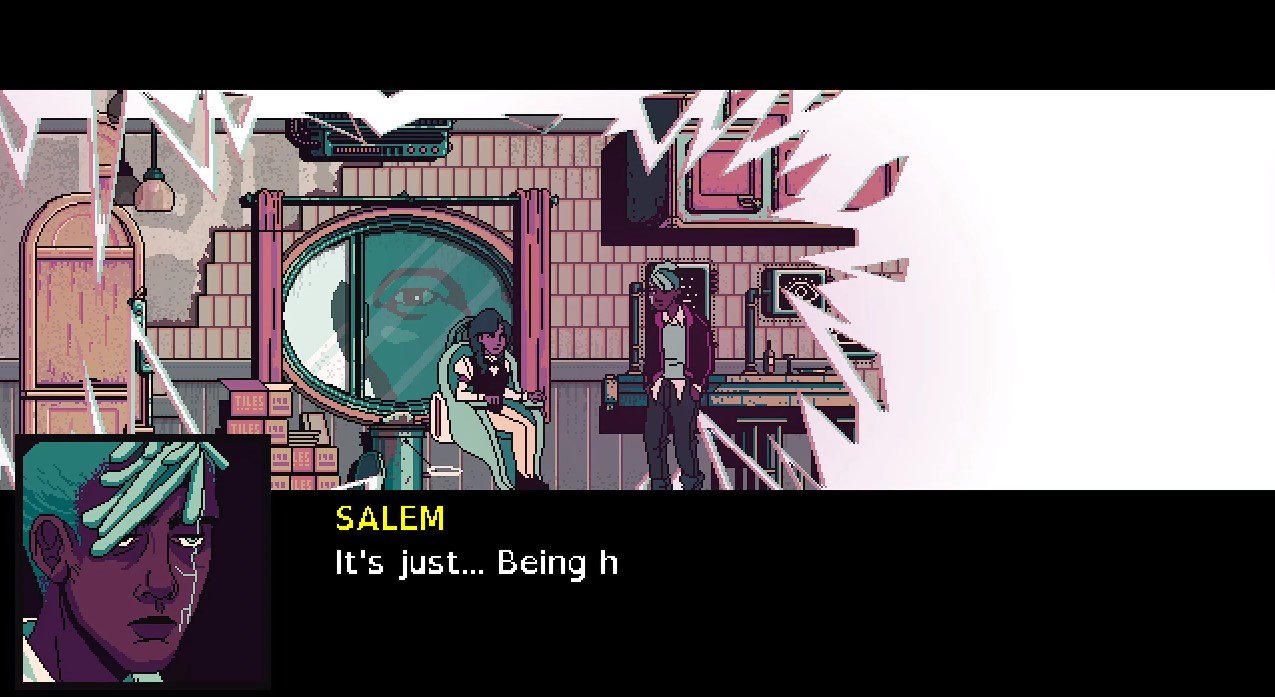
Psychroma excels in its visual presentation for an indie title, highlighting the hauntingly beautiful scenes. The game uses lighting and shadow to create a foreboding atmosphere and add depth to eerie scenarios. This is complemented by the unsettling music and sudden cues that enhance the horror experience.
Verdict

Psychroma is a beautifully crafted masterpiece. It offers rich, immersive gameplay into the paranormal. Against a cyberpunk background, players face unsettling horrors where a fine line exists between reality and illusion.
Moreover, the game’s story is compelling. It sets the scene perfectly, keeping players hooked for hours on end.
Perhaps its most important feature is the bold embrace of queer and BIPOC characters that promotes inclusivity. This representation is not just tokenistic; it is integrated deeply into the storyline and character development, making it a more authentic and engaging experience.
The game’s hauntingly beautiful graphics and chilling soundscapes enhance the eerie experience. Its simple mechanics are intuitive, allowing for smooth exploration and interaction with the game’s environments. This makes the game accessible to gamers of varying experiences.
Psychroma Review (PS5, PS4, Nintendo Switch, Xbox One, Xbox Series X|S, PC)
A Spooky And Inclusive Cyberpunk Saga
Psychroma blends psychological horror with a socially conscious story, setting it apart from other titles in the genre. It is not merely a game but a thought-provoking experience that pushes the boundaries of conventional storytelling in video games.




