Reviews
I Am Bread Review (Xbox, PlayStation, Switch & PC)


Of all the protagonists in the world, it was a slice of bread that made me loathe physics. I could deal with Goat Simulator, and I could just about turn a blind eye to Egging On. But I Am Bread was an entirely different ballgame. And it wasn’t even a game; it was a test—an uphill battle that forced me to question my sanity and ability to remain as patient as possible as the world burst into flames. Of course, it wasn’t the objective that was the problem; it was figuring out how to accomplish it with as little as an incompetent piece of bread and a lack of ligaments. I knew what I had to do: to toast—not burn—a slice of bread. But it was learning how to reach the stove without dirtying the breadcrumbs, that made it more difficult than it needed to be. I hated it. But then, I also couldn’t help but stick with it, because I sincerely felt that, if I could make toast, then I could overcome just about anything that the world could ever throw at me. And they told me Dark Souls was tough. Eat your heart out, FromSoftware.
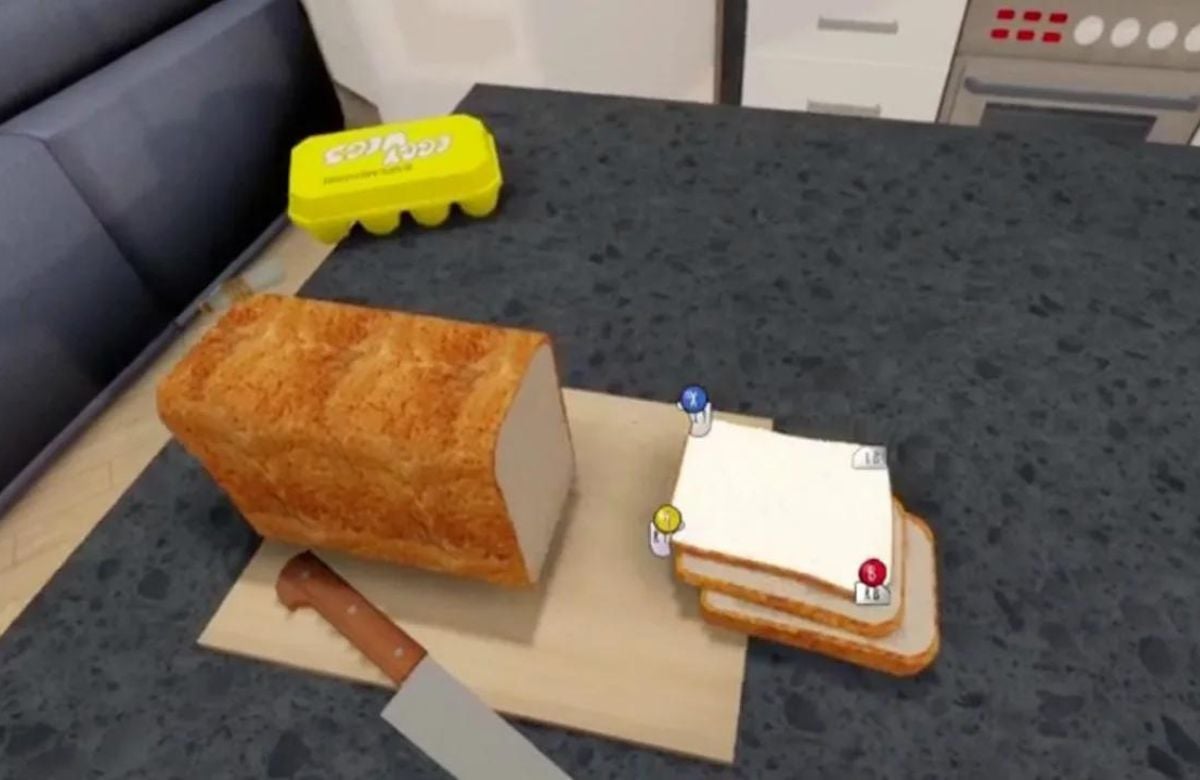
It all started with an oversized kitchen, a toaster, and an anthropomorphic slice of bread that had a simple dream: to be toast. The goal was 20/20: operate each corner of the slice and navigate a world with the intent of toasting it. That was the easy part — understanding that the objective was as clear as day. The difficult part, however, was that operating such a character wasn’t as simple as slapping and slopping around; instead, it involved pinching each of the four corners and using whatever stickiness that the bread had to manually ascend, jump, and tackle a plethora of obstacles. To make matters worse, I didn’t have the glossy coating to keep said slice from being smothered in dirt and grease. That was another issue that, after a good four minutes, I was able to address. I didn’t just need to toast the bread; I needed to ensure that it met the toaster without any additional seasoning peppered over it. Conceptually, it wasn’t a difficult task to beat, but little did I know at the time of embarking on that seemingly noble quest that it was also a recipe for disaster. Go figure.

I Am Bread is a headache, a pain in the neck, and, regrettably, a pretty good game, all things considered. As I said, the idea is straightforward: use four buttons—a trigger for each corner of the bread—and navigate various obstacles that range from kitchen appliances to garage tools, homely keepsakes to garden furniture. From the kitchen counter to the great, great beyond, you essentially “knead” to keep your wits about you as you tackle a treasure trove of frustrating situations, all whilst avoiding clutter and dirt, and also discovering unique ways to toast the bread. It doesn’t matter if it’s a toaster or a radiator, the goal remains the same: to give it a little heat and to progress to the next area.
Excusing all of the stress and anxiety from the mix, I Am Bread is a funny little game with some great and weirdly creative elements. The mechanics aren’t all that complicated, but the settings and the oversized components are enough to counteract the lack of technical complexity. It’s a bit like I Am Fish, in that it balances out its frustratingly uncooperative controls with a ton of eye candy and original set pieces. It’s still a regular house with regular things, but from the perspective of a slice of bread, everything looks just a little better and more appealing. That is, of course, until you find yourself free falling from a shelving unit and needing to start the ascent from scratch. But don’t even get me started on that.

I Am Bread isn’t the longest game on the chopping board, but it is one that you can quite easily spend a lot of time working through. It depends how you slice it. If you’re looking for a quick recipe that doesn’t require a lot of steps, then you might be disappointed with just how many additional steps are required in I Am Bread. It isn’t that it’s a drawn-out journey with a lot of chapters; it’s that a single chapter can take you a lot longer to cut through, especially if it requires more finesse and calculation. For instance, in one area you have to climb to the top of a garage—a job that involves ascending shelves, jumping across tools, and sticking to various items in order to reach annoyingly hard to reach grappling points. Unfortunately, if you make a mistake and fall to your death, you need to start the ascent from the beginning. And honestly, that same rule of thumb applies to the entire game.
Suffice it to say, I Am Bread is a game that you’ll either love or hate. It won’t be everyone’s cup of tea, and it probably won’t do you any favors, either. That said, if you’re able to look beyond the frequent failures and heartaches, then you might just be able to enjoy it for the comedy and its eccentric nature. It’s still a silly game that’ll make you want to pull the hairs from your scalp, but it’s also one that you might just learn to love after you’ve spent enough time with the toaster. Either way, you can’t really win here.
Verdict
I Am Bread is fitting fodder for the local masochist—a vessel of pain and suffering that only a select few will find pleasure in. It isn’t that it’s conceptually difficult; it’s that it thrives on being an annoyingly incompetent voyage that has little else to offer other than a brief spout of comical nonsense every once in a while. This isn’t to say that it’s all bad. No, I Am Bread is, in spite of all its annoying gimmicks and its uncooperative control system, a rather enjoyable game, and one that happens to have a lot of great things going for it. Lest we forget, though, that this isn’t a game for the faint of heart; it’s for the seasoned player who has just enough patience to address defeat time and time again. It’s bread, though — how hard could it possibly be? We’ll let you find the answer to that yourself.
I Am Bread Review (Xbox, PlayStation, Switch & PC)
We're Toast
I Am Bread is fitting fodder for the local masochist—a vessel of pain and suffering that only a select few will find pleasure in. It isn’t that it’s conceptually difficult; it’s that it thrives on being an annoyingly incompetent voyage that has little else to offer other than a brief spout of comical nonsense every once in a while. Still, it’s a heck of a lot better than watching paint dry.