Reviews
Gears of War Series Review (Xbox, PlayStation & PC)


I distinctly recall the atmosphere as Michael Andrews’ Mad World filled the room. Epically foreboding, yet stagnant in its ability to illuminate the sincerity of the situation, a theatrical trailer flooded across the screen, leaving a macabre silence to reflect the shifting of a mood that you couldn’t dare slice with a butter knife. Gears of War introduced itself, and before long, the entire world needed to peel back more of its layers to make sense of its warring factions. The birth of a new platform; an overhaul in cinematic storytelling; the inception of a third-person shooter that, at least up until that moment in time, we had never seen before. The Coalition found a pot of gold in the palm of its hand, and I, among millions of others, had every intention of seeing it make its formal debut.
Gears of War holds a firm spot in my heart, not just because it was one of the first shooters to truly elevate the Xbox 360 alongside the likes of Halo, but because it was the first of its kind to leave me on tenterhooks both before and after its initial debut. It was, at least for a long while, a standalone chapter that I often found myself returning to. Naturally, I’d venture out to other open waters, but I’d often find that no other shooter could capture the same aura—the grittiness of the combat; the camaraderie between Gears; or even the close-quartered battlefields and chainsaw-addled encounters between grunts. Gears had all of that, and not to mention a gameplay style that, at least during the time of its arrival, was vastly superior to what we were accustomed to. Frankly, it made an impact from the moment it came to light, and at no point did it ever squeeze the brakes of settle for anything that wasn’t a flawless experience.
Although The Coalition did eventually pivot the series more towards an open-world action-adventure with vast sandbox features and meatier campaigns, it was, of course, the original trilogy that forged its cult-like status as one of the best in the business. And for all the while other intellectual properties came along, it was Gears and its three-piece saga that made it the groundbreaking success that it was.
A War Beyond Time

In addition to its gripping plot and rigorous combat, the opening sequences also offered a plethora of solid character arcs, voice performances, and a world layout that felt both familiar yet unique, hollow yet complex and deeply intriguing. The gunplay was satisfying, as was the simple act of exploring an apocalyptic hellhole with the intent of restoring it to its former glory via a journey of smoke and bullets, chainsaw fumes and bone fragments. Truth be told, the trilogy amounted to a great deal, but not before it became a little too comfortable for its oversized boots to experiment with other, slightly less interesting spin-offs à la Judgment. Regrettably, it was Judgment that threw the spanner in the works—a smooth cylinder in the mechanism, so to speak. It’s best we don’t talk about that too much.
If we can ignore People Can Fly’s attempt to capitalize on Gears’ earlier successes with its underwhelming arcade-centric spin-off, then we should, in all fairness, be able to appreciate the series’ broader expansions, particularly the fourth and fifth mainline entries. To say that the latter segments of the anthology were on par with the original series just wouldn’t be true. But then, perhaps that’s me, or maybe it’s due to the fact that the earlier chapters were more nostalgic than the modernized open-world iterations. Either way, it felt as if there was a line in the sand somewhere between the original tale and the homecoming; some fans were curious to see more of the new format, and others were adamant that the original was vastly superior to its modern counterparts. I suppose I fell somewhere in the middle.
The Embodiment of Brotherhood

Before Gears took a stab at expanding its world with a larger environment and open-ended objectives, the series was never so much about spoon feeding you the perfect climax as it was about providing you with the tools and breadcrumbs to connect the dots and come to the bitter realization that you weren’t destined for a triumphant conclusion, but a hollow victory with little to no grand-scale effect. And frankly, the series was always more than capable of capturing that feeling — that you were battling against the odds and working towards an ever-allusive vision. The fourth and fifth entires, on the other hand, not as much.
While the original campaigns would have benefited from a few extra Acts or chapters to help broaden the appeal and lore, the self-contained campaigns were, in all honesty, substantially sizable in terms of gameplay. From the balls-out shootouts to the occasional fork in the road, each campaign had a ton of great moments, and above all, some surprisingly emotional cinematic tearaways with a lot of emphasis on brotherhood and loss, vengeance and companionship. True, the fourth and fifth installments were as equally gripping, yet they also sort of fell short in regards to the chemistry between characters and their shared predicaments. It wasn’t a deal breaker, but they certainly had some lofty boots to fill, nonetheless.

For a long, long time it certainly felt that Gears was ahead of its time, both graphically and mechanically. Granted, cover shooters weren’t a new concept at the time of the first release, but, to give credit where it’s due, The Coalition did play a huge part in its rapid development, with its adoption of a snap-to-cover system and a swift reload feature to expand its reach and make the experience more accessible. Moreover, that trove of features and technical embellishments helped establish the blueprint for other developers to use as a source of inspiration, which, in turn, made Gears not just an ambitious shot in the dark, but something of a trail blazing IP that would eventually revolutionize the modern world and cover shooters as we know them today.
Verdict
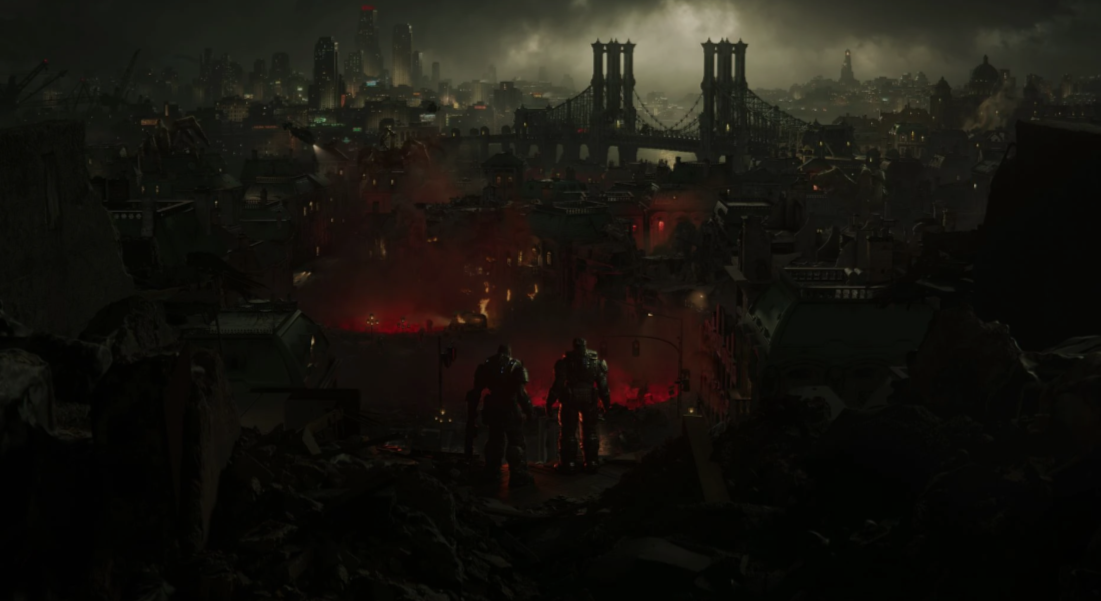
Gears of War will forever remain a prime candidate in Xbox Games’ portfolio, and above all, a timeless third-person shooter saga that will retain its status as one of the few formidable poster children for the genre for the foreseeable future. With an extensive collection of phenomenal action-oriented chapters beneath its belt and the capacity to deliver a truly compelling selection of sequels, The Coalition more or less has the ball in its court to bring Gears to an even wider spectrum of epic tales and ballsy battles. There’s no telling where it will go next, but one thing’s for sure: If it can keep to the same standard as its predecessors, then the sky is well and truly the limit here.
Gears of War Series Review (Xbox, PlayStation & PC)
Bullets & Brotherhood
Gears of War will forever remain a prime candidate in Xbox Games’ portfolio, and above all, a timeless third-person shooter saga that will retain its status as one of the few formidable poster children for the genre for the foreseeable future. With an extensive collection of phenomenal action-oriented chapters beneath its belt and the capacity to deliver a truly compelling selection of sequels, The Coalition more or less has the ball in its court to bring Gears to an even wider spectrum of epic tales and ballsy battles. There’s no telling where it will go next, but one thing’s for sure: If it can keep to the same standard as its predecessors, then the sky is well and truly the limit here.




