Reviews
Animal Crossing Series Review (Nintendo)


The word cozy get thrown around a lot; it’s a moniker that most, if not every farming simulation game tends to lean toward to appeal to a specific demographic—a clique that idolizes smooth gameplay over rigorous analysis, digestible plot points over complex narrative elements. Animal Crossing, above all, vies to capture all of these flexi traits in a world where coziness isn’t just a generic incentive, but an idyllic reality where you can build, work, and explore without being tied by the traditional borders. With a handful of iterations that celebrate your journey and hold your hand as you gradually build from the foundations, Nintendo’s ode to coziness guarantees smooth progression and, above all, a space for you to return to after a grueling shift.
I’ve been with Animal Crossing for a long, long time, and so, like many others, I too understand the restless desire to spend more time with the series than with any other farming sim. Perhaps that’s a little bit of an exaggeration, but you get the gist of what I’m trying to convey. The point is, where most sleepless simulators are likely to forget your birthday or your successes, Tom Nook and the Animal Crossing troupe remember everything. And I don’t just mean your birthday; I mean every Christmas, New Year, and each and every milestone that you celebrate on your island. Frankly, that’s something that I love about it: the fact that you can abandon the franchise for years, yet still come back to a bunch of friendly neighbors who genuinely care about you. It’s like a Tamagotchi, but with bills and payday loans. It’s probably best not to dwell on the latter, though.
Drowning in Bells
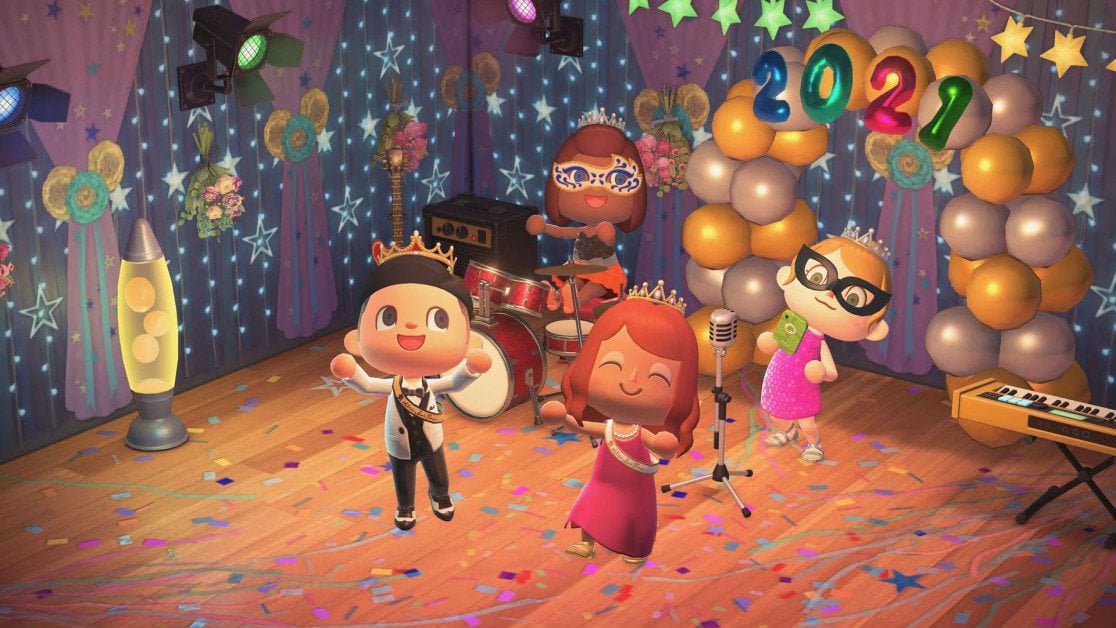
I’ll admit that, while the latter parts of your journey across Nook’s archipelago of utopian islands can be a lot of fun to progress through, the initial rollout phase for any chapter in the Animal Crossing series can also be awfully daunting. Case in point, once you manage to find a foothold and acquire your first home in any of the mainline entries, you immediately have the task of having to pay back several thousands Bells—a job that you can accomplish via a network of manual jobs and time-consuming activities, like fishing, cooking, or catching bugs. It’s a pain in the backside I’ll admit, yet the series does this peculiar thing where you can’t help but feel the need to explore further. What’s just one extra room in your home? Could it be that Tom Nook grants you access to a special island after paying back so many Bells? The answer to that last question is no — but you get the point. Once you’re in with the loan shark, you want to pay back every last cent you owe in order to reap the benefits.
Of course, if Animal Crossing was just about paying bills and appeasing loan sharks, then frankly, you wouldn’t have a game; you would have a worryingly accurate representation of a real-life situation, but with cutesy characters and charming personalities. No, Animal Crossing has a lot more to offer. Aside from its homestead upgrades and bite-sized activities, each installment also features an in-depth island customization suite, a plethora of neighbors, and a built-in progression system that allows you to mop up jobs, earn cash, and explore countless possibilities both on and off the primary island. And that, really, is where the series finds its niche: as a joyfully engaging and, more importantly, evergreen experience that has the capacity to keep you in a wholesome headlock for years.
Pocket-Sized Comforts

Similar to a lot of “wholesome” farming games, some of Animal Crossing’s best moments aren’t necessarily about spending cash and shoveling deeper into the world, but rather, enjoying the little things, like fishing down at the docks after midnight in the hopes of catching a shark, or visiting an old friend to see if they’ve finally overcome their goals. Thankfully, each iteration in the series has included a ton of these bite-sized moments, and not to mention an ever-evolving system that openly celebrates each season with new content and dialogue, decor and quests that can easily boost your game time. In other words, there’s a lot of bang for your buck here.
Animal Crossing is a charming franchise through and through, that much is evident. Having said that, you could also argue that, while it does offer a wide variety of things to do, it is a lot slower than your average life simulation game. This isn’t a bad thing, though it is something that tends to steer a lot of avid islanders away from joining the fold. The thing here is that, to truly experience Animal Crossing to the fullest, you do need to jump through a lot of hoops and mundane tasks. With no real quests to follow or endgame perks to unlock, it can feel somewhat daunting. But again, it’s the little things that make the series for what it is — and it’s “little things”’are abundantly obvious, even to the untrained eye.
Verdict

There’s no turning a blind eye to Animal Crossing and its pocket-sized utopias. Like a lot of Nintendo’s cult classic franchises, it’s stitched into the core memories of both younger generations and the elder folk who either devoted themselves to one of the several staple hits that debuted way back when, or continue to soak up New Horizons’ nostalgic auras. It’s here to stay, basically, and it’s with the power to span multiple iterations and stories if it so pleases. That’s the beauty of it, I guess.
Although you’re essentially spoiled for choice when it comes to life and social simulation games, you won’t find another series that replicates that same special ingredient as Animal Crossiny. Wholesome games are certainly plentiful, that much is true. Yet, there’s a reason as to why fans of the genre continue to bathe in Nintendo’s poster child: it’s cute, simple, and above all, bursting at the seams with activities and hooks to keep you progressing for weeks, months, even years. If that doesn’t sound like it’s worth the ticket price, then frankly, I don’t know what does. The point is, there’s a reason why Nintendo-branded IPs are so darn expensive, and that’s because they’re second to none in terms of longevity and replay value. Animal Crossing, really, just reflects that statement in its own special way.
Animal Crossing Series Review (Nintendo)
The Bells to Be Beautiful
There’s no turning a blind eye to Animal Crossing and its pocket-sized utopias. Like a lot of Nintendo’s cult classic franchises, it’s stitched into the core memories of both younger generations and the elder folk who either devoted themselves to one of the several staple hits that debuted way back when, or continue to soak up New Horizons’ nostalgic auras. It’s here to stay, basically, and it’s with the power to span multiple iterations and stories if it so pleases. That’s the beauty of it, I guess.