around the world
France’s Love Affair with Roulette: From Royalty to the Modern Casino

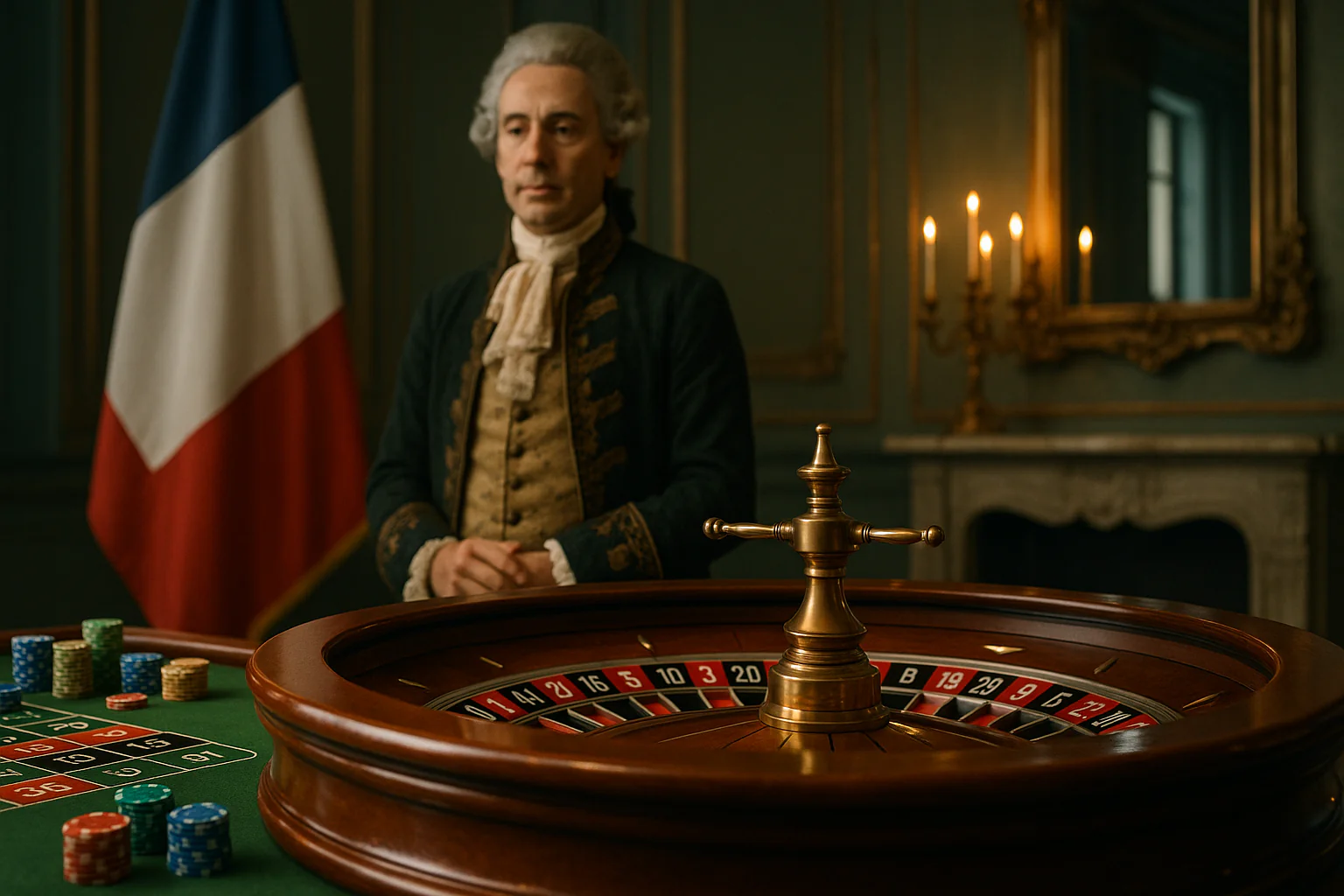
France was the birthplace of roulette, at a time when gambling was in high demand among the aristocracy and played in gleaming casino floors in royal courts. To this day, roulette is among the more glamorous of casino games, and is still highly popular. Nowadays, there are plenty of innovative variants and exciting modern roulette games with special features and nifty extras. Back when roulette first game out in France, it quite literally took gamblers for the spin of their lives.
A tantalising blend of chance, mathematics, and eye-catching motion, roulette was destined to become a hit. Sure, it doesn’t give you any influence over the outcome in any way. Like you can in blackjack or various card based games. But roulette provides players with a wide array of different bets and mathematical possibilities. And from the moment it hit the French courts, roulette became one of the most exhilarating games to wager money on.
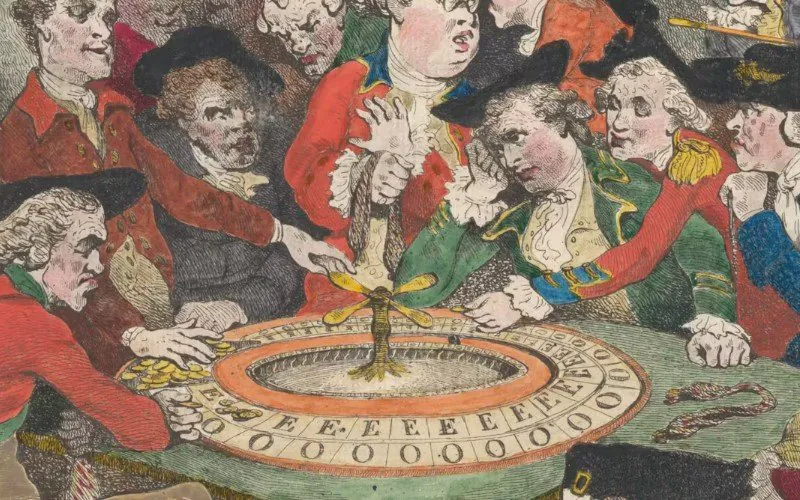
Origins and the Birth of the Wheel
The roulette wheel was developed by Blaise Pascal, a French mathematician, physicist, inventor, and philosopher. He laid down some of the groundwork in mathematics that led to Leibniz’s formulation of calculus. Pascal worked a lot on formulating mathematical puzzles and complex formulas. Such as Pascal’s triangle. Probability and chance were two of the key areas he was interested in. A leading physicist at the time, he created a primitive form of roulette and the roulette wheel while attempting to establish a model using perpetual motion.
A byproduct of his experimental machines, it is not really known how the table was first introduced to gambling circles. At the time, there was a similar game of chance from Italy called Biribi. This game was played on a board, with tickets drawn from a bag. And we don’t know when, who, or how the first person combined the wheel and the betting game. But we do know this happened around 1720, long after Pascal passed away.
And thus roulette was created, a game with endless mathematical possibilities and a grand array of betting options.
The game as we know it today dates back to 1796. A description of standard roulette was found in a French novel, La Roulette, ou le Jour, by Jacques Lablee. The game was played in the Palais Royal in Paris, the former abode of Cardinal Richelieu. The physical wheel used the same segments, including two betting spaces for the bank – the zero and double zero. Funnily enough, that version of Roulette is now known as American Roulette. French and European Roulette use 37 segments with just “0” and not “0 and 00”.
Repression and Revival of Roulette
That account was dated during the French Revolution (1789 – 1799), during which games like roulette were banned. Gambling was seen as an aristocratic pastime, and something that the revolutionaries wanted to completely wipe out. Even as roulette was outlawed during one of the bloodiest periods in French history, the game didn’t just vanish.
By the 19th century, after the revolution was over, roulette returned in France, and experienced a grand revival. The game spread like wildfire across Europe. The Monte Carlo Casino was established in the 1860s, by the Blanc family, and there single zero roulette wheels were introduced. These quickly became the hottest casino games around, and single zero replaced the original double zero format nearly everywhere. Roulette was exported to new territories and continents, but when it was brought to America, it retained the double zero wheel.
Roulette Evolution in Modern Times
Early in the 20th century, America only had the double zero wheel. Las Vegas began to emerge as the main hot spot for gambling in the US by the middle of the 20th century, and it still served the original format of the game. There were a few additional rules in Roulette that distinguished two more formats of roulette.
French roulette, as we know it today, kept two rules from the original 18th-century game. Both relate to what happens if the ball lands on the zero (in single-zero roulette – these rules don’t exist in American roulette).
- En Prison – if you bet a 1:1 wager (even/odds, high/low, red/black), and the ball falls on zero, instead of losing our money, you can put it “in jail” and spin again for an all or nothing gamble
- La Partage – in the same scenario as En Prison, but instead of putting the stake “in jail”, you can reclaim half your money back if the ball falls on zero
Both these rules are used in French Roulette, but not a part of European Roulette, where if you don’t cover the 0 and the ball lands there, you lose. If you calculate the French roulette house edge, this means you actually have a better chance of winning at French Roulette than European. But bear in mind that nowadays, not all French Roulette games may have both la partage and en prison rules.

The Many Faces of Roulette
When digitalized gaming machines started hitting casinos, roulette was right there to catch the trend. Nowadays, roulette is available in so many different forms and styles. You can play online mobile games, live games with real dealers that are streamed to your device, or even play at electronic roulette machines in casinos. Of course, the original tables are also still hugely popular, and frequented by roulette players all over the world.
Live dealer games have helped mobile gamers access a more authentic and realistic version of roulette. These games are conducted by trained dealers on real tables, with all the action streamed in HD. The eRoulette machines at casinos may have fully digitalized gameplay, or they may use real wheels that are powered by motors and sensors. These two can provide players with exhilarating action. And instead of placing your money on the table with everyone else, you can enter your numbers on individual displays and load up your cash through them.
Some players may argue that live dealers have a more authentic feel and are more exciting to play. Others swear by digitalized games, which run faster and use RNGs to ensure fairness through completely randomized results. And to further diversify roulette aficionados, there are also a myriad of different strategies and systems related to roulette.
The flexibility of the wagers and the long list of mathematical staking options open the doors to an abundance of different betting systems. Plus, bettors can employ all kinds of staking systems such as Martingale, Fibonacci, Reverse Martingale, Paroli or straight Flat Betting to optimize their bankroll.
Gambling on Roulette – What You Should Know
There have been many wild exploits around roulette tables, from devastating losses to tales of extraordinary wealth. Charles Wells, a famous gambler, famously “broke the bank of Monte Carlo” playing roulette. He won so much, they had to shut the tables as the casino’s purse had run out of money. But it has also produced legendary losses and baffled the minds of many a gambler.
The game can play tricks on us, and lead to players forming some typical gambler’s fallacies. Such as the belief that a player is due a win, because there is too much variance in the outcomes. If the ball lands on black 9 times out of 10, some players may assume the next few rounds have to fall more on red. That would balance out the results and make them more closely resemble the actual probabilities.
But that’s not how roulette works. The probabilities are always the same at the start of each round, regardless of the previous outcomes. It is easy to see why some people call it the Devil’s Wheel. And not just for the fact that if you add all the numbers together (1+2+3…+37), you get 666, the Devil’s Number.
When you play roulette, you always have to respect the fact that the house has an edge. It must, as this is the only way the casino doesn’t go bust. You must prepare a bankroll and play wisely, not overspending or getting too emotional about losses. It is all a part of the game, and if you ever feel like you have had enough, it is best to take a break.

An Ever-Present Casino Gaming Favorite
Roulette has always been a glamorous and elegant casino game. It has attracted players from all backgrounds and walks of life. From the French aristocrats to the modern online gamblers, it is a high-octane game with a generous array of betting options. Sure, there have been scandals and incidents of players or the house cheating in roulette. But any game that has been around as long as roulette will no doubt have had its fair share of scandals. Nowadays, you can rest assured that no such incidents take place.
Modern casino games are rigorously tested for fairness, and casinos don’t rig their games to make money. They don’t need to, as all table games are designed to give the house a numerical edge over players. This applies perhaps even more so in online roulette games. The outcomes are determined by random number generators, ensuring that every result is fully randomised and impossible to predict.
At the end of the day, the spin of the roulette wheel cannot be calculated or predicted. It is a game of chance, in which you know the odds and gamble in the possibility that they will swing in your favour. It is what makes roulette such a tantalizing and alluring game. And why it has stood the test of time, evolving with the ever-changing trends and technological advances in gambling.