Game Guides
Farming Simulator 25: 10 Things to Know Before Starting a Coffee Farm
Plan a coffee farm in Farming Simulator 25: Beans & Alpacas with ten practical checks covering plantations, equipment, crop care and processing.

 Add Gaming.net to your preferred sources on Google
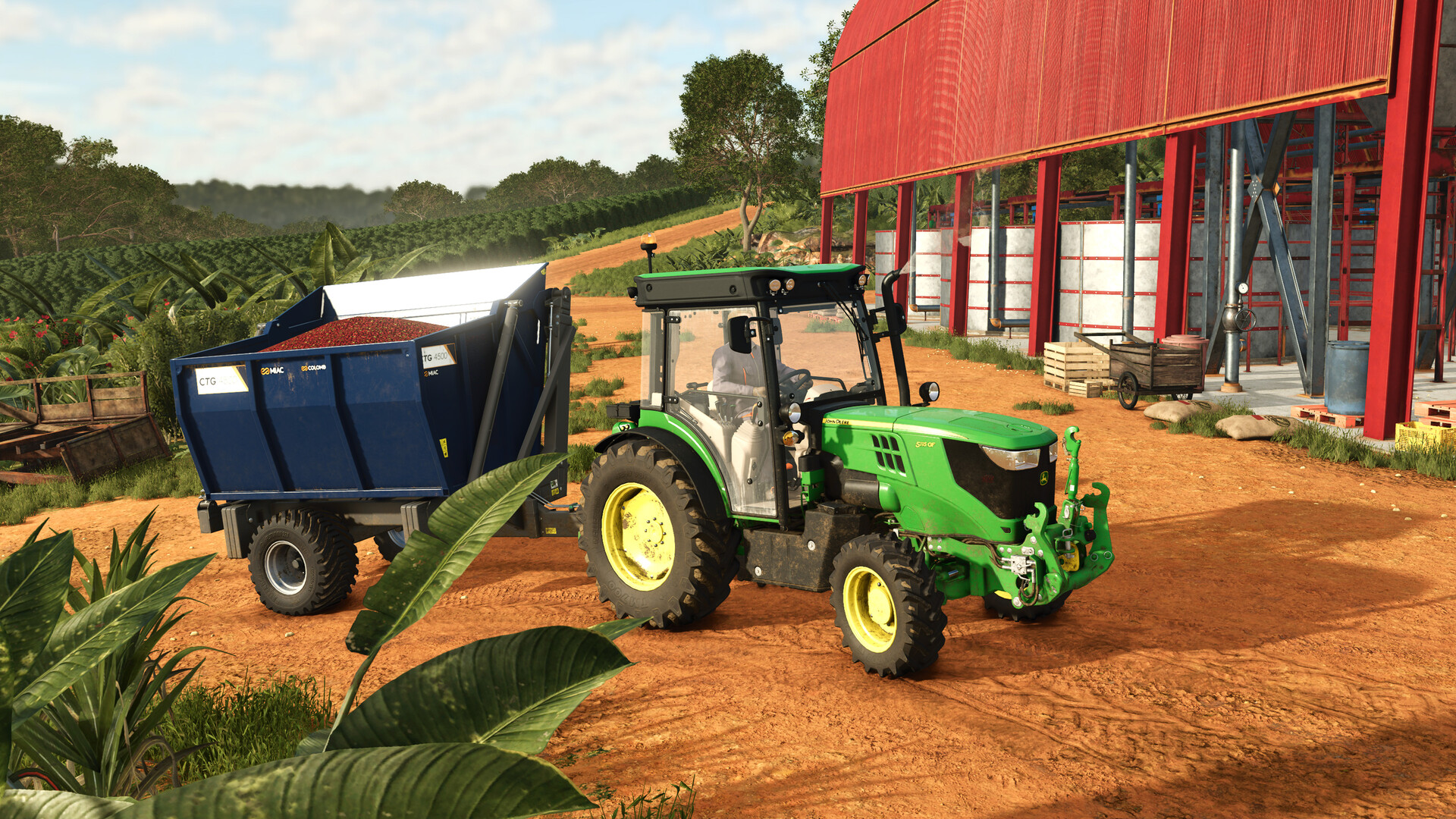
A coffee farm is a tempting project in Farming Simulator 25: Beans & Alpacas. The rows look inviting, the specialized machinery gives you something new to learn, and the harvest can feed several different businesses. Before spending your budget, though, it helps to understand how the whole operation fits together.
These ten points focus on setting up a manageable coffee operation on Catuaí. For the base game’s broader premise, see our Farming Simulator 25 overview.
1. Check That You Own the Coffee Content
Coffee cultivation belongs to the Beans & Alpacas expansion. Confirm the content is installed and available in your save before planning a purchase around it. Check your existing edition and season-pass entitlements first, so you know whether you already have access.
This is a useful moment to decide what you actually want from the expansion. A small coffee operation has different demands from a farm that also raises alpacas and processes several new crops. Start with the part you most want to learn, then expand once its costs and workload make sense to you.
2. Use Catuaí’s Calendar Instead of Assuming a Familiar One
Catuaí has its own warm-climate growth calendar. GIANTS also explains that plantations can be placed throughout the year there, with their initial growth stage adjusted to the season. That makes placement timing different from simply treating coffee like another conventional seeded crop.
Check the calendar in your save and connect it with the work already occupying your farm. Think about when machinery, transport, and your attention will be available. Planning around the actual cycle is more useful than rushing to build the largest plantation immediately and discovering that its busy period clashes with everything else.
3. Learn the Plantation System Before Buying a Seeder
Coffee uses a dedicated plantation setup rather than a normal seeder and seed rate. Inspect the construction options before purchasing equipment by analogy with grain farming. A machine being useful elsewhere on the farm does not establish that it performs the job coffee requires.
Begin with a size you can understand and maintain. That gives you a chance to learn the layout tools, the routes through the rows, and the practical shape of the work. Expanding a system you understand is easier to budget for than building an ambitious one first and trying to diagnose its awkward parts afterward.
4. Preview the Boundary and Row Direction Carefully
Boundary painting can generate a plantation layout, with an opportunity to adjust its angle and review the cost. Use the preview as a planning tool. Look at the proposed rows in relation to entrances, slopes, nearby buildings, and the route vehicles will take afterward.
Do not judge the layout only by how much land it fills. A little clear space can make turning and transport easier. Before confirming, imagine a machine entering a row, completing its work, and reaching the next one. If that imagined route already looks awkward, revise the plan while it is still a preview.
5. Budget for the Whole Operation
The cost of placing rows is only the beginning of a working farm. You also need a practical plan for harvesting, moving the crop, and any care required by your chosen settings. Review the relevant shop information before committing most of your money to land coverage.
Write down the major jobs and the equipment you expect to use for each. Then compare that plan with the budget actually available. A smaller plantation with a complete working chain is a clearer starting point than a large one whose harvest depends on a purchase you cannot yet afford.
6. Decide How You Want to Handle Plant Health
Coffee introduces fungal disease treatment. GIANTS describes a dedicated sprayer and also an option to disable the disease system. Check the setting in your save and choose deliberately, because it changes the work you are planning to take on.
If you leave it enabled, make room for crop care in the equipment budget and the routine you follow between harvests. If you disable it, treat that as a choice about the style of farm you want. The useful goal is a setup you understand, with the same assumptions used when you plan the work and when you carry it out.
7. Choose Equipment for the Rows You Have Built
The official machinery information identifies specialized coffee equipment, including the Case IH Coffee Express 200 Multi. Check the expansion’s fact sheets and the current in-game shop when comparing the machines relevant to your operation.
Match the equipment plan to the layout instead of considering the two separately. Think about access, working space, and how you will move from one section to another. Avoid interpreting the largest or most impressive machine as the best purchase for every save. The right choice is one that fits the jobs and scale you have actually planned.
8. Plan Where the Harvest Will Go Before the Tank Fills
The crop you collect is coffee cherries. GIANTS describes a narrow transfer option that can operate between plantation rows, which gives you another way to think about the journey from harvester to the rest of the farm.
Map that journey before beginning a large harvest. Where will a larger vehicle wait? Which route reaches the processing or selling destination? Is there room to unload without blocking the next job? You do not need the most elaborate logistics system immediately. You do need a clear answer to what happens when the harvesting machine needs to empty.
9. Separate Selling the Crop From Owning Its Processing Chain
The official production overview explains how coffee connects to processing and further goods. Decide how much of that chain you want to manage. Growing a crop and running the facilities that transform it are related projects, with different demands on your budget and time.
Compare the current options in your save before assuming that more processing automatically gives you the best return for your situation. Look at inputs, output handling, and the additional work involved. Selling a harvest can be a sensible learning stage while you decide which production branch you would enjoy operating next.
10. Expand After You Understand One Complete Cycle
A completed cycle gives you something a preview cannot: a practical picture of the work. Notice where time went, which machines were occupied, and what interrupted the flow. Use those observations to decide what the next investment should solve.
Perhaps the plantation needs more room to maneuver, perhaps transport deserves attention, or perhaps the existing size already suits your routine. Let that experience guide expansion. A coffee farm becomes easier to manage when each addition has a clear purpose, rather than simply making the operation larger before you know which part is limiting it.
Start with a manageable plantation, connect the machinery and transport plan, and learn the full cycle before adding another business. For other farming experiences, browse our best farming games.