Interviews
Dan Govier, Lead Developer at Fleetyard Studios Talks Starship Simulator – Interview Series

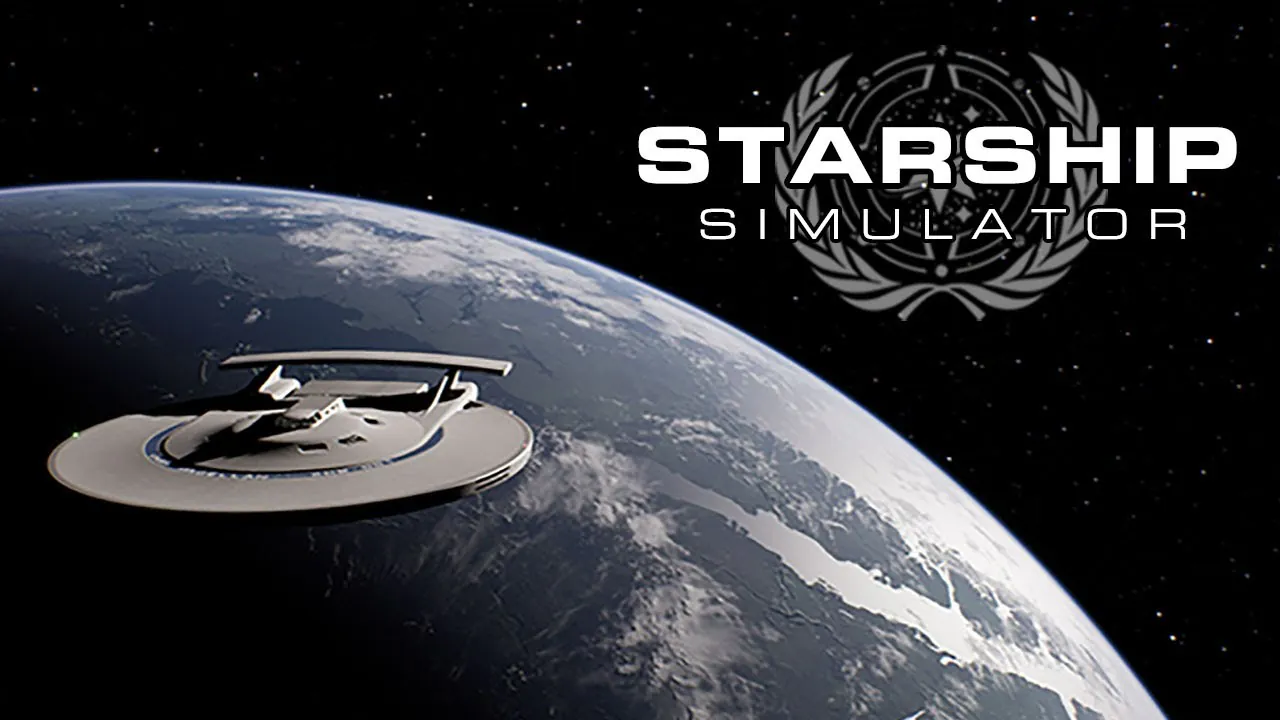
Dan Govier, whose admiration of the Milky Way and the intergalactic treasures that loom beyond the lens of a telescope, has birthed an impressive simulation experience that will reportedly allow users to travel through vast oceans of space to live out their dreams of piloting a starship—a vessel that will feature “plausible structural framework” and authentic systems. The game, aptly titled Starship Simulator, will include numerous decks to explore, alien species to converse with, and an enormous amount of tasks to perform, thus making it one of the most in-depth sci-fi games of its kind.
In an effort to learn more about the game, I recently caught up with Dan, who was kind enough to fill me in on all of the details.
We’re fascinated by this procedurally generated tapestry of the Milky Way that you’ve crafted using real world astrophysics; 1.7 quadrillion cubic lightyears is an incredibly impressive feat. Please could you tell us more about this decision to cover such an astronomical space? Moreover, how do you plan on fleshing said galaxy out?
Dan: Our decision to model the entire Milky Way galaxy as astrophysically correct as possible, is really born of our desire to know what’s out there. I’m always looking up at the stars at night, wishing I could be up there exploring those tiny points of light, but sadly we won’t have that sort of technology in my lifetime. The best I can do instead is to simulate the galaxy as accurately as possible, to at least get a small taste of what it might really be like out there.
The biggest challenge with this is absolutely filling that space (and there is a LOT of space) with interesting content. Naturally, procedural generation is the only viable tool at our disposal, but that in itself also comes with challenges, such as avoiding repetition in its output. We are solving this partly by having the astrophysics drive the content generation, and also by creating massive asset pools to draw from.
For example, whether a planet has plant life or not will be determined by the physical and atmospheric conditions of that world, which are of course a result of the astrophysics-driven procedural generation. Then, the physical nature and chemistry of that plant life will be tuned to the environmental conditions it grows in. So, as much as we are procedurally generating assets for that world, their look and feel will be unique to those specific planetary conditions. You might find another planet with similar plant life due to similar environmental conditions, but that’s the sort of scientific consistency we’re happy with.
There will of course also be many thousands of alien civilisations scattered throughout the galaxy to interact with, and like everything else, they will be the sum of their procedural attributes.
The amount of detail that you’ve poured into every nook and cranny of the Magellan Class is astounding. Would you mind telling us more about the research you carried out in order to be able to replicate a real naval vessel and its many, many technological innovations?
Dan: It all started as a hobby, with me trying to build the Enterprise Refit as though it were a real vessel, with plausible structural framework and properly simulated sci-fi hardware. This eventually lead to me creating my own unique vessel from scratch, which was really a thought experiment on how we might really build such a thing in the near future, and what sort of technology/hardware would be needed to make such a vessel viable.
I’ve always been fascinated by Architecture and Engineering, so a lot of the initial research was around the construction of real-world megaships such as cruise liners and aircraft carriers. What I found particularly interesting is how the entire vessels are designed in CAD software, right down to the individual cable runs, so I adopted that exact same approach for our ships in the game. In that sense they are very much real vessels, with every bolt and weld line catered for.
I naturally then progressed to researching electrical engineering in order to construct the electrical system for the ship, and again I did a lot of research on how the electrical systems work on real world commercial vessels. I even did a bit of cold-start training using the Kongsberg Engine Room Simulation software, which in all honesty was way over my head.
I also did a bit of research on HVAC systems and how best to place air vents around the ship, along with some general research on ship departments and how to operate and manage large naval vessels.
Ultimately, I begin each and every new ship system with a research phase, long before I start committing things to code. I then leverage the knowledge and experience of our growing backer community, many of whom are subject matter experts who know far more about these things than I do.
We’re curious to hear more about the roles aboard the ship and, more importantly, the duties each associate will have to perform on a frequent basis. Could you tell us a bit more about these positions and what each of their responsibilities entail?
Dan: In a nutshell, the ship is split into 7 departments. You have Command, Engineering, Deck Crew, Science, Tactical, Medical and Stewards. Each department has what is essentially a jobs board, and this is populated with tasks procedurally based on the needs of the ship and her crew. These tasks are assigned to individual crew members within a given department (Players and NPC’s alike), and will need to be completed in order for the ship to operate properly.
For example, if a player in the Engineering department picks up a task to perform maintenance on a particular supply cable, and then opts to ignore that task, then that cable could break at some point with very real consequences. It might just be a lighting circuit, but it could also have been for the life support. That’s the beauty of having everything simulated. Breaking one thing affects other things.
Naturally, some departments are less critical than others. The Stewards department for example will focus on Cooking and Cleaning, and ignoring a task to clean the mess hall toilets definitely won’t result in the ship exploding. Maybe.
We’re also making the tasks entirely optional for players in the sandbox mode, so if you want to just hang out on the ship and let the NPC crew take care of the task lists then you are free to do so. In fact, we will also have a special “Passenger” role that won’t be assigned to any department, leaving you free to do whatever you want on the ship while the NPC crew runs everything for you.
Let’s talk a bit about the interior of the starship—the vessel that, according to the elevator pitch, will include seven unique decks and over 200 rooms to explore. Care to walk us through these seven floors and tell us a bit about each of their respective features and landmarks?
Dan: The Magellan Class vessel has gone through a fair number of major iterations over the past 3 years, but she’s now approaching what should be her final form. This iterative design process has really been a result of constant community engagement and active discussion on what does or does not work in terms of internal layout and room compliment.
At the time of writing the planned layout looks like this;
Deck A – Main Bridge, Conference Room and Offices.
Deck B – Officer’s Lounge, Staterooms and the upper floor of the Data Centre.
Deck C – Science Labs, Data Centre, Probe Facility and Airlocks 1-4.
Deck D/E – Habitation Levels. 200+ Crew Quarters, Shuttle Bay, Airlocks 5-8, Security Office, Brig, Sports Bar, Bowling Alley, Cinema, Gym, Mess Hall, Medical Facility, Park, Hydroponics and a few other misc rooms/offices.
Deck F/G – Main Engineering Decks. Control Room, Reactor Room, Battery Rooms 1-8, Cryo Fluids, Life Support, Emergency Power, Waste Management and Workshop. The cargo holds are also located aft of the engineering areas at this level.
Deck H – Refinery hardware, resource storage and small docking bay for a mining vehicle.
Deck I – Gas scooping hardware and cryogenic storage tanks.
The main goal of the ship’s internal layout is to provide a crew of ~200 everything they need to be entirely self sufficient during multiple years exploring deep space. Corridors, stairs and lifts have also been placed strategically to maximise the efficiency of human traffic flow around the vessel.
Every inch of the vessel will of course be fully explorable, and also fully interactive. Our goal is to always have something you can interact with, no matter where you are on the ship. As we are fond of saying, every button will do something.
Tell us a bit more about the extraterrestrial sequences and the choice-based dialogue that will feature in the game. How will we be given the opportunity to make contact with alien civilizations, and how will our choices affect the overall gameplay experience?
Dan: We will have several categories of alien life in the game, which will define how and to what extent you can interact with them.
The most numerous aliens will be those that are procedurally generated, and to use a typical sci-fi analogy, these are the “aliens of the week”. Their territory won’t extend far beyond their homeworld, and it’s likely you won’t return to their space often (or at all) in the future. Essentially they’re just cultures you meet on your journey.
Less numerous will be the hand-crafted alien races, and again using the same sci-fi analogy, these are the “hero races” that you’ll encounter as part of the main storyline. Their territory will be more extensive, and their narrative more deep.
We’ll also have non-spacefaring races in the game, which will range from cavemen to humanity as we currently stand. Should they possess a sufficient level of technology you will be able to hail them from orbit, otherwise you’ll need to take a shuttle down to the surface. An important caveat to mention here however, is that we’ll have to block surface landings where the race exceeds a certain point of development. We expect this to be “small villages”, because once you start needing roads and other infrastructure, it gets progressively harder to generate procedurally.
When you hail an alien culture you will be presented with a multiple-choice dialogue, and how they respond to you will depend on their procedurally generated personality profile. For example, a race of warriors might respect strong, forceful responses, while that sort of response will be taken less positively by a more pacifist species. Skilled diplomacy will involve quickly working out how to respond in a way that will please the contactee.
Upon achieving a successful first-contact, you can trade star charts or other resources with that race. They might point you in the direction of another race they know about, or an interesting anomaly in space. Conversely, if first-contact goes terribly, then you might find your ship under attack and unable to venture near that system safely in the future.
We will also be exploring how players can have a more direct impact on a region of space, such as choosing which side to assist in a war between two species. We’ll of course continue to expand the possibilities over time.
Starship Simulator@Starship_Sim pic.twitter.com/ebKwk7WR8b
— Fleetyard Studios (@Fleetyard) June 17, 2023
We would certainly appreciate a few quick tips and tricks on how to tackle Starship Simulator and its plethora of on-board systems and intergalactic challenges. Do you have any valuable words of advice that you wouldn’t mind sharing with our readers?
Dan: We will absolutely be adding more depth and more complexity to the game over time, as can be seen with our upcoming Sensors overhaul. At the same time however, we will always update the tutorials to reflect the latest iteration of a particular system.
We’ve designed the tutorials to be as verbose and informative as possible, so I highly recommend checking those out. Eventually, the tutorials will form a small story arc of their own, taking the player from an academy environment to operating their first real starship, so again, definitely keep an eye on those.
That aside, when seeking out new alien cultures be sure to pay attention to a star’s habitable zone. If you spot a terrestrial planet sitting in that region, then that’s a prime system for closer inspection.
Where might we be able to source some more information on Starship Simulator? Are there any useful social channels, newsletters, or perhaps any event roadmaps that we should be taking note of ahead of the game’s formal debut?
Dan: We try to be active across many forms of social media, and this is entirely down to the very lovely Claire who manages all of that side of things. Our main platform is Discord (https://discord.gg/eDSQvpgdUX), which we also use as our remote studio space. Hanging out on our Discord server is very much like hanging out in our studio, so we encourage anyone who’s interested in what we’re building here to join the server and share their thoughts and ideas.
I also do live development streams on YouTube (https://www.youtube.com/@StarshipSimulator) twice a week, and we’ve got a nice gang of regulars who tune in to every stream. If you want to watch me making the game in real time, then that’s the place to be!
Would you like to add any final touches to this story before we begin to wrap things up on our end?
Dan: I think we’ve covered most things (Claire is always telling me my replies are far too long), but I’d just like to say a huge thankyou to everyone that has supported us to date, and we’re definitely in this for the long run. We’ll be improving and expanding this project for many years to come.
Thanks for speaking with us about Starship Simulator — we can’t wait to see more of it over the coming months!
You can find more information on Fleetyard Studios’ Starship Simulator by following the official X handle here. For additional updates on the status of the game, be sure to add it to your wishlist on Steam here.