News
Are Adult Gaming Centres the Future of the UK High Street Gambling?

 Add Gaming.net to your preferred sources on Google

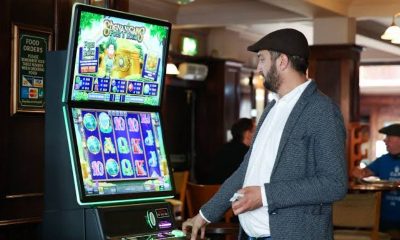
Adult Gaming Centres bring the UK public a slice of the Las Vegas gambling frenzy on popular high streets, albeit in far less lavish settings. If you have wandered around high streets in Hammersmith, Crystal Palace, Soho, or even Tottenham Court Road, you may have seen a few of these centres. Admiral and Merkur are the two major brands in the space. These are typically very small venues, roughly the size of your average tennis court, and they contain anywhere from 40 up to 80 physical machines.
What makes them alarming, is that these Adult Gaming Centres are licensed venues in the UK, they are allowed to serve Category C and Category D machines – typically lower-stake machines – and they are allowed to run 24/7. Don’t think of these as high end Vegas-style machines, but instead those cheaper aisles where the gaming continues well into the night, attracting the lower budget players. There are just about 1,500 of these centres across Great Britain, and only 300+ that have all-night licences. And these are not only raising the ire of the health and safety professionals, they also may prove to be a strong alternative for the retail operators who are struggling in a tough UK market.
Rise of Adult Gaming Centres in the UK
An article in the Telegraph talked about the rise of 24-hour casinos on Britain’s high streets, and how the councils are trembling in this wave of localized gambling venues. These gaming destinations, which the UK Gambling Commission points out are often called arcades, are licensed venues that abide by UK laws. They can obtain licences through the UK Gambling Commission, and some licences allow venues to run all night, that is, 24/7. This already pins it to Las Vegas, the city that never sleeps, where slot machines can run all night and into the early hours of the morning.
That article called the Adult Gaming Centres a relatively new arrival to the British high street, and unlike the traditional bookmakers or UK landbased casinos, these are (in the writer’s words) designed to keep people spending money for as long as possible. There are definitely addictive tendencies that you can relate to these venues, especially given that they are located on major high streets, you can jump in and hit some games (sort of like a hit-and-run gambling experience), and the stakes are low.
Gaming Rules and Licensing Conditions
And those stakes are deliberately kept low, by the Gambling Commission. Adult Gaming Centres run on a 80/20 rule, whereby each venue can have an unlimited amount of Category C and D machines, but only 20% of the entire offering can be Category B3 or B4.
- Category D: Up to 10p stake, can include up to £5 cash prizes and up to £8 non-cash prizes. Can be played by under 18s
- Category C: Fruit/slot machines, with stakes up to £1 and prizes up to £100. Age 18+
- Category B4: High stakes gaming machines, stakes up to £2 and prizes up to £400. Age 18+
- Category B3: High stakes gaming including slots and casino-style games, stakes up to £2 and prizes up to £500. 18+
Venues that just have Category D machines or bingo prize gaming don’t necessarily need an AGC UKGC licence, but permissions from the local licensing authority. Then, there are licensing fees and annual fees that can range depending on the gross gambling yield of the machines. At the Bacta Annual Convention, chief executive Andrew Rhodes confirmed that there were around 1,415 AGCs across the UK, compared to around 5,825 betting shops and 8,234 total premises (including AGCs, high street bookies, bingo venues and landbased casinos). In the UKGC annual report for 2025 (April 2024 – March 2025), of a total £4.8 billion GGY for the landbased sectors, around £682.9 million came from Adult Gaming Centres. That is, around 14.23% of the GGY for arcades, betting, bingo and casino, and 4% of the UK’s total GGY for 2025 (£16.8 billion).
Fears for Britain’s High Streets
The two main brands in the space are Merkur and Admiral. Merkur Gaming, which is a German company that creates slot machines, video lottery terminals, and operates arcades, besides its massive online casino and sports betting products. Admiral Casino, on the other hand, is a brand that is run by Novomatic, a famous Austrain landbased slot machine developer. Besides its UK arcade centres, Admiral Casino has casinos in Spain, Gibraltar, Switzerland, Croatia, and various other European countries. The brand has over 270 slot machine lounges and AGCs across the UK.
And these two powerhouses worry both the responsible gambling organizations and locals who are afraid of the non-stop gambling joints. There have been claims that these prey on vulnerable people, put off local businesses, and that each machine takes about £32,000 a year from customers. Heather Wardle, a professor of gambling research at the University of Glasgow, said that the odds of experiencing gambling harms are up to 3.5x higher among those who have played slots. The fast paced nature and intermittent rewards of slots gameplay are addictive, especially with features like near misses.
Potential for Retail Operators
For the operators, the Adult Gaming Centres represent a cheaper and perhaps more accessible retail gaming unit. For a start, the gaming floor spatial requirements are kept to a minimum. These units can be the size of your average tennis court (~2,800 square feet), housing around 40 to 80 gaming units. That means, a distribution of around 32 up to 64 lower stakes fruities and coin pushers, with around 8 to 16 of the B3 and B4 machines, with £2 maximum stake limits and payouts of up to £400 and £500.
Smaller retail space equates fewer rental and utility/maintenance costs. These joints can also be run by just 1 or 2 people at a time, and as they are quick stops for passing gamblers, there is no need to cram in extra utilities, as you would at a retail casino.
But let’s not compare these units with full-on landbased casinos. Licensed betting shops are a much closer comparison, where you get fixed odds betting terminals, or category B2 and B3 machines, sports betting and horse race betting features. These can vary in size, from the smaller “arcade-scale” units to larger venues like Paddy’s Sportsbook at the Hippodrome or the Kings Sports Bar at the Empire Casino in London. The smaller high street betting shops are similar to the AGCs, only these are not limited to a small niche of gamers. Selling betting products, they attract a wider demographic of gamblers.
Interest in New Verticals
We bring up bookies because of the recent betting shop closures across the UK. Just last year, Paddy Power shut 57 high street shops, followed by William Hill which shut around 200, and now BetFred recently announced it will close 132 betting shops. While these were not impacted by the UK gambling tax hikes, these operators have had to restructure their businesses due to the remote gaming/betting taxes, and they cut costs at their retail branches as a result. There has been talk about operators pulling back bonuses, potentially trimming their games portfolios on their sites, or even shaving the RTP in their games. But while these are speculative moves, the bookmaker/casino brands have gone ahead and reduced their retail footprints.
As BetFred shut down 132 shops, approximately 10% of its entire network in the UK, there has been speculation about them potentially turning to AGCs. But the company has not confirmed any such notion.

How Popular Are These Venues?
AGCs have been around for years, and while they do present opportunities for operators, there is a reason why many haven’t jumped on the bandwagon up until now. They attract a relatively niche audience, and given the lower stakes games they can offer, the AGCs are not poised to pull in the high value players (read: VIP customers and high rollers), in the same way that betting shops and landbased casinos can. And more recently, UK Prime Minister Andy Burnham signaled a plan to raise taxes on slot machines to raise small business relief – which would help the UK’s pubs, clubs and live music venues.
The former Mayor of Manchester had criticized these AGCs as being socially harmful, and they could potentially face a £460 million tax rise.
Such a move could hurt the market, but considering their growth in recent years, they may just be able to leverage these burdens and find a way to retain their business models. After all, pretty much every gambling sector in the UK – from retail gaming arcades to online bookies and casinos – have been impacted by the rising taxes, and survival is more about innovation than it is about using the old models with diluted odds or reduced RTP. So it may not spell the end of AGCs, and these have every potential to keep growing in what is practically a new era in British gambling.