Game Guides
Mycopunk: A First-Mission Guide for New Co-op Squads
Get a new PS5 crew through its first Mycopunk mission, from choosing a robot and helping dismantled teammates to reaching the pod and arranging useful upgrades.

 Add Gaming.net to your preferred sources on Google
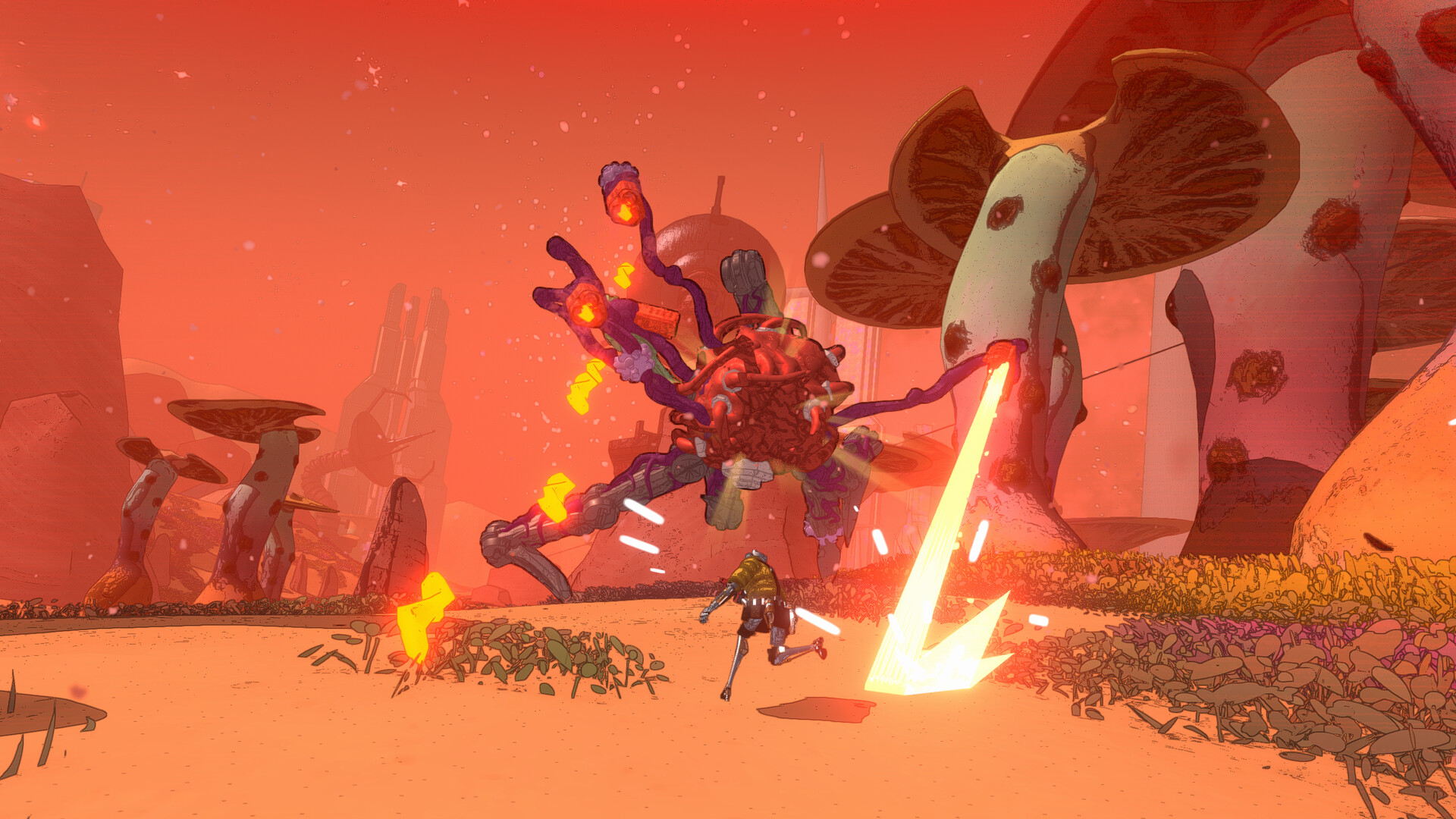
One robot is airborne, another has planted a grapple pole, and the fungal machinery below has started borrowing pieces from its fallen friends. Mycopunk gives a new crew plenty to keep track of before anyone has built an elaborate weapon. Your first mission should teach you how to move, help each other and actually get home.
Choosing your next squad game after browsing our co-op recommendations for PlayStation Plus? Here is how to get started with Mycopunk. This is a first-session guide for a fresh squad, from choosing a robot to making sense of your first upgrades.
Get the right kind of co-op session together
Mycopunk joined the PS5 Game Catalog on October 20, 2026, for PlayStation Plus Extra and Premium members. The PS5 product listing supports solo play or up to four online players, with PS Plus required online. It lists one local player, so this is not a four-controller game on one television.
Agree on that before inviting everyone over. For a shared sofa, use our local co-op picks for PS5 instead. For an online crew, let the least familiar player set the pace: the useful first run is the one where everybody understands what the group is doing.
Choose an employee whose tools you want to learn
You do not need a finished build to contribute. The starting robots already offer different ways to help, described in the official Employee Handbook:
- Bruiser: a projectile-reflecting shield and an airborne ground slam. Start here if protecting space sounds more appealing than flying around it.
- Glider: a wingsuit and rockets that can damage enemies or heal allies. Choose her if you want movement with a clear support job.
- Scrapper: a jetpack and a grapple pole the whole squad can use. Make that pole a shared route rather than your private escape plan.
- Wrangler: a rocket lasso and an air dash. Pick him if learning to reposition quickly is the part you want to practice.
These are starting suggestions, not a required party composition. Tell the others what your abilities do and try them before a crowded fight forces the introduction. A useful call is specific: “My grapple pole is here” gives teammates an option they can act on.
Do not worry about a locked Mycologist slot on your first night. The developer’s launch notes tie her unlock to rescuing her in Expedition Alpha. There is plenty to learn with the crew already available.
Follow the job, then get into the drop pod
Mycopunk is built around separate missions, not one uninterrupted march across a planet. The orbital H.U.B. is where you regroup, and the drop pod takes you down to the assignment. Use that break to make sure everyone is ready, rather than letting one enthusiastic player set the next job in motion.
Start with the game’s recommended-mission prompts. Pigeons at Play added them for new players, alongside a rule worth remembering: if nobody gets into the drop pod, the mission fails. Both are documented in the launch notes. When the objective turns to extraction, stop treating another enemy as the main event. Call out the pod’s location, account for the group and focus on boarding.
During a fight, look at what you are dismantling. The official game description explains that enemies can pick up parts dropped by other enemies. Knocking a machine apart can therefore change the next threat rather than finish the encounter. Watch the nearby survivors instead of assuming falling pieces mean a safe patch of ground.
A dismantled teammate also deserves a second look. The handbook describes putting allies back together to return them to action. Make room for the rescue before charging in; having the rest of the squad fall at the same spot only creates a larger repair job.
Give the first upgrades one clear purpose
Back aboard the ship, take a moment at the upgrade grids. The publisher’s game description explains the appeal: missions supply mods, and your equipment develops through the combinations you can fit. If tinkering is what brings you to our looter-shooter recommendations, this is the part to slow down for.
Choose a problem from the run before changing anything. Were you struggling to help a teammate, losing control of your weapon, or wasting the ability you had equipped? Read each available effect against that problem. A modest combination you understand is a better first experiment than several impressive descriptions working toward different goals.
On a controller, hold L3 in the upgrade screen to inspect the order in which effects apply. Later, when you start using pattern infusion, remember that changing a mod’s footprint affects its stats: smaller patterns generally reduce their effectiveness, while larger ones improve it. The developer’s infusion adjustments preserve that tradeoff. Inspect the result rather than simply cramming in the smallest shapes.
Give the second mission one small experiment
Keep the robot you are beginning to understand, change one useful part of the setup and return with a question you can answer. Did that adjustment make your chosen job easier? The point is to build a crew that understands its own tools, not to finish somebody else’s endgame loadout on the first evening.
For a new squad, the first milestone is simpler: complete the assignment, get someone safely into the pod and come home knowing what you want to improve.
Already played the early-access version? Our Mycopunk 1.0 returning-player guide is the better next stop. Still comparing shooters before the next download? Browse our best FPS games on PS5.