Licenses
South Korea Blocks Polymarket as Illegal Gambling After Month-Long Review

 Add Gaming.net to your preferred sources on Google
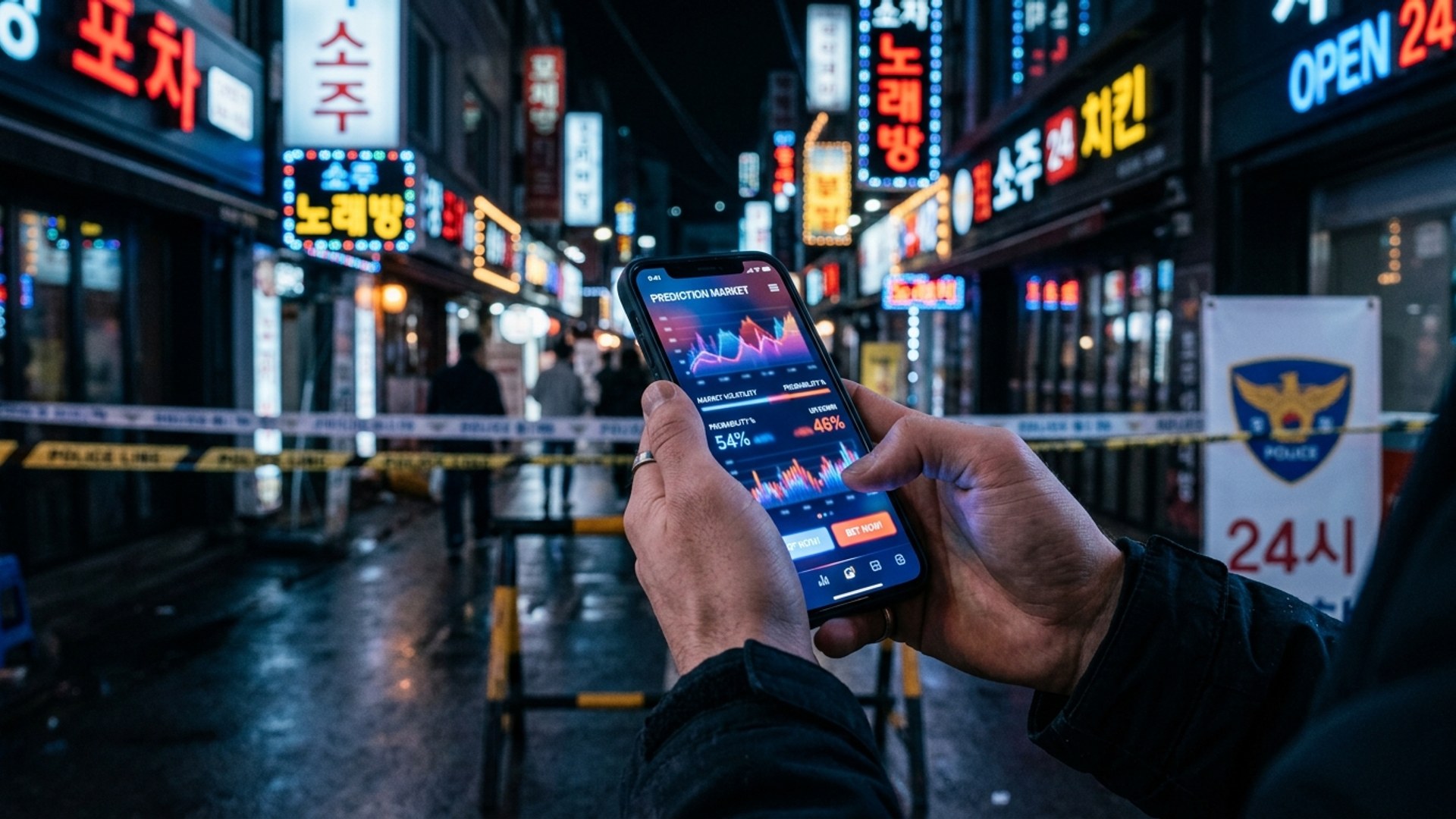
South Korea’s media and communications review body has voted to block domestic access to Polymarket, ruling that the crypto-based prediction market amounts to an illegal gambling environment under Korean law and ordering the platform cut off at the network level.
The Korea Communications Standards Commission announced the decision in a statement dated August 18, 2026, after its communications review subcommittee approved a corrective measure requiring internet providers to block access to the site. The commission determined that parts of Polymarket’s service fall within the scope of Korean criminal-law provisions covering gambling assistance and the operation of gambling venues, as well as related prohibitions under the country’s sports promotion law, according to the decision as reported by crypto.news and Korean outlets including Newsis.
The block ends a review that began in early July 2026, when the commission paused to give Polymarket a formal chance to argue its case before any enforcement action was taken.
How the Commission Reached Its Decision
The subcommittee examined how Polymarket actually functions rather than how it describes itself: how markets are created, how trading rules are set, how crypto deposits and withdrawals are processed, and how trades between users are settled. It also weighed the transaction fees the platform collects from share trading, which the commission treated as evidence that the operator profits economically from the activity.
On that basis, the commission concluded that even though users trade with one another, Polymarket manages market creation and the trading infrastructure in a way that effectively collects and distributes user funds, creating what it classified as a practical illegal gambling environment for Korean users. It pointed to the winner-take-all profit-and-loss structure, driven by uncertain events outside a user’s control, as encouraging speculative gambling behaviour.
Polymarket’s defence, submitted during the July hearing window, rested on its technical architecture. The company argued that because the platform runs on non-custodial peer-to-peer transactions and smart contracts, it does not act as the organiser of any wager, does not directly hold or manage user funds, and does not issue sports lottery tickets. On that basis, it said, it does not meet the legal tests for gambling under the Criminal Act or the National Sports Promotion Act. It also noted that it had already removed its Korean-language service and did not accept payments in Korean won.
The commission rejected each of those points. Its position was that technical characteristics and delivery methods, including the presence or absence of a Korean-language service and the use of decentralised technology, cannot exempt a service from domestic law. Nor did the won-payment argument carry weight, because Korean users could still fund positions in crypto. The commission cited Korea-specific markets, including a contract on August precipitation in Seoul, as evidence that the platform continued to offer products aimed at users in the country.
The Story So Far
South Korean scrutiny of Polymarket has been building for months. In late May 2026, Gangwon Provincial Police opened what was described as the country’s first illegal-gambling investigation into local Polymarket users, examining election-related prediction markets at the request of the National Police Agency, as SBC News reported in July 2026.
On July 7, 2026, the KCSC’s communications review subcommittee said it would hold off on corrective measures until Polymarket had stated its position, saying it planned a final decision after reviewing the submitted opinions and related materials. During the review, the commission also sought opinions from the National Police Agency, the National Gambling Control Commission and the Korea Sports Promotion Foundation, all of which indicated Polymarket’s operating structure could fall within gambling and gambling-venue provisions. The August 18 vote converts that process into a formal access-blocking order.
South Korea is not acting in isolation. Polymarket’s own geographic restrictions page lists Australia, France, Germany, Italy, Singapore and the United Kingdom among more than 30 jurisdictions where trading is restricted, and governments including India, the Czech Republic, Indonesia and Spain have imposed their own blocks under domestic gambling rules over the past year. Gaming.net has tracked the parallel US fight, where state lawmakers have put prediction markets on notice and a federal court froze Minnesota’s prediction-market ban in July 2026.
What the Block Means in Practice
The corrective measure is a network-level access block: Korean internet service providers are required to prevent users in the country from reaching Polymarket’s site. The KCSC, which reviews reports of illegal and harmful online information, issued a corrective measure ordering access to Polymarket blocked.
The practical stakes for Korean users are sharpened by the country’s gambling framework. South Korea forbids betting through any service other than the state-sanctioned Sports Toto, run by the Korea Sports Promotion Foundation, with individual stakes capped at 100,000 won. Because the commission has classified Polymarket’s markets as gambling, Korean users who continued to trade on the platform would be doing so outside that legal channel entirely.
For Polymarket, the decision removes another Asian market and underlines the regulatory cost of its central argument. The company has consistently maintained that it is a prediction market, not a gambling operator, and in the United States it sits under the Commodity Futures Trading Commission rather than any gambling regulator. South Korea’s review treated that distinction as irrelevant to what the service does for the end user, joining a growing list of gambling regulators that have reached the same conclusion.