Licenses
Blask Projects Brazil’s Bettors Will Keep Betting, Almost All Offshore

 Add Gaming.net to your preferred sources on Google
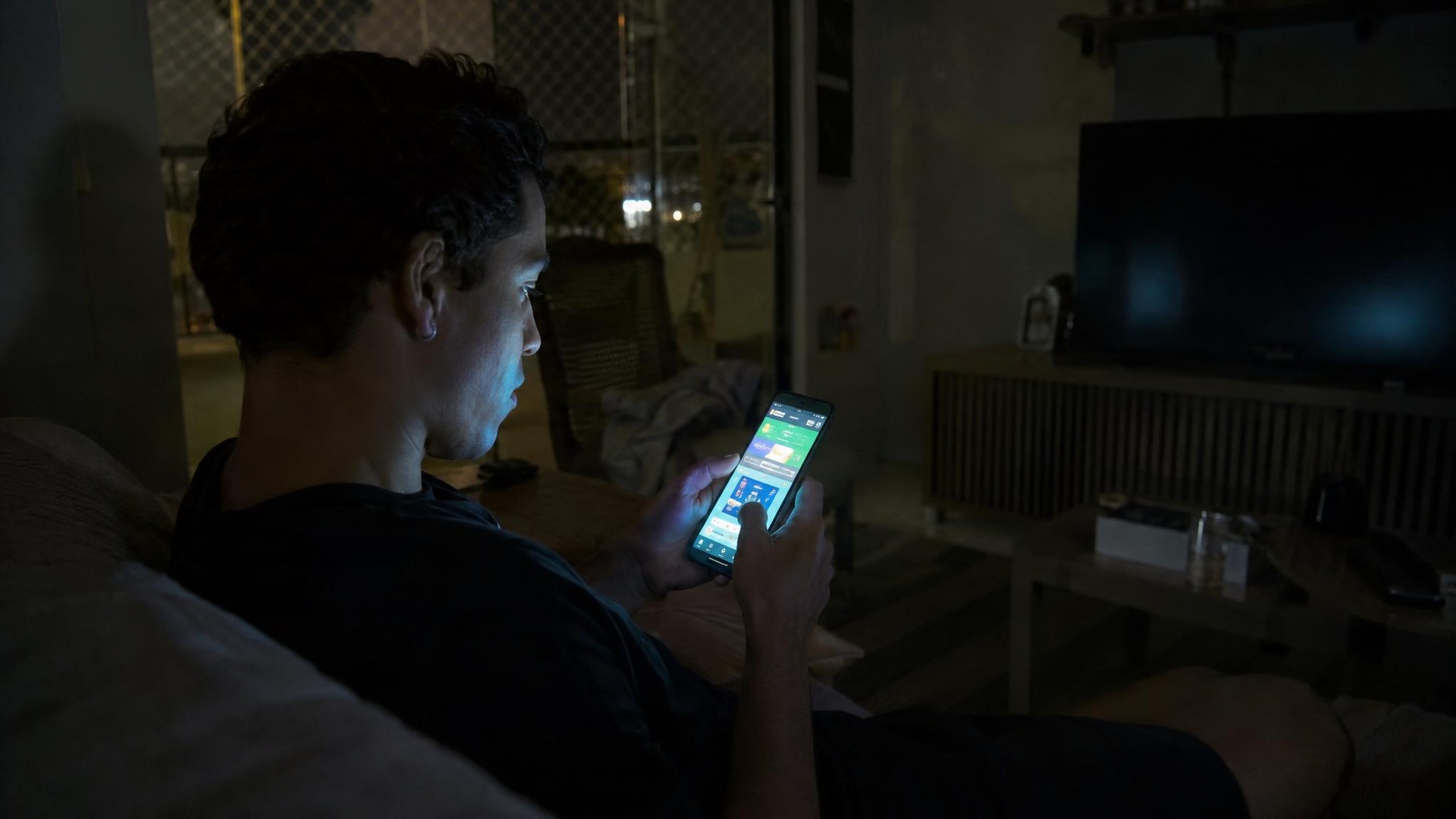
iGaming data firm Blask published an analysis on October 9, 2026 projecting that about 21.6 million of Brazil’s 25.2 million legal bettors will carry on betting after the federal ban on fixed-odds betting and online casino, almost all of them on offshore sites.
President Lula da Silva’s Provisional Measure 1,394 barred new deposits and bets on September 25, 2026, took licensed sites offline on October 6, 2026 and ends federal licences around October 25, 2026. Congress has 120 days to approve the measure or it lapses, and the vote can slip into February 2027.
The 21.6 million figure is a projection from India’s data, not a measurement of Brazil, Blask said. Three months after India’s own ban, of 100 Indians who had used legal sites, 63 were still betting, almost all offshore; in Brazil, where there was no ban at the time, 74 of 100 were. That placed India at 86% of the control rate, and 86% of Brazil’s 25.2 million legal bettors is roughly 21.6 million.
First-Week Panel Data
By October 1, six days after the measure, the share of Blask’s Brazilian panel visiting a licensed site was 74% below normal, according to Blask’s India study; India took three months to reach a comparable point. Reach to unlicensed sites stayed within 11% of normal on every day of the first week, the company reported in its cost estimate.
Onshore Blask Index fell 82% after September 25 while offshore brands drew the same demand as before, within 1%, so their share of search rose from 3.8% to 17.8% on a much smaller total, according to an October 8 brand analysis. An October 1 post recorded offshore search share at 11.3% by September 30, the highest full day since Brazil’s licensed market opened, and noted that in the 90 days before the decree 57% of Brazilian bettors had already visited an unlicensed site.
Of panelists who had used only licensed sites, 6.7% reached an unlicensed one in the week after the ban, against 5.1% in a normal week. Licensed use among that group fell from 35.4% two weeks before the ban to 23.2% in the week after, and those who switched went to names they recognized, Blask said.
In a panel of 5,970 Brazilians who had used only a licensed site in the month before the decree, Stake.com drew 271 panelists in the first week, up from 78, on an address outside the.bet.br licence, while one new 1win mirror went from zero visitors to 505, according to Blask’s account of the shutdown. Searches for 1win and Melbet jumped after the decree, with Melbet at 4.0 times the September 1–24 average by September 30.
What India Shows
Blask measured behavior through an opt-in panel of people who agreed to share browsing data, holding 13,700 to 111,000 people in India and 25,000 to 72,000 in Brazil over the period. The core comparison uses fixed cohorts of 19,924 in India and 31,785 in Brazil, each seen on at least five days both before India’s ban, from June 1 to August 19, 2025, and after it, from September 1 to November 30, 2025.
India’s domestic real-money sites lost 73% of their reach within three months of the law, yet of 100 Indians who had used legal sites, 63 were still betting afterward and 61 of them used offshore sites. Indian panelists who had only ever used offshore sites kept betting at 59.8% after the ban, against 59.0% for the equivalent Brazilian group, even as India blocked 8,376 URLs over the period.
The routes players took to offshore operators shifted: search engines fell from 16% to 8% of visits to India’s offshore sites, while pop-under ad networks, redirect trackers and pirate streaming sites rose from 21% to 41%. Blask said it expects Brazil to follow the same pattern as India, and faster, and described that expectation as an inference from India, not a measurement of Brazil.
Brazil’s self-exclusion register, age checks and deposit limits stop at the licensed perimeter, the analysis noted, and more than 1.5 million Brazilians have self-excluded from licensed sites. That register has no force offshore, nor do the identity checks, transaction monitoring and anti-money-laundering obligations attached to the.bet.br licence. In a CUTS survey of former Indian players cited by Blask, the share using offshore sites rose from 67.6% to 85.6% after the ban and the share using them daily rose from 3.4% to 42.3%; among offshore users surveyed in Delhi, 26.8% reported fraud or lost funds, and complaints about blocked withdrawals continued a year on.
Blask said three numbers will show whether the projection holds: the share of former licensed players who reach an unlicensed site each week, the volume of withdrawal complaints and the pace of new illegal sites.
Market Scale and Enforcement
Blask estimated the ban cost licensed operators about R$1.35 billion (roughly $270 million) in gross gaming revenue between September 25 and October 5, projected forward from official first-half 2026 licensed GGR of R$20.07 billion, about 15% above the first half of 2025. At the pre-ban pace, every further week without licensed betting adds roughly R$0.8 billion, about $160 million, to that total.
Blask Index, the company’s demand measure built from normalized search data, put Brazil at 1.41 billion in the first half of 2026, 15% of the global total across the countries Blask tracks and the largest iGaming market in the world by demand on that measure; the Philippines followed at 879.6 million. By Competitive Earning Baseline, a modelled revenue benchmark that is not operator-reported GGR, Brazil ranked fourth in the same period, with ten licensed brands holding 66% of the total and Betano alone 23%.
Before the decree, licensed brands held 96.8% of Brazil’s CEB in January–September 2026, $7.5 billion, against 3.2% for offshore brands. Of the 158 licensed brands Blask tracks in the country, 125 had no other market and together held $3.14 billion, or 41.8% of the onshore total; OIG Gaming and Esportes Gaming Brasil alone held $965 million through five brands. At least 36 of the 188 licensed brands had made staff redundant by October 5, according to a survey by Amig, Brazil’s association of women in the gaming industry, reported by Folha and cited by Blask. In 2004 a provisional measure closed Brazil’s bingo halls; the Senate rejected it by 32 votes to 31 that May, and the industry never returned as a regulated sector.
Federal betting tax was $1.8 billion in 2025, the 85 licences cost $456 million in total and are extinguished with no refund, and the government’s own estimate of lost revenue to 2028 is $2.4 billion, according to public sources cited in Blask’s report.
The Ministry of Justice said 187 of 188 authorized sites had stopped on October 6, with a block requested for the one still operating, and by that date it had sent 13,241 illegal sites for blocking. At a September 29, 2026 press conference, the Ministry of Justice and Public Security and the Ministry of Finance said they had requested the takedown of 5,209 domains, 1,386 indicated by the National Secretariat for Digital Rights and 3,823 by the finance ministry’s Secretariat for Prizes and Bets, with telecommunications regulator Anatel ordering 2,387 blocked. The operation removed 300 Facebook pages and 90 Instagram profiles and reached 1,014,722 members and users of illegal-betting channels on Telegram.
Authorities notified 186 betting apps for removal from the Apple and Google stores by October 6 and gave eight platforms (Google, Meta, YouTube, X, Telegram, TikTok, Kwai and Discord) deadlines to remove betting advertising. PIX transactions fell 10% after the measure, according to Central Bank figures cited by the ministry. Between March 2023 and August 2026, the Federal Police recorded 12 operations, at least 73 search and seizure warrants and 15 arrest warrants, with seizure requests totaling approximately R$4.17 billion.
Withdrawals closed at 23:59 on October 5 with R$1.325 billion remaining with about 26.5 million bettors, and banks are due to return the money between October 9 and 14. Under the measure, open bets without a result ten days after publication are annulled and refunded in full, while prizes on bets settled in the period are paid normally.