Licenses
Lula Signs Provisional Measure Banning Fixed-Odds Betting in Brazil

 Add Gaming.net to your preferred sources on Google

President Luiz Inácio Lula da Silva signed Provisional Measure No. 1,394 on September 25, 2026, prohibiting the exploitation, offer, intermediation and advertising of fixed-odds betting in Brazil and setting a transition calendar that takes licensed betting sites and apps offline on October 6, 2026.
The full text of the measure, published in an extra edition of the Diário Oficial da União and in force on publication, bans fixed-odds betting lotteries in physical or virtual form, including when they are run by agents based abroad who offer them to people located in Brazil. The prohibition covers wagers on real sports-themed events and on virtual online game events, and it does not apply to other lottery modalities authorized by law. It also extends to state and Federal District exploitation, whose concessions, permits and authorizations will be extinguished.
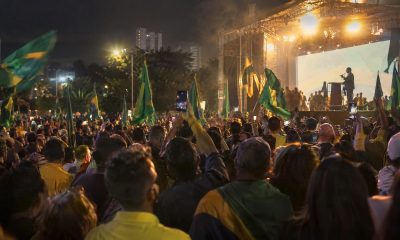
The measure was announced at an event in São Paulo on the evening of September 25, 2026, alongside a second provisional measure on household debt and an executive-initiative bill that criminalizes conduct related to online gambling, Agência Senado reported. The text was signed in Brasília by Lula and countersigned by Dario Carnevalli Durigan and Wellington César Lima e Silva.
Licenses Extinguished Within 30 Days
Concessions, permits and authorizations granted under Law No. 14,790 of December 29, 2023, the statute under which Brazil’s fixed-odds licenses were issued, are extinguished 30 days from the measure’s publication. The extinction rests on public-interest grounds and confers no right to a full or partial refund of the grant fee and no indemnification from the government. From the publication date, no new concessions, permits or authorizations may be granted, and applications still undecided are moot.
The Ministry of Health’s announcement states that 85 licenses were granted for fixed-odds betting exploitation, each at R$30 million, totalling R$2.55 billion paid by companies during the concession process. The ministry said the extinction generates no right to compensation for lost profits, investments made or the expectation of continuity.
Operators whose licenses are extinguished keep their regulatory, tax, pecuniary, anti-money-laundering, responsible-gambling and sports-integrity obligations for the period in which they were authorized. They must keep legal-representative and contact information current with the Finance Ministry’s Prizes and Bets Secretariat, transmit activity data through the Sigap betting-management system, and preserve records on bettors, bets, financial operations and prize payments for at least five years. Administrative sanctioning processes not definitively judged by the publication date are suspended, and they will be definitively archived if operators fulfil every transition obligation on time.
Refund Calendar for Player Balances
From the measure’s publication, no new funds may enter operators’ transactional accounts, and bettors have until 11:59 p.m. on October 5, 2026 to withdraw their balances voluntarily, under the government’s published calendar. Betting sites and apps go offline from October 6, 2026: the measure requires operators to make their betting sites and internet applications unavailable, including in virtual app stores, under penalty of blocking, and Agência Senado reported that blocked sites will redirect to information about refunds.
Open bets whose results are not settled within the transition period become void, with full restitution of staked amounts and no deductions of any kind; bettors keep the right to receive prizes from bets settled by the deadline. Within two days after the takedown, operators must guarantee the availability and liquidity of refund resources, deliver to the financial and payment institutions holding their transactional accounts an individualized list of bettors with CPF registration numbers, amounts owed and origin accounts, and send the same information with proof of funds to the Prizes and Bets Secretariat. Refund resources must remain segregated from operator assets, and non-compliance draws a daily fine of R$200,000 until regularization.
Financial and payment institutions then have seven days from receiving the lists to make full refunds, preferably to the origin account; the government’s calendar sets this window at October 9 to 14, 2026. Funds that cannot be returned go to a specific Caixa Econômica Federal account under Finance Ministry supervision, with individualized identification of the amounts owed, for restitution to their holders, a step the calendar places from October 14, 2026.
Advertising Ban and Enforcement Machinery
All communication, advertising, marketing and sponsorship actions for fixed-odds betting are banned nationwide, in any physical or digital medium, covering any content that offers, promotes, publicizes or facilitates access directed at the Brazilian public. Advertising and sponsorship material must be removed within ten days of publication; the government’s calendar sets an October 5, 2026 deadline for withdrawing material in physical media and outdoor advertising, and previously contracted advertising may run until that date, when visible sponsorship signage must also be removed, according to the Senate’s report. Violations constitute abusive advertising under the Consumer Defense Code, subject to administrative sanctions including counter-advertising.
Internet application providers carry a duty of care to prevent and impede circulation of the banned content, and app-store and operating-system providers must prevent the availability of banned products and remove them after notification. The Ministry of Justice and Public Security can impose warnings, simple fines of up to 10% of the economic group’s revenue in Brazil in its last fiscal year excluding taxes, or, absent revenue, R$10 to R$1,000 per registered user capped at R$50 million per infraction, daily fines, and, only for repeat non-compliance, temporary suspension or prohibition of activities. Brazilian establishments of foreign companies answer jointly for the fines.
Financial institutions, payment institutions and payment-arrangement participants are barred from processing, settling or enabling transactions for fixed-odds betting, except the transactions needed to close operations and refund bettors, and the Central Bank will establish an electronic data-communication system to reject transactions and return funds tied to illegal fixed-odds betting within the real-time transfer system it operates. The Finance and Justice ministries may request the blocking or redirection of betting sites, with telecommunications agency Anatel distributing the orders to internet-connection providers and internet steering committee CGI.br handling orders for.br domains. The Health Ministry’s announcement describes a Finance Ministry virtual laboratory for faster identification and blocking of irregular platforms, with app removals and restrictions on payment methods used by illegal operators.
The measure creates an Interinstitutional Committee for oversight and combating of illegal betting exploitation and advertising, coordinated by the Presidency’s Civil House, and requires the Federal Police, the Receita Federal tax authority and the COAF financial-activities control council to share information. It also amends Law No. 14,790 so that funds held in accounts blocked in cases of irregular exploitation can be declared forfeit to the Union through an administrative process, without a prior judicial case, with the values directed to the National Public Security Fund. The Health Ministry’s announcement states that sanctions for individuals and companies that fail to comply range from warnings to fines of up to R$2 billion, plus partial or total suspension of activities for companies. At the announcement event, Justice Minister Wellington Lima e Silva pointed to a multi-agency task force, reinforced Justice Ministry and Federal Police structures, and the gov.br/falabr channel for reports about bets and online games, the Senate’s report said.
Alongside the measure, the government prepared a bill defining five crimes, according to the Health Ministry’s announcement: exploiting fixed-odds betting even under a foreign authorization, punishable by four to six years’ imprisonment; publicizing fixed-odds betting or recruiting bettors, two to four years plus a fine; using personal data to recruit bettors, two to four years plus a fine, with increased penalties when the data involve betting history, health or children and adolescents; financial facilitation of betting exploitation, two to four years plus a fine; and supplying internet applications for betting, two to four years plus a fine, increased when the application evades age or location verification or targets children and adolescents. Agência Senado reported that influencers who profit from promoting illegal betting face up to four years in prison under the proposal, and that the government will send the bill to the Legislature.
The Health Ministry said attendances in the SUS public health system related to pathological gambling and betting problems grew about 140% between 2018 and 2025, with a projected increase of more than 104% by 2028. The ministry cited World Health Organization findings that suicide mortality is 15 times higher among people with gambling disorder, survey findings that more than 28 million Brazilians had bet in the 12 months before a 2023 survey, with 10.9 million showing at-risk or problematic patterns, and an Institute for Health Policy Studies estimate of R$38.8 billion in annual social cost, of which R$30.6 billion, nearly 79%, is health-related.
Health Minister Alexandre Padilha said the problem “goes far beyond an economic activity,” entering people’s homes, schools and phones and affecting relatives around those who develop compulsive behavior. He pointed to a self-test available on the Meu SUS Digital app for people to assess the impact of betting on their own lives.