Licenses
Brazil Senate Committee Approves Curbs on Betting Ads and Sponsorship

 Add Gaming.net to your preferred sources on Google
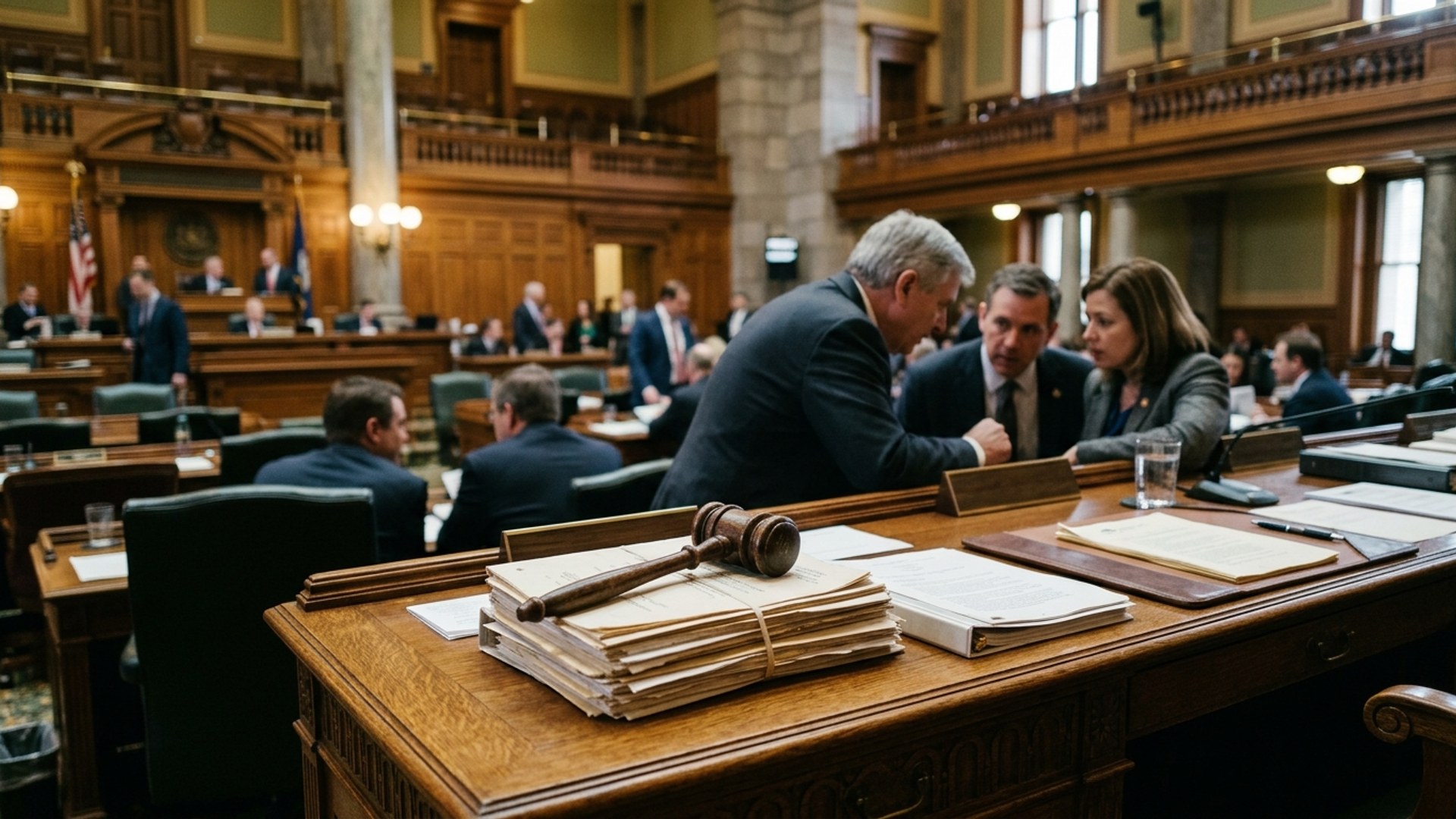
Brazil’s Senate Science and Technology Committee (CCT) approved a bill on September 2, 2026 that prohibits fixed-odds betting and online gaming advertising across broadcast, digital, and messaging channels, bans sponsorship by betting companies, and creates a crime of promoting unlicensed operators, Agência Senado reported. The committee also approved an urgency request for analysis by the full Senate.
The proposal, PL 2.470/2026, was introduced on May 19, 2026 by Senator Damares Alves and six other senators, according to the bill’s legislative tracking page. It amends Law 14,790 of December 29, 2023, the statute known as the Lei das Bets that regulates fixed-odds betting in Brazil, with measures directed at protecting mental health, consumers, and family finances. The committee approved a favorable report from the rapporteur, Senator Alessandro Vieira, in the form of a substitute text.
“This is a cross-party initiative,” Vieira said. “It stems from the understanding that society now has of the scale of the harm caused by the so-called bets.”
Advertising and Sponsorship Restrictions
The approved text prohibits direct or indirect commercial communication for betting on radio and television, in newspapers and magazines, on outdoor media, and on streaming services, podcasts, social networks, video platforms, applications, websites, blogs, forums, search engines, and other internet environments. The restriction also covers instant messages, SMS, email, notifications, advertising targeted automatically by algorithms, advertising shown again to people who previously had contact with certain content, and profiling based on user behavior.
Advertising is additionally barred in electronic games and esports, on uniforms and sports equipment, on public transport, and in content produced by affiliates, comparators, and other paid intermediaries, including tipsters, people who provide predictions, tips, and analysis on the probable results of sporting events.
Bonuses, promotional credits, free bets, cashback, free spins, rewards, and loyalty programs used to encourage signing up, remaining, or returning to betting are prohibited. The text also bans messages presenting betting as a risk-free activity, a source of income, a financial solution, a certain profit, a guaranteed method, or a way to recover losses.
The prohibition does not reach strictly institutional communication on an authorized operator’s own official channels, such as its website, app, internal platform areas, and service channels. In those spaces, information must be limited to the company’s identification, official channels, access rules, self-exclusion and blocking mechanisms, and mandatory warnings, with no promises of winnings, bonuses, invitations to bet, paid boosting, or features designed to attract and retain the user’s attention. Operators will answer for the acts of affiliates, agencies, influencers, and other third parties paid or incentivized to promote them commercially.
Sponsorship by betting companies is prohibited for clubs and other sports entities, federations, leagues, competitions, sports broadcasts, cultural events, shows, educational and social projects, philanthropic entities, civil society organizations, political parties, candidates, and election campaigns, as well as digital influencers, athletes, artists, and celebrities. The ban covers brand exposure, naming rights, licensing, ambassadors, and other forms of promotional association. Sponsorship actions involving children and adolescents, schools, and youth sports categories are also prohibited, and betting companies may not associate their brands with campaigns or projects on mental health, suicide prevention, financial education, gambling-disorder treatment, social assistance, prevention of over-indebtedness, or protection of vulnerable families. The text provides a 24-month period for sponsorship contracts to be adapted or terminated, and new, renewed, or extended contracts will be admitted only if their term ends within that window.
Player Protection, Risk Classification, and Enforcement
Operators may not use data from people who are self-excluded, in treatment, or who have requested a marketing block in order to reactivate them. Repeated or intrusive messages and offers directed at users who have reduced their playing frequency, recorded relevant losses, triggered limits, or shown signs of risky behavior are also prohibited, as is exploiting economic crisis, unemployment, indebtedness, emotional suffering, grief, anxiety, depression, loneliness, or other conditions of vulnerability to attract, keep, or reactivate bettors.
Operators must maintain permanent age-verification, self-exclusion, and voluntary time- and spending-limit mechanisms, along with information on each user’s own gambling behavior, and self-exclusion must take effect across all authorized operators. The text prohibits bets placed through credit, the use of predictive models to identify moments of greater vulnerability, and platform design mechanisms that make it harder for a user to consciously decide to stop betting, leave the service, or activate limits and blocks. Operators must maintain permanent alerts about compulsive gambling, indebtedness, and loss of assets and adopt verifiable protocols to identify risky behavior.
The proposal establishes criteria for classifying products according to their potential for harm, including instant or short-duration results, continuous repetition at short intervals, the use of random mechanisms to determine outcomes, intermittent rewards, near-miss stimuli, incentives to recover losses, and features that hinder interruption or induce successive, impulsive, or rising-value bets. Products offered to the public must undergo a prior evaluation by a federal executive branch body to be defined in regulation. Products classified as high risk would be subject to specific harm-reduction measures, while products deemed excessively risky, such as roulette, slot machines, crash games, and simulated virtual sports, could not be offered.
App providers, digital platforms, hosting services, and media intermediaries must remove irregular promotions and campaigns after notification from the competent authority. The notification must clearly and specifically identify the content pointed to as irregular, with a guarantee of adversarial proceedings and full defense, and journalistic, academic, parliamentary, artistic, and opinion content is expressly preserved. Operators and companies linked to them are also barred from acquiring, licensing, or exploiting rights to sporting events held in Brazil. The substitute folds the new infractions into the sanctions system of the 2023 betting law, which provides for fines of up to R$2 billion.
Among the main changes made by Vieira is the creation of a crime of promoting an unauthorized betting operator, punishable by one to five years in prison. The penalty can be increased by one-sixth to two-thirds when the promotion is carried out by a digital influencer, athlete, or well-known person, on account of their greater capacity to reach the public. The rapporteur also added a rule blocking professionals who have held a relevant tie with an operator or market representative body from certain regulatory functions for 24 months, with an equal quarantine applying to movement from the regulator to the private sector.
Public Hearing and Next Steps
The committee held a public hearing on the bill on September 1, 2026, at which government and betting-sector representatives presented divergent positions. Marcelo Kimati Dias, director of the Ministry of Health’s Department of Mental Health, Alcohol and Other Drugs, told the hearing that about 25 million Brazilians bet on legalized platforms in 2025 and that public health-network care related to games and betting grew 140% between 2018 and 2025. He said people with betting problems present a suicide risk up to 15 times higher than the general population, and that only 1% of betting revenue is transferred to the Ministry of Health.
Francisco Cordeiro, a national consultant for the Pan American Health Organization, cited a study published by the institution in December 2025. “For each real that the state collects, the country spends at least something around R$4 to deal with the damage,” he said. Daniel Amaral Nunes Carnaúba, director of the Ministry of Justice’s Consumer Defense Department, said the department maintains administrative processes investigating irregular betting advertising, digital influencers, and companies linked to the illegal market.
Carlos Lima, representing the Instituto Brasileiro do Jogo, cited a study by Aliciar Consultoria that he said indicates Brazilians’ indebtedness stems from other factors, such as cellphone purchases, streaming services, and alcoholic beverages, with betting last on the survey’s list. He said the regulated sector accounts for R$9.6 billion in revenue collection for the country, more than 15,500 direct and indirect jobs, and gross revenue of R$35 billion. Carlos Eduardo Cabral Lima, executive president of the Instituto Brasileiro de Jogo Responsável, argued the sector’s main challenge is combating clandestine platforms, noting the regulated market has identity verification, betting limits, and protection tools that do not exist on illegal platforms.
Andiara Maria Braga Maranhão, coordinator-general of Responsible Gambling Monitoring at the Ministry of Finance’s Secretariat of Prizes and Betting, said the federal government launched its Centralized Self-Exclusion Platform in December 2025 and that more than one million people have used the tool. She said current legislation prohibits participation by people under 18 and sets rules for advertising, consumer service, and risk awareness.
The legislative tracking page shows the bill was approved at the committee’s 30th extraordinary meeting on September 2, 2026, in the form of Vieira’s substitute amendment, and that the matter will be sent to the Senate’s Social Affairs Committee, which can decide it conclusively. The urgency request was forwarded to the Senate Board’s General Secretariat for deliberation.