Betting
Brazil’s Lula Favors Ending Online Betting, Signals ‘More Drastic’ Decision

 Add Gaming.net to your preferred sources on Google
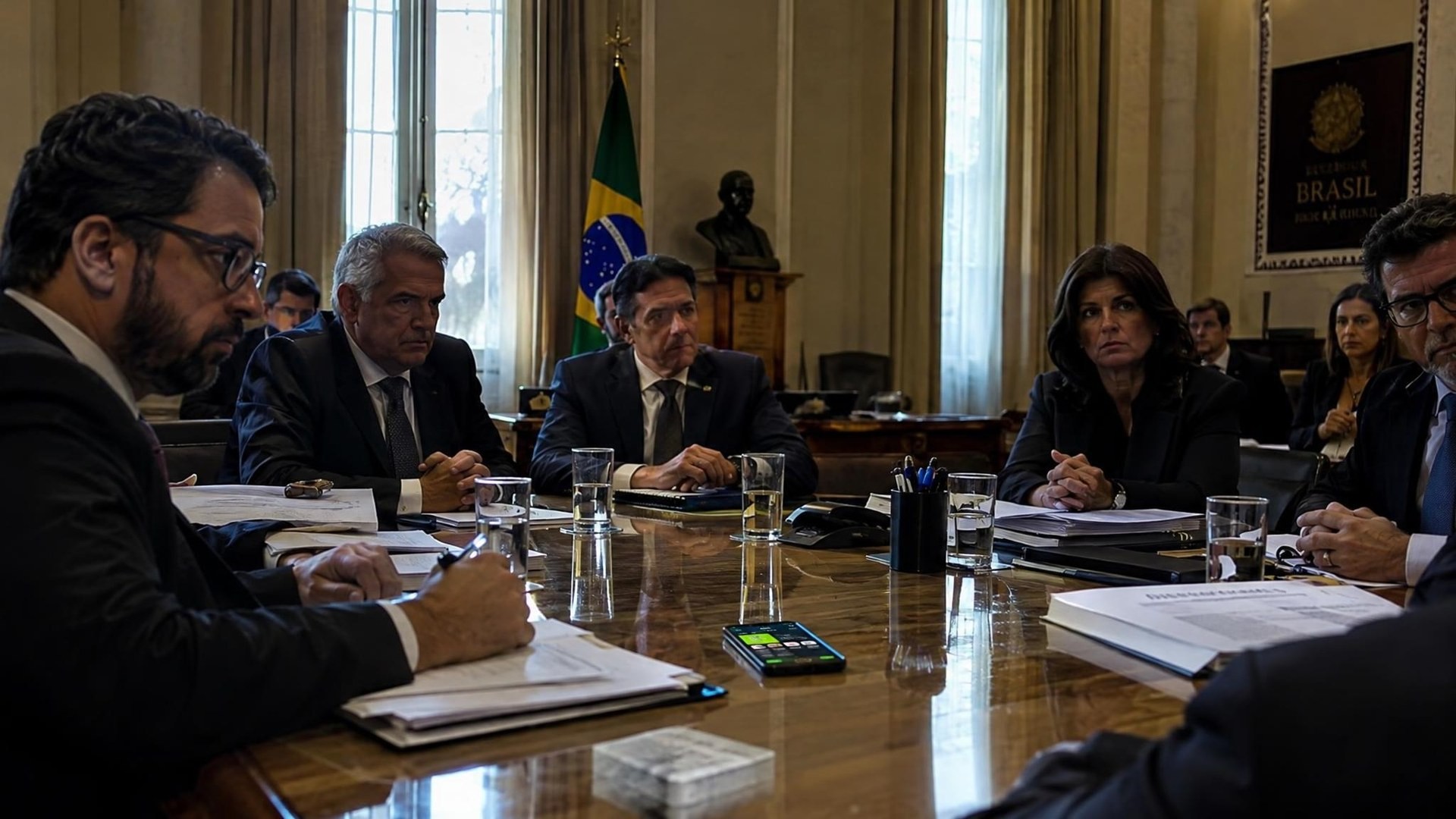
President Luiz Inácio Lula da Silva said he favors ending online betting in Brazil and indicated the government needs to take a “more drastic decision” on the sector, speaking at a September 1, 2026 meeting with civil-society representatives at the Planalto Palace, according to the Workers’ Party account of the meeting.
Lula told the gathering that he is in favor of ending the bets. “I think they are an evil for society,” he said, adding that with the digitalization of the world, “everything that was demonized has entered our homes” and reached the hands of children and adolescents.
The president said the state needs to “take a more drastic decision,” and said the decision on what to do about the sector was already “two-thirds taken,” pending the meeting. He said he would not want to decide based solely on his own will and that of his ministers, but wanted to hear what society thinks.
“We tried to regulate, but what was gambling has taken over the country,” Lula said, adding that “some are winning, but the majority of society is losing with this.” According to the Workers’ Party, Lula favors banning the platforms because he believes regulation has not been sufficient.
Lula Cites Household Debt And Social Costs
Lula said the money spent combating the harms caused by betting is far greater than the tax revenue collected from the platforms. He cited economic measures from his government, including controlled inflation, historically low unemployment, expanded family income, an income tax exemption, and a real increase in the minimum wage, as ways of leaving a little extra money for the population that he said has increasingly been used on betting.
The president also referenced Desenrola, his government’s debt-renegotiation program. He said the program did not end the debt because it was an “invisible” debt, arguing that a person who owes money because of gambling does not say so and lacks the courage to say the milk ran out because of gambling.
Attendees Present Data On Addiction And Household Impact
Representatives from the health field, religious organizations, the productive sector, and the artistic community presented data and accounts during the meeting, which ministers and other government members also attended. All present positioned themselves in favor of prohibition, or at least a severe restriction, on the operation of online betting houses.
Miguel Lago, executive director of the Institute for Health Policy Studies (IEPS), described Brazil as a symbolic case of a worldwide phenomenon expanding since 2018 and more accelerated in Latin America. He said 11 million Brazilians were in a critical situation of addiction in 2023, the most recent data available, and said the situation is likely much worse now. Lago also said the R$10 billion collected last year from taxing the bets is exceeded by up to four times by the costs falling on the population, particularly in health.
Mariana Ribeiro, CEO of the Clarice Institute, presented a survey conducted by her own organization finding that 4 in 10 Brazilian women have had contact with gambling, and that more than half suffer, in some way, the effects of other people’s betting. The survey also found that 1 in 4 Brazilians has reported an episode of family violence linked to betting.
Maria Mello, of the Alana Institute, warned that 10.5% of Brazilian adolescents have already bet, and that 55.2% of that group is in the risk zone or has already developed a disorder related to addiction. Citing data from the National Committee of Finance Secretaries, she said betting withdrew more than R$62 billion from family budgets in 2025.
Psychiatrist Hermano Tavares, a professor at the Institute of Psychiatry at the University of São Paulo, compared the addictiveness level of betting to that of inhaled cocaine, saying that 1 in 25 Brazilians bets problematically.
Also participating were Rômulo Paes, president of the Brazilian Association of Collective Health (Abrasco); Leandro Domingos Teixeira, president of the National Confederation of Commerce (CNC); Ricardo Alban, president of the National Confederation of Industry (CNI); Isaac Sidney, executive president of the Brazilian Federation of Banks (Febraban); Adriana Marcolino, technical director of the Inter-Union Department of Statistics and Socioeconomic Studies (Dieese); Igor Rodrigues Britto, executive director of the Consumer Defense Institute (Idec); Dom Jaime Spengler, president of the National Conference of Bishops of Brazil (CNBB); Patrícia Bauer, second vice president of the National Council of Christian Churches of Brazil (Conic); cultural producer Paula Lavigne; singer and songwriter Emicida; and influencer Yuri Zero, CEO of Melted Videos.
Recent Enforcement And Advertising Measures
The Lula government has intensified control over the platforms in recent months through the blocking of irregular sites, the suspension of licenses, and the requirement of user-protection mechanisms.
In July, the Ministry of Finance imposed new rules for the online betting market, with requirements to curb the advertising harassment of the bets and to protect consumers’ finances and mental health. The directives restricted betting-house advertising, prohibiting suggesting easy winnings, associating gambling with social or financial success, and running campaigns directed at minors.
In August, the Finance Ministry suspended 14 sites linked to six companies for failing to comply with the rules of the regulated market. The Ministry of Health has also acted to raise awareness of the risks of betting.
Workers’ Party lawmakers are also promoting an effort in the National Congress for regulation and advertising-control rules covering the market to be taken up.