Licenses
Federal Court Freezes Minnesota’s Prediction Market Ban

 Add Gaming.net to your preferred sources on Google

Federal Court Freezes Minnesota’s Prediction Market Ban
A federal judge has frozen Minnesota’s first-in-the-nation ban on prediction markets days before it was to take effect, handing federal regulators and the platforms Kalshi and Polymarket a rare win in a fight that most state courts have been deciding the other way.
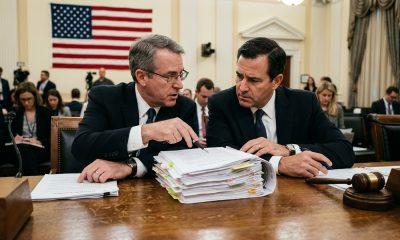
U.S. District Judge Katherine Menendez granted a preliminary injunction on July 27, 2026, barring Minnesota from enforcing the law against exchanges registered with federal commodities regulators. In a 44-page order, she found the operators and the government likely to succeed in arguing that federal commodities law preempts, or overrides, the state ban, and that the platforms would suffer irreparable harm if it took effect on August 1, 2026. The order holds until the court reaches a final decision on the merits.
The challenge was a joint federal-and-industry effort. The Commodity Futures Trading Commission (CFTC) sued Minnesota in May 2026, a day after Gov. Tim Walz signed the measure, calling it the most aggressive attempt yet by a state to shut down federally regulated markets, one that would even criminalize the weather and crop contracts Minnesota farmers use to hedge. The Justice Department, Kalshi and Polymarket US filed alongside it. The law went further than any prior state effort. Rather than apply an existing gambling statute to individual contracts, it criminalized operating, advertising or helping run a prediction market, and extended to anyone providing data or verification services to the platforms, a reach the operators warned could ensnare news outlets and sports-data partners.
Where the swap line falls
The win is narrower than the outcome suggests. Menendez, a Biden appointee, grounded the injunction in a single question: whether the event contracts these platforms list qualify as “swaps,” the financial instruments that federal law places under the CFTC’s exclusive control. Contracts tied to outcomes with clear economic or commercial stakes — a Senate race, the World Cup winner, the reopening of the Strait of Hormuz — clear that bar, she found. Wagers on who wins “Love Island USA,” or on what an announcer says mid-match, likely do not.
That distinction is the whole battleground. Because Minnesota’s ban swept in every prediction contract at once, the judge reasoned, it reaches trades the state has no authority to criminalize. But she was explicit that the law might not be preempted in every application, and that any permanent order could be far narrower once the court sorts which contracts are federally protected and which fall to state law. She left the operators’ free-speech claims undecided.
A rare setback for the states
The ruling stings for the states because it is the first to freeze an outright legislative ban on federal-preemption grounds, rather than pause a regulator’s enforcement action. It also cuts against the prevailing trend. On July 20, 2026, a Washington judge reached the opposite conclusion, finding Kalshi likely an illegal gambling operation and holding that federal law did not displace state gambling rules. Nevada forced Kalshi to geofence its sports markets under a state court order, and Michigan has threatened six-figure daily fines.
Minnesota Attorney General Keith Ellison signaled he is not backing down. “Prediction markets are gambling, plain and simple, and Minnesota has every right to keep predatory gambling out of our communities,” he told ABC News, adding that the state would continue defending the law. Polymarket’s chief legal officer, Neal Kumar, framed the decision as proof that prediction markets on federally registered exchanges are “governed by federal law, not a patchwork of state rules.”
The stakes are large. Kalshi’s monthly trading volume reached about $33 billion in June 2026, while Polymarket and its U.S. arm handled roughly $14 billion over the same stretch. Both are contesting or absorbing orders in states including Massachusetts, Michigan, Nevada and Washington, even as the CFTC, which has now sued at least nine states to assert its authority, treats their contracts as federally regulated derivatives.
What comes next
Ellison must now decide whether to appeal, and the underlying case moves toward a full trial that both sides expect to reach the Supreme Court. The injunction is not a final judgment; it freezes only the criminal ban’s application to federally registered exchanges while the litigation runs.
The unresolved question is the same one the CFTC is wrestling with in its own rulemaking, having warned the platforms off bulk contract filings that blur where federal oversight ends. Until a court draws the swap line cleanly, every state case turns on it, and Minnesota, having tried the most direct ban and lost, is now the leading test of how far a state can go.