games
Nvidia Ships DLSS 4.5 Ray Reconstruction and Nanite at Gamescom 2026

 Add Gaming.net to your preferred sources on Google
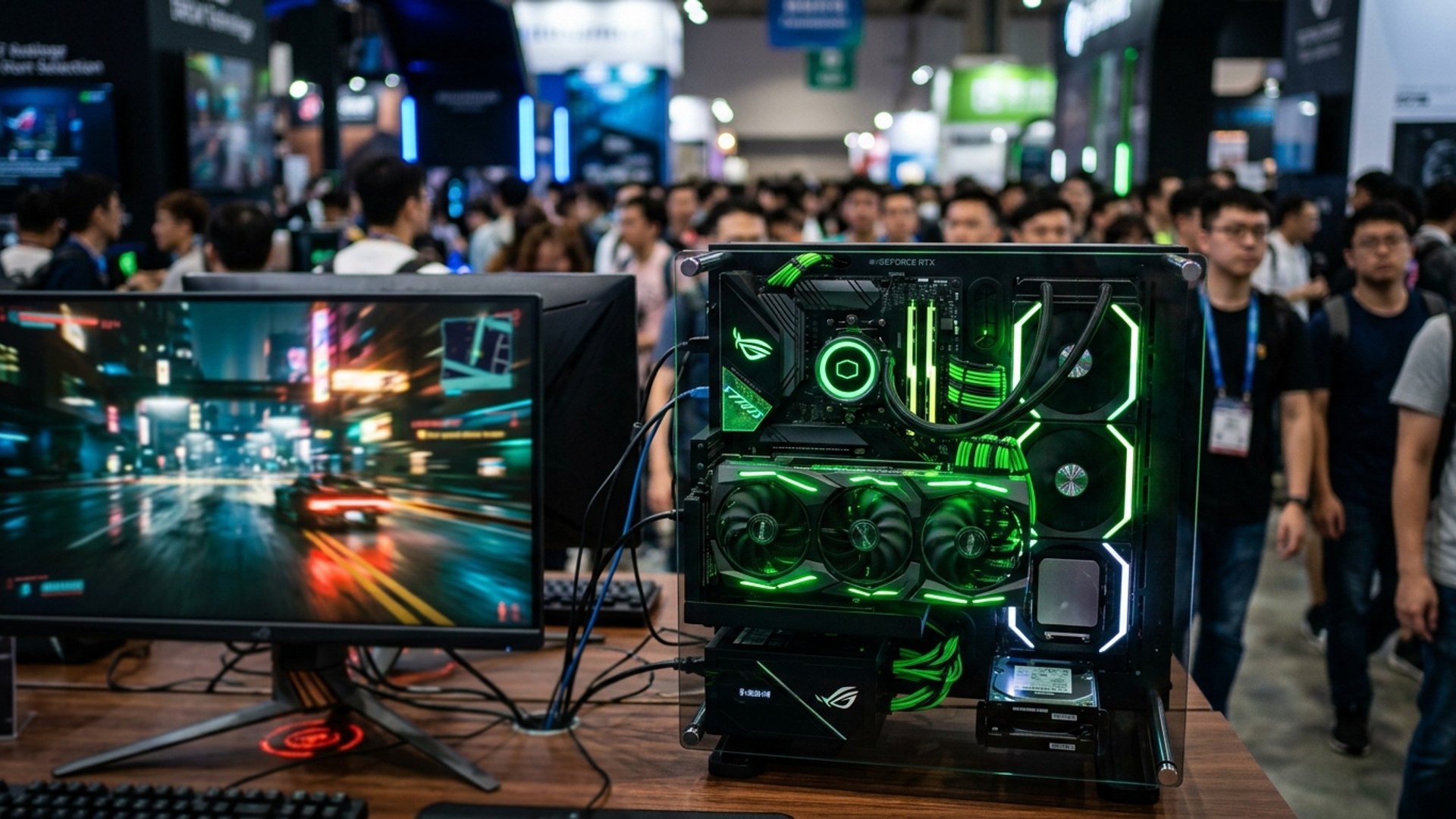
Nvidia opened Gamescom 2026 on August 25, 2026 with a stack of developer-facing releases, headlined by the launch of DLSS 4.5 Ray Reconstruction and the debut of a technique that finally lets Unreal Engine 5’s Nanite geometry render at full detail in ray tracing. The announcements span the DLSS suite, the upcoming RTX Spark Windows platform, and the GeForce Now cloud service, detailed across Nvidia’s Gamescom 2026 roundup and its companion RTX games post.
DLSS 4.5 Ray Reconstruction is available now through an Nvidia app Early Access update for all GeForce RTX GPUs, with an official release to follow in September. It requires GeForce Game Ready Driver 580.88 WHQL or newer. The model is a second-generation transformer that unifies denoising and Super Resolution into a single network, replacing the hand-tuned denoisers ray-traced games have historically shipped with.
At the time of writing, the new model can be applied to 30 games through the app’s DLSS override, including Alan Wake 2, Cyberpunk 2077, Call of Duty: Black Ops 7, and Portal with RTX. Developers can also integrate it directly through official game updates.
Ray-Traced Nanite Arrives in Gears of War: E-Day
The more consequential release for engine developers is RTX Mega Geometry, which debuts in Gears of War: E-Day on October 6, 2026. The technique resolves a limitation that has sat inside Unreal Engine 5 since Nanite shipped: when Nanite’s virtualized geometry is used alongside UE5’s ray tracing, the ray-traced scene falls back to a single static low-detail mesh, because building acceleration structures for full Nanite geometry is prohibitively expensive under the existing DXR 1.2 and Vulkan APIs. Players see full-detail geometry on screen, but shadows and reflections are traced against the coarse stand-in, producing discontinuities and flicker.
Nvidia says the fix took six years of research and development, and that Microsoft will adopt it into the DirectX Raytracing 2.0 standard, codifying ray-traced Nanite for every UE5 title rather than leaving it an Nvidia-only path. E-Day itself ships with DLSS 4.5, Reflex, and hardware acceleration for UE 5.8’s Lumen and MegaLights, under the technical partnership with developer The Coalition that Xbox detailed in July 2026.
What the DLSS 4.5 Ray Reconstruction Model Changes
Nvidia’s own figures for the second-generation transformer: 35% more compute capability and 20% more parameters than the previous Ray Reconstruction model, at what it describes as similar performance. The company lists four specific changes: a more efficient denoiser, Super Resolution with deeper spatial awareness built on the DLSS 4.5 model, a larger training dataset, and finer developer control over temporal accumulation, the tuning surface that governs how the model responds frame to frame. Nvidia demonstrated the gains in Indiana Jones and the Great Circle, PRAGMATA, and Alan Wake 2, citing cleaner particle effects and reduced ghosting in motion.
On the content side, 007 First Light adds path tracing and Ray Reconstruction on September 15, 2026, and Remedy’s Control Resonant launches September 24, 2026 with the complete DLSS 4.5 suite plus path-traced effects building on the original Control. Eight further titles showed new DLSS 4.5 or ray-tracing trailers, including Aion 2, Ananta, Black State, Cinder City, and Silver Palace. The RTX Remix modding toolkit gained DLSS 4.5 Ray Reconstruction and Multi Frame Generation support, alongside a Painkiller RTX update remastering its first 15 levels and a newly revealed Morrowind RTX mod covering the Seyda Neen and Balmora areas.
RTX Spark Gains EA, Embark, and Ubisoft — Plus Native Anti-Cheat
RTX Spark, Nvidia’s Windows platform combining DLSS and Reflex with on-device AI agents, launches this fall with new publisher backing. Electronic Arts, Embark Studios, and Ubisoft join the Krafton, NetEase, Riot Games, and Xbox commitments made at Computex in May 2026, bringing titles including EA Sports F1 25, Apex Legends, Anno 117: Pax Romana, Arc Raiders, and The Finals.
The platform’s multiplayer credibility hinged on a less visible piece of engineering: anti-cheat. Many kernel-level anti-cheat systems have historically blocked or broken on new Windows platforms. Nvidia said it has been working with EA to bring native EA Javelin Anticheat support to RTX Spark, covering EA’s largest multiplayer games at launch — the first named anti-cheat integration for the platform.
“We’re excited to bring Anno 117: Pax Romana to a new generation of RTX-powered PCs,” said Stéphane Jankowski, Ubisoft executive producer on the game. “Seeing RTX Spark hold that level of fidelity from a single chip is genuinely impressive.”
GeForce Now Adds DLSS 4.5 Controls and New Storefront Links
GeForce Now members get per-game DLSS 4.5 controls soon, spanning Super Resolution, Dynamic Frame Generation, and Ray Reconstruction. GOG single sign-on and official Firefox support are live now, with Steam Machine and Steam Controller support and expanded Fire TV compatibility rolling out later in 2026. Day-one streaming will cover Control Resonant, Gears of War: E-Day, Onimusha: Way of the Sword, The Blood of Dawnwalker, and Star Wars Zero Company. The additions extend a platform push that also saw GeForce Now’s native Linux app graduate from beta on Ubuntu earlier this month.
What Ships Next
The near-term dates out of the announcement: 007 First Light’s path-tracing update lands September 15, 2026, Control Resonant launches September 24, 2026, and Gears of War: E-Day ships October 6, 2026 with the first public implementation of RTX Mega Geometry. The Nvidia app’s DLSS 4.5 Ray Reconstruction leaves Early Access for a full release in September 2026, RTX Spark devices arrive this fall, and Microsoft’s DXR 2.0 adoption of the Mega Geometry technique is slated to follow, which is when ray-traced Nanite stops being a single-game showcase and becomes a standard UE5 capability.