Licenses
Michigan Judge Orders Kalshi to Maintain Geofence on Sports Contracts

 Add Gaming.net to your preferred sources on Google
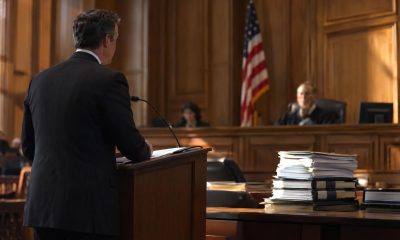
A Michigan judge has ordered prediction market operator Kalshi to keep geofencing in place that blocks state residents from its sports event contracts, granting a preliminary injunction that carries a $500,000 daily fine for violations. Ingham County Circuit Court Judge Rosemarie Aquilina signed the order on September 1, 2026, and the Michigan Attorney General’s office announced the injunction on September 2, 2026.
The preliminary injunction requires KalshiEx, LLC to maintain geofencing that prevents Michigan residents and anyone located within the state’s borders from accessing its sports betting contracts. Under the order’s terms, violations trigger a fine of $500,000 per day. The restrictions remain in effect until a final order is issued in the case.
Court Cites Seven Grounds of Harm
The injunction follows the court’s earlier findings, set out when the case first came before Judge Aquilina, that Michigan and its residents faced immediate and irreparable harm from what the court described as a “sports betting operation masquerading as an investment opportunity.” The court identified seven grounds in its June order.
First, Michigan’s legalized gaming framework requires bettors to be 21 or older, while Kalshi allows users to place wagers starting at age 18. “If Kalshi is allowed to continue to offer sports wagers, the potential irreparable harm on Michigan’s youth would be profound,” the judge wrote in that order.
The court also found that Kalshi takes advantage of serious mental health issues without providing the protections built into Michigan’s regulatory structure, and that the platform operates outside the patron-protection mechanisms required of licensed operators. Judge Aquilina further found that non-compliance with Michigan gaming law gives the company an unfair advantage over entities that follow the state’s regulatory structure, disrupting the industry.
On the financial side, the court found that Kalshi is undercutting Michigan funding for schools, compulsive gambling prevention, economic development and first responders. It noted that Detroit directs its gaming tax revenue toward law enforcement, public safety, economic development, youth programs and infrastructure. Finally, the court found that Kalshi’s conduct “negatively impacts Tribes by depriving them of the revenue they need to operate their governments and serve their citizens, while also ignoring their sovereignty.”
Geolocation and Compliance Terms
The order requires Kalshi to use a third-party geolocation services provider licensed by the Michigan Gaming Control Board and capable of meeting the geofencing specifications in the board’s Technical Bulletin No. 2024-03. The company may propose a provider licensed by another state’s gaming regulator, subject to a court determination that it can satisfy the Michigan board’s specifications.
The June order also spelled out the categories of conduct covered by the ban on sports wagering activity. Those include offering, listing, matching, executing, clearing or settling any contract that constitutes internet sports betting for anyone located in Michigan; accepting deposits, stakes or fees tied to such contracts from Michigan users; advertising or soliciting participation through websites, apps, email, push notifications, social media, influencers, affiliates or paid placements; permitting account creation or funding for the purpose of trading the contracts; and operating products functionally similar to internet sports betting, including moneyline, parlays, over-under, in-game and proposition bets.
The earlier temporary restraining order, signed on June 29, 2026, carried a lower fine of $120,000 per day for non-compliance with its geolocation requirements. The newly issued preliminary injunction raises that figure to $500,000 per day.
Case History
Attorney General Dana Nessel filed the lawsuit in the Ingham County Circuit Court on March 3, 2026, on behalf of the People of the State of Michigan and the Michigan Gaming Control Board. The complaint alleges that Kalshi violated Michigan’s Lawful Sports Betting Act by operating an online platform that lets Michigan residents place wagers on the likelihood of sports-related outcomes without licensing approval from the Michigan Gaming Control Board. The state asked the court to declare the operation a common law nuisance and to issue a permanent injunction and order of abatement.
Kalshi removed the case to the U.S. District Court for the Western District of Michigan two days after the complaint was filed. On June 25, 2026, U.S. District Judge Paul L. Maloney granted the state’s motion to remand, sending the case back to state court. Maloney rejected Kalshi’s federal-question and preemption theories, writing that the company failed to establish that the Commodity Exchange Act completely preempts Michigan’s gambling claims and that no court had found the Act provides the parallel federal cause of action required for such preemption.
Judge Aquilina then issued the temporary restraining order on June 29, 2026, halting Kalshi from engaging in or advertising its internet sports betting operation in Michigan while the litigation proceeded. The preliminary injunction now extends those restrictions for the remainder of the case.
“Kalshi long attempted to pass itself off as a legitimate gaming operation in our state, and I am relieved that this order further protects Michigan residents from its predatory, unlicensed practices,” Nessel said. “My office will continue to defend Michiganders and enforce our gaming laws, which ensure gambling revenue is regulated and distributed back into our communities.”