Best Of
10 Best Horror Games Without Combat
Explore ten horror games built around hiding, investigation and escape, including SOMA, Outlast and Still Wakes the Deep.

 Add Gaming.net to your preferred sources on Google
Horror changes when a threatening sound cannot be answered with a weapon. Your attention moves toward doors, hiding places and the distance between you and somewhere safer. The ten games below build their appeal around that vulnerability, with exploration, investigation and escape taking the place of conventional fighting.
There is plenty of variety within that idea. Some are driven by pursuit, others by a mystery or an unsettling place to explore. Choose according to the kind of tension you enjoy, and remember that the absence of combat does not make a game gentle. The descriptions below keep major story developments out of view.
10. The Exit 8
The Exit 8 makes a repeating underground passage into an observation test. You inspect each loop for anomalies, turn back when you find one and continue when you do not. There is no conventional fighting system to master; the tension comes from deciding whether the corridor you are looking at has changed.
Choose it for a compact horror idea that rewards attention. Familiarity becomes both an advantage and something the game can unsettle, because a routine walk is easy to stop examining carefully. Go in with as little knowledge of the individual anomalies as possible. Discovering what is wrong with the passage is a large part of the appeal.
9. Layers of Fear (2016)
The original Layers of Fear follows a painter through a home that refuses to stay dependable. Rooms change, memories intrude and the search for a completed masterpiece becomes an exploration of obsession. The recommendation here is specifically the 2016 game, rather than the later 2023 title with the same name.
It suits a player who wants environmental horror and a clear artistic theme. Looking around is part of how you engage with the unease: a familiar room may no longer behave as expected when you return your attention to it. Pick it for a story-led walk through an unstable place, with discovery and atmosphere doing the work that combat would handle in an action game.
8. Detention
Detention brings the list into a haunted school in 1960s Taiwan under martial law. Red Candle Games combines side-scrolling exploration, puzzles and stealth with local religious and cultural references. You investigate what has happened while trying to avoid the supernatural dangers around the campus.
Choose it if you want the setting’s history and beliefs to be central to the story. The school provides a place to explore, but the emotional weight comes from discovering what lies behind its transformed spaces. Hiding, finding items and working through the puzzles are the priorities. Keep plot-heavy explanations for afterward so the story can reveal its connections in its own order.
7. Among the Sleep: Enhanced Edition
Among the Sleep puts you at a child’s height, searching for your mother after strange sounds wake you during the night. The small viewpoint makes ordinary rooms and objects feel unfamiliar. The developer explicitly places atmosphere and exploration at the center of the experience.
Choose it if perspective is what interests you about horror. The setting does much of the work by changing how you relate to a familiar-looking world. It has a particular emotional angle, so it is a good fit when you want a story behind the unease as well as the immediate question of what might be around the corner.
6. Observer: System Redux
Observer: System Redux brings the list into cyberpunk detective fiction. As Daniel Lazarski, you investigate a decaying future and enter people’s memories to search for clues. The appeal is in following the case through increasingly unstable impressions of what happened.
Pick it for investigation and a setting that makes technology feel intrusive rather than reassuring. It suits a player who wants to inspect, interpret and piece things together while the environment becomes harder to trust. The detective role gives your movement through the horror a clear purpose, even when the next memory refuses to behave like an ordinary place.
5. Visage
Visage centers on a house with a disturbing past. Exploration and environmental detail reveal its stories, while the familiar shape of a home becomes increasingly uncomfortable. Its developer describes a slow-building experience that can be difficult in unconventional ways.
This is the choice for players who want to spend time inside one deeply unsettling environment. Rooms and corridors become things to scrutinize, and making sense of what the house is showing you is part of the work. Give it room to be deliberate. It is a less natural fit if you want a clear, brisk sequence of objectives for a casual group evening.
4. Amnesia: The Dark Descent
Amnesia: The Dark Descent begins with Daniel waking in a castle with little understanding of his own past. The official description makes its survival priorities clear: hiding, running and using your wits. The place you are exploring and the memories you uncover provide reasons to continue despite that disadvantage.
Choose it if you want a strong example of horror organized around vulnerability and discovery. Pay attention to sound and surroundings rather than expecting an encounter to become a duel. The castle gives you an immediate question about survival, while Daniel’s past supplies another question that is harder to leave alone.
3. Still Wakes the Deep
Still Wakes the Deep takes place on a North Sea oil rig in 1975. A disaster transforms the workplace into a collapsing route through an otherworldly threat. Running, climbing and swimming are central to reaching the crew and finding a way through.
This is a strong choice if you want people and place to matter alongside the danger. The rig has the character of somewhere that functioned before everything went wrong, and the crew gives your struggle a human connection. The developer’s premise is direct: you have no weapons or powers, so the focus stays on getting through the disaster with what you can do as a person.
2. Outlast
Outlast sends investigative journalist Miles Upshur into Mount Massive Asylum. You are there to uncover what has happened, but survival depends on escaping or hiding from the people pursuing you. The camera is part of your investigative identity, not a route into becoming a conventional action hero.
Pick it when pursuit is the kind of horror you want. The immediate challenge is often about reading a route and finding somewhere to go, which makes movement itself tense. It is an intense choice, with graphic material as well as chases. The original game is the recommendation here; do not confuse its particular structure with the multiplayer approach of The Outlast Trials.
1. SOMA
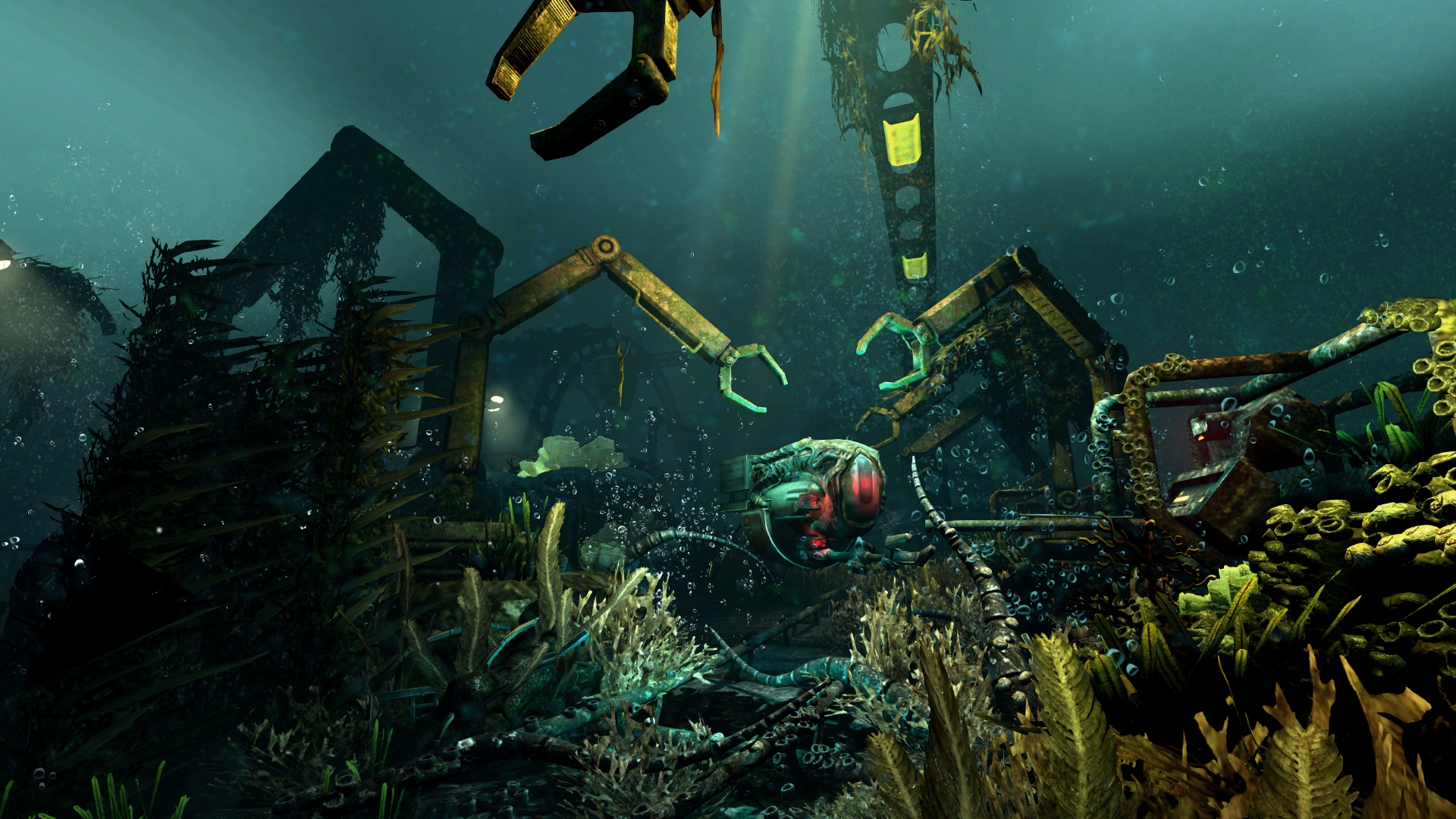
SOMA combines an underwater science-fiction setting with questions about consciousness and identity. Exploring PATHOS-II means dealing with hostile presences and discovering why the facility has reached its current state. Its story supplies a reason to keep going even when the surroundings are deeply unwelcoming.
It earns the top recommendation here for readers who want the ideas behind the horror to stay with them. Frictional also offers a Safe Mode that changes the handling of monster danger, giving players another way to experience the story. Decide which experience suits you before starting, and keep plot-heavy discussion for afterward.
For more options across different kinds of scares, browse our 100 best horror games or its Halloween horror picks. This selection is for the nights when vulnerability and escape are the attraction.