Best Of
10 Best Games Like Stellaris: The Machine Age
Discover ten games like Stellaris: The Machine Age, from sprawling space empires and galactic politics to fleet battles and thoughtful strategy.

 Add Gaming.net to your preferred sources on Google
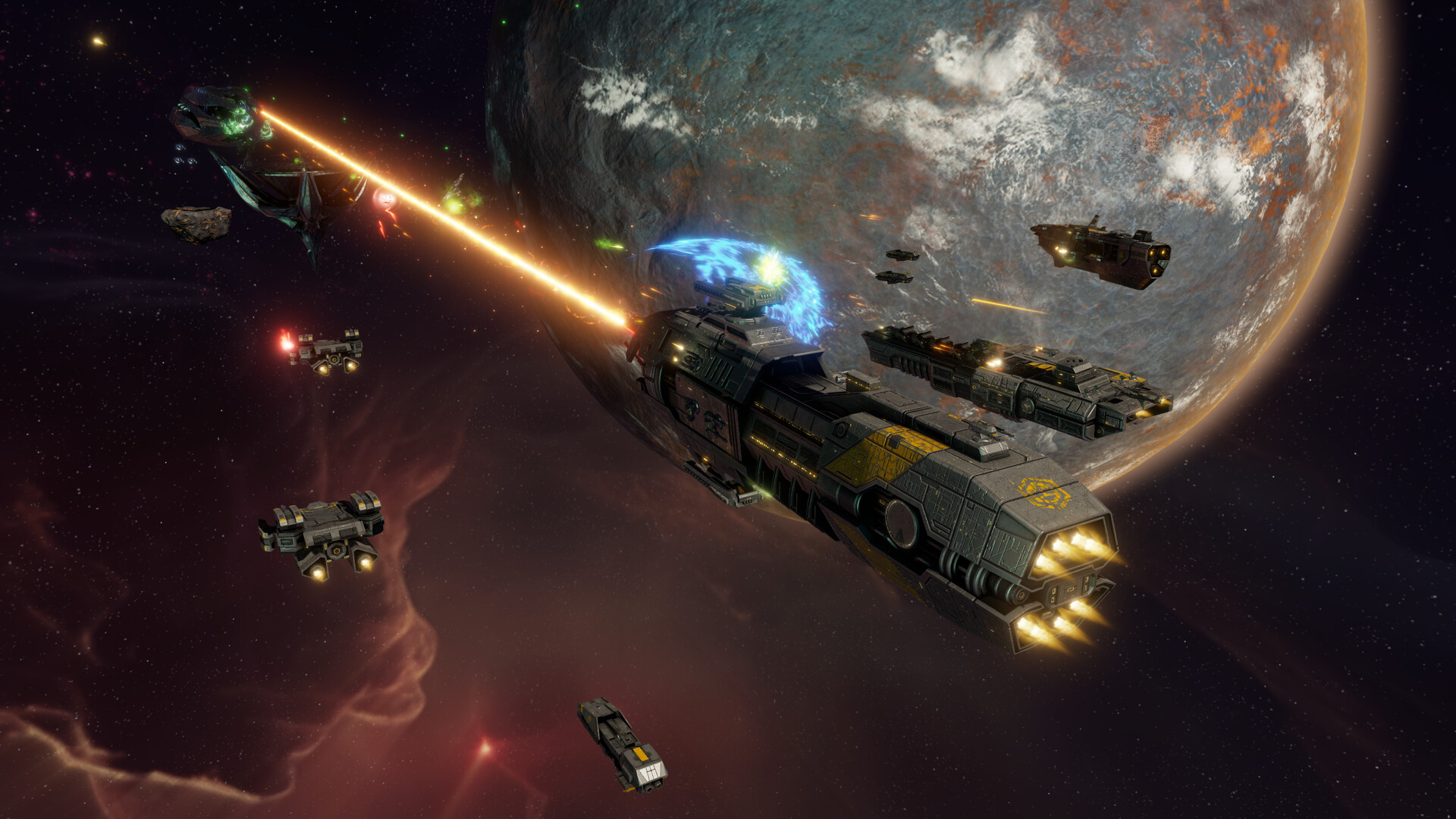
Stellaris: The Machine Age connects the future of a civilization to decisions about technology and identity. These ten alternatives share parts of the broader space-strategy appeal, from building an economy to directing a fleet. They are not all grand-strategy simulations or direct substitutes for that expansion. The useful distinctions are scale, pace, and the decisions you control personally. Each entry explains its place in the comparison without asking you to learn an entire fictional galaxy first.
Empire management, automation, and fleet control are treated as different priorities. For a related angle, see our Best Turn-Based Strategy Games for Beginners guide.
10. Homeworld 3
A fleet travels through a science-fiction campaign where three-dimensional space changes how an encounter can unfold. Positioning and the use of terrain put direct fleet command closer to the center than it is in a large political 4X game. The story provides a reason to move from one situation to the next. Choose it when the attraction of a space empire is watching and directing its ships in action. It offers that combat-focused perspective without pretending to reproduce every part of grand strategy.
Official promotional video — Gearbox. Watch on YouTube.
9. AI War 2
A powerful AI controls much of the galaxy, so expanding carelessly can make the situation considerably worse. Choosing what to capture and how much attention to attract gives the strategic map an unusual tension. Fleets still matter, but overwhelming everything immediately is not a dependable plan. Choose it for an asymmetric real-time strategy challenge rather than a conventional contest between equally placed empires. Its satisfaction comes from understanding where a smaller force can make a useful difference.
Official promotional video — Arcen Games. Watch on YouTube.
8. Stellar Monarch 2
An emperor does not need to personally supervise every mine and cargo route. Stellar Monarch 2 focuses on leadership, court politics, and the wider decisions that shape an empire, leaving much routine detail to the people below you. That change of perspective is its main reason to sit beside more conventional space 4X games. Choose it if ruling a political structure sounds more appealing than placing every industrial building yourself. The problems come from exercising authority as much as from extending a border.
Official promotional video — Silver Lemur Games. Watch on YouTube.
7. Star Ruler 2
Building a space empire involves logistics and the relationships between worlds as well as the more obvious business of constructing fleets. Ship design offers another way to give a strategy its own shape. The real-time format makes the galaxy feel active, with economic and diplomatic decisions feeding into conflict. Choose it if understanding a large connected system is the part of space strategy you enjoy most. The interesting question is often what supports an expansion, not simply how far it reaches.
Official promotional video — GOG. Watch on YouTube.
6. Stars in Shadow
A compact-looking galaxy still contains plenty of decisions about expansion, research, diplomacy, and the movement of fleets. Its turn-based approach and illustrated presentation make the empire easy to survey without removing the strategic consequences. The appeal is a comparatively focused space 4X campaign, rather than a collection of every possible grand-strategy subsystem. Choose it if you like building a civilization but want the practical choices to remain easy to find. The scale gives planning room to matter without requiring direct control of individual pilots.
Official promotional video — Iceberg Interactive. Watch on YouTube.
5. Master of Orion (2016)
A familiar collection of alien civilizations competes to explore, develop worlds, research technology, and establish influence across a galaxy. Turn-based empire decisions give the campaign its structure, with fleet encounters adding a different perspective on conflict. This is the 2016 reimagining, not the older games that share the name. Choose it for a recognizable space 4X framework with a strong emphasis on faction identity. Knowing which version you are purchasing matters more than the title alone suggests.
Official promotional video — Wargaming Europe. Watch on YouTube.
4. Distant Worlds 2
A busy galaxy contains civilian activity as well as the decisions made by your empire. Pausable real-time play and extensive automation let you decide which parts of that activity to manage personally. That makes learning what to delegate an important part of understanding the game. Choose it for a large-scale space strategy simulation with many connected systems. Its appeal is the sense of an active universe, rather than a clean sequence of isolated tactical encounters.
Official promotional video — SlitherineGames. Watch on YouTube.
3. Endless Space 2
Distinctive factions give the familiar business of exploring and developing a galaxy a strong narrative personality. Turn-based empire management connects economic decisions, diplomacy, and fleet preparation. Combat is not a conventional real-time ship-control exercise, so it helps to approach the game as a strategic planner. Choose it for a space 4X game where the civilization you select changes the mood as well as the systems. The factions provide reasons to try a different way through the same broad challenge.
Official promotional video — GOG. Watch on YouTube.
2. Galactic Civilizations IV
An expanding civilization needs a plan for exploration, colonization, technology, and relations with other powers. The turn-based structure gives those decisions space to develop across a large galaxy. Different approaches to leadership and development change what a successful empire looks like. Choose it if the appeal of space strategy lies in the overall civilization rather than personally steering a ship. Building a useful network of worlds can be as interesting as preparing the next military confrontation.
Official promotional video — Stardock Games. Watch on YouTube.
1. Sins of a Solar Empire II
Developing a space empire and directing fleets take place in a real-time strategic setting. Economics, research, and the movement of forces share attention, giving a large battle consequences beyond the ships currently firing. It is a useful alternative when you want empire-scale decisions with a stronger direct combat emphasis. Choose it for that combination, rather than expecting a dialogue-heavy political simulation. A good plan needs to account for the systems that support a fleet as well as its weapons.
Official promotional video — Stardock Games. Watch on YouTube.
Which Should You Choose?
Galactic Civilizations IV and Endless Space 2 are turn-based routes into empire-building. Distant Worlds 2 emphasizes a busy simulated galaxy, while Sins of a Solar Empire II and Homeworld 3 put more attention on fleets in action. For another direction, our Best Strategy RPGs on PS5 and Xbox guide offers a different set of options.