Game Guides
Valor Mortis: 10 Beginner Mistakes and How to Avoid Them
Starting Valor Mortis? Avoid ten common combat and exploration mistakes, from overcommitting to attacks to overlooking useful routes and upgrades.

 Add Gaming.net to your preferred sources on Google

Valor Mortis can make a familiar mistake feel surprisingly unfamiliar. You recognize the incoming sword swing, decide there is time for one more hit, and suddenly the entire screen is an enemy you would rather be standing farther away from. The first-person view makes every decision feel close and personal.
One More Level’s first-person Soulslike rewards observation, deliberate attacks, and a willingness to change your approach. These ten beginner mistakes are worth catching early. They focus on useful habits rather than boss spoilers, and you do not need a perfect build to start putting them right.
10. Attacking before you have read the room
Before starting a fight, look beyond the enemy nearest to you. Check the sides of the space, the route behind you, and anything that could interfere with movement. A doorway that looks convenient on the way in may become an awkward place to retreat.
Try choosing where you want the encounter to happen before committing. Give yourself a clear line of sight and enough room to make a defensive decision. If you keep losing track of a second enemy, change your starting position on the next attempt instead of repeating the same entrance.
9. Committing to one more swing
The developer’s launch combat advice confirms that an attack cannot be cancelled into a parry. That makes the decision to begin a swing important.
Keep your early punishments short. Land a hit when an opening is clear, then watch what happens next. If an enemy catches you during your follow-up, shorten that sequence next time. A useful practice goal is to finish an exchange ready to respond, even when that means leaving a little damage on the table.
8. Trying to learn every defensive response at once
Parries and dashes are central to combat, but frantic switching makes it difficult to tell which decision failed. Pick a familiar enemy and concentrate on recognizing one attack. Notice the preparation, the moment it becomes dangerous, and the recovery afterward.
Once you can identify that move reliably, practice an appropriate response and a short retaliation. Change one thing at a time. “I reacted too early to the overhead swing” is useful information; “everything went wrong” gives you very little to work with.
7. Watching health while ignoring posture
Attacks and parries build enemy posture pressure; breaking posture creates an opportunity for a heavy attack or finisher. Watch that meter as well as the health bar.
In practice, this means staying attentive when an enemy is nearly vulnerable. You do not need to launch a reckless flurry to force the issue. Keep reading the opponent and take the next safe opportunity. Learning to recognize the transition from ordinary exchange to finishing opportunity helps you turn good defense into meaningful progress.
6. Firing without a useful target
Guns have a specific place in the combat loop. The team identifies glowing weak points as valuable targets, with successful weak-point hits replenishing nephtoglobin. Ammunition deserves a little patience.
Before shooting, ask what the shot is meant to achieve. Can you clearly see the target, or are you reacting to panic? If your aim becomes unreliable at close range, make space first. Practicing deliberate shots against a readable opponent is more helpful than emptying your weapon into a crowded screen and hoping the problem disappears.
5. Ignoring the effect of a perfect dodge
A perfect dodge produces a brief slow-motion opportunity. Recognize it, then make a deliberate follow-up instead of continuing to dodge automatically.
The useful habit is looking up after a successful defensive action. Where is the enemy now? Are you positioned to respond, or have you moved somewhere awkward? Good movement should leave you with an understandable next decision. If you repeatedly avoid the first attack and lose control of the exchange afterward, concentrate on your landing position before trying to increase damage.
4. Equipping Ambers without reading the trade-offs
Ambers can change how a build works, and they are slotted at lanterns. Some effects involve substantial compromises, so read the entire description before committing.
Treat a new setup as an experiment. Decide which habit it is supposed to support and try it against an encounter you understand. If the build asks for aggression you cannot yet sustain, there is no benefit in forcing it. A straightforward combination that supports your current strengths is a better starting point than a complicated setup copied without its surrounding strategy.
3. Walking past routes you should remember
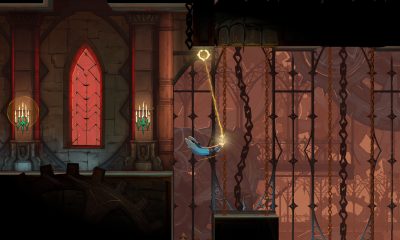
The official store description emphasizes mobility and environmental secrets. When a route catches your eye but you cannot use it yet, remember the location rather than assuming it is decoration.
Keep a short note with a recognizable landmark and the reason you could not continue. That is much more useful than “somewhere near the village.” Revisit promising places when your options change, and approach unfamiliar side paths carefully. Exploration is easier to manage when you have a reason to return instead of searching every corner again from memory.
2. Changing nothing after a failed attempt
A repeat attempt should answer a question. You might test a safer opening, check whether you can hold a better position, or find out which part of an enemy’s sequence keeps catching you. Choose one question before heading back.
Keep the rest of your approach as consistent as possible. If you change your equipment, route, aggression, and timing together, even a successful attempt will be hard to learn from. Small adjustments make progress easier to recognize, especially during the first few hours when several systems are still unfamiliar.
1. Judging progress only by whether you won
A useful attempt can end with a defeat. Perhaps you finally recognized an attack, reached the encounter with more resources, or stopped getting trapped near a wall. Those are improvements you can repeat.
After a difficult fight, name one thing that worked and one thing to change. Keep that target small enough to remember under pressure. As those improvements add up, the game becomes less of a blur and more of a series of decisions. That is a far more reliable foundation than waiting for a lucky run.
If Valor Mortis has you looking for another demanding action game afterward, our best Soulslike games like Valor Mortis list is a useful next stop. For now, start with the mistake that costs you the most health and give yourself a few attempts to fix it.