News
The Major Loophole in Scrapping the “Aim to Permit” UK Betting Shop Reforms

 Add Gaming.net to your preferred sources on Google
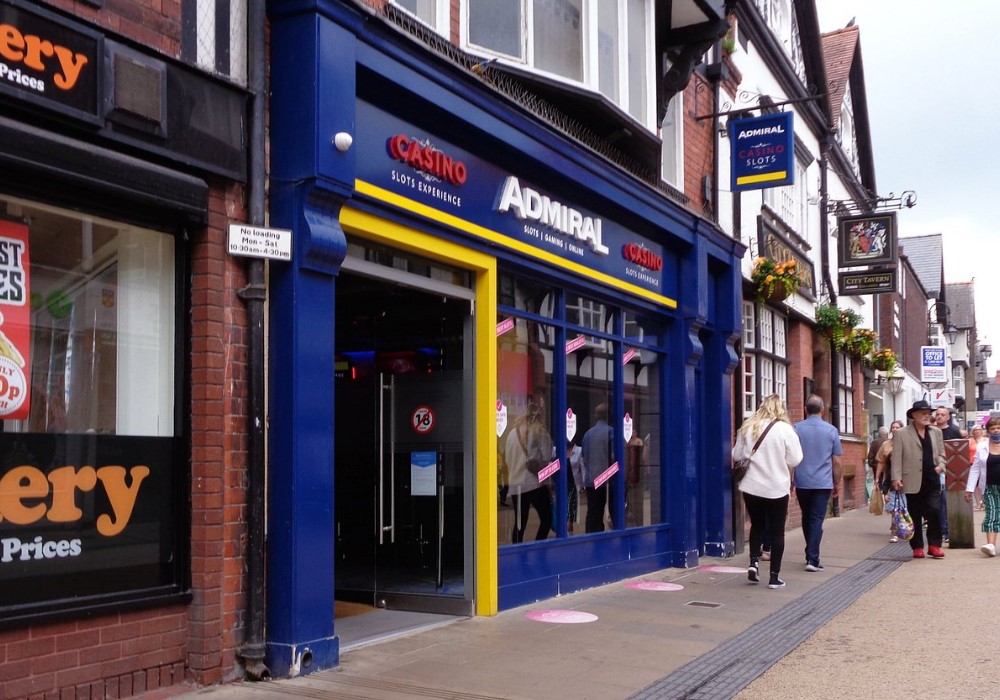
Betting shops and adult gaming centres have become the talk of the town in the UK in recent days. Prime Minister Andy Burnham, who once defended bookies when he was the Mayor of Greater Manchester, has now taken a strictly anti-gambling stance in Parliament. On August 11, Downing Street confirmed it will be looking to scrap the aim to permit rule, whereby councils across the UK were incentivised to approve betting shops and slots venues.
Though it may not be as straightforward as it seems. The situation is quite complex, as Burnham wants to give councils more power, but another reform, the National Scheme of Delegation, seems set to delegate such decisions from the councils to specially assigned planning officers. And in the meantime, the British public is quite heavily divided on whether the anti-gambling policies will have the desired effect or not.
Two Contrasting Legislative Goals
Andy Burnham’s stance is clear, and he has been quoted as calling Adult Gaming Centres and UK betting shops “dodgy” and “socially harmful”. The proposal here is to remove the Aim To Permit principle that was defined in the Gambling Act 2005. Burnham wants to give power to the local councils to have a say in whether or not new gambling venues can be set up. This is especially true for venues such as the emerging Adult Gaming Centres, which are slots-only venues that require special UK Gambling licences to operate. There are even licences that allow these venues to operate for 24 hours a day, which is one of the main factors that is causing great outrage across the country.
First, let’s simplify and describe the process of how betting shops and adult gaming centres open shop on UK high streets.
- The operator has to find a property
- They then apply to the UK Gambling Commission for an operating licence (non-remote betting or AGC operating)
- After completing the application, getting approved and receiving the operating UKGC licence, they must apply for local permission
- Apply for local betting premises licences and planning permission
- Councils must decide (currently the format, this is also where aim to permit comes in)
- With a UKGC operating licence, planning permission and gambling premises licence, the shop can open
Now the aim to permit doesn’t force councils to give planning permission and gambling premises licences to all UKGC-approved operators. But it does favour permitting the gambling. Under section 153 of the Gambling Act 2005, the licensing authority must “aim to permit” the gambling so long as the proposal is compliant with the Gambling Commission guidance, codes of practice and licensing objectives.
Andy Burnham’s Gambling Licensing Reform
The Prime Minister wants to have the Gambling Act 2005 licensing framework reformed, so that local councils can veto any proposals and withhold the gambling premises licence and planning permissions. While the operators would still hold their UKGC licences, they would be effectively forced to look for a more suitable location, or even take their business to another council entirely, if the sentiment is very anti-gambling.
Until now, councils couldn’t really turn down any applicants because:
- There were too many betting shops/AGCs in the area
- They have a negative impact on children/vulnerable people (in extreme cases this could be used)
- The local opposition is strongly against it
- There would be no demand
The only legitimate ground for declining an application to open a new gambling premises is that there are links of crime and disorder around the premises or that the opening hours (specifically of a 24-hour venue) could exacerbate a known criminal problem in the area.
The exact premises for rejecting an application are not yet known, this is still being fleshed out. But if Burnham succeeds, councils will expect greater control over deciding whether or not another gambling operator can open shop on one of their high streets.
The National Scheme of Delegation
That is, they would be, if it were not for the National Scheme of Delegation. This is a completely separate reform that was introduced in the Planning and Infrastructure Act 2025, and is going to come into force from 31 October, 2026. The objective of this delegation is to reduce the workload on elected planning committees – hence by delegating the work to professional planning officers. While this does not mean that councillors will never get a say on any new proposals, it does remove much of the existing structure that would give them automatic handling of the application.
Betting shops and AGCs would be a Schedule 2 application, meaning they are defined as “which are not householder, minor commercial or minor residential applications”. Councillors don’t get a shoe in to the approval review. But if the application raises economic, social or environmental issues of significance to the local area, or they raise a “significant planning matter” regarding the development plan and other material considerations, they could be nominated to go up in front of the committee.
Essentially, this new rule, unless it is amended to make exceptions for gambling premises (and vape shops, these were also targeted by Burnham), then they would significantly reduce the council’s input into whether new gambling premises can be erected.
The UK Public’s Stance on High Street Gambling
There are definitely members of the UK public that are siding with Burnham, concerned about the impact that localised gambling venues may have on vulnerable people, and normalise social gambling. But it is not as one sided as reports may suggest. The arguments made against these proposed changes, which would make it more difficult for operators to open gambling venues, are that it may not necessarily be the bigger problem.
After all, Burnham’s government is supportive of local pubs and clubs, to the extent that they want to raise small business relief by increasing taxes on slot machine venues – but pubs and clubs could also be socially harmful with problem drinkers.
Those Against the Betting Shops
The support for the measure has been backed by local councillors and committee members across the UK. MP Dawn Butler has campaigned for the removal of the Aim to Permit rule for several years, and she took the government’s decision as a major win.
“Too many shops are blighting too many communities. With the rule change I fought for now on the horizon, ordinary people can fight back.”
Dawn Butler, MP
Katrina Kerr was not happy with the grounds for refusal that local committees had, and argued that there were premises that could be erected near children’s shops, on routes used by children from several schools, and also close to nightclubs, where the overlapping hours could be dangerous.
“The only available grounds for refusal was protection of children and vulnerable people. I had a strong case, backed up by help from Butler’s campaign, plus many protests submitted by nearby landlords, resident groups, schools, the university and other concerned individuals. Despite heartfelt pleas and what I thought was a basic common-sense argument, the panel of three councillors advised by licensing officers approved it.”
Katrina Kerr, Chester Borough Councillor
But Durham Parish Councillor Roger Cornwell hit the nail on the head when he said that taking away the aim to permit rule may not have the desired effect. Citing the National Scheme of Delegation, he pointed out that the councillors won’t have as much power, and that the decision may need to be reversed.
“The national scheme of delegation, due to come into force on 31 October, will take away the ability from council leaders and planning committees to determine most planning applications, including the change of use proposed here. Instead, they will be delegated to officers. Elected members and parish councils will lose the power to call controversial planning applications to committee.”
Roger Cornwell, Durham Parish Councillor
The People Fighting Back
On the other side of the argument, the people and organisations that back the betting shops and AGC have made some very convincing points. In that this is not an industry that is swallowing up the UK as a whole – just in the last year, nearly 400 betting shops have closed across the country, and it all began in 2025 with William Hill closing 200 and Paddy Power closing 57 betting shops, followed most recently by Ladbrokes. Virtually all the top dogs in the UK have closed shops – all except for BoyleSports (which is bucking the trend).
Back to these supporters, they have also stressed that by making it more difficult for regulated operators to do business in the UK, they are inadvertently helping the UK’s black market thrive.
“The notion that betting shops are proliferating like weeds is a myth – their number has fallen by more than a third since 2019. Betting shops are well-regulated enterprises that contribute to the exchequer and serve as centres of local sociability.”
Alan Knight, Retired footballer
“The government’s announcement associates responsible, licensed AGCs with illegal and criminal businesses… [Bacta is] strongly challenging these proposals and the way our sector has been characterised.”
Joseph Cullis, Bacta President
Also, in Burnham’s own constituency, there were many in support for bookies, with most elderly residents (in Ashton) criticising the PM’s comments. Wrapping up, the main complaints was that the government seem to be tying all regulated operators with the black market, adding insult to injury by making it more difficult to open new premises while increasing the gambling duties, and trying to increase government gambling revenue all at the same time.
The Situation of Retail Gambling in the UK
Ultimately, the UK is very divided on this topic, and it is one that doesn’t have a clear regulatory means forward either. The question of who will get final say on the gambling premises and planning applications remains to be seen, but one thing is definite. If the government continues to pick on gambling operators and reduce the means through which they can keep up their business, it won’t just hurt the operators. It will also hurt goverment revenue through taxation, and the greater UK public who may be forced to the black market for lack of options (or poor quality options) at regulated brands.