Reviews
Echoes of the Plum Grove Review (PC)

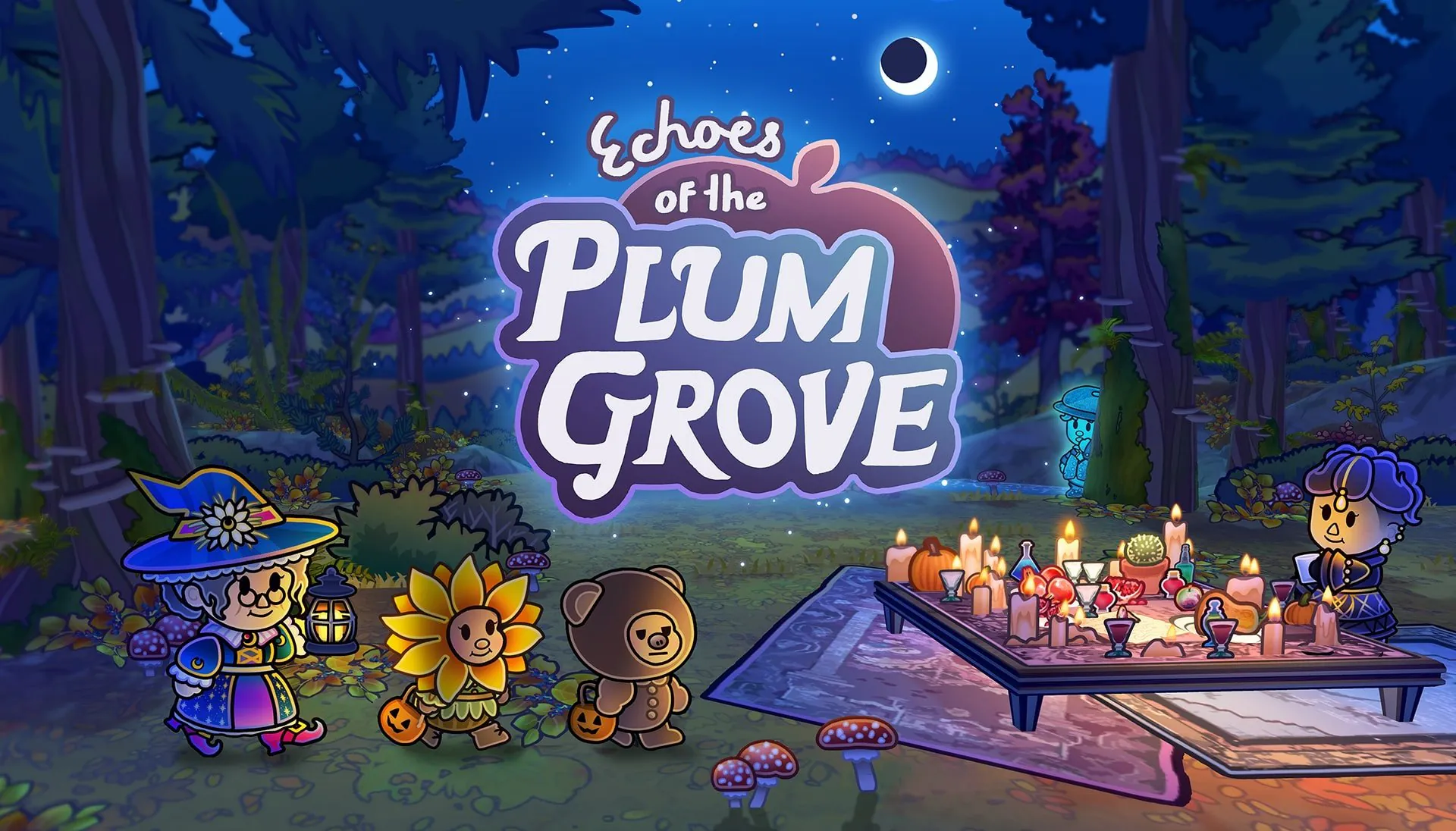
If there’s one thing I’ve come to learn from these past several months, it’s that people, in general, love cozy games—so much, that they’re often keen to plant roots in just about anything that sports a lo-fi ambiance or some favorable form of home comfort. It was only natural, then, that developer Unwound Games used this undying love of the genre to conjure its own brand of lighthouse—an atmospheric haven that would eventually become the outer walls of Echoes of Plum Grove. As the title suggests, it isn’t a threatening place to call home, let alone use as a vessel to unwind and relax over some good old-fashioned agricultural practices. But that’s sort of what drew me to it: the fact that I could just let myself go without thinking about the consequences. That, to me, was precisely why I fell in love with the ideology of coziness.
Echoes of the Plum Grove is many, many things, but a ballsy action role-playing game it most certainly is not; on the contrary, it’s an apple that falls from an entirely different branch, one that just so happens to host a plethora of cozy farming activities, culinary adventures, and social events. It isn’t quite on the same wavelength as My Time at Portia, as it doesn’t boast an enormous world to scoot around in, but it does, on the other hand, contain a lot of the same hallmark qualities and thematic elements as the aforementioned cult classic. The question is, is it worth picking up and playing, or at least setting aside for the forthcoming season? Let’s talk about it.
Echoing the Ideology

It starts like this: Honeywood, an idyllic island town, has become the local haven for travelers, and more importantly, you—a fledgling green thumb who has recently washed ashore with the hopes of establishing a prosperous farmyard that touts all of the bells and whistles of a fully functioning agricultural society. If that sounds almost too familiar to you, well, that’s because it’s essentially the same basic premise that countless other life and farming simulation games adopts. Simply put, the game is all about building a home off the fat of the land—a goal that will see you forming lifelong friendships with local townsfolk, managing seeds and rarities, and creating homes and other natural habitats for the citizens of Plum Grove.
As Echoes of the Plum Grove is, at its core, a farming simulation game, a lot of the tasks that make up the storyline are predominantly about, well, planting seeds and cultivating various patches of land. With this, of course, comes a rather important challenge: deciding which crops to plant in each season, and which natural resources to harvest and stockpile for each communal event. There’s a lot more to it than that, for sure, but for the most part, your duties mostly consist of preparing for the winter—a season that brings forth its own set of challenges, of which you must learn to overcome in order to keep your farmyard intact, and your family legacy from succumbing to the elemental pressures of the ruthless winter.
Through the Ages

What I find the most fascinating about Echoes of the Plum Grove is its ability to continue telling stories from the same tree; it doesn’t end with just the one character, or when the farm falls at the hand of fate, but instead, it falls into the hands of another member of the same clan, allowing you to pick up the slack and carry the torch forward for your former kin. In other words, the game doesn’t just simply end once you’ve played out your final hand, but rather, once you’ve unlocked the secrets of the fateful world and progressed to the point of being something of a curator of lost knowledge.
Naturally, characters can die in Echoes of the Plum Grove, and it’s up to you to keep the legacy of your family alive and kicking for future generations. Think The Sims, in the case that grandparents eventually pass away, and then ultimately pass down their heirlooms to their children. That, in short, is what the game aims to encapsulate: an everlasting journey that spans countless generations, seasonal events, and economic changes. It’s a neat feature, for sure, and one that definitely has the power to keep die-hard fans of the genre coming back for a second, third, and perhaps even a fourth round.
Of course, there is a bit of a learning curve to the whole process, and certain seasons can take a bit of getting used to, but once you’ve learned the basics and withheld the lessons of your previous endeavors, a lot of the game does become slightly less demanding. For me, I found that the first two winter seasons were the toughest to overcome — but that was mainly due to the fact that I didn’t know which crops would survive.
A Silver Lining
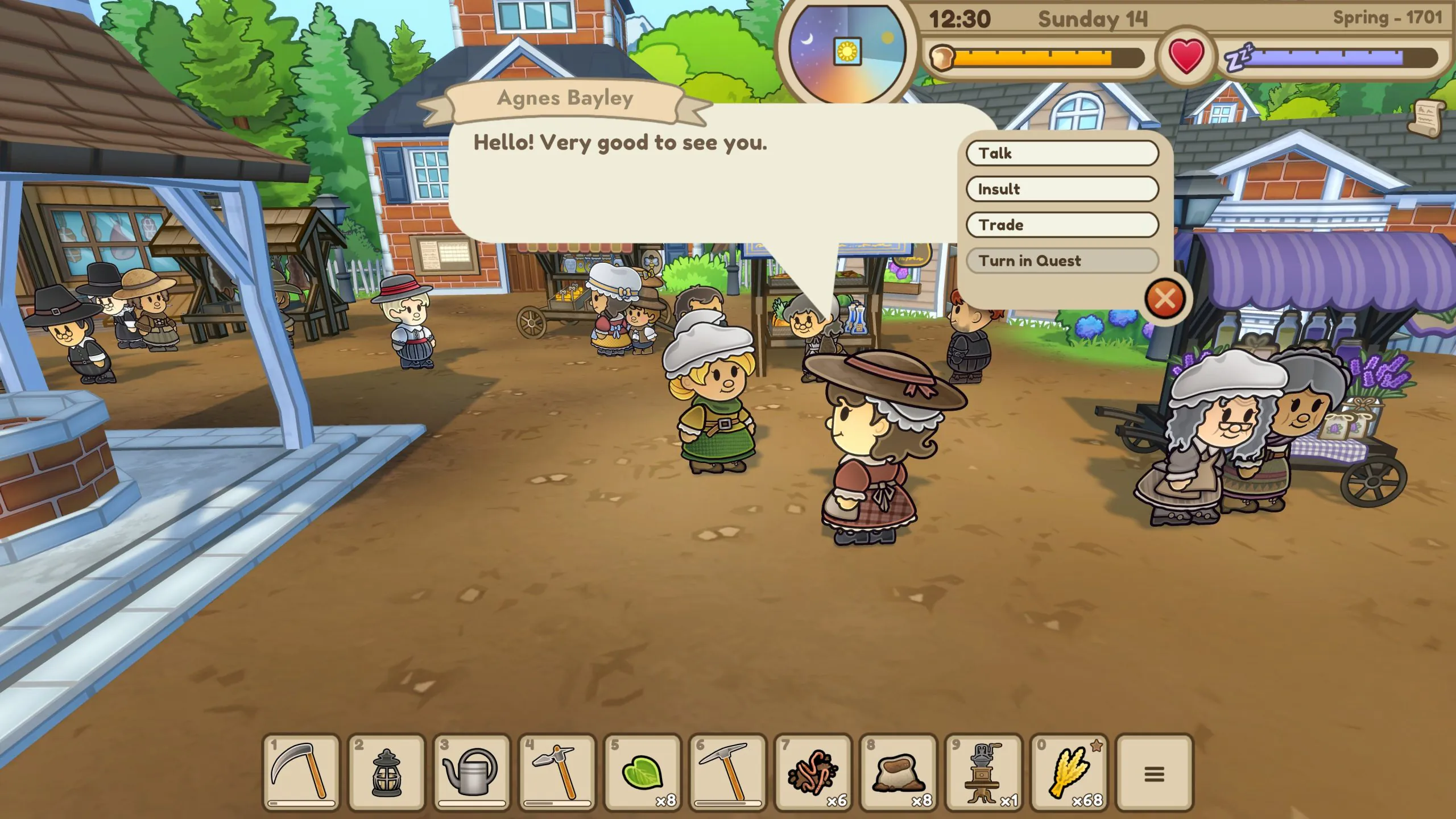
Thankfully, it isn’t all doom and gloom in the region of Plume Grove; it also comes loaded with its own share of communal vacations and seasonal festivities, too. Aside from the fact that you spend the majority of your time foraging for supplies and gradually chipping away at that agricultural to-do list of yours, you also spend a good portion of time connecting with locals and fulfilling various requests, a task that often involves exploring the far depths of the island and absorbing its natural beauty. And honestly, there was more than enough to see and do — even though it often felt like my duties were tied to the work that was taking place back home. However, when the colder months did pass, the luxury of being able to bathe in the festivities was great, not only for me, but for the rest of the folks in the hamlet, too.
There’s a surprising amount of depth to Echoes of the Plum Grove, I’ll say that much. Aside from its various types of seeds, plants, and natural resources, the game also offers a rather hefty selection of customizable features, including apparel, decor, and accessories, too. For this reason alone, I was often happy to sideline several of the chores in order to flesh out a further section of the hamlet, if not for my own satisfaction, then for the whole community. Similarly, I enjoyed just getting out and about and seeing what made the world of Honeywood, I don’t know, tick. To that end, I was able to uncover a lot more than I initially bargained for; it had schools, woodlands, blacksmiths, and even an entire network of hidden corridors and regions, too.
Verdict

Echoes of the Plum Grove isn’t overly complicated, or at least, it isn’t for those with a habit of scraping these sorts of barrels squeaky clean, anyway. It’s a great life and farming simulation game, and one that finds its own identity in many different aspects, whether it’s in its ability to generate everlasting story arcs that span countless generations, or in the living, breathing world that it tries so desperately hard to keep alive and kicking for however long it is you choose to be apart of its community. On that note, I can’t quite complain, as it does, in all fairness, summon more than enough content to make the relatively small price tag seem reasonable, to say the least.
Suffice it to say that, as a product, there’s a great deal to love about this one. Granted, it isn’t the easiest farming simulation game on the market, what with several of its biggest challenges requiring a lot of time management and careful planning, but once said issues have been resolved, its world does, at some stage, become your oyster — and that’s when its greatest features tend to shine the brightest, truly.
To answer that initial question — yes, Echoes of the Plum Grove is a fruit that you should definitely consider picking and taking a big ol’ bite out of, if not for its cozy appearance, then for its everlasting nectar that retains a sweet scent for the duration of your trip. Aside from it bearing all of the qualities of a wholehearted farming simulation game, it also touts a beautiful art style and soundtrack—two elements that make the overall experience thrice as memorable as the gameplay itself, for sure. So, if you’re planning on purchasing any “cozy” game this year, then this should suffice.
Echoes of the Plum Grove Review (PC)
Exquisitely Adorable
Echoes of the Plum Grove is arguably one of the most adorable farming simulation games you’ll play this year—a common consensus that is reinforced by a charming soundtrack, familiar characters, and a radiant homely atmosphere.