News
NVIDIA RTX Spark Laptops Now Available From Six PC Makers

 Add Gaming.net to your preferred sources on Google
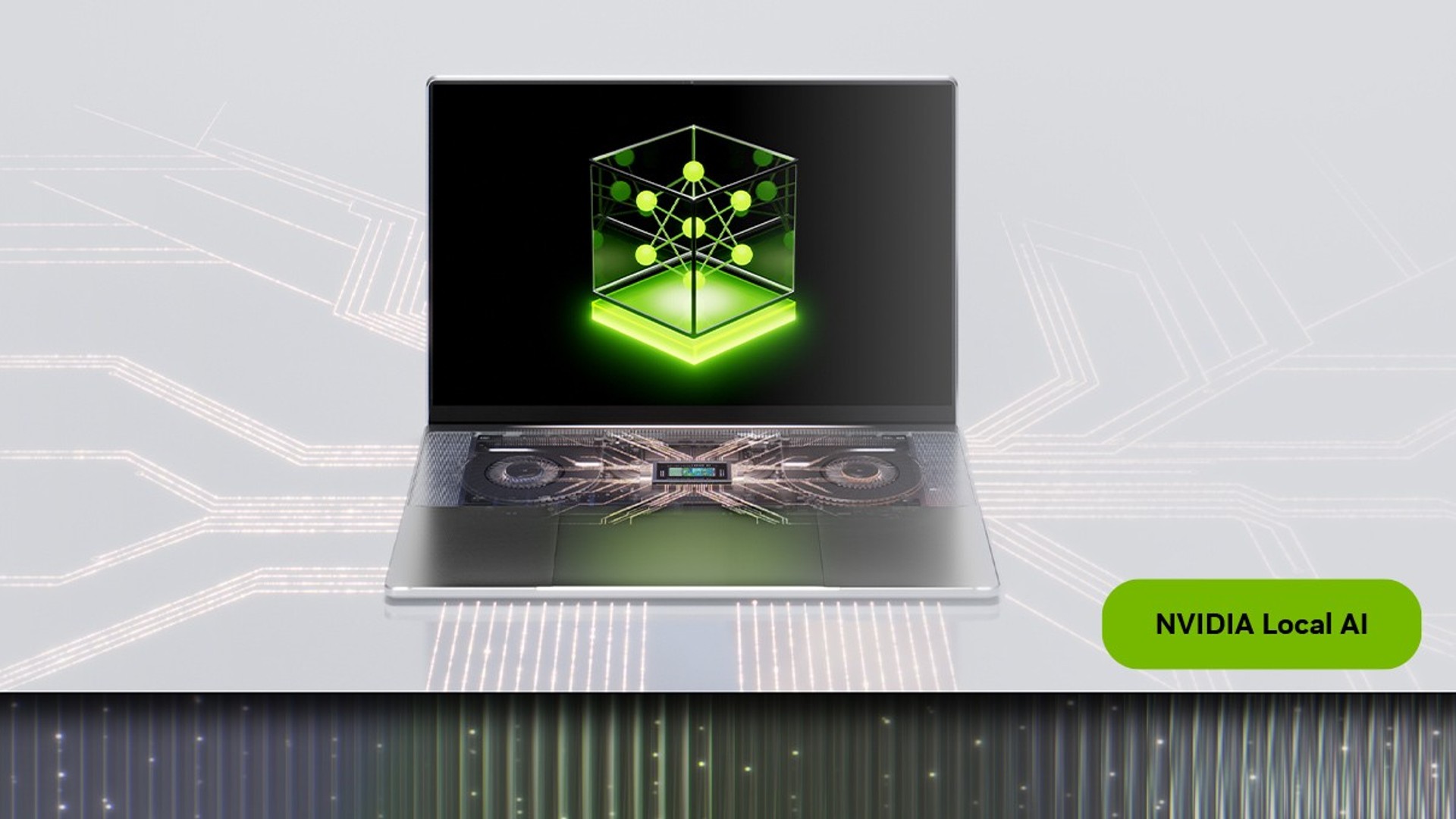
NVIDIA announced on October 28, 2026, that its RTX Spark laptops are now available from six PC makers, alongside a new open speech model, GPU resource-sharing controls for NVIDIA App and a set of game launches and updates built around ray tracing and DLSS.
The laptops are available from ASUS, Dell, HP, Lenovo, Microsoft and MSI, starting at $2,599, with 128GB configurations on shelves. Each system combines an NVIDIA Blackwell RTX GPU and an NVIDIA Grace CPU in a single superchip with up to 128GB of unified memory, a configuration NVIDIA says delivers up to 1 petaflop of FP4 AI performance.
RTX Spark laptops come in a range of designs, with options including different screen sizes, colors, touchscreens, pen support and two-in-one convertibles. NVIDIA describes the machines as thin as 14mm and as light as three pounds, with all-day battery life, and says the platform can edit camera native 4:2:2 video and render 3D scenes of up to 90GB. Adobe Photoshop and Premiere offer native RTX Spark support through beta releases, and NVIDIA says hundreds of games run on RTX Spark with DLSS, ray tracing, Reflex and G-SYNC.
Nemotron 3.5 Transcribe and Liquid AI Models
Also introduced on October 28, NVIDIA Nemotron 3.5 Transcribe is an open weight speech model that handles transcription, speaker attribution and translation in a single promptable model, and it can also answer questions about the audio. It transcribes 40 languages, including seven Indic languages. Developers guide the model with plain-language prompts, which can include product terms and formatting conventions to handle specialized vocabulary in fields such as healthcare, financial services and customer service.
NVIDIA said the model ranks No. 1 on the Hugging Face Open ASR leaderboard and No. 2 among open weight models on Artificial Analysis, with approximately 4.3 billion active parameters, which the company described as 80% fewer than the No. 1 open weight model. The model is available on Hugging Face in BF16, FP8 and NVFP4 formats, with support on RTX Spark and DGX Spark systems, Jetson AGX Thor devices and GeForce RTX 5090 GPUs. Developers can deploy NVFP4 versions through NeMo-Speech.cpp or vLLM.
A new resource management feature in NVIDIA App lets users choose how GPU resources are shared between a foreground app and background-running agents. Users can prioritize the foreground app for the best performance, or give the background agent more resources to finish work faster. The controls are accessed from System > Advanced in NVIDIA App, and the feature requires hardware-accelerated GPU scheduling to be enabled in Windows Settings.
Liquid AI’s LFM3 family of open Liquid Foundation Models spans text, vision, audio, omni and decision models built on one shared backbone, with base and post-trained models available as open weights. The models have day-zero support on RTX Spark through llama.cpp and vLLM, and developers can fine-tune them locally. Liquid AI says its new 1.7-billion-parameter base model outperforms its previous 2.6-billion-parameter base model. The models support local agents in Hermes Agent, Pi and OpenClaw for tasks such as triaging inboxes, managing calendars, reading documents and app screens, transcribing and translating speech, and routing support tickets or voice requests.
Phantom Blade Zero and RTX Remix 1.6
S-GAME’s Phantom Blade Zero launches October 28, 2026, at 7 p.m. PT on Steam and the Epic Games Store. Players take on the role of Soul, a swordsman framed for his master’s murder, as he travels the martial world to uncover a conspiracy.
NVIDIA worked with S-GAME Studio and S-GAME Publishing to add ray-traced effects to the title. On RTX Spark laptops and GeForce RTX GPU-powered PCs, NVIDIA says ray tracing adds more accurate bounced lighting, detailed reflections and realistic shadows on foliage and terrain, while the DLSS Dynamic Multi Frame Generation feature boosts frame rates with up to 6x frame generation or adjusts the multiplier on the fly to hit a player’s target frame rate.
NVIDIA released RTX Remix 1.6, its modding platform for remastering classic games with path tracing and DLSS, in the week before the announcement, bringing the platform to Minecraft. Creators and players can render Minecraft Java Edition 1.21.1 through RTX Remix with DLSS-accelerated path tracing. The update also adds DLSS 5 with 3D-Guided Neural Rendering, up to 6x Multi Frame Generation, native RTX Spark support and agent-assisted workflows.
Starting October 28, those upgrades extend to Portal with RTX and the Half-Life 2 RTX demo. Both now support RTX Spark, with DLSS 3D-Guided Neural Rendering, a new Performance Mode for DLSS Frame Generation and new options that speed up path tracing. A redesigned ComfyUI workflow lets modders generate physically based materials directly inside RTX Remix, with no application programming interface setup, and NVIDIA agent skills let compatible AI agents work directly with RTX Remix on remastering projects.
Additional Local AI Releases
NVIDIA Nemotron 3.5 Bolt E4B 4GB is also now available, enabling natural conversations and multistep agent tasks with as little as 4GB of memory. The model runs across RTX Spark, DGX Spark, GeForce RTX GPUs and NVIDIA Jetson devices, and supports llama.cpp, vLLM, Ollama, Unsloth and LM Studio. NVIDIA DGX Spark 64GB, powered by the GB10 Grace Blackwell Superchip, is now available to purchase from manufacturer partners.
Black Forest Labs’ FLUX 3 Image Klein is a 5.6-billion-parameter open weights model for generating and editing images locally, with NVIDIA-optimized versions that run on RTX GPUs with as little as 8GB of VRAM. During the GTC Berlin keynote, NVIDIA founder and CEO Jensen Huang showed AI agents running on RTX Spark helping to train Hugging Face’s Microduck robot.