Licenses
Lula Wins Fourth Term as Brazil Betting Ban Awaits Court and Congress

 Add Gaming.net to your preferred sources on Google
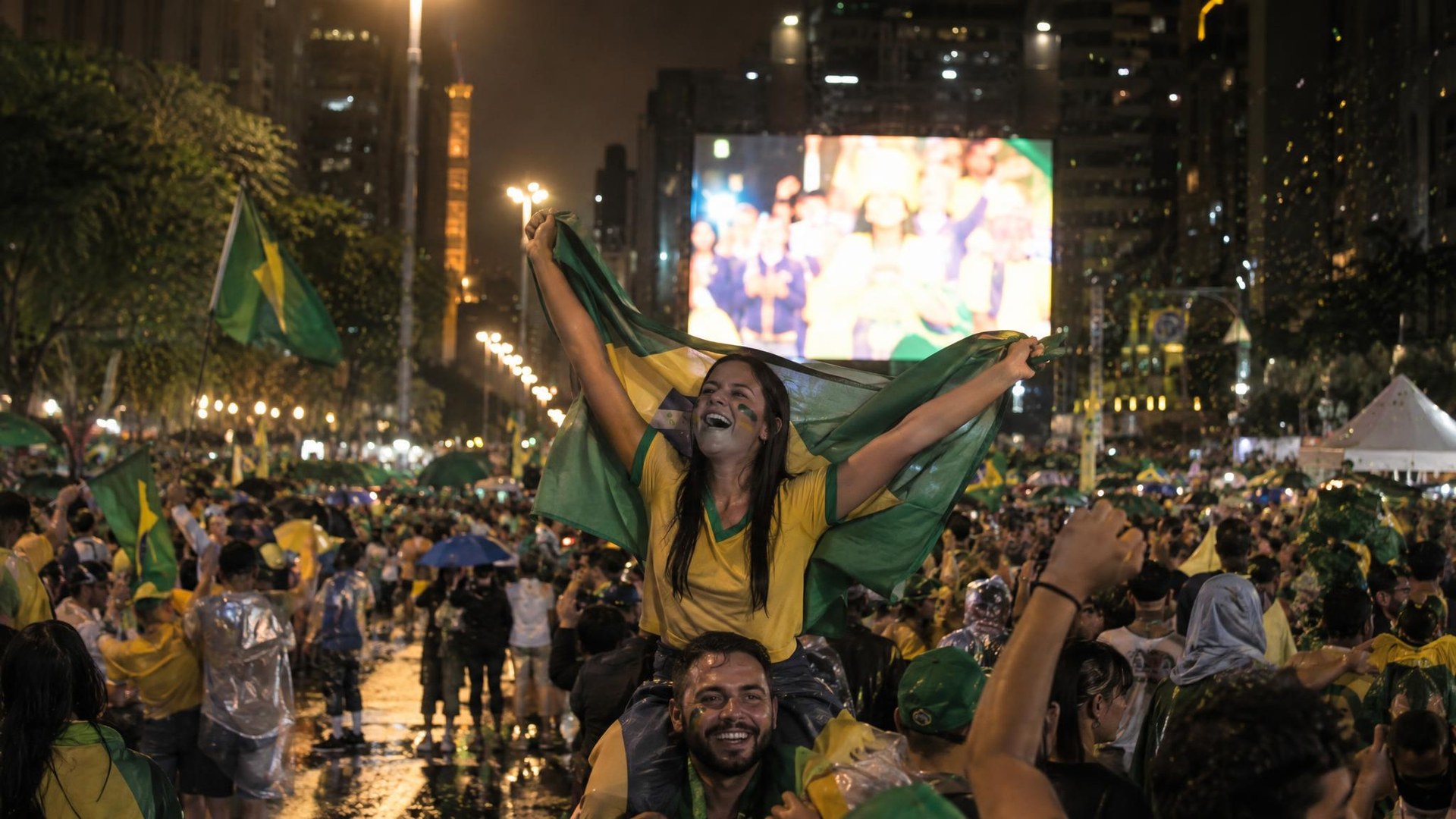
Brazil’s Superior Electoral Court proclaimed President Luiz Inácio Lula da Silva’s re-election on October 25, 2026, settling the presidential contest with the fixed-odds betting ban he signed on September 25, 2026, under challenge at the Supreme Federal Court and awaiting an uninstalled congressional committee facing a November 23, 2026, deliberation deadline.
Court president Kassio Nunes Marques announced the final second-round result: Lula, of the PT, received 64,256,232 votes, or 51.79 percent of the valid votes, against 59,826,041 votes, or 48.21 percent, for Flávio Bolsonaro, of the PL, according to the court’s announcement. A Senate record of the proclamation, published at 10:40 p.m. Brasília time, states Lula was re-elected to a fourth term, running from 2027 to 2030.
The court reported that more than 158 million voters were eligible and 128.2 million cast ballots, with abstention around 19.2 percent, below the 21.08 percent recorded in the first round. A Supreme Federal Court injunction extended voting from 5 p.m. to 7 p.m. Brasília time in sections still open; because the decision came after 5 p.m., thousands of voting machines had already closed and could not be reopened, and the electoral court temporarily suspended receipt of ballot bulletins. Of the 499,248 voting machines used in the runoff, 1,551, or 0.31 percent, were replaced.
The Measure and Its 30-Day Wind-Down
Lula signed Provisional Measure 1,394 on September 25, 2026, published in an extra edition of the Diário Oficial da União and effective on publication. The measure prohibited the exploitation, offer, intermediation and advertising of fixed-odds bets nationwide, in physical or virtual form, including by agents based abroad who offer bets to persons located in Brazil. The prohibition covers bets on real sports events and on online games and does not extend to other lottery modalities authorized by law.
The measure extinguished federal, state and Federal District authorizations 30 days after publication, a date the Supreme Federal Court’s newsroom recorded as October 25, 2026, as a public-interest decision that carries no right to a refund of the outorga or to indemnification. It barred new authorizations from the publication date, with applications still undecided on that date rendered moot, and it subjects operators that miss the transition’s refund and reporting obligations to a daily fine of R$200,000.
In its account of the signing, the Health Ministry stated that 85 outorgas, the paid authorizations to operate fixed-odds betting, had been granted at R$30 million each, totaling R$2.55 billion paid by companies during the concession process. The government’s published schedule gave bettors until October 5, 2026, to withdraw balances voluntarily, took betting sites and apps offline from October 6, required operators to report remaining balances to financial institutions on October 7 and 8 and banks to refund bettors between October 9 and 14, with any balances that could not be refunded transferred to Caixa Econômica Federal from October 14.
The measure also bans betting advertising and sponsorship in any medium and treats violations as abusive advertising under the Consumer Defense Code. It bars financial and payment institutions from processing betting transactions under Central Bank regulations, provides for the blocking of websites through the telecoms regulator Anatel and the Brazilian internet steering committee, and creates an interinstitutional enforcement committee coordinated by the Casa Civil.
Challenges Before the Supreme Federal Court
The Associação Nacional pela Segurança Jurídica dos Jogos e Apostas, known as Anseja, filed a direct action of unconstitutionality seeking full suspension of the measure and asked that the case be assigned by prevention to Justice Luiz Fux, rapporteur of other actions addressing the betting regulatory framework, the court’s newsroom reported on September 28, 2026. A direct action of unconstitutionality is the procedure for challenging the validity of a norm before the court.
The association argues the measure was issued without the urgency the Constitution requires, covers matters that cannot be regulated by provisional measure, lacks a budgetary and financial impact estimate, and violates legal certainty, free enterprise and the federative pact. Subsidiarily, it requests a transition period of at least 180 days and asks that site blocking and the loss of funds depend on a court decision.
The Associação Nacional de Jogos e Loterias filed a separate action, also seeking suspension, with a request that the court declare constitutional the provisions of the 2018 and 2023 statutes, Chapter V of Law 13,756/2018 and Law 14,790/2023, that form the fixed-odds betting regulatory framework. That association and the Instituto Brasileiro de Jogo Responsável, admitted as amici curiae in an earlier case already before the court addressing the framework, asked the court to consider, when judging the sector’s cases together, that the new measure suspends the effectiveness of the framework under review in that case.
Committee Awaiting Installation Ahead of November Deadlines
The Mesa do Congresso, the National Congress’s governing board, designated the joint committee for the measure on September 30, 2026, and extended the amendment deadline to October 13, 2026, six days after the general elections, according to the measure’s official tracking page. Lawmakers filed 99 amendments, published in the Diário do Congresso Nacional on October 15, 2026; five were withdrawn by their authors on October 14, 2026.
The committee’s composition page, dated October 26, 2026, lists titular and alternate senators and deputies across party blocs, with several alternate seats marked vacant, and records no president or rapporteur appointed. The tracking page lists the measure’s status as awaiting installation of the committee.
Among the 99 filed amendments, a proposal by Senator Dr. Hiran (PP/RR), listed as a titular member of the committee, would end tigrinho and other games of chance and permit only bets on real sports events while maintaining the advertising prohibition. Other filed proposals would bar recipients of federal income-transfer benefits such as Bolsa Família from placing bets and direct funds from taxes, fines and penalties tied to irregular betting to Health Ministry actions on gambling disorder within the public health system.
Under the calendar published by the Mesa do Congresso, the deliberation period for the measure runs from September 25 to November 23, 2026, and from November 9, 2026, the measure enters the urgency regime, obstructing the congressional agenda until it is voted. The joint committee must issue its report before the measure goes to the plenaries of the Chamber of Deputies and the Senate.