games
Fire Emblem: Fortune’s Weave Launches Exclusively on Nintendo Switch 2

 Add Gaming.net to your preferred sources on Google
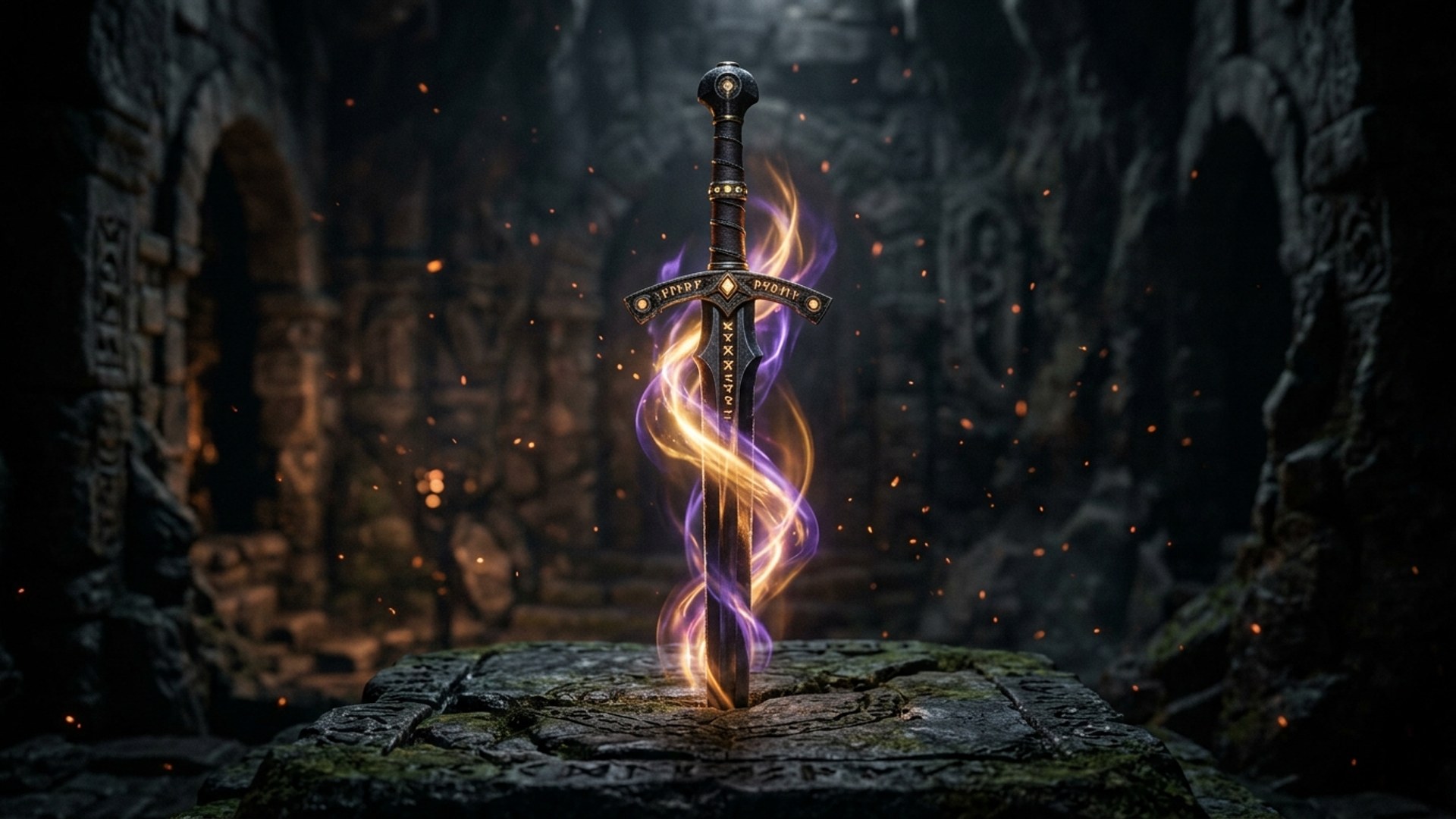
Nintendo released Fire Emblem: Fortune’s Weave exclusively for the Nintendo Switch 2 system on September 17, 2026. The tactical RPG, developed by Intelligent Systems and published by Nintendo, sends players into the past to recruit a band of heroes for a final confrontation with the demon god Balor.
The game takes place in the Dagdan Empire, a prosperous land ruled by gods, where disaster looms after Balor’s return. The player travels into the past with the goddess Fortuna, bound for the Heroic Games, an elite competition held in Dagsion, the empire’s capital, where fighters from across the land compete for a prize of one wish. Nintendo’s official store listing identifies Fortuna as the Goddess of Fate and Sothis as the Progenitor God, the deity who assigns the pair their mission.
Four Playable Heroes
The story is divided into four paths, each following its own protagonist, and players can work through the storylines in any order, pausing one to pick up another. Cai is a young boy fighting to free his imprisoned father. Dietrich is a swordsman searching for stronger opponents. Theodora is a queen pursuing a dream her homeland has long held. Leda is a musician out for revenge.
Director Toshiyuki Kusakihara gave fuller accounts of the four in Nintendo’s Ask the Developer interview, published September 15, 2026. Cai hails from Ribeira, a peaceful village, and sets out with his childhood friends to learn the truth about his birth. Dietrich is a gifted swordsman from Fódlan who finds purpose in combat and reaches Dagda as a shipwreck survivor. Theodora rules the Kingdom of Saramis as its young queen; the nation’s founding is entangled with the Dagdan Empire and its gods, and she competes to realize a wish her people have long held. Leda is a bard who has given herself over to revenge after learning the person behind her father’s death and her city’s destruction is living in Dagsion.
Combat and the Blaze Gauge
Battles use turn-based combat on grid-based maps, ranging from small skirmishes to massive engagements with specific rules. Positioning matters: players must weigh their distance from enemies, how far their attacks reach, unit matchups, and the placement of allied units. Certain heroes can spend HP to unleash signature moves called Blaze Arts. Using them fills the Blaze Gauge, which grants a power boost once it passes the halfway mark, but filling it completely triggers a Burst effect that strips the bonuses and halves the hero’s maximum HP.
Nintendo’s launch post says the game teaches these mechanics gradually and includes ways to lower the challenge, such as the option to rewind turns a limited number of times and test different strategies. A separate Blessings system lets players earn boons from the gods and level them up for additional effects, including temporarily reducing damage from enemy attacks.
Between story events, players can prepare inside Dagsion by recruiting allies in the city, strengthening Blessings at temples, working on skills at the training ground, and forming friendships at inns. Beyond the city walls, the world map offers quests to complete, resources to gather, roaming enemies that yield experience, and dungeons containing materials, treasure chests, and Clashes, battles in which members of the player’s team attack one after another. Heroic Games matches can feature special rules or terrain-based conditions.
Development Background
Kusakihara directed the game at Intelligent Systems, with Masahiro Higuchi as the studio’s producer; Genki Yokota served as producer and Kenta Nakanishi as associate producer on the Nintendo side. The game is set on Dagda, a continent situated below Fódlan, where Fire Emblem: Three Houses took place. Higuchi said the new game shares a world with Three Houses but occupies a different era and region, and the team built it as a standalone title rather than a sequel.
“We developed the game with the guiding principle that players should be able to fully enjoy it as a standalone title, even if they aren’t familiar with Fire Emblem: Three Houses,” Higuchi said.
The developers said the team first expanded the number of story perspectives from three in Three Houses to eight, then narrowed the plan to four after concluding that eight protagonists would leave players with too much to keep track of. The player character Eshmel, who opens the game in a prologue as a savior descending into a world that has fallen to the underworld, was created only after development was already under way. Kusakihara said the team added the character late because the converging storylines needed one figure who could see the whole picture; in the finished game, Eshmel journeys into the past, gathers the four heroes as allies, and faces the final battle.
“If we just had one more person, all the stories would come together nicely!” Kusakihara said of the team’s reasoning.
For its building designs, the game drew on the ancient Mediterranean region, Kusakihara said, while Three Houses looked to Eastern Europe of the medieval period onward. The interview’s notes place the release of Fire Emblem: Three Houses in July 2019 and Fire Emblem Engage in January 2023.
Fire Emblem: Fortune’s Weave is a 27.5 GB download for one player on a single system, with support for TV, Tabletop, and Handheld modes, Nintendo Switch Online Save Data Cloud, Nintendo Account family-group lending, surround sound through linear PCM, and HDR output on compatible televisions. Supported languages are Japanese, French, German, Italian, Spanish, Korean, Simplified Chinese, Traditional Chinese, and American English. The game’s ESRB rating carries descriptors for Fantasy Violence, Mild Language, Suggestive Themes, and Use of Alcohol, and it includes in-game purchases.