Interviews
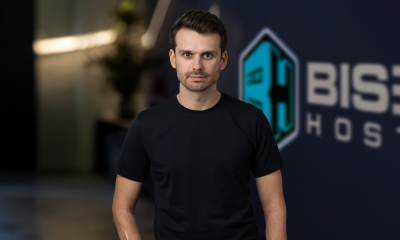
Dima Beseda, Co-Founder of Spiry – Interview Series

 Add Gaming.net to your preferred sources on Google

Dima Beseda is Co-Founder of Spiry and a gaming entrepreneur whose businesses grew out of his experience in World of Warcraft and digital economies. He co-founded Overgear, a marketplace connecting players with professional gamers, and LF.Group, a teammate-finding platform acquired by Xsolla. His work spans gaming services, virtual goods, community building, and influencer marketing.
Spiry develops AI tools for influencer marketing, helping brands manage creator discovery, relationships, campaign operations, spending, and performance. Beseda brings his experience buying creator campaigns and building gaming businesses to the platform. In this interview, he discusses gaming economies, the limits of boosting, multiplayer communities, creator partnerships, and the opportunities AI could open for digital self-expression.
You started gaming at an early age, then became deeply immersed in World of Warcraft as a teenager, and eventually turned paid character boosting into what became Overgear. Looking back, when did you first realize that gaming could be more than a passion and actually become the foundation for a serious business?
It all happened very organically. Back then, success in games mattered more to me than success in real life, so I spent a huge amount of time trying to be the best.
20 years ago, gaming communities were very active on forums. Being good at a game wasn’t enough, it was also cool to be known in the community. That was a different kind of pleasure in itself.
At some point, I became both a good player and a well-known one. Without consciously trying to do so, I had accidentally built my first personal brand.
That brought me my first orders. People started reaching out for help, usually asking me to play with them in exchange for a small reward in in-game currency. They paid in gold.
But the more valuable requests were from people who wanted me to log into their accounts and play for them. The first person to approach me with this request was an acquaintance who played hockey professionally. At the time, I was working at McDonald’s, and in just two evenings of boosting, I earned the equivalent of my monthly salary there. I quit McDonald’s that very day because I realized I needed to monetize my unique skills.
That was probably my first major turning point.
I continued taking similar orders and making good money, but it still didn’t develop into a business yet. Eventually, I started playing WoW less. One season, my team performed particularly badly, narrowly missing first place. It was a major blow to my ego, and I went through a period when I boosted less, took a regular job, and worked part-time as an English tutor.
The next major turning point was the release of Diablo III.
It was a unique experiment by Blizzard: the game introduced a real-money auction house. You could find a valuable item, list it online, and receive money through PayPal.
For the first few months, I played 24/7. I worked out optimal routes and tried to make every second count. Eventually, I reached an income of $4,000 a month. That put an end to my attempts to make money through regular employment.
That’s when my first actual business began.
Thanks to my community connections and network, I got access to a private group of bot operators. They didn’t play the game themselves – they had entire farms of bots farming gold and items for them.
I could manually achieve roughly the output of five bots, and at first, I didn’t understand why anyone would bother with bots when a skilled player could earn more. Then someone showed me that you could run 10–15 bots simultaneously on a single computer.
That was something I couldn’t match through manual play.
I bought a second computer and started buying every Diablo III key from a local seller at a gaming store. We constantly needed new keys because the bots were regularly banned.
At my peak, I had 30 bots running simultaneously.
On ban days, I barely ate, slept very little, and didn’t leave the house. I had to reinstall everything, level up the characters, and equip my entire bot farm again. But then I could spend at least a week going out and enjoying the money I’d made.
It was an incredible feeling. I’d go about my business, occasionally check that the bots were running properly, and list the items they’d farmed for sale. Looking back, I feel nostalgic about that period. It was my first real experience with delegation 🙂
Then Blizzard announced major changes to Diablo III. Trading was removed, and the game’s economy was redesigned. The entire bot business collapsed almost overnight.
But running that bot farm permanently changed my mindset. After that, I could never really go back to manual work.
That happened between 2009 and 2014. Overgear itself came later, around 2017–2018.
That’s also where I started learning about influencer marketing.
In a way, Overgear evolved from your early experience selling gaming services into a major marketplace connecting players with professional gamers. What did you understand about the demand for gaming services that most people outside that community initially missed?
Demand is driven by the game itself and its mechanics.
Pretty much any player who wants to reach high rankings or achieve top-tier progression ends up paying for some part of that progress.
Some people simply buy in-game currency. Others pay to gear up their characters quickly, especially when they’re working on a second or third character. Some let a driver play on their account and handle all the boring routine tasks so that they can enjoy the parts of the game they actually care about.
Games themselves force players to invest in them. Otherwise, you end up spending dozens of hours on tedious, repetitive tasks that quickly wear you down until you eventually quit playing altogether.
Boosting, account progression, virtual currencies, and other paid gaming services have sometimes generated debate among players and publishers. From your perspective, how has this market matured, and where should the line be drawn between legitimate player services and practices that damage a game’s competitive ecosystem?
I’d divide competition in games into two broad categories: time-based and skill-based.
In time-based games, the winner is the person who invests the most time. Skill still plays a role, but it’s more about optimizing progression than having a deep understanding of game mechanics or exceptional reaction speed.
In games where reaching the top requires spending an absurd amount of hours online, a character essentially needs to be active 24/7. That’s physically impossible for one person. By default, one player’s army of boosters ends up competing against another’s.
I’m not sure whether that’s good or bad, but it’s simply the reality, and I think developers understand that perfectly well. In this case, I don’t think you can really argue that RMT damages the competitive ecosystem.
The second category is more interesting. It concerns people who buy services to claim progress they haven’t actually achieved themselves, rather than simply enjoying their characters or showing off their accomplishments.
That might annoy hardcore players who spend their entire lives in a game and haven’t achieved much outside it. But most people don’t really care. If you want to level up and gear your character yourself, go ahead and enjoy the process. If you’d rather buy a boost, that’s your choice.
What actually becomes toxic for the community is when someone buys achievements that give them access to groups, communities, or high-difficulty content they aren’t genuinely skilled enough to handle.
Some content is designed so that you can’t simply join a group as a random player. You have to demonstrate that you’re capable of completing it.
Competitive shooters such as Counter-Strike offer a particularly clear example. Someone pays for a boost, gets their rank artificially increased, and plays with highly skilled players. But when they return to regular matchmaking at that rank, they realize they can’t compete. Very quickly, they fall back to their actual skill level. That’s a well-established pattern.
This is the kind of boosting that creates problems for the community. Nobody wants to be on a team with someone who has been carried to a rank they haven’t earned and is pretending they achieved it themselves.
Fortunately, I think only a very small proportion of the money players spend on these services goes toward that kind of behavior. Very few players actually buy boosts to lie about their achievements and create problems for others.
In many games, the content is now designed to let players choose a difficulty level that suits them. They can stay engaged while playing alongside people of roughly the same skill level.
Of course, there will always be toxic players who want to misrepresent their abilities. But every area of life has people like that.
You have built businesses around several behaviors that started organically inside gaming communities — from paying skilled players for help to finding teammates through Discord. What signals do you look for inside gaming communities that suggest an informal behavior could eventually become a large standalone business?
For me, it comes down to RMT — real-money trading — and the human drive to create.
I’ve reached the ceiling of what I can do with RMT, whether it’s boosting or trading skins. I’ve worked on projects in the skins market myself, so I know that space very well.
Before the current boom in the creator economy and AI, there was another major direction: private game servers. In games like Minecraft, people would set up their own servers with custom rules, their own economies, and unique experiences. Players would spend money within these ecosystems, and server owners could make very good money from them.
I think we’re about to see some breakthrough opportunities emerge as AI makes it easier to create things. And the more advanced these tools become, the more interesting the possibilities will be.
I know someone who’s building a startup that lets children create their own game worlds using voice messages. That’s a great example of how the barriers to creation are falling.
There’s also a growing trend toward self-expression through digital products. I recently learned that some people make a living designing furniture skins and other virtual items for The Sims 4. They’re essentially interior designers for virtual worlds.
My daughter is also planning to publish a skin she designed herself in Roblox. The monetization model there is a little unusual — she apparently has to pay to list it rather than getting paid when someone buys it — but the underlying behavior is interesting.
I believe the future belongs, in part, to games where people can create things and share them with one another. A huge amount of commerce will emerge around these ecosystems.
LF.Group focused on helping multiplayer gamers find teammates and was ultimately acquired by Xsolla. What did building and exiting LF.Group teach you about the social problems that multiplayer games still haven’t solved?
One problem that nobody has really solved yet, despite numerous attempts, is helping players quickly find the right people to play with.
Ideally, you should be able to find your gaming soulmate in half an hour — someone you genuinely enjoy playing with regularly. For some people, that means finding someone with a similar skill level; for others, it’s about finding someone they connect with.
Plenty of services have tried to solve this problem with all sorts of filters and settings, but I don’t know why they haven’t taken off. My guess is that you’d need to invest a huge amount of money to make finding teammates so effortless and widespread that it becomes a commodity everyone uses.
Gamers are lazy in a very specific way: they’re used to getting instant dopamine. If you meet someone in the moment and hit it off, everything works. But if you have to search for people, introduce yourself, assess whether you’re a good match, and coordinate your gaming schedules, only a small percentage of players are willing to put in that effort.
And even after all that, you might suddenly not feel like playing. What initially seemed like a fun activity starts to feel like an obligation or a job.
It’s a paradox. Ask almost any gamer, and they’ll tell you they want to find their people — a group they can play with and genuinely enjoy spending time with. But when it comes to actually finding those people, very few are willing to do the work.
You have argued that some of the most lucrative opportunities exist in niches that other entrepreneurs don’t take seriously. Gaming itself was once viewed that way by many investors. What areas within gaming today do you think are still underestimated from a business perspective?
I’m interested in seeing where things go as AI makes it easier to create entire worlds and lowers the barrier to entry for coding.
We’re also seeing a growing desire for self-expression and individuality, particularly among Gen Z and younger generations. As the barriers to creating things within games continue to fall, more people will be able to create their own items, experiences, and virtual worlds.
Games are making this possible, and development itself is becoming easier. I think the people who figure out how to monetize this growing desire for individuality and self-expression will make a lot of money.
But honestly, the money is already in skins, real-money trading, and running your own servers. I don’t know how to come up with some ultra-unconventional idea here. A lot of the opportunities are obvious.
Having operated in gaming, digital goods, performance marketing, and now the creator economy, how has your experience with gamers influenced the way you think about customer acquisition, retention, community, and monetization?
Good games teach you how to play them without you noticing. From the first minute, they introduce one mechanic at a time, make it feel easy, and keep pulling you a little deeper. I think that’s where my focus on onboarding comes from, and I don’t think I’ve ever been fully happy with the onboarding in any of my products. Games set the bar very high!
What makes it impressive is how much a game has to teach. You barely need to learn anything to use TikTok; you just start scrolling. But a game can have dozens of systems that depend on each other, and walking someone through all of them without overwhelming them is a real craft. It’s also where acquisition succeeds or fails: if you bring people in and they get lost in the first ten minutes, you’ve paid for nothing.
Retention works on the same principle. Take The Witcher. There’s the big loop of following the story and completing quests. Beneath it are smaller, more instantly rewarding ones, like clearing question marks off the map or getting better at combat. Then there’s crafting, with its own resources to gather and recipes to discover. None of these would keep you playing on its own, but together they create a world you want to return to. I look at products the same way, as a set of systems that strengthen each other, and I’ve noticed that not everyone thinks about product design like that.
That shapes how I see monetization, too. Players are happy to pay for things that make the experience richer or let them express themselves, and they resent paying to get around friction that was put there on purpose.
Community is the most fascinating part. Gaming communities can be the most toxic places on the internet, and also the warmest 🙂 I was reminded of the warm side recently while playing the WoW Forever beta. I ran into another player in a cave and asked if he’d help me with a quest. He’d already finished it, but he offered to guide me through the whole cave anyway.
We were both skinning the monsters we killed to collect resources. Since he was giving up his time for me, I figured the skins should go to him, but he suggested we take turns.
It’s a tiny moment, but that’s what community really is: strangers connecting over a shared goal, small kindnesses, and even the most ordinary tasks. It’s incredibly hard to build something like that around your product, but if you succeed, it can take the product to a whole new level.
Influencers and content creators have become increasingly important to how games are discovered and marketed. What do game studios and publishers most often get wrong when working with creators, and what separates an effective influencer campaign from one that simply generates views?
The most common mistake is judging influencers by performance marketing standards.
Even with pre-roll integrations, promo codes and tracked links, last-click attribution only catches part of the picture. In my experience, for every conversion you can trace back to a creator, there’s at least one more that arrives through organic channels and never gets credited. So the real impact is often much bigger than your dashboard shows.
And that’s before you count the effects you can’t measure at all: the PR value, people seeing your product again and again, and the way creators shape how their audience feels about it and teach them how to use it. The more creators talk about you, the better your other channels tend to convert as well. Because none of this fits neatly into a spreadsheet, many companies, including gaming studios, are nervous about the channel. You have to develop an instinct for it and accept that its value goes beyond what you can attribute directly.
A collab that works starts with real views from the right people. In a good one, a creator makes something their audience actually wants to watch. If it’s truly interesting, it spreads beyond their followers to similar people who are likely to enjoy it too. Those views are worth far more than ones bought through cheap ad traffic. So it comes down to three things: creators whose niche fits the brand, an audience that matches, and content people choose to watch.
With Spiry, you’re applying AI to influencer marketing, including campaign management, creator relationships, spending, and performance analysis. Where do you believe AI agents can automate the process, and which parts still require human judgment to preserve the authenticity that makes creator marketing effective?
Well, authenticity still belongs to the creator. What we do at Spiry is help them make better work when they create promotional content. Each creator gets an individual brief that reflects the brand’s goals, their own voice, their niche and other context, along with examples of content that has performed well in their space and fits the campaign. But what they actually shoot is their call.
Nearly everything around that can be automated. The hardest part right now is discovery: how many of the creators AI finds for brands are actually a good fit and get selected? With today’s tools, it’s around 10%. Our goal is for our influencer managers to approve 70–80% of the creators our AI suggests, which would be an excellent result. We won’t get to 100% for a long time, so people still need to review those creators, score them and judge whether they suit the brand.
I do expect that human involvement to shrink. I can picture AI running an entire campaign: finding creators, filtering out the wrong ones, reaching out, negotiating rates, coordinating production and handling the instructions. Eventually, people may not be needed to execute the process at all.
But the creator will stay at the center. The person making the content is the whole reason influencer marketing works. We automate everything around them, not the thing that makes their work connect with people.
Where do you see the strongest intersection between gaming, creators, and AI over the next several years?
For me, the most interesting intersection is digital self-expression and how much easier it’s becoming for people to create things themselves.
Two trends are coming together: social media and AI. Making things is getting easier, and expressing who you are through digital products matters more and more. Gamers are way ahead here. I’ve said before that in some ways a virtual skin can be more compelling than a Birkin bag. A digital item can be a way to express yourself, a status symbol, a collectible, and an asset inside a whole virtual economy, and these markets develop their own subcultures, trading scenes and business opportunities.
AI will widen this even further by letting people create items, experiences and whole worlds. I expect more games where players build things and share them, with increasingly sophisticated economies growing around them.
As creative tools become more accessible and people want more ways to express themselves digitally, there will be more ways to create, share and earn from digital products. That’s where I see the real potential.
Thank you for the great interview, readers who wish to explore AI-powered creator campaign management and influencer marketing should visit Spiry.